The EFSA ultra-low CBD daily intake limit (2 mg/day) has shocked many consumers and companies across Europe. It defines a provisional safe intake of 0.0275 mg per kilogram for adults and sets a hard benchmark. However, this ultra-conservative threshold sits far below earlier industry proposals and other national guidance. Therefore, it matters because manufacturers must rethink formulas, dosing, and labeling to comply.
Consumers face reduced product choices and new safety messaging, while researchers must fill key data gaps quickly to inform regulators. As a result, businesses, health officials, and consumers will watch upcoming EFSA assessments and industry studies closely to see whether this conservative limit is adjusted based on stronger toxicology and clinical evidence and public health policy implications across Europe.
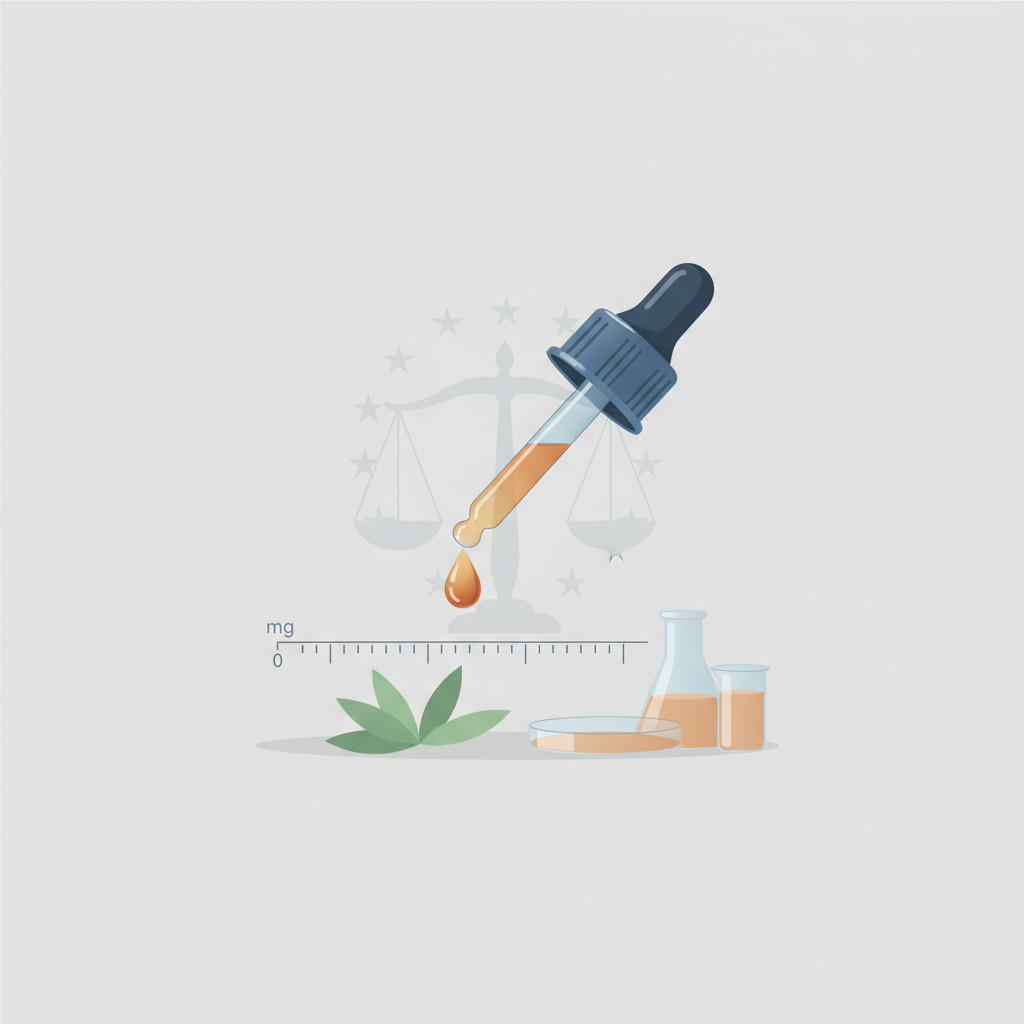
EFSA ultra-low CBD daily intake limit (2 mg/day)
EFSA set a provisional safe intake for cannabidiol at 0.0275 milligrams per kilogram of body weight per day. For a 70 kilogram adult, this equates to roughly 2 mg per day. The agency based this limit on a conservative toxicological review. It focused on liver effects and possible impacts on the endocrine and nervous systems. EFSA also highlighted persistent data gaps and called for more human and animal studies. For full details, see EFSA’s statement at EFSA’s statement.
In practical terms, the limit affects product formulation, labeling, and market strategy. Therefore manufacturers that use CBD isolate or synthetic CBD in foods must adjust dosing. Below are the key takeaways for companies and consumers:
- Reformulation needs: Many existing supplements contain higher CBD doses. As a result, companies must lower concentrations or change serving sizes.
- Labeling and compliance: Products will require accurate dose information and safety warnings for vulnerable groups.
- Market segmentation: Manufacturers may shift to topical or cosmetics, which fall outside novel food rules.
- Research demands: EFSA’s conservative approach increases the need for targeted toxicology and human trials. EIHA’s response and dossier are relevant: EIHA dossier.
- Consumer safety: The limit aims to reduce long term risks, especially liver and hormonal effects.
- International comparison: For context, the UK FSA advises about 10 mg per day. See UK FSA guidelines.
In short, EFSA’s ultra-low threshold changes both risk assessment and commercial practice. Manufacturers must act quickly, while researchers must close the data gaps that will determine future policy.
| Regulatory Body | Daily Limit | Regulatory Status | Notes |
|---|---|---|---|
| European Food Safety Authority EFSA | 2 mg per day (0.0275 mg per kg for a 70 kg adult) | Provisional safe intake under Novel Food assessment | Official EFSA page |
| Food Standards Agency UK FSA | ~10 mg per day (guidance) | National guidance and novel food oversight | Guidance and information |
| Health Canada | 20 to 200 mg per day for short term use (up to 30 days) | Advisory range from Science Advisory Committee | Review and report |
| U S Food and Drug Administration FDA | No established daily intake | CBD not authorized as dietary ingredient or food additive; regulatory action and warnings possible | FDA consumer information |
Practical implications of the EFSA ultra-low CBD daily intake limit (2 mg/day)
For consumers
- Safety first: The EFSA limit prioritizes long term safety because the agency cited potential liver and endocrine effects. Therefore consumers may see stronger safety messaging on packages.
- Fewer high dose options: As a result, many supplements and edible foods will offer lower CBD per serving. For example, a 10 milligram capsule will no longer meet the EFSA threshold in a single serving.
- Vulnerable groups emphasized: Pregnant people and those under 25 face heightened caution. Consequently, manufacturers may label products with clearer age or pregnancy warnings.
- Transparency and trust: Consumers will rely more on third party testing and clear labeling to verify low dose claims. Related guidance from national bodies will shape expectations (see EFSA).
For businesses
- Reformulation pressure: Companies must lower CBD concentrations or redefine serving sizes to comply. Therefore product recipes and batch testing must change quickly.
- Compliance and legal risk: Novel food approvals now matter more because enforcement could follow EFSA guidance. For context consult the UK FSA guidance.
- R and D and labeling costs: Firms will invest in toxicology studies, stability tests, and new labels. As a result they will face higher upfront costs.
- Market strategy shifts: Many brands may expand topical cosmetics or non ingestible lines, which often fall outside novel food rules. Thus companies will diversify to protect revenue.
In short, the 2 milligram threshold reshapes both consumer choice and industry practice. It forces rapid operational change while increasing demand for better safety evidence and testing.
Emerging Research on CBD Safety and Dosing
Emerging research is reshaping how regulators and scientists view CBD safety and dosing. Recent pharmacokinetic reviews emphasize that CBD’s absorption and half life depend heavily on formulation and route of administration. For example, oromucosal sprays and oils show different bioavailability from capsules or edibles, affecting systemic exposure and safety margins. See a pharmacokinetics review at Frontiers in Pharmacology.
New clinical data have also flagged dose related liver enzyme elevations and drug interaction risks. Therefore some randomized trials and systematic reviews report liver enzyme increases at higher therapeutic doses. A systematic review of randomized trials highlights gastrointestinal side effects, somnolence, and notable liver enzyme elevations in a minority of participants PubMed Entry. Because of these signals, EFSA applied a conservative approach in its provisional assessment EFSA Provisional Assessment.
Will EFSA’s ultra-low CBD daily intake limit (2 mg/day) change? The short answer is possibly. EFSA explicitly noted data gaps in long term human safety and reproductive toxicity, and it will reassess claims as new evidence arrives. Industry groups such as EIHA argue the level is overly conservative and point to large proprietary toxicology programs intended to address gaps. Therefore future adjustments depend on high quality human trials, targeted toxicology studies, and transparent data sharing.
In the near term, expect more dose-ranging human trials, better formulation studies on bioavailability, and regulatory dialogue. As a result, the scientific community may refine guidance to balance real world use and safety, but any change will require robust evidence and time.
CONCLUSION
EFSA’s ultra-low CBD daily intake limit (2 mg/day) marks a pivotal regulatory shift for Europe. It sets a provisional safe intake of 0.0275 mg per kg for adults and favors a conservative safety margin. Consequently, consumers will see lower-dose food and supplement options, clearer warnings, and more emphasis on testing.
For businesses, the limit demands rapid reformulation, revised serving sizes, and increased investment in safety studies. However, it also creates market opportunities for topical products and novel non-ingestible formats. Industry groups like EIHA and data sponsors are working to fill key toxicology gaps.
MyCBDAdvisor will continue to track EFSA’s work and industry responses closely. Therefore we commit to delivering clear, evidence based analysis and practical guidance for consumers and brands. Visit MyCBDAdvisor for updates, resources, and tools to navigate evolving cannabinoid rules.
In short, the 2 mg per day threshold reshapes safety policy and product strategy. Future change remains possible as new data appear.
Frequently Asked Questions (FAQs)
What does EFSA ultra-low CBD daily intake limit (2 mg/day) mean?
The EFSA limit sets a provisional safe intake at 0.0275 mg per kilogram per day. For a 70 kilogram adult this equals about 2 mg daily. It stems from a conservative toxicology review that prioritized liver and endocrine safety. Therefore regulators treat CBD in foods as a novel ingredient needing strict review.
Will this limit make CBD products unsafe or illegal?
No. However many current ingestible products exceed the threshold and will not comply. Producers must reformulate or reduce serving sizes to meet the limit. As a result some high dose foods or supplements may disappear from shelves.
How will consumers’ choices change?
Expect more low dose servings, clearer labels, and increased third party testing. Vulnerable groups may see explicit warnings. Consumers should check lab certificates and serving information before buying.
Can businesses realistically comply?
Yes. Companies can reformulate, cut serving size, or pivot to topical or cosmetic lines. But compliance requires new testing, labeling, and possible novel food dossiers. These steps raise costs but preserve market access.
Is the EFSA limit likely to change?
Possibly. EFSA highlighted data gaps and invited more studies. High quality human trials and targeted toxicology could shift the threshold. Until then stakeholders should plan around the 2 mg per day benchmark.