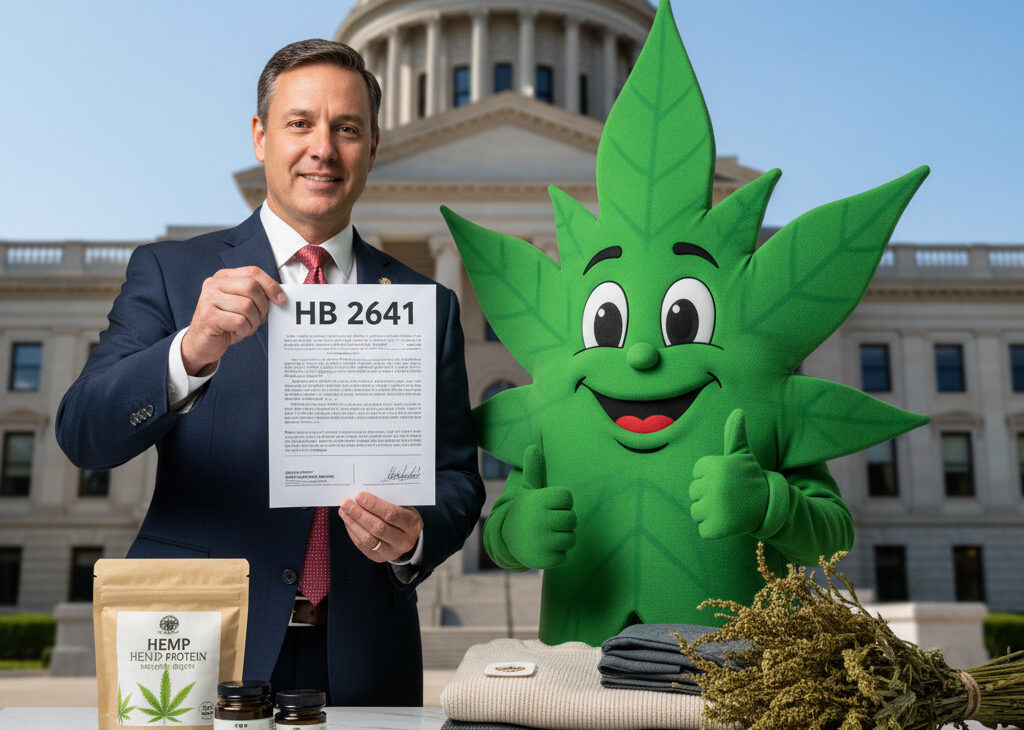
The Missouri Intoxicating Hemp Product Ban (HB 2641)
The Missouri intoxicating hemp product ban (HB 2641) marks a major policy shift for hemp-derived THC in the state. Passed by the Missouri House 109-34, the bill aims to align state rules with recent federal action. Because the measure would equate intoxicating hemp products with licensed cannabis products, retail paths could change. As a result, consumers may see sales confined to licensed dispensaries rather than mainstream stores.
Businesses that now sell hemp-derived THC face new compliance demands, including age restrictions, clear labeling, and packaging safeguards. However, lawmakers argue the change improves law enforcement coordination and closes regulatory loopholes. Retailers and manufacturers must adapt testing protocols and responsible retail rules quickly.
Importantly, the bill’s sponsor said the proposal mirrors federal steps taken last year. Therefore, consumers, small businesses, and regulators need to follow the Missouri Senate’s next steps closely.
This introduction previews what HB 2641 means for everyday buyers and retailers, with practical implications ahead. The article breaks down the law, likely impacts, and actions stakeholders should consider now.
Missouri intoxicating hemp product ban (HB 2641): overview and key definitions
HB 2641 would reclassify many hemp-derived products that contain intoxicating levels of THC. The Missouri House passed the bill by a 109-34 vote. As a result, products that exceed set THC thresholds could be treated like state-legal cannabis. Because of that change, sales might move from grocery stores and gas stations into licensed dispensaries only.
What the ban entails
- The bill targets intoxicating hemp products, including edibles and THC seltzers. It sets specific THC limits per package that determine legality. For example, sponsors described thresholds aligned with the recent federal crackdown on hemp-derived THC.
- If enacted, state law would equate certain hemp-derived THC products with marijuana. Therefore, those products could face the same licensing and retail restrictions as cannabis.
Legal definitions and enforcement
Legally, HB 2641 defines intoxicating hemp products by measurable THC content and packaging dose. The measure also gives law enforcement clearer standards for prosecution and seizure. Rep. Dave Hinman, the bill sponsor, said, “We’re not pioneering anything new here. What Missouri is doing…is simply aligning our state statutes with the federal action so our law enforcement, the highway patrol, local prosecutors and the attorney general’s office can work in tandem with our federal partners. No gaps, no loopholes.”
Opposition and rationale
However, critics warned the bill could override voter-approved language and reduce market competition. Rep. Matthew Overcast argued, “We cannot rewrite voter adopted language by statute simply because certain market participants prefer less competition.” Therefore, retail and manufacturing stakeholders face legal and business uncertainty as the bill moves to the Senate.
Sources
Impacts of Missouri intoxicating hemp product ban (HB 2641) on consumers and businesses
The proposed Missouri intoxicating hemp product ban (HB 2641) would reshape access, pricing, and compliance across the hemp market. Below are the main effects for key stakeholders, with real examples and reporting that illustrate early market shifts.
-
Consumers
- Many buyers could lose easy access to hemp-derived THC in convenience stores and supermarkets. As a result, purchases may move to licensed cannabis dispensaries only. This change could raise prices and reduce variety for casual users. Local reporting shows consumer confusion and questions about where to buy popular items like THC seltzers and edibles. See local coverage for examples: Missouri THC Seltzer Coverage.
-
Hemp product manufacturers
- Brands face reformulation and relabeling costs because stricter THC thresholds may apply. Therefore, manufacturers may stop selling certain products in Missouri. Manufacturers also confront testing burdens and new packaging safeguards. Industry outlets note these shifts in supply strategies: Ganjapreneur Report.
-
Retailers and small businesses
- Independent retailers risk losing revenue from popular hemp-derived THC lines. Consequently, some stores might delist products or seek cannabis retail partnerships. Retailers must also adopt age verification and responsible retail rules.
-
Market and regulatory effects
- The bill aims to align state law with federal action, according to sponsors. However, critics warn it may override voter intent and reduce competition. Early signals show inventory disruption and price adjustments as businesses adapt. For additional reporting on state legislative action and industry impact, see: KBIA Report.
Overall, consumers may face higher costs and less convenience. Businesses must invest in compliance, and some producers may leave the Missouri market. Regulators and stakeholders will need clear guidance to minimize disruption while protecting public safety.
| State | Legal status | Key restrictions and limits | Enforcement notes | Source |
|---|---|---|---|---|
| Missouri | House passed HB 2641 to ban many intoxicating hemp products and reclassify them as cannabis equivalents. | Would treat products over set THC thresholds as marijuana and likely limit sales to licensed dispensaries. | Sponsor says the bill aligns state law with federal action for law enforcement coordination. | Source |
| Kansas | No statewide outright ban yet, but legislators have proposed scheduling Delta-8 as a controlled substance. | Pending SB497 would add Delta-8 to Schedule I, creating broad restrictions on sale and possession. | As a result, retailers face uncertainty and local ordinances may impose age and licensing rules. | Source |
| Illinois (Chicago) | Illinois allows many hemp products, however Chicago passed local restrictions on intoxicating hemp items. | Chicago ordinance bans many hemp-derived THC edibles and vapes while allowing limited exceptions. | Therefore, urban shoppers may see reduced retail availability and tighter local enforcement. | Source |
| Arkansas | Statewide ban enacted on Delta-8 and similar hemp-derived intoxicants is currently enforced. | Agencies ordered removal of Delta-8 and related products from store shelves and inventories. | Consequently, sellers risk criminal penalties and regulatory enforcement if they do not comply. | Source |
| Oklahoma | Oklahoma permits hemp-derived products under strict THC measurement and testing guidance. | Department guidance requires total THC tests and limits products to nonintoxicating thresholds. | Retailers must meet testing, labeling, and packaging rules to avoid enforcement actions. | Source |
Notes: This table contextualizes the Missouri intoxicating hemp product ban (HB 2641) alongside nearby states. It highlights how state and local bans, hemp-derived THC limits, and enforcement approaches differ across the region. Stakeholders should monitor regulatory updates and local ordinances for compliance.
Conclusion
The Missouri intoxicating hemp product ban (HB 2641) would reshape access and regulation for hemp-derived THC in the state. As a result, consumers could face higher prices and fewer buying locations. Businesses will likely need to invest in compliance, reformulation, and new retail strategies.
Because the bill equates certain hemp products with licensed cannabis, market structure may shift toward dispensary sales. However, lawmakers argue this alignment improves law enforcement coordination and closes statutory gaps. Conversely, critics warn it could limit competition and override voter intent.
Stakeholders should monitor the bill as it moves to the Missouri Senate and plan for testing, labeling, and retail changes. Therefore, manufacturers, retailers, and consumers should seek clear guidance and legal advice to reduce disruption.
Frequently Asked Questions (FAQs)
What is the Missouri intoxicating hemp product ban (HB 2641)?
HB 2641 is a bill passed by the Missouri House that would reclassify certain hemp-derived products with intoxicating THC as equivalent to state-legal cannabis. Because it passed the House 109-34, it now moves to the Senate. If enacted, many edibles, beverages, and similar items could face cannabis-style retail limits.
Who will be affected?
Consumers, manufacturers, and retailers will feel the change. Consumers may lose convenient access to certain THC products. Manufacturers may need reformulation and new label standards. Retailers may need licensing changes and age verification systems. Law enforcement and regulators will implement testing and packaging rules.
Is it already illegal to buy these products in Missouri?
Not yet; the House passed the bill but the Senate must act before it becomes law. Therefore, current sales continue until the bill is signed or otherwise enacted. However, some retailers may change inventory early to avoid compliance risk.
How will the ban change where I can buy hemp products?
If enacted, sales could shift toward licensed cannabis dispensaries. As a result, shoppers may face fewer retail options, age checks, and higher prices. Also, packaging, labeling, and testing standards would become stricter.
What should consumers and businesses do now?
Stay informed and follow legislative updates closely. Businesses should audit product formulations, update testing protocols, and prepare compliance plans. Consumers should verify product sources and expect changes in availability. Seek legal advice if you handle or sell hemp-derived THC products.