Thai cannabis landrace genetics preservation: Inside KD Genetics’ Living Seed Bank
Thai cannabis landrace genetics preservation is more than science; it is heritage. It ties farmers, fishermen, and monks to plants that shaped lives for generations. In this article we enter KD Genetics’ living seed bank to understand why these Thai landraces matter.
On Koh Tao a ring of green hugs rocky shores as sun and salt etch each leaf. KD, whose seeds moved across Thailand by trade and trust, tends roughly 180 plants there. Because KD mixes permaculture with seed exchange, the genetics stay adaptive and robust. Moreover his family and community spread these strains, ensuring living conservation not museum pieces.
Preservation matters because Thai genetics hold weather hardiness and unique chemical profiles. Therefore conserving them protects medicine, culture, and future breeding for climate resilience. As a result this story blends science, ritual, and the humble act of seed sharing. Read on to meet the keeper, explore techniques, and learn how these strains may shape cannabis’ future.
Thai cannabis landrace genetics preservation and cultural heritage
Thai cannabis landrace genetics preservation keeps living culture alive. Because these plants grew alongside villages, they carry stories. For example fishermen traded cannabis for fish on Koh Tao. As a result seeds moved by trust, not commerce. These exchanges shaped local varieties that now resist heat and humidity. KD and his family protect this heritage at KD Genetics. Visit their site for farm details here.
Benefits at a glance
- Protects local knowledge and farming practices
- Maintains unique cannabinoid and terpene profiles
- Supports permaculture and biodiversity through seed exchange
Thai cannabis landrace genetics preservation as a resource for breeders and medicine
Preserving heritage cannabis genetics helps science and medicine. Because Thai landraces have distinct chemical profiles, they offer new therapeutic possibilities. For example KD created cannabis oil used for pain and insomnia for decades. Moreover breeders reuse these genes to strengthen modern strains. Therefore conservation reduces genetic erosion and helps develop climate resilient varieties. The South China Morning Post explored the role of small growers in Thailand here.
Key scientific advantages
- Broader genetic base for breeding programs
- Potential for novel cannabinoids and aromatic compounds
- Natural resistance to pests and weather
Thai cannabis landrace genetics preservation through living seed banks and community practice
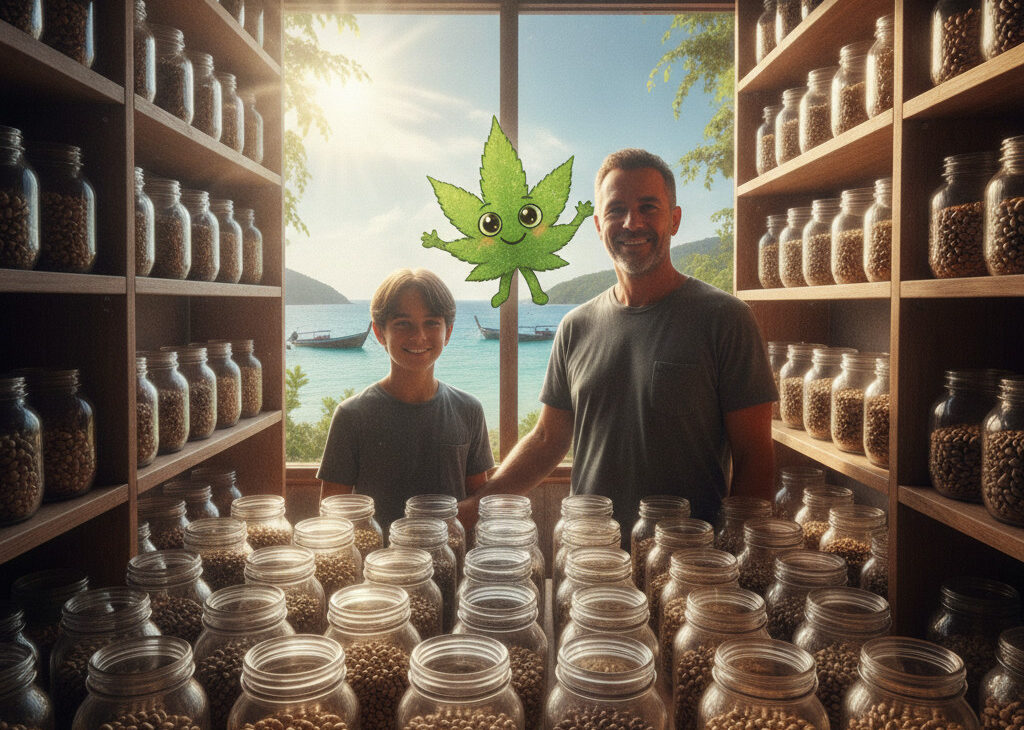
Living seed banks combine preservation with propagation. KD keeps roughly 180 plants on Koh Tao. He uses permaculture to attract pollinators and preserve soil health. As a result seeds stay adaptive and alive in the landscape, not frozen in a vault. Community spread matters too. KD aims to multiply his genetics by sharing seeds across Thailand. Events like cannabis cups highlight these strains and build networks here.
Practical steps communities can take
- Encourage seed exchange rather than hoarding
- Integrate permaculture with cultivation
- Document traditional uses and recipes for cannabis oil
Together these approaches protect traditional cannabis strains, conserve biodiversity, and honor the living legacy of Thai genetics.
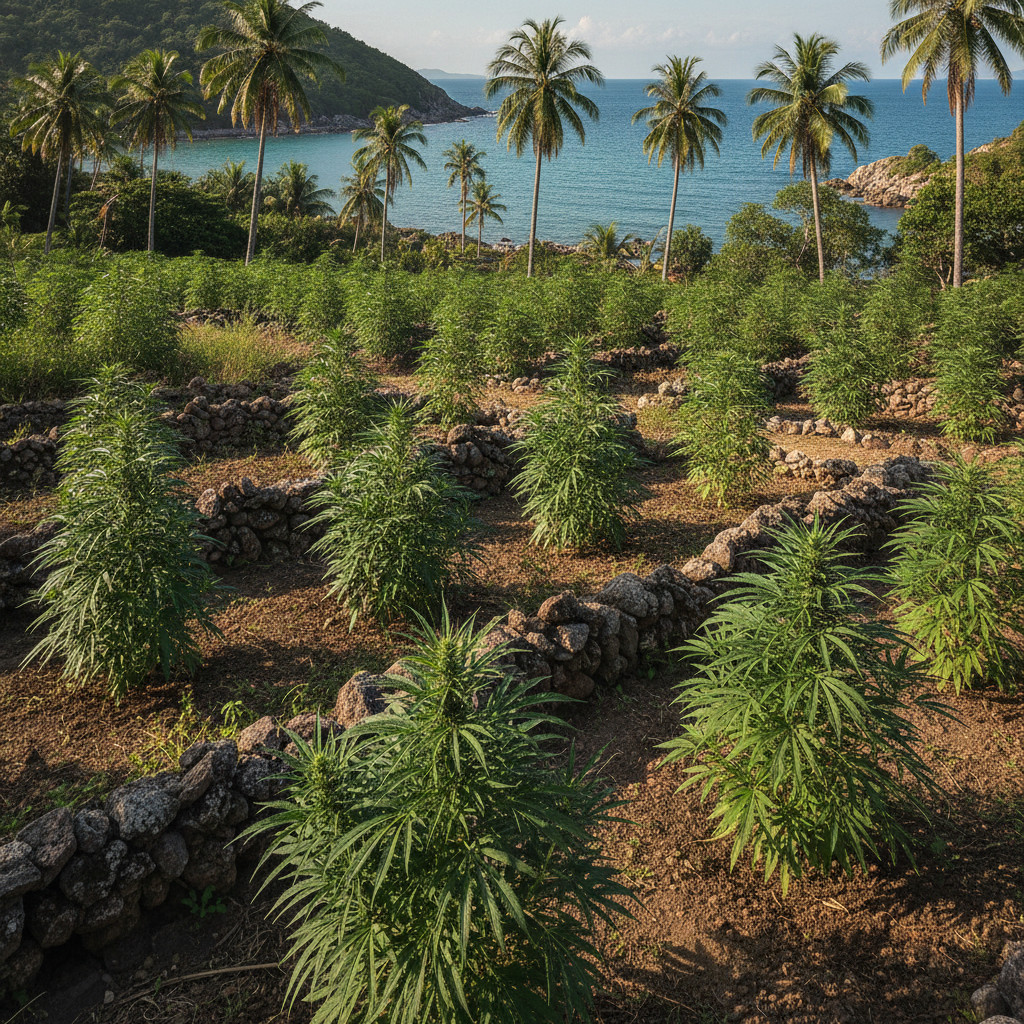
Image: Thai cannabis landrace plants growing in a coastal farm setting on Koh Tao, with coconut palms and rocky shore in the background.
How Thai cannabis landrace genetics preservation compares to other cannabis genetics
This table highlights key differences and unique value. It shows origin, chemical profile, growth, uses, and preservation.
| Genetics | Origin | Typical THC CBD profile | Growth characteristics | Traditional uses | Preservation status |
|---|---|---|---|---|---|
| Thai landrace | Thailand coastal and inland regions | Moderate to high THC, low CBD, unique terpenes | Tall sativa type, heat and humidity tolerant, long flowering time | Medicinal oil, cultural rituals, daily local use | Living seed banks, community exchange, vulnerable but actively preserved |
| Afghan landrace | Hindu Kush region, Afghanistan | Typically high THC, low CBD | Short robust indica, resinous buds, cold hardy | Hash production, traditional medicine | Conserved in remote farms and seed banks |
| South Asian Haze | India and Southeast Asian sativas, Jamaica influenced | High THC, low CBD, complex terpene profile | Very tall, very long flowering, thrives in sun | Recreational and spiritual use, prized by breeders | Preserved by breeders and events, rare in pure form |
| Modern commercial hybrid | Global breeders, especially North America | Very high THC, variable CBD depending on target | Optimized for yield, short flowering, indoor friendly | Recreational and regulated medical products | Widely preserved and commercialized |
| Industrial hemp CBD strains | Europe, North America, Asia | Low THC, high CBD | Fibrous, fast growing, tall plants | Fiber, seed oil, CBD extracts | Widely conserved due to industry demand |
Key insights
- Thai landraces carry unique aromatic and medicinal chemistry not common in many hybrids. Therefore they expand therapeutic options.
- KD Genetics and other keepers use permaculture and seed exchange to keep lines adaptive. As a result genetics stay alive in the landscape.
- Preserving heritage cannabis genetics reduces genetic erosion and fuels resilient breeding for heat and pests.
- To help preservation support seed sharing, document traditional recipes like cannabis oil, and back living seed banks.
Evidence and research backing Thai cannabis landrace genetics preservation
Scientific studies now show why conserving landrace genetics matters. A recent cannabis pangenome study found high structural variation across global cannabis genomes, which affects cannabinoid synthases and trait diversity. See the pangenome findings here: pangenome findings. Because genetic variation drives adaptive traits, preserving unique Thai alleles helps breeders and researchers access new functional traits.
Key scientific evidence
- Whole genome resequencing reveals adaptive selection in wild and cultivated cannabis. Therefore conserving wild and landrace stocks preserves those adaptive alleles: adaptive alleles research
- Population studies show strong geographic structure among landraces. As a result local varieties maintain unique chemotypes and phenology, which modern hybrids often lose: geographic structure study
- Living seed banks and on-farm conservation maintain evolutionary processes. Thus seeds evolve with local pests and climate, keeping resilience alive.
Traditional and cultural evidence
Local knowledge supports scientific claims. KD Genetics documents decades of sun-grown cultivation on Koh Tao and seed exchange across villages. Visit KD Genetics for farm practices and oral history. Because fishermen and families shared seeds by trade, Thai landraces carry both genetic and cultural signatures.
Why this matters globally
- Conserving Thai genetics broadens the gene pool for climate-resilient breeding.
- Therefore researchers can discover novel cannabinoids and terpene profiles.
- Moreover community-led living seed banks keep plants adaptive, not static.
Together scientific data and traditional practice make a clear case. Preserving Thai cannabis landrace genetics protects biodiversity, medicine, and cultural memory.
Conclusion: Protecting a living legacy
Thai cannabis landrace genetics preservation matters for biodiversity, culture, and medicine. Because these landraces hold unique genes, they offer resilience to heat, pests, and shifting climates. Therefore conserving them supports future breeding and therapeutic discovery. Moreover preserving local knowledge keeps rituals, recipes, and community stories alive.
KD Genetics demonstrates practical conservation. On Koh Tao KD grows plants in permaculture systems. As a result seeds adapt while farmers and families exchange them. This living approach spreads genetic lines, reducing the risk of loss when modern agriculture narrows diversity.
Finally, preservation invites participation rather than passivity. Support seed sharing, document traditional uses, and back living seed banks. Together we can protect heritage cannabis genetics, expand medical options, and honor the communities that kept these strains alive. Hope and action can secure this rare botanical legacy for future generations.
Frequently Asked Questions (FAQs)
What is Thai cannabis landrace genetics preservation?
Thai cannabis landrace genetics preservation means protecting native Thai cannabis varieties. These landraces carry unique genes, flavors, and medicinal chemistry. Because they evolved with local climates and cultures, they represent living heritage and biodiversity.
Why should we preserve heritage cannabis genetics like Thai landraces?
Preservation safeguards rare cannabinoid and terpene profiles for medicine and research. It therefore expands options for breeding climate resilient strains. Moreover it conserves cultural knowledge tied to traditional cultivation and cannabis oil use.
How do living seed banks and community practice protect traditional cannabis strains?
Living seed banks keep plants growing in their home environments. KD Genetics uses permaculture and seed exchange to maintain adaptive traits. As a result seeds stay dynamic, not static, and resist local pests and heat.
Can modern breeders and researchers use Thai landrace genetics?
Yes. Breeders use landrace traits to add resilience and new chemotypes to hybrids. However pure landrace lines are increasingly rare, so timely conservation matters. Therefore researchers gain more discovery potential when landraces survive.
How can individuals support Thai cannabis landrace genetics preservation?
Support living seed banks and community growers, share noncommercial seeds responsibly, and document traditional recipes and uses. Volunteer with or donate to conservation projects, and advocate for policies that protect farmer rights. Together small acts build resilient, living heritage.