
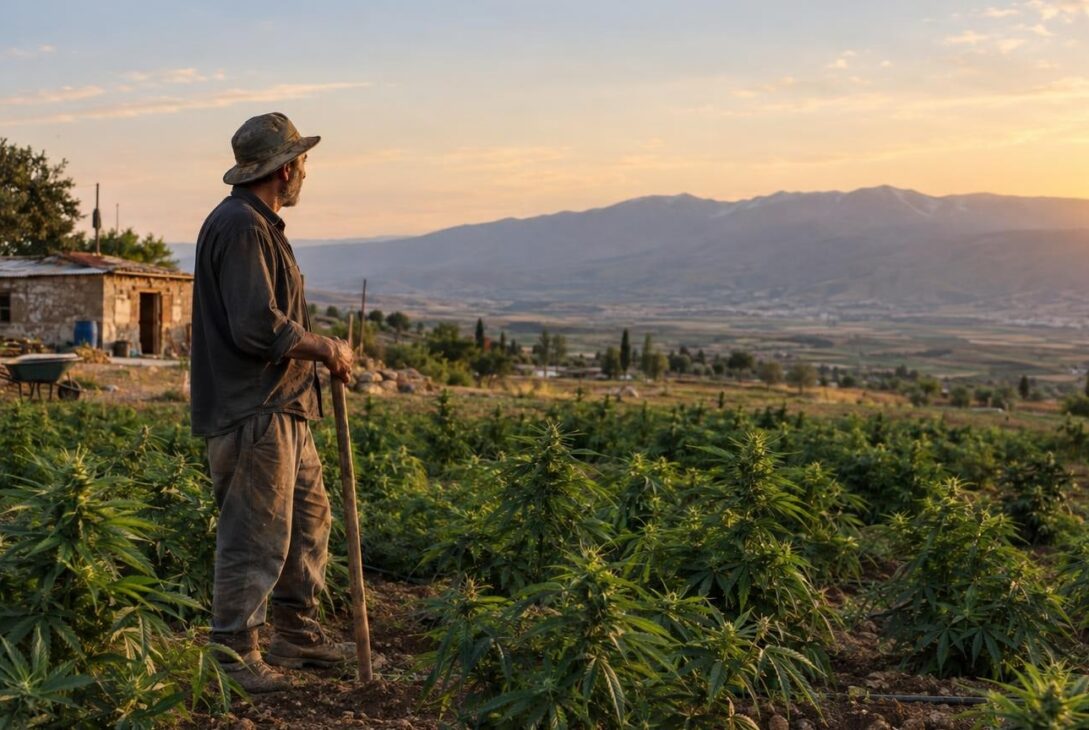
When a Bekaa Valley farmer who once grew grapes began planting cannabis to feed his children, he joined thousands of households turning to survival cannabis economies across Lebanon, Myanmar, and Afghanistan. These rural livelihoods reflect cash crop substitution under extreme economic stress, where cannabis functions as a critical cash crop for survival and strict prohibition or rigid commercialization can deepen household poverty, as field reporting shows Bekaa Valley farmers report.
Global data and field evidence support this pattern; the United Nations Office on Drugs and Crime notes related trends in its World Drug Report 2024. The article below examines the drivers of these economies, presents case studies, and outlines pragmatic policy implications for protecting livelihoods while reducing harm.
Survival cannabis economies in collapsing countries
Survival cannabis economies are informal cash markets where households grow and sell cannabis to survive. They provide rapid cash but increase income volatility and legal risk World Drug Report and local reporting from the Bekaa Valley documents uneven reform and informality Bekaa Valley farmers report.
Below we unpack how these systems form and why they spread.
How do survival cannabis economies form?
Survival cannabis economies form when households swap low return staples for faster cash through illicit or semi legal cultivation. These drivers are visible in the Bekaa, Sagaing and Afghan provinces below.
- Economic collapse prompts cash crop substitution as households chase faster income sources
- Currency shock and remittance collapse erode savings, driving risky crop decisions quickly
- Weak governance and enforcement gaps create space for informal cannabis cultivation rapidly
- Regional demand and higher returns per hectare incentivize farmers to switch crops
- Middlemen and market consolidation link growers to buyers, shaping local price structures
- Conflict related protection rents and armed group taxation distort incentives and security
UNODC’s Afghanistan survey estimated gross cannabis income at about US$3,900 per hectare Afghanistan cannabis survey 2009 PDF. Global trend data show shifting cultivation patterns and market pressure global drug trend data 2024.
Cannabis role in economic survival: Case studies
Survival cannabis economies emerge where formal work collapses and cash is scarce. The three cases below show how income incentives, weak governance, and market shifts shape local choices.
Lebanon Bekaa Valley
The Bekaa has long hosted hashish cultivation and reporting estimated roughly 35,000 people linked to farming and outstanding warrants Bekaa Valley amnesty report, 2018. Lebanon approved medical cannabis frameworks in 2020 but implementation and promised amnesty for smallholders remained uneven, keeping most production informal Lebanon reform and warrants assessment, 2021. Policy implication: reforms must combine amnesty, accessible licences, and farmer support to avoid penalising dependent households.
Myanmar Sagaing Region
After the 2021 coup and kyat collapse many Sagaing farmers shifted to cannabis where governance weakened; local reports indicate dried cannabis prices reached about 800,000 kyats per viss versus roughly 20,000 kyats per viss for betel nut, an indicative 40 fold gap that drove rapid adoption Sagaing cannabis price comparison, 2025. Policy implication: cash alternative programmes and market access are needed to prevent deeper criminal control.
Afghanistan rural provinces
Some Afghan farmers moved toward cannabis as opium market dynamics changed; UNODC noted cannabis resin could yield up to $7,400 per hectare versus about $2,200 per hectare for opium in 2021, making cannabis a viable substitute in some areas UNODC Afghanistan briefing, 2021. Policy implication: integrated crop diversification, targeted cash assistance, and harm reduction can protect livelihoods while reducing criminal exposure.
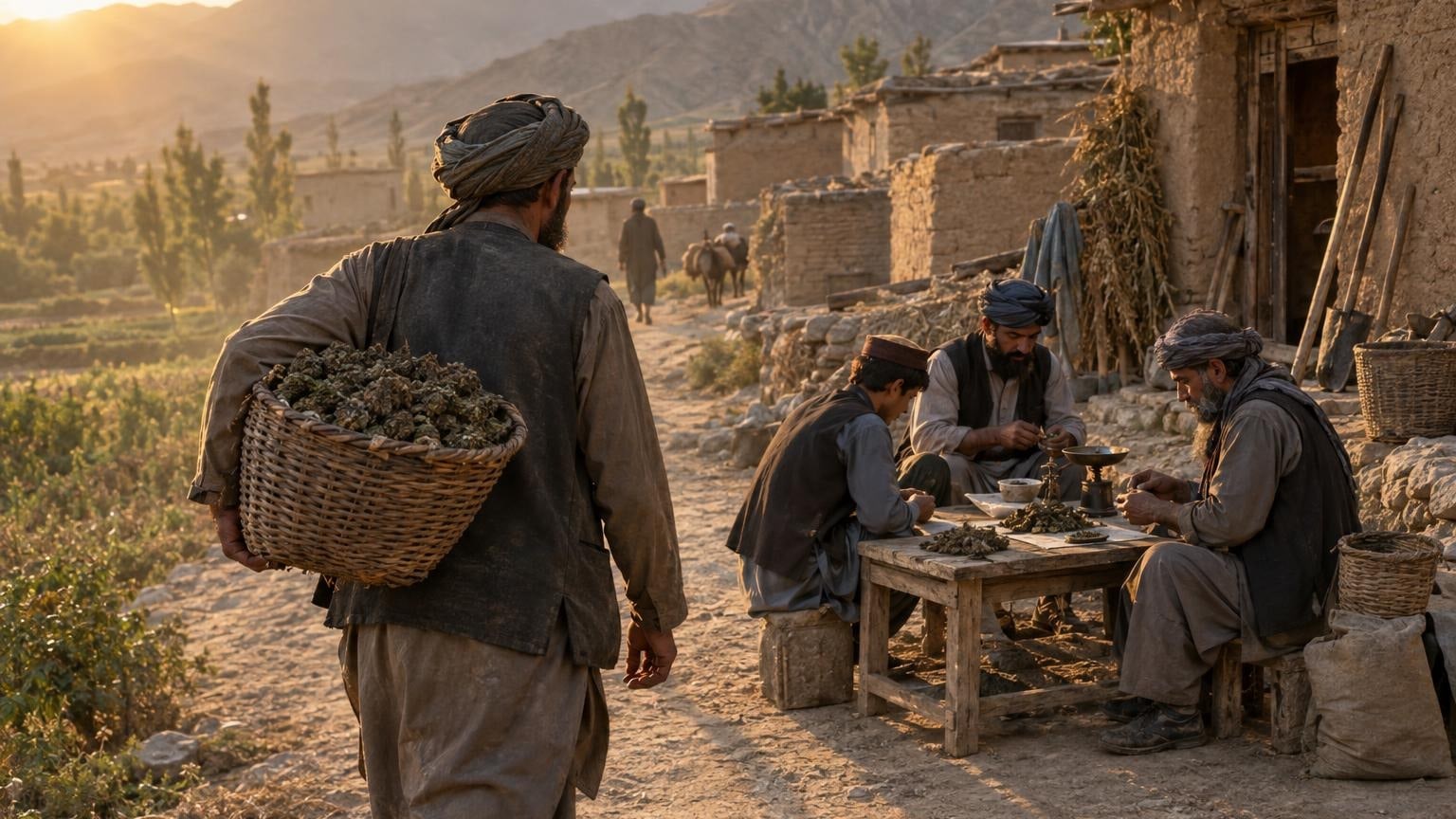
Economic Impacts of Survival Cannabis Economies
1: Three takeaways summarized with keywords income volatility and legal risk — cannabis brings rapid cash but exposes households to sharp income swings and prosecution.
2: Policy note about uneven legalization — inconsistent reform and enforcement can penalize dependent families unless paired with amnesty and support.
Survival cannabis economies deliver high short term incomes yet cause acute income volatility and legal risk for vulnerable households. Policymakers must balance immediate livelihood needs with protections that prevent deeper criminalisation and economic precarity.
| Country/Region | Employment | Income stability | Government stance | Social impact |
|---|---|---|---|---|
| Lebanon Bekaa Valley | Seasonal and yearround work; many smallholder families | High shortterm cash; very volatile | Medical program uneven; mixed enforcement | Supports survival; raises arrest risk |
| Myanmar Sagaing Region | Alternative cash for smallholders | Higher returns per unit; price and security volatile | Weak state control; armed groups exert influence | Embedded in conflict economy; displacement rises |
| Afghanistan rural provinces | Labour options; labour intensive seasons | Preserves cash flow amid crop shifts; unstable | Variable enforcement; periodic bans shift cultivation | Keeps families afloat; increases legal exposure |
CONCLUSION
Cannabis-based survival markets have filled gaps when jobs and public services vanish. They give rapid cash, local employment, and a basic safety net for many households in Lebanon, Myanmar, and Afghanistan. However, they also create legal risk, expose people to violence, and cause health harms.
Policy responses must recognize these twin realities. Therefore regulators should couple harm reduction with livelihood supports and flexible licensing. Moreover, sudden prohibition or rigid commercial legalization can deepen poverty and push cultivation further underground. As a result, careful, inclusive policy design matters.
For researchers and policymakers, the evidence calls for balanced debate and field-grounded solutions. To explore reporting and analysis on cannabis economies and policy, visit My CBD Advisor. Survival cannabis economies in collapsing countries demand that we weigh humanitarian needs alongside rule of law.
Stakeholders should fund local studies, support crop diversification, and design transitional legal regimes. International donors can help stabilise markets while governments build accountable regulation. Ultimately, humane interventions can reduce harm while preserving livelihoods.
Frequently Asked Questions (FAQs)
What are survival cannabis economies?
Survival cannabis economies are local, informal markets where households grow and sell cannabis to survive. They appear when formal jobs and markets collapse. Because cannabis yields higher returns than many staples, families adopt it quickly to buy food and pay bills. These systems mix livelihood logic with legal and safety risks.
Why do these economies form during state collapse?
They form because wages disappear, currencies collapse, and state services shrink. Moreover, legal voids and weak enforcement create space for cultivation. As a result, farmers switch to cannabis for faster cash. Demand across regions makes this shift practical, and intermediaries quickly build supply chains.
Are survival cannabis economies legal and how do governments respond?
Legality varies widely, and enforcement is often inconsistent. Some states pursue raids and arrests, while others explore regulated medical markets. However, sudden prohibition or strict commercialization can harm dependent households. Therefore many governments face a trade off between control and pragmatic amnesty or regulation.
What social and health risks do these economies create?
They expose people to violence, exploitation, and criminal networks. Also, limited healthcare and stigma increase public health harms. Consequently workers lack labor protections and injury support. Moreover, children and marginalized groups may face higher vulnerability in these informal systems.
Can policy balance livelihoods and law enforcement?
Yes, but it requires careful, inclusive design. Policies should combine harm reduction, transitional licensing, and cash livelihood supports. International aid can fund crop diversification and local research. Therefore balanced approaches reduce harm while protecting household incomes.