Hemp processing grants in Australia: quick overview
Hemp processing grants in Australia are unlocking capital for large scale decortication, fibre processing and value added manufacturing. For U.S. industry watchers and partners this matters because it highlights new export opportunities, potential investment partners and regional policy signals that affect cross border trade.
Recent awards include A$10 million to Ausuntech Pty Ltd near Carrathool and funding to Murray Industrial Hemp in Barham (project report on award recipients). These grants form part of the NSW Sustainable Communities Program, which ties funding to regional recovery after Murray-Darling Basin water buybacks (Sustainable Communities Program announcement). Projects focus on decortication and linen quality fibre processing, hempcrete block manufacture and textile export readiness, and they require power upgrades, planning approvals and grower partnerships. This guide explains recent awards, eligibility, project profiles and practical next steps.
Hemp Processing Grants in Australia
Hemp processing grants in Australia are government awards that fund construction and equipment for hemp decortication, fibre processing and value-added manufacturing. They aim to boost regional jobs, scale domestic processing capacity and support exports, because they reduce capital barriers for processors and encourage sustainable rural investment.
What are Hemp Processing Grants?
Hemp processing grants are targeted government awards that fund capital costs and project development for hemp processing plants. They lower upfront barriers by covering equipment, site works and compliance expenses so projects can scale faster.
Programs focus on decortication, fibre processing, value added manufacturing and regional economic development. Grants support industrial hemp processing, linen quality fibre, hempcrete production, textile lines and export readiness as a result.
Eligibility criteria
- Australian registered business, cooperative or joint venture with verified governance.
- Projects must show clear regional economic benefits and local job creation.
- Evidence of matched funding or co investment preferred by assessors.
- Detailed business case, budget and milestone schedule required.
- Planning, environmental and land access approvals must be addressed.
- Financial records, tax registration and governance documents necessary.
- Strong grower, processor or offtake partnerships improve competitiveness.
Common uses
- Purchase and install decortication and fibre processing lines for linen quality fibre.
- Upgrade power, transport and storage infrastructure for high throughput handling.
- Establish value added production lines such as hempcrete blocks and pelletising.
- Build textile processing, spinning and finishing lines for export markets.
- Fund compliance systems, testing labs and product certification activities.
- Invest in drying, baling and logistics to preserve fibre quality during transport.
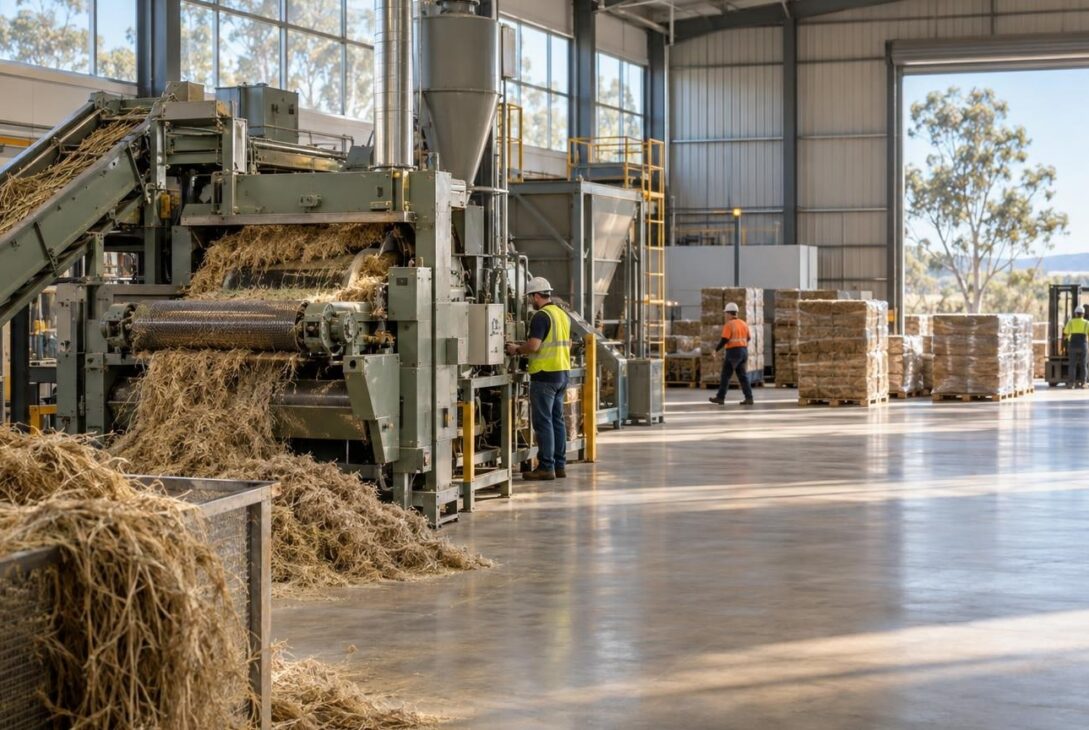
Example: Ausuntech received A$10 million under the Sustainable Communities Program to build a large linen quality hemp fibre facility at Gundaline Station Sustainable Communities Program announcement. Award: A$10 million; intended output: process up to 20,000 metric tons of hemp per year to produce about 4,000 tonnes of fibre coverage of fibre facility award. This example shows how grants fund decortication equipment, plant upgrades and regional employment.
How to Apply for Hemp Processing Grants in Australia
Assess eligibility and fit
- Check your business entity, project location and minimum project size.
- Confirm the program requires regional benefits and job creation to qualify.
Gather legal and financial documents
- Assemble business registration, tax records and recent financial forecasts.
- Include governance papers, letters of support and evidence of matched funding.
Build a concise business case and budget
- Outline scope, timeline, capital needs and clear milestones.
- Add a sensitivity analysis to show risk mitigation and conservative forecasts.
Confirm site, planning and environmental approvals
- Identify required permits, land access and utility plans early.
- Resolve potential planning delays before submitting your application.
Line up partners and offtake agreements
- Secure grower contracts, equipment suppliers and buyers to prove market demand.
- Strong partnerships reduce delivery risk and score higher in assessments.
Submit, track and manage the grant
- Submit early through the portal and monitor correspondence with the program officer.
- Prepare systems for milestone reporting, audits and co funding drawdowns.
Typical timeline
Application → Decision → Project completion: 2–3 months → 1–6 months → 12–36 months (example ranges; check specific grant rules).
See program details and timelines in the Sustainable Communities Program guidelines and the Business and Industry Round FAQs for exact dates and requirements: Sustainable Communities Program guidelines and Business and Industry Round FAQs.
Checklist for success
- Clear conservative budgets and realistic milestones.
- Letters of support from local councils and growers.
- Confirmed matched funding or investor commitments.
- Demonstrated regional jobs and environmental benefits.
Common pitfalls
- Planning delays and unresolved permits.
- Over optimistic revenue forecasts that weaken credibility.
- Missing or inadequate matched funding evidence.
Comparison of Major Hemp Processing Grants in Australia
| Grant Name | Funding Amount | Eligibility Criteria | Application Deadline / Status | Purpose | Notes | Source / Link |
|---|---|---|---|---|---|---|
| NSW Sustainable Communities Program — Economic Development and Infrastructure Round | A$69 million (Round 2 total) | Australian registered businesses or consortia in the southern Murray Darling Basin; must demonstrate regional benefits and job creation and matched funding where possible | Applications closed for Round 2; applicants notified from 30 June 2026; projects must complete by 31 May 2029 | Fund infrastructure and processing plants to increase domestic hemp processing and support sustainable regional economies | Round total shown; individual grant sizes vary | Source |
| NSW Sustainable Communities Program — Business and Industry Round | A$50 million (round total) | Businesses and industry projects that scale local industry and support employment; project viability and supply chain benefits required | Opened 10 June 2026; closed 3 August 2026 | Support business growth, equipment investment and industry scale up including value added hemp processing | Program level funding; individual grants typically A$100,000 to A$5,000,000 | Source |
| Ausuntech Pty Ltd award (Gundaline Station) | A$10,000,000 awarded | Successful private company recipient under the Sustainable Communities Program for a large scale processing project | Award announced June 2026 | Build a linen quality hemp fibre processing facility to process up to 20,000 metric tons annually and support regional employment | Explicit award amount confirmed; funds allocated to plant, power upgrades and specialised equipment | Source |
| Murray Industrial Hemp Pty Ltd (Barham) | Amount part of round totals; reported as A$ support in June 2026 | Identified as a regional recipient under Round 2; must demonstrate local jobs and supply chain benefits | Award announced June 2026 | Develop a hemp processing precinct for construction materials and value added lines | Reported as supported through Round 2; exact individual award amounts described by local reporting | Source |
Notes
- Row notes clarify whether amounts are awarded or part of round totals.
- Dates standardized to day month year format such as 30 June 2026.
- Source links provided in the table point to program pages and reporting for verification.
Australian Hemp Industry Funding Resources
The NSW Sustainable Communities Program outlines funding streams that supported 14 regional projects worth A$69 million. It explains eligibility rules, typical grant sizes and priority outcomes, therefore showing how infrastructure and processing proposals qualify. Consult the full program page for application guidance and funding criteria: NSW Sustainable Communities Program details.
The NSW Hemp Industry Development Plan ministerial release frames longer term policy for investment and processing capacity. It highlights support for value added facilities, licensing reform and research because the government aims to scale a domestic hemp sector. Read the announcement and key policy measures here: NSW Hemp Industry Development Plan announcement.
Together these authoritative resources show program priorities, reporting obligations and expected timelines. In addition they clarify environmental and regional benefit requirements that strengthen competitive applications. Use them early when you build your business case and project budget because matching program language improves scoring.
Also consult local council pages and reach out to program officers early. Doing so helps resolve planning and water access questions. As a result your application will show realistic delivery paths and credible timelines.
CONCLUSION
Hemp processing grants in Australia offer targeted funding for equipment, decortication and value added lines. They reduce upfront capital needs and therefore speed project delivery for processors and regions. Recent awards such as the A$10 million grants to Ausuntech and MIH illustrate this policy in action.
Because grants are tied to regional benefits and environmental programs, they also support sustainable local recovery. Processors should build clear business cases, secure grower contracts, and confirm planning approvals early. To improve success rates, applicants must show jobs created, matched funding and measurable environmental outcomes.
Use authoritative program pages and local program officers to confirm deadlines and reporting obligations. For practical guides and regional analysis visit MyCBDAdvisor and sign up for updates. Act now to position your project for funding.
Frequently Asked Questions (FAQs)
What are hemp processing grants in Australia?
Hemp processing grants in Australia are government funds awarded to build processing capacity and value added lines. They cover equipment, site works and compliance costs, and therefore reduce capital barriers for processors. As a result, grants help scale domestic hemp industry funding and create local jobs.
Who can apply for these grants?
Typically Australian registered businesses, consortia or cooperatives may apply. In addition programs often require clear regional benefits, matched funding proof and a robust business case. Applicants must meet program specific eligibility and provide governance documents.
What costs do grants usually cover?
Grants commonly fund machinery, decortication lines and site upgrades. They also support infrastructure such as power, storage and transport because these lower operational risk. However operational expenses are rarely funded, so applicants should show other funding sources.
How competitive are applications and how do I boost my chances?
Grant rounds are competitive because many projects seek similar support. To improve success, show offtake agreements, grower contracts and measurable regional employment outcomes. In addition align your proposal with program priorities and provide conservative financials.
What reporting and delivery obligations follow an award?
Successful recipients must meet milestone reporting, audits and co funding conditions. They must also confirm planning and environmental approvals before drawdowns. Therefore prepare systems for clear record keeping and timely milestone delivery.