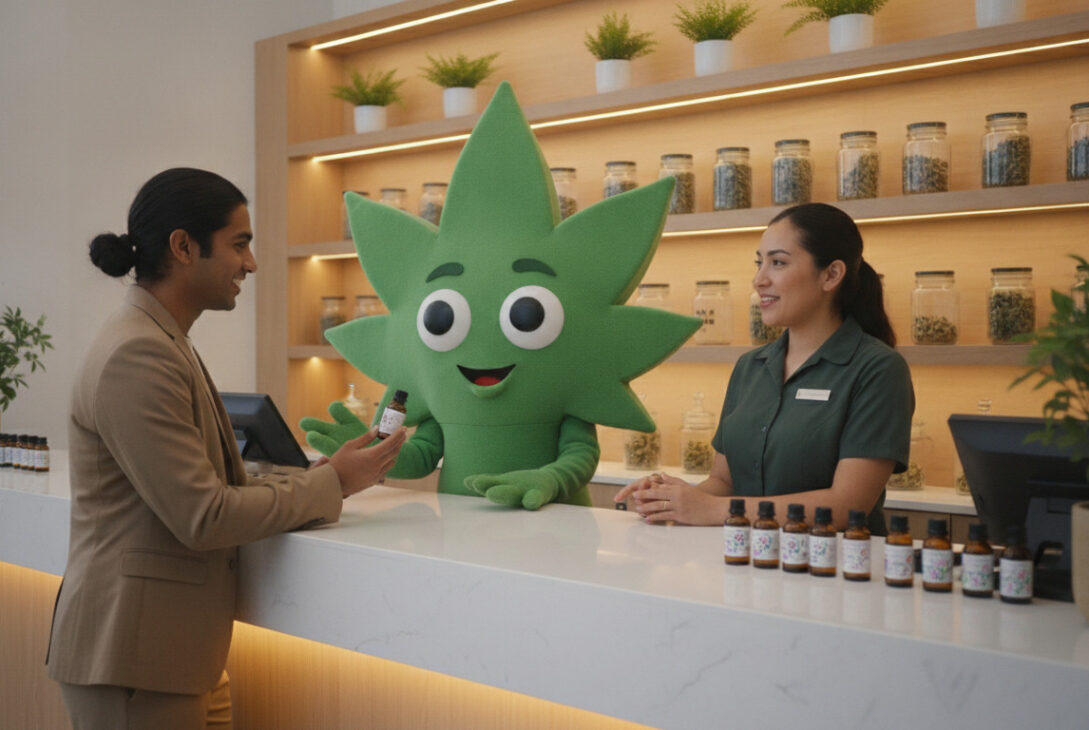
AI-assisted cannabis shopping is reshaping how people discover and choose products online. Across the country, shoppers now ask AI assistants for product suggestions and dosing ranges before they visit a menu. As a result, the sale begins earlier in the journey.
These AI tools include chatbots and large language models like ChatGPT and Gemini. They often pre-qualify customers by shaping category, format, and dose preferences. Therefore retailers must present clear product categories and structured data to guide both AI and shoppers.
For dispensaries, this shift changes the role of menus and education. Because AI forms expectations earlier, menus act as pre-click merchandising. Budtenders still matter, however, since staff validate or correct AI suggestions in store.
This article explains how to make menus AI-ready while staying compliant and helpful. It offers practical steps on content, metadata, and product pages so teams can serve smarter shoppers.
We draw on industry data and best practices to show tangible changes. As a result, teams can prioritize tasks that improve discovery and conversion.
What is AI-assisted cannabis shopping?
AI-assisted cannabis shopping uses AI tools like chatbots and large language models to recommend products. It can suggest formats, dose ranges, and use occasions before shoppers reach a dispensary menu. It matters because AI pre-qualifies needs, shapes expectations, and speeds discovery.
Retailers must provide clear product data and education so AI answers stay accurate and compliant, and staff can validate recommendations.
Benefits of AI-assisted cannabis shopping
AI-assisted cannabis shopping brings practical advantages for shoppers and retailers alike. It helps match products to preferences, speeds product discovery, and reduces friction. Therefore dispensaries that optimize menus and metadata gain clearer signals for AI systems.
Personalized recommendations
AI tools analyze user prompts and context to suggest formats, dose ranges, and use occasions. For consumers, this means quicker matches and fewer returns. For example, AI can narrow choices based on desired onset time and format.
Improved product discovery and conversion
Because AI often pulls from product metadata, retailers that provide rich, searchable attributes see better placement. Adobe found AI referrals drive higher-value visits, which matters for revenue and engagement: Adobe Digital Insights Quarterly Report.
- Increases relevant search results
- Raises conversion by pre-qualifying intent
Safety insights and compliance support
AI can highlight lab results, cannabinoid content, and recommended dose ranges when available. Therefore customers make more informed choices, and staff can validate or correct AI suggestions.
Retail teams should follow product structured data guidance to feed accurate answers to AI systems: Google Structured Data Product Guidance.

How AI-assisted cannabis shopping works
AI-assisted cannabis shopping guides discovery by combining user prompts, product data, and local inventory into actionable suggestions. By narrowing formats, dose ranges, and use occasions early, AI shapes expectations before a shopper reaches a menu. Therefore retailers must organize menus and metadata so AI answers remain accurate and reduce friction. This process changes where the sale begins and how menus perform.
- Ask detailed, contextual questions about desired effects, timing, and experience so AI-assisted cannabis shopping tailors recommendations to real needs.
- Provide curated product matches by format, cannabinoid ratios, and onset expectations, therefore narrowing choices for faster discovery.
- Analyze product metadata, lab certificates, and user history to avoid mismatches and keep AI suggestions compliant.
- Retrieve live price, availability, and local pickup or delivery details so AI-assisted cannabis shopping shows accurate, actionable options.
- Rank and filter results using relevance, reviews, onset times, and price, thereby surfacing the most suitable products first.
- Present concise dosing ranges, format notes, and expected onset, however avoid medical claims and advise consulting staff.
- Validate recommendations with budtenders or verified third-party data so customers get clarity and staff can correct AI assumptions.
Comparison of Top AI-assisted Cannabis Shopping Tools
| Tool Name | Key Features | Pricing | User Ratings | Availability |
|---|---|---|---|---|
| LLM Assistant (Chat-powered) | Personalized recommendations, natural-language Q A, dose-range suggestions, integrates with structured data | Free tier; $49–299/mo for retailers | 4.2/5 average | Widely available via web and API |
| Inventory-Aware Menu Bot | Live inventory sync, price and availability, local pickup and delivery, age-gate support | $99–499/mo; enterprise pricing | 4.0/5 average | Best for multi-location retailers |
| Retail AI Concierge (SaaS) | Curated bundles, review aggregation, lab result linking, staff handoff tools | $199–999/mo depending on scale | 4.4/5 average | SaaS with POS and e-commerce plugins |
| Search-Driven Recommender | Product structured-data parsing, SEO-focused answers, fast indexing | One-time setup + $79/mo | 3.9/5 average | Ideal for online-first dispensaries |
| In-Store Kiosk AI | Touchscreen guidance, budtender assist mode, QR follow-up links | Hardware plus $59/mo software | 4.1/5 average | Suitable for retail locations only |
Challenges and Future of AI-assisted cannabis shopping
AI-assisted cannabis shopping adds convenience, however it faces real limits on accuracy, privacy, and compliance. Vendors and retailers must manage data carefully because laws and expectations vary by state. Therefore teams should treat AI as an assistive tool, not a substitute for staff expertise.
Key challenges
- Privacy and data handling. AI systems often use personal data. Regulators remind businesses to obtain and secure data lawfully. See FTC guidance.
- Accuracy and hallucination. Large language models can produce incorrect or misleading answers. NIST stresses managing validity and reliability in AI systems: NIST AI Risk Management Framework.
- Fragmented product data. Inconsistent metadata and missing lab links cause mismatches and poor recommendations.
- Regulatory complexity and age gating. State rules differ, and AI must avoid making medical claims. Retailers must enforce age verification and local compliance.
- Integration and speed. Slow scripts, third-party frames, and poor structured data create friction and lost conversions.
Future trends
Standardized structured data, verified lab feeds, and better budtender handoffs will improve outcomes. Additionally, federated learning and on-device processing may reduce privacy risk. As a result, retailers should audit menus, fix metadata, and monitor AI referrals to stay competitive.
CONCLUSION
AI-assisted cannabis shopping is changing the retail funnel by moving discovery earlier and making menus central to conversion. Therefore dispensaries must optimize product data, metadata, and staff handoffs to serve smarter shoppers.
AI brings speed and personalization, however human budtenders still validate and correct recommendations. As a result, teams should treat AI as a partner not a replacement. Retailers that balance clear education and compliance will gain trust and better outcomes.
Start with simple audits, monitor AI referrals, and iterate on structured data and product pages. For practical guidance and cannabis education resources and menu audits visit cannabis education resources and menu audits. Start small and measure results regularly. Explore confidently, and focus on clarity, compliance, and customer service.
Frequently Asked Questions (FAQs)
What is AI-assisted cannabis shopping?
AI-assisted cannabis shopping uses AI chatbots and models to recommend products based on user prompts and inventory. It narrows formats, dose ranges, and use occasions before shoppers view a menu. As a result, discovery happens earlier in the funnel, and consumers find relevant products faster. Use structured data and clear categories to improve AI results and merchandising.
Is AI-assisted cannabis shopping safe and private?
AI-assisted cannabis shopping can respect privacy if retailers secure and limit data use. However AI systems may collect personal preferences and purchase intent. Therefore retailers should minimize retention, use strong encryption, and post clear privacy policies. Check vendor privacy practices before sharing personal details online.
How accurate are AI product recommendations?
AI recommendations vary because model accuracy depends on data quality and scope. If product metadata, lab links, and inventory are current, AI gives reliable matches. However models can hallucinate or misinterpret vague queries, so verify outputs. Collect user feedback to fine tune recommendations and improve trust over time.
How can dispensaries prepare for AI-assisted cannabis shopping?
Dispensaries should audit menus, product pages, and location content first. Then update structured data for price, availability, cannabinoids, and lab results. Because slow scripts and age gates create friction, optimize speed and verify embeds. Measure AI referrals and iterate monthly to improve discovery and conversion metrics.
Will AI replace budtenders?
AI-assisted cannabis shopping will not replace budtenders. Instead it shapes customer questions and speeds discovery before store entry. Human staff clarify intent, correct AI errors, and provide in-person compliance checks. They also help build trust when staff confirm suggestions and guide safer purchases.
Related on CBD Advisor
- How Safe Is Cannabis Camping On The Trail
- Can AI-powered dispensary boost margins and loyalty
- Can AI in the cannabis industry cut costs