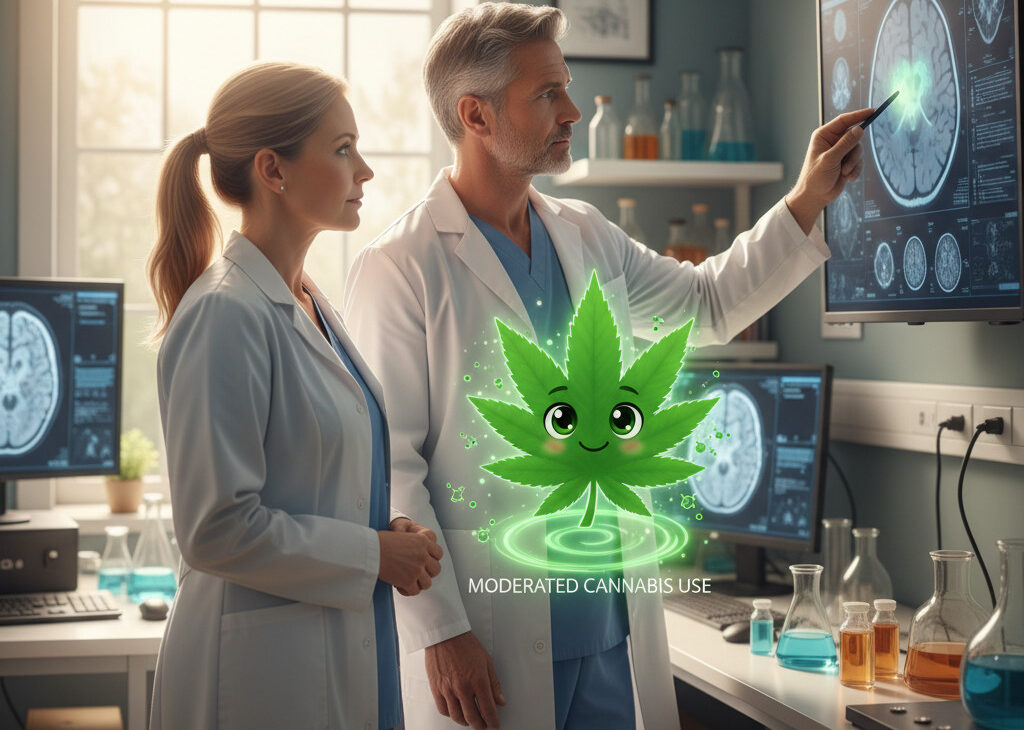
Cannabis use and cognitive function in adults aged 40-77
Cannabis use and cognitive function in adults aged 40-77 has moved from niche curiosity to mainstream concern. As more people in midlife and early older age experiment or return to cannabis, interest grows about how cannabis consumption affects thinking and memory. Research now asks whether moderate use, high use, or lifetime exposure shapes brain volume and cognitive function.
This age range matters because brains change in subtle ways from 40 onward. Therefore, midlife and early older age represent a window when small declines can signal future risk. At the same time, many adults in their forties to seventies still work, drive, and care for family. As a result, understanding dose-dependent effects and real world outcomes feels urgent.
In this article we translate key findings from a large UK Biobank-linked study. First, we explain what the data show about brain regions like the amygdala and cognitive tests such as visual memory and learning. Then, we highlight caveats about patterns of usage and measurement. Finally, we offer a balanced view so readers can weigh evidence about moderation, potential benefits, and aging risks.
Cannabis use and cognitive function in adults aged 40-77
Recent research offers new scientific insight into how cannabis relates to thinking and memory in middle aged and older adults. Interest has grown because many people in this age group now use cannabis for medical or recreational reasons. The largest study to date used data from 26,362 UK Biobank participants to look at brain volume and cognitive tests.
Researchers at the University of Colorado Anschutz analyzed lifetime cannabis estimates and grouped participants into no use, moderate use, and high use. Their press release summarizes key findings and methods, and you can read it here: CU Anschutz Press Release. Media coverage also reported the results and context: Clear Health Life Article. However, the team noted limits because they lacked detailed patterns of day to day usage and product types.
Key cognitive functions affected include
- Working memory: moderate use associated with preserved performance and larger volumes in many brain regions, according to the study. This suggests maintained cognitive function with certain cannabis exposure.
- Visual memory and learning: high use showed benefits on some measures. This was especially true for visual memory and learning, likely reflecting dose dependent effects.
- Processing speed and attention: moderate use linked with small improvements, yet results varied across tests and regions.
- Executive function and risk for decline: larger brain volumes do not always equal better outcomes. In aging, context matters because neurodegeneration and atrophy can alter interpretation.
In sum, evidence points to complex, dose dependent relationships between cannabis consumption and cognitive function. Therefore, clinicians and researchers call for cautious interpretation. They also want studies that capture usage patterns, product potency, and long term outcomes. Related keywords include cannabis consumption, brain volume, amygdala, dose dependent effects, moderate use, and neurodegeneration.

Factors Influencing Cannabis Effects on Cognition in Adults
Understanding why cannabis affects people differently requires attention to many factors. Below we outline the main influences on cognitive outcomes for adults between 40 and 77. We use clear, evidence oriented language and keep points short for busy readers.
Dosage and frequency
Dose and how often someone uses cannabis shape its cognitive effects. In the UK Biobank study, researchers grouped lifetime use to approximate dose dependent effects. Therefore, moderate use often linked with preserved brain volume and cognitive performance, while high use showed mixed results.
- Amount per session matters because higher THC can cause stronger acute effects
- Lifetime exposure matters because cumulative use may alter long term outcomes
- Frequency affects recovery; daily use may leave less time for the brain to normalize
Strain, potency, and cannabinoids
Different products produce different effects. For example, THC tends to be psychoactive, while CBD may counter some effects.
- THC percent and chemovar influence memory and attention
- CBD content can modulate anxiety and inflammation, therefore potentially change cognitive outcomes
- Unknown product purity adds measurement uncertainty
Age, baseline cognition, and brain health
Older adults often face subtle cognitive shifts. Thus cannabis may interact with existing age related processes.
- Pre existing cognitive baseline predicts how much change occurs
- Brain volume and neurodegeneration alter interpretation of larger or smaller regions
- Midlife status matters because small declines can forecast later risk
Medical conditions and medications
Health status changes how cannabis acts. As a result, people on certain drugs may see drug interactions.
- Neurological conditions can amplify or mask effects
- Prescription drugs may interact with cannabinoids, therefore changing efficacy or side effects
- Chronic illnesses and sleep problems shape cognitive resilience
Method of use and timing
How and when people consume cannabis changes outcomes. Smoking, vaping, or edible use each produce different onset and duration.
- Fast onset routes produce stronger acute cognitive impairment
- Slow onset edibles may produce longer, subtler effects
- Timing relative to tasks like driving or work matters for safety
In sum, cannabis consumption does not act in isolation. Instead, dose, product type, user age, baseline brain health, and medical context all determine cognitive outcomes. Therefore, researchers call for studies that measure these factors more precisely to clarify real world risks and benefits.
Comparative Table of Cognitive Effects of Cannabis Use in Adults Aged 40-77
| Category | Study or Source | Cognitive Domain | Brief description |
|---|---|---|---|
| Positive | University of Colorado Anschutz analysis of UK Biobank (26,362 participants) | Working memory and general cognition | Moderate use associated with larger brain volumes and improved performance in several tests. |
| Positive | University of Colorado Anschutz analysis of UK Biobank | Right amygdala volume and visual memory and learning | High use group showed best outcomes for right amygdala volume and visual memory on some measures. |
| Neutral | Multiple research sources and aging context | Brain volume interpretation | Larger brain volumes may reflect preserved tissue in aging, not always better function. |
| Negative | Methodological limits in UK Biobank analysis | Generalizability and causal inference | Lack of detailed usage patterns and product potency data limits firm conclusions. |
Conclusion
Cannabis use and cognitive function in adults aged 40-77 requires a nuanced view. Research shows complex, dose dependent relationships. Therefore, moderation often appears beneficial, yet high use shows mixed advantages for certain domains.
Key takeaways include
- Moderate cannabis consumption linked with larger brain volume and preserved working memory in some studies.
- High use showed better outcomes for right amygdala volume and visual memory on specific tests.
- Methodological limits mean causation remains unclear, and more precise measures are needed.
In sum, stay informed, consult trusted sources, and discuss cannabis use with healthcare professionals. Thoughtful, evidence based decisions will best protect cognitive health through midlife and beyond.
Frequently Asked Questions (FAQs)
Does cannabis use harm thinking and memory in adults 40-77?
The short answer is not simple. Research shows complex, dose dependent relationships. For many measures, moderate use linked with preserved brain volume and better working memory. However, high use had mixed benefits for visual memory and the right amygdala. Because researchers lacked fine details about patterns and potency, causation remains unclear. Therefore talk to your doctor before making choices.
Which cognitive skills does cannabis affect?
Studies point to working memory, visual memory, processing speed, and attention. Moderate use often associates with preserved working memory. At the same time, high use showed advantages in visual learning in some tests. Overall effects vary by test and brain region.
Do dose and frequency change outcomes?
Yes. Dose and frequency shape effects strongly. Moderate lifetime exposure often links to better outcomes. Conversely daily heavy use may reduce recovery time and raise risk. As a result, researchers describe dose dependent effects.
Can cannabis prevent dementia or age related decline?
No clear evidence supports prevention. Larger brain volumes may reflect preserved tissue in aging rather than protection. Therefore researchers urge caution and call for long term trials. Discuss risks with a healthcare professional.
How can adults use cannabis more safely if they choose to?
Start low and go slow. Prefer products with balanced cannabinoid profiles. Avoid operating vehicles while impaired. Also track dose, frequency, and interactions with medications. Finally consult your clinician for personalized advice. Stay curious and informed.