
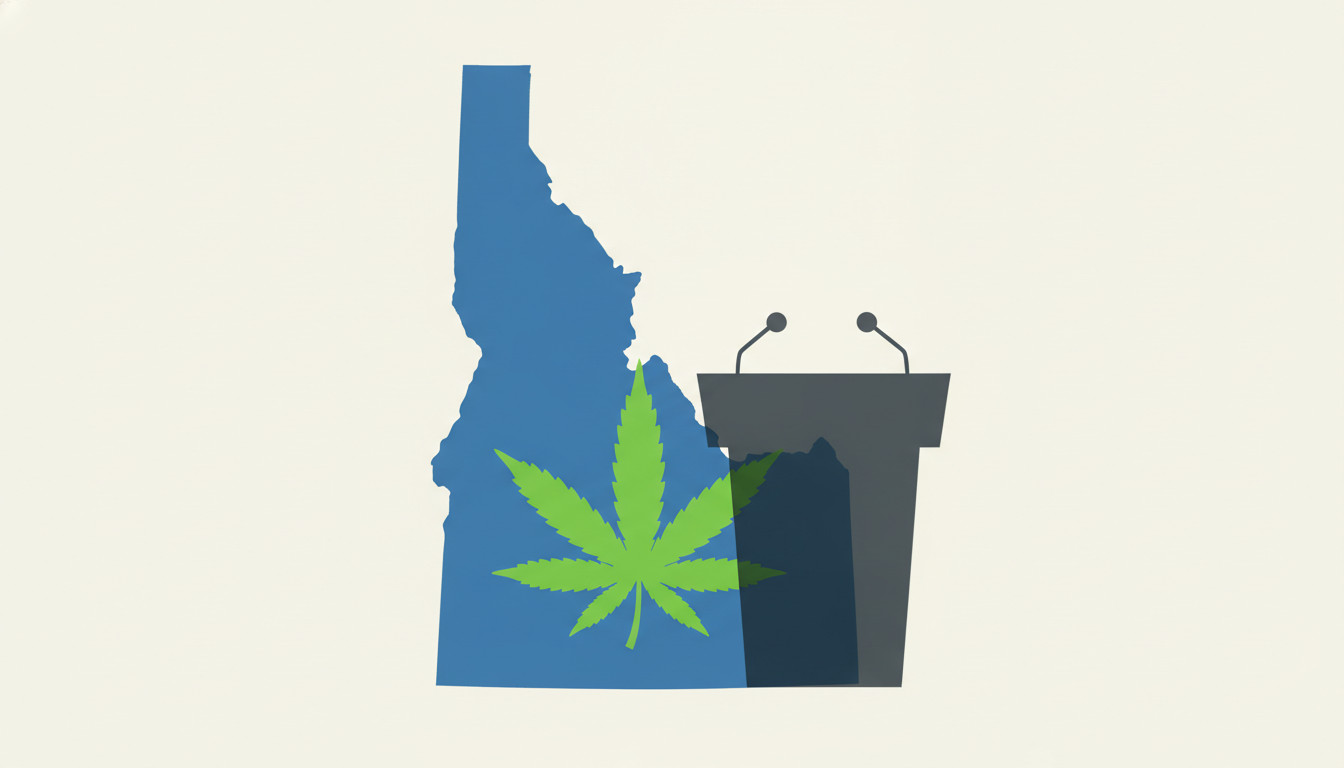
A proposed constitutional amendment would bar citizen initiatives from legalizing marijuana and other psychoactive substances, giving the Idaho Legislature exclusive authority. The Idaho ballot measure to limit cannabis legalization to lawmakers would remove the citizen initiative route for medical cannabis and recreational reforms if voters approve it.
One patient who backed the medical petition said, “My doctor told me cannabis is the only thing that helps my pain,” a remark advocates say highlights the stakes for people seeking care. Campaign organizers submitted signatures for a medical cannabis petition, according to a report on medical cannabis petition signatures, and the Idaho Secretary of State initiatives page shows the amendment language and qualification process. Read “What the Idaho ballot measure entails” for a concise breakdown of how the change would work, who it affects, and likely legal conflicts.
Direct answer
The proposed constitutional amendment would make the Idaho Legislature the exclusive authority to legalize marijuana and other psychoactive substances, removing the citizen initiative route. It matters because the change shifts policymaking power from voters to lawmakers, could block a concurrent medical cannabis petition and trigger legal disputes, and would leave implementation timelines and regulatory choices to the Legislature and the courts; see the Idaho Secretary of State initiatives page and the cannabis policy overview.
What the Idaho ballot measure entails
The proposed constitutional amendment would assign sole authority to the Idaho Legislature to legalize, decriminalize, or regulate marijuana and other psychoactive substances. It removes the citizen initiative process as a route for future legalization measures and raises questions about how existing and future statutes interact with voter-enacted laws.
Ballot text highlights
- Legislature exclusive authority to legalize or decriminalize marijuana, medical cannabis, narcotics and other psychoactive substances.
- Citizens would be barred from using the initiative process to enact legalization or related reforms.
- The amendment does not explicitly repeal current statutes but could supersede citizen-passed laws and invites judicial review on conflicts.
How the measure works
- The amendment changes the state constitution so only the Legislature may adopt legalization statutes, shifting political accountability to lawmakers.
- Support and opposition statements appear in the official ballot packet so voters see competing views when they decide.
Timeline & process
- Petition circulation, signature verification and county clerk reviews follow Idaho’s initiative filing rules and the signature threshold requirements; see official guidance at the Secretary of State’s initiatives page and filing rules for details here and here.
- After verification the Secretary of State certifies qualifying measures for the general election ballot, typically placed on the November ballot following certification.
Legal implications and conflicts
- Could preempt citizen initiatives and block direct voter enactment on covered substances.
- If a medical cannabis initiative and this amendment both pass, courts would likely resolve competing outcomes; see the FAQ on competing measures What happens if a medical cannabis initiative and this amendment both pass?.
- Judicial review is likely to address retroactivity, enforceability and whether existing statutes remain in effect.
State comparison of legalization approaches
| State | Approach | Decision makers | Legalization status | Impact on consumers |
|---|---|---|---|---|
| Idaho | Constitutional amendment to limit cannabis legalization to lawmakers | Idaho Legislature would have exclusive authority if amendment passes | Recreational cannabis remains illegal; medical access contested via citizen initiative efforts | Would remove citizen-initiative route for legalization and could delay or block patient access; possible legal conflicts if competing measures pass (source) |
| Colorado | Voter-led ballot initiative (Amendment 64, 2012) | Voters adopted the constitutional amendment; regulators implement rules | Legal for adult recreational use since 2012 | Consumers gained regulated retail access and testing; taxes and rules apply; voter initiative initiated rapid market development (source) |
| Vermont | Legislative action (H.511/Act 86, 2018) | State Legislature passed reforms; governor signed into law | Decriminalized and later moved toward regulated adult use through laws passed by legislators | Consumers saw policy change without a ballot initiative; gradual policy rollout and legislative control over regulations (source and source) |
Impact of restricting cannabis legalization to lawmakers
Idaho ballot measure to limit cannabis legalization to lawmakers
The Idaho ballot measure to limit cannabis legalization to lawmakers could reshape who decides drug policy. For voters, the biggest change would be losing direct ballot access for legalization reforms. Therefore, citizens could no longer place medical or recreational cannabis measures on the ballot.
For lawmakers, the amendment would centralize responsibility and political accountability. As a result, legislators would debate and vote on legalization measures in public hearings. Moreover, this could politicize health and criminal justice decisions during election years.
For patients and consumers, impacts could be significant. If the measure passes, patients might face delayed access to medical cannabis. In contrast, states that used ballot initiatives often created faster paths to regulated markets.
Market and legal effects
- Regulated market development may slow, because only legislators set rules and timelines.
- Businesses could see greater uncertainty, because laws may change with session cycles.
- The illicit market might persist if legal access stalls, reducing public health benefits.
- Legal challenges are likely if competing measures both pass, prompting judicial review.
Research and expert context support these risks. Studies show that ballot initiatives and legislative reforms produce different policy outcomes and implementation speeds. See the National Conference of State Legislatures cannabis overview for comparisons and policy detail: National Conference of State Legislatures cannabis overview. For research comparing ballot-driven and legislative legalization, see the American Journal of Public Health analysis: American Journal of Public Health analysis.
CONCLUSION
The Idaho ballot measure to limit cannabis legalization to lawmakers would transfer decision making from voters to the Legislature. Therefore, it alters how Idaho addresses marijuana, narcotics, and other psychoactive substances.
This change could slow access for patients and consumers, increase legal uncertainty, and concentrate political responsibility in the Capitol. However, if a citizen medical cannabis initiative also wins, courts may need to sort conflicts. As a result, implementation timelines and market development could remain unclear for months.
Readers should watch November outcomes and possible court challenges closely. For ongoing coverage and analysis, visit myCBDadvisor for updates and resources.
Frequently Asked Questions
What does the amendment change
The amendment would rewrite the state constitution to give the Idaho Legislature exclusive authority to legalize marijuana and other psychoactive substances. If adopted, citizens could not use ballot initiatives to enact legalization or decriminalization laws.
- Key point: Transfers decision making from voters to lawmakers.
- Key point: Applies to recreational and medical marijuana policy and other substances.
How would citizen initiatives and patients be affected
Voters would lose the initiative route, which reduces grassroots options for medical marijuana reform and other drug policy changes. Ballot certification and petition campaigns would still occur, but successful certification would no longer let voters adopt legalization laws.
- Key point: Campaigns must shift from ballot drives to legislative lobbying.
- Key point: Patients may face slower access because lawmakers often move more slowly than ballot-driven reforms.
What if a medical cannabis initiative and the amendment both pass
Conflicting results would likely trigger lawsuits and judicial review to determine which law controls. Courts could delay implementation, creating months of uncertainty for regulators, patients, and businesses.
- Key point: Legal fights are probable and timelines become unclear.
- Key point: Medical marijuana access could be stalled during litigation.
How could markets and enforcement change
With lawmakers in sole control, policy timing and regulatory details would follow legislative calendars rather than voter mandates. That can slow market creation, increase uncertainty for businesses, and prolong unregulated markets.
- Key point: Regulatory rollout may be gradual and politically driven.
- Key point: Public health protections like testing can be delayed.
When will voters decide and where is the official language
Ballot timing depends on certification steps and election rules; check official deadlines and petition status on the Idaho Secretary of State calendar. Read the exact amendment text and campaign filings at Idaho Secretary of State — initiatives and confirm deadlines at Idaho election calendar.
- Key point: Watch both petition certification and election deadlines closely.
- Key point: Official sources provide the authoritative ballot language and certification status: Idaho Initiatives and Amendments and Idaho Election Calendar.
Related on CBD Advisor
- Will Idaho resolution to reject medical cannabis legalization pass
- Will Idaho medical cannabis ballot initiative signatures pass
- How cannabis legislation shapes Idaho, Wisconsin, Ohio