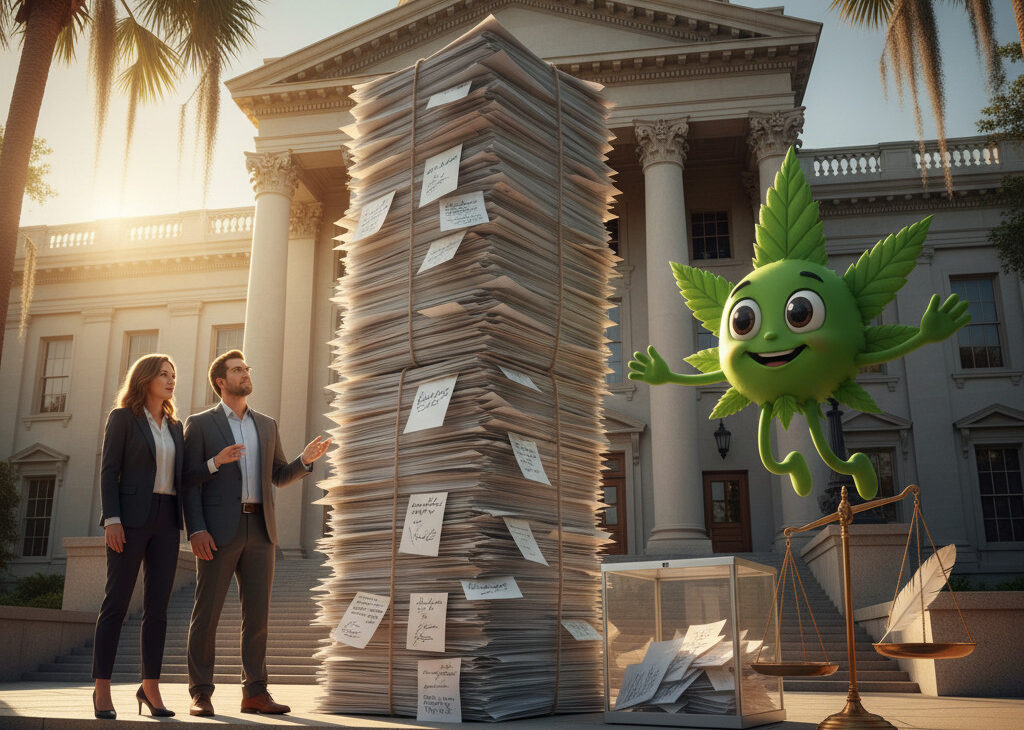
Florida cannabis legalization ballot qualification failure: A turning point for voters
Florida cannabis legalization ballot qualification failure explained
Florida cannabis legalization ballot qualification failure has reshaped the state campaign landscape and raised urgent questions for voters and advocates. The effort fell roughly one hundred thousand valid signatures short of the required 880,062 total. Because the campaign submitted over 1.4 million signatures, the shortfall surfaced after multiple rounds of validation and legal fights. Moreover, county by county reviews and court rulings removed more signatures than organizers expected. As a result, the initiative did not make the 2026 ballot, and that outcome matters beyond Florida.
Florida cannabis legalization ballot qualification failure and why it matters
This failure signals how strict verification rules shape ballot access. It also shows how political opposition and procedural delays can influence outcomes. For voters, the loss delays a statewide referendum on adult use cannabis and shifts advocacy strategies toward future sessions and local measures. For advocates, the result highlights the need for stronger petition drives, better legal planning, and clearer communication with signers. In short, the shortfall is not only a missed ballot measure, it is a lesson in ballot access and campaign resilience.
Background and context of Florida cannabis legalization ballot qualification failure
Florida cannabis legalization has been a contentious topic for years. In 2024 voters narrowly rejected a constitutional amendment, and legalization efforts shifted to signature drives for 2026. However, those petition efforts ran into legal and procedural hurdles. As a result, the proposed ballot initiative failed to reach the required threshold for qualification.
Key facts at a glance
- Campaign size and deadline: Organizers reportedly submitted over 1.4 million petition signatures but still fell roughly one hundred thousand validated signatures short of the 880,062 total needed by the February 1 deadline.
- Court rulings and validation: A Florida circuit court tossed more than 200,000 signatures after finding the petitions lacked the amendment text, which reduced the validated totals and altered the campaign math. See reporting from CBS Miami for details.
- Administrative directives: In January, the state required thousands of signers to verify their signatures before counting. Those verification steps further reduced the usable signature pool.
- Political opposition: Governor Ron DeSantis and several governor appointees opposed the initiative, and advocates alleged interference and delays during signature gathering.
Why this matters
- Voter challenges and ballot access: The failure shows how signature verification rules shape ballot access. Moreover, it highlights the practical voter challenges campaigns face during high-stakes drives. For official guidance on initiatives and filing rules, consult the Florida Division of Elections.
- Lessons for legalization efforts: Campaigns must plan for legal pushback, robust petition drives, and clear signer communication. The Associated Press reported the statewide outcome and broader context.

Image source: Florida Cannabis Map
Why the Florida cannabis legalization ballot qualification failure happened
Several clear factors combined to sink the petition drive. First, the campaign missed the 880,062 valid signatures threshold by about one hundred thousand. Because signature validation removes duplicates and invalid entries, organizers could not rely on raw submission totals. The Smart and Safe Florida campaign says it submitted over 1.4 million signatures and disputed the Secretary of State declaration. As they put it, “We believe the declaration by the Secretary of State is premature” and they argued county totals were incomplete.
Legal and procedural roadblocks
- Court rulings removed signatures. For example, a Florida circuit court tossed more than 200,000 signatures after finding petitioners did not receive the full amendment text. See reporting at CBS News
- Verification directives reduced counts. In January, the state required thousands of signers to verify their signatures before counting. As a result, many potential valid signatures never cleared validation.
- Administrative delays lengthened the timeline. In October, the campaign sued state officials for delaying signature gathering, which increased pressure on organizers and volunteers.
Political opposition and practical limits
- Governor Ron DeSantis publicly opposed the measure, which influenced administrative priorities and public debate.
- Several governor appointees faced accusations of interfering with the initiative process, which created legal fights and uncertainty.
- Voter challenges still matter. In 2024 a similar amendment failed to reach the 60 percent threshold, demonstrating divided public support.
Why these factors matter nationally
Together, these points show how ballot initiative rules can block well funded campaigns. Moreover, the episode highlights the importance of careful legal planning, surplus signatures, and clear signer outreach. For official initiative rules and deadlines consult the Florida Division of Elections and for broader news coverage see the Associated Press.
Florida cannabis legalization ballot qualification failure in context
Below is a quick comparison of Florida’s failed ballot effort with successful legalization efforts in other states. This table highlights method, timing, and current implementation status. Use it to contrast ballot initiative risks with legislative routes.
| State | Year of Legalization | Method of Legalization | Current Status |
|---|---|---|---|
| Colorado | 2012 | Ballot initiative (Amendment 64) | Adult use legal and regulated; retail sales active |
| Washington | 2012 | Ballot initiative (I-502) | Adult use legal; state licensing established |
| California | 2016 | Ballot initiative (Prop 64) | Adult use legal; large regulated market |
| Michigan | 2018 | Ballot initiative (Prop 1) | Adult use legal; municipalities regulating sales |
| Illinois | 2019 | State legislature | Adult use legal; social equity programs active |
| Vermont | 2018 | State legislature | Adult use legal; phased regulatory rollout |
| Arizona | 2020 | Ballot initiative (Prop 207) | Adult use legal; established retail market |
| Florida | 2026 attempt | Ballot initiative attempt | Failed to qualify for 2026 ballot due to shortfall and validation issues |
Key takeaways
- Ballot initiatives can deliver rapid legal change, however they carry signature verification risks.
- Legislative paths often allow phased regulation, therefore they may avoid petition pitfalls.
- Florida cannabis legalization ballot qualification failure shows the need for surplus validated signatures and legal preparation.
Conclusion
The Florida cannabis legalization ballot qualification failure highlights how strict rules and political opposition can stop ballot access even for well funded campaigns. Because organizers fell roughly one hundred thousand valid signatures short, the episode shows how signature validation and court rulings matter. Therefore, voters and advocates face a longer road to statewide reform.
Going forward, campaigns must plan legally and logistically. They should gather large signature surpluses, document outreach clearly, and prepare for verification directives and litigation. Moreover, advocates may pursue legislative paths, local ordinances, or new ballot strategies that reduce procedural risk. In short, the failure is a lesson in campaign resilience and in systems that govern direct democracy.
MyCBDAdvisor offers research driven, easy to understand coverage on cannabinoids and policy. As a full spectrum resource, MyCBDAdvisor explains implications for patients, consumers, and advocates. Visit MyCBDAdvisor for trustworthy articles, guides, and updates. The site publishes studies, policy analysis, and practical tips for safe use.
Frequently Asked Questions (FAQs)
What caused the Florida cannabis legalization ballot qualification failure?
The campaign fell about one hundred thousand validated signatures short of the 880,062 threshold. Campaign organizers submitted over 1.4 million raw signatures, however validation removed duplicates and invalid entries. Court rulings also removed more than 200,000 signatures after procedural challenges. Because the state required extra signer verification, the usable signature pool shrank further.
What immediate impact does this failure have on voters and advocates?
Voters will not see a statewide adult use cannabis referendum in 2026. As a result, advocates must shift tactics to legislative lobbying, local ordinances, or future ballot drives. Moreover, the setback creates time for new legal planning and community outreach. It also renews debate about ballot access and signature verification practices.
Can organizers appeal the decision or try again quickly?
Organizers can pursue limited legal appeals, and they may challenge validation procedures in court. However appeals rarely reverse broad signature shortfalls. Therefore, most groups will plan a new petition drive or focus on legislative strategies. Campaigns must respect deadlines and build a larger validated signature surplus when they try again.
Why did verification rules and court rulings matter so much?
Verification rules remove signatures that lack proper voter details or that come from unverifiable records. In this case, a court found many petitions lacked required text, which led to mass disqualifications. Because of these rules, campaigns cannot rely on raw totals alone. They must ensure legal compliance during every step.
What lessons should future legalization efforts take from this failure?
Future campaigns should gather a larger buffer of signatures, document outreach clearly, and prepare legal teams early. Moreover, they should educate signers about verification steps and maintain county level tracking. In short, combine strong ground operations with robust legal planning to reduce procedural risk.