
Cannabis use by teens declined 1999-2023, marking a notable shift in adolescent cannabis consumption trends. Researchers analyzed CDC Youth Risk Behavior Survey data and tracked more than 254,000 high schoolers. The study found cannabis use peaked at 47.3 percent in 1999 and fell to about 30.1 percent by 2023, with early-age initiation dropping from 11.5 percent to 6.5 percent. Moreover, Monitoring the Future survey data suggest declines among eighth, tenth, and twelfth graders, highlighting a broader, multi-survey trend.
Therefore, this long-term decline matters because it may reflect shifts in prevention efforts, changing social norms, and policy impacts, and because lower adolescent use can reduce short-term harms and long-term mental health risks; however, researchers caution that pockets of higher use and changing product potency require continued surveillance and targeted public health strategies, and further research must examine demographic gaps, gender differences, and access to services to ensure equitable prevention and policy.
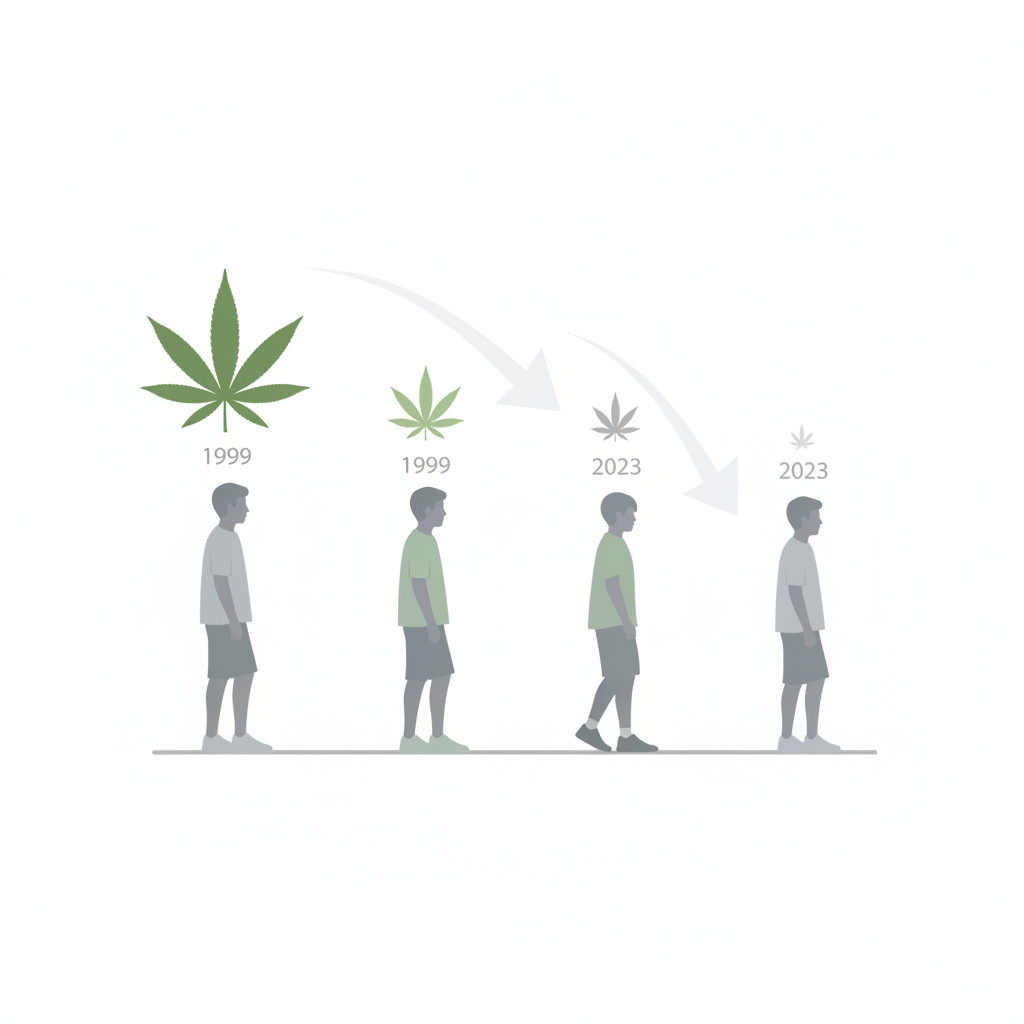
Factors Contributing to Cannabis Use Decline Among Teens
Cannabis use by teens declined 1999-2023: why the shift happened
Multiple social, educational, legislative, and cultural forces contributed to the long decline. Together they changed youth behavior and shaped youth cannabis trends across cohorts.
-
School prevention and education programs
Schools expanded evidence based prevention programs after the 1990s. Because programs teach risks and refusal skills, teens report lower intent to try cannabis. For background on prevention and youth guidance see CDC resources.
-
Changing risk perception and public messaging
Public campaigns and clinical messaging raised awareness of harms. As a result, many adolescents now view marijuana as more risky. For research on marijuana and adolescent risk see NIDA.
-
Policy and legalization effects
Legalization changed access, but studies show mixed effects on teen use. However, several analyses found no large increases in adolescent use after adult legalization. See a systematic analysis at PubMed.
-
Cultural shifts and social norms
Social norms evolved toward health promotion and lower substance use. Meanwhile, youth recreational preferences and digital habits shifted away from in person substance scenes.
-
Surveillance, survey methods, and targeted interventions
Better monitoring, such as the CDC Youth Risk Behavior Survey, helped target high risk groups. For methods and teen cannabis statistics, visit CDC Youth Risk Behavior Survey.
These combined factors likely explain much of the drop in teen cannabis use. Nonetheless, researchers warn that pockets of higher use remain. Therefore continued surveillance and targeted prevention remain essential.
| Year | Percentage of Teen Cannabis Users |
|---|---|
| 1999 | 47.3% (peak ever used; CDC Youth Risk Behavior Survey) |
| 2003 (female) | 33.4% (female reported use in 2003) |
| 2003 (male) | 27.0% (male reported use in 2003) |
| 1999 early initiation | 11.5% (measured early-age use in 1999) |
| 2023 | 30.1% (ever used; Addictive Behaviors analysis of YRBS data) |
| 2023 early initiation | 6.5% (measured early-age use in 2023) |
The table displays selected CDC and study estimates over time. These rows highlight the decline in teen cannabis use between 1999 and 2023 and the drop in early-age initiation.
Impact of Legislation and Education
Legislation effects
- Age restricted sales and minimum purchase laws reduced routine retail access for adolescents, which helps explain part of the decline in lifetime use and early initiation.
- Licensing requirements and retailer compliance checks increased penalties for selling to minors, limiting informal supply and reducing youth availability.
- Retail regulation focused markets on adult consumers, giving enforcement tools that correlate with lower youth exposure to cannabis.
- Natural experiments after adult legalization show mixed local effects, but several analyses report no large increases in teen use, supporting a neutral or negative contribution to the downward trend. See review at PubMed Review.
Together these policy levers likely reduced access and normalized safer distribution, contributing to lower youth use.
Education efforts
- Evidence based school programs taught refusal skills and corrected misperceptions, delaying initiation and lowering prevalence among cohorts.
- Public health campaigns raised perceived harm and discouraged experimentation, reinforcing cohort level declines.
- Targeted interventions and improved surveillance such as the CDC Youth Risk Behavior Survey enabled resources to focus on high risk groups and measure progress. For guidance see CDC Guidance.
Combined, legislation and education acted synergistically and help explain much of the observed decline in adolescent cannabis use between 1999 and 2023.
CONCLUSION
Cannabis use by teens declined 1999-2023, falling from a 1999 peak of 47.3 percent to about 30.1 percent by 2023. This long term drop also shows lower early initiation, from 11.5 percent to 6.5 percent. These trends matter because they suggest prevention efforts and policy changes affected youth behavior.
Education played a central role. Schools and public health programs taught refusal skills and highlighted harms, so many teens now report higher perceived risk. Legislative reforms also influenced access. Age restrictions and regulated retail changed how teens encounter cannabis, and studies show no consistent large increases after adult legalization.
MyCBDAdvisor supports informed public discussion and research. For more information, visit MyCBDAdvisor. Together, continued education, smart laws, and ongoing surveillance can help sustain the decline and protect adolescent health.
Frequently Asked Questions (FAQs)
Why did Cannabis use by teens declined 1999-2023?
Multiple factors explain why Cannabis use by teens declined 1999-2023. Prevention programs expanded in schools and communities. Public health campaigns raised perceived risk, so fewer teens started. Policy changes set age limits and regulated retail, and surveillance improved targeting. Together these forces reduced use across cohorts.
How much has teen cannabis use fallen?
Lifetime use fell from about 47.3 percent in 1999 to roughly 30.1 percent in 2023. Early initiation dropped from about 11.5 percent to 6.5 percent. Recent national surveys also show declines among middle and high school students. For example, Monitoring the Future reported lower rates in eighth and tenth graders in 2024.
Did adult legalization cause teen use to rise?
Research finds mixed results, with many studies showing no large long term increase. However local effects vary, and enforcement matters. Age restricted sales, retailer compliance, and community outreach can limit youth access. Therefore policy design influences outcomes.
What role do education programs play?
School based programs teach refusal skills and correct misperceptions. Evidence based curricula reduce use and delay initiation. Parents who engage in conversations also lower teen risk. As a result, education remains a primary prevention tool.