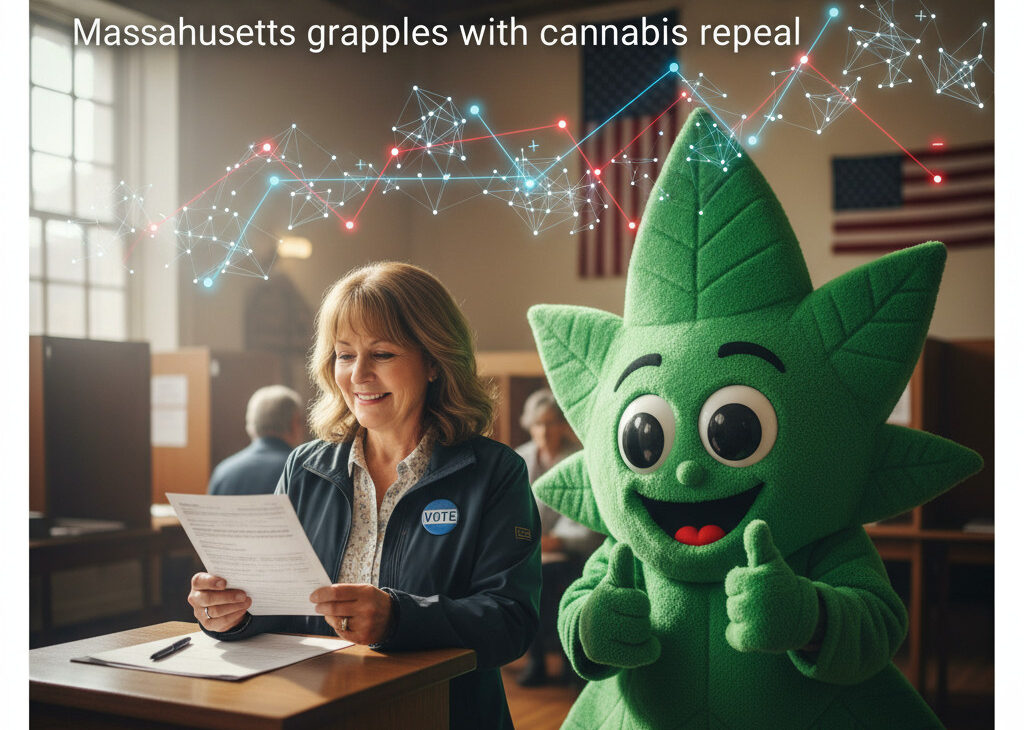
A recent Massachusetts poll on repeal of adult-use cannabis sales shows clear voter resistance. The timing matters because the survey captures shifting public sentiment around adult-use cannabis. Conducted in mid-February, the online poll sampled 670 residents. It reported that 63% opposed the repeal, while 20% supported it. Because the initiative would ban commercial adult-use sales starting January 1, 2028, it could reshape the market. However, possession laws would remain unchanged, and many voters weigh economic and social impacts.
This article examines poll methods, key data points, and what the results mean for regulators, businesses, and voters. Additionally, it explores sales trends, including the recent record of more than $1.65 billion in annual dispensary sales. Finally, we outline possible scenarios if the ballot measure advances to voters in November. We also review reports about signature gatherers using deceitful tactics and how that might affect public trust. Moreover, regulators recently finalized rules for on-site consumption that open new social use opportunities. As a result, the article provides context for voters and industry stakeholders ahead of the November vote.
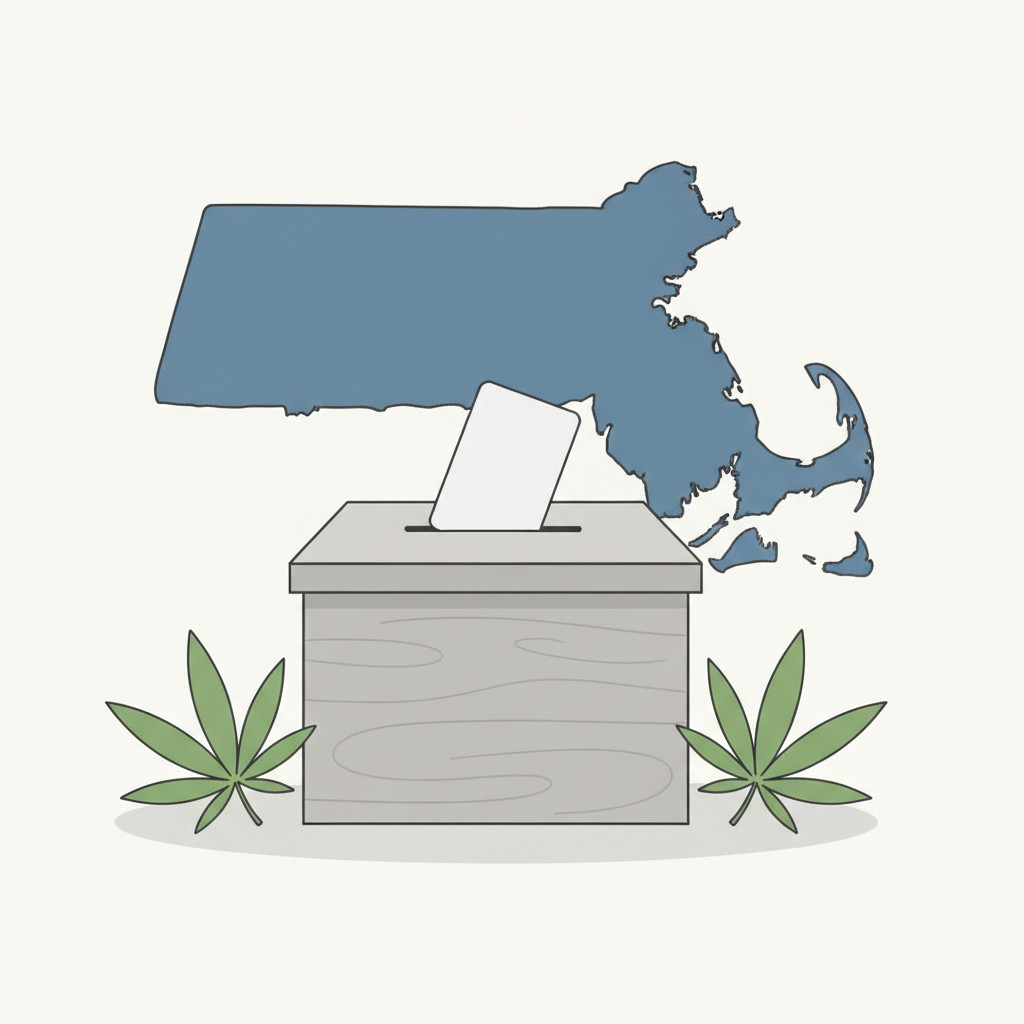
Key insights from the Massachusetts poll on repeal of adult-use cannabis sales
The poll shows clear voter resistance to rolling back commercial adult-use cannabis sales. Conducted online from February 12 to 16, the survey sampled 670 residents. The margin of error was plus or minus 3.8 percent. As a result, 63 percent opposed the repeal, 20 percent supported it, and 7 percent were unsure.
Method and context
- The sample size of 670 gives reasonable precision for statewide trends. However, the plus or minus 3.8 percent margin of error means close results could shift.
- The Massachusetts State Ballot Law Commission advanced the initiative in January, which moves the measure closer to a November vote. For background on the Commission process see Massachusetts State Ballot Law Commission.
Public opinion trends
- Voters appear to distinguish between commercial sales and possession laws. Therefore, even opponents of commercial sales may still support possession remaining legal.
- Opposition at 63 percent suggests broad resistance to repeal, possibly driven by economic and social concerns.
Implications for regulation and industry
- If approved, the initiative would ban adult-use commercial sales starting January 1, 2028. However, possession laws would remain unchanged.
- The market has grown quickly and generated record sales. For example, Massachusetts dispensaries posted more than $1.65 billion in adult-use sales in 2025. See Massachusetts Adult-Use Cannabis Sales 2025 and reporting at Boston Globe Cannabis Sales 2025.
Notable caveats and demographic notes
- The poll did not publish a full demographic cross tab in the summary. Therefore, patterns by age, region, or party are unclear. However, early signals suggest younger voters and urban areas tend to support adult-use markets.
- Reports also surfaced about signature gatherers using deceitful techniques, which could shape public trust and campaign dynamics as the issue advances.
Taken together, the poll indicates strong statewide opposition to repeal. As a result, the industry and regulators still face uncertainty but appear to retain public support for commercial adult-use sales.
Massachusetts poll on repeal of adult-use cannabis sales — demographic snapshot
The poll reported clear overall numbers, but detailed demographic tables were not published. Therefore, the table below shows the confirmed statewide results and a qualitative snapshot for demographic groups. However, exact percentages by age, party, or region were not released by the pollster.
| Demographic | Support (%) | Oppose (%) | Unsure (%) | Notes |
|---|---|---|---|---|
| Statewide (Feb 12–16, 670 respondents) | 20 | 63 | 7 | Poll margin of error ±3.8%; confirmed results from the online survey. |
| Age 18 to 34 | Not released | Not released | Not released | Trend indicator: Younger voters generally show more support for adult-use markets, though exact poll figures were not published. |
| Age 35 to 54 | Not released | Not released | Not released | Trend indicator: Mixed views; moderation between younger and older cohorts is common. |
| Age 55 plus | Not released | Not released | Not released | Trend indicator: Older voters often express higher opposition to repeal of commercial sales. |
| Democrats | Not released | Not released | Not released | Trend indicator: Democratic voters typically favor regulated adult-use markets. |
| Republicans | Not released | Not released | Not released | Trend indicator: Republican voters often lean toward repeal or restrictions, but not uniformly. |
| Independents | Not released | Not released | Not released | Trend indicator: Independents can swing the result; they show varied opinions across the state. |
| Urban versus rural | Not released | Not released | Not released | Trend indicator: Urban areas tend to support commercial sales more than rural areas. |
Note: The poll did not provide a full demographic cross tab in its public summary. As a result, the table combines confirmed statewide numbers with commonly observed trends from other Massachusetts surveys and national patterns. For context, the Massachusetts State Ballot Law Commission moved the initiative forward in January, which increases the importance of demographic shifts ahead of the November vote. The poll sample and margin of error frame how tightly results could change as campaigns continue.
What the Massachusetts poll on repeal of adult-use cannabis sales could mean
The poll’s 63 percent opposition suggests repeal faces long odds. However, the 20 percent support and 7 percent unsure leave room for change. Because the margin of error is plus or minus 3.8 percent, close shifts could matter. Therefore campaigns still have time to influence undecided voters before November.
Potential outcome: repeal fails
- Businesses win short term. Dispensaries keep legal sales and staffing levels. The market retains the record momentum it showed last year, when dispensaries reported more than $1.65 billion in adult-use sales. See Massachusetts Adult-Use Cannabis Sales Report.
- Lawmakers avoid an abrupt policy reversal. As a result, regulators can continue implementing new rules, such as on-site consumption licensing.
- Consumers retain legal access, product testing standards, and tax-funded programs tied to sales.
Potential outcome: repeal passes
- Commercial sales would become illegal starting January 1, 2028. Consequently, many licensed businesses would lose revenue and close. The state could see job losses across cultivation, retail, and testing.
- Consumers could face higher prices and less safety. Because an illegal market often lacks testing and oversight, product risks would rise. Moreover, taxation revenue tied to adult-use sales would decline.
- Lawmakers would confront enforcement and transition issues. For example, possession would remain legal, so the state would need clear rules on how to handle remaining activity.
Other implications and campaign dynamics
- The Massachusetts State Ballot Law Commission advanced the initiative in January, raising the chance of a November vote. See State Ballot Law Commission Proceedings.
- Reports of deceitful signature gathering could shape voter trust and turnout. Therefore, campaign credibility may sway undecided voters.
- Given the market’s growth since 2018, with about nine billion dollars in total sales to date, the economic stakes are high. For additional reporting on the market and policy stakes see Boston Globe Reporting.
In short, the poll favors maintaining commercial adult-use sales, but the final outcome depends on turnout, campaign strategy, and how undecided voters respond to messaging. Policymakers and industry leaders should prepare for either scenario because the November vote could still surprise observers.
Conclusion
The recent Massachusetts poll on repeal of adult-use cannabis sales found broad opposition. Sixty-three percent of 670 respondents opposed the measure. The sample ran February 12 to 16 with a margin of error of ±3.8 percent. Because the initiative targets only commercial sales, possession laws would remain unchanged.
For businesses the stakes are economic and immediate. If repeal fails, dispensaries and related firms will keep revenue and jobs. If repeal passes, many licensed operators could close and a shift to illicit markets could follow. As a result, consumers might face fewer safety safeguards and less product testing.
The campaign also faces credibility questions after reports of deceitful signature gathering. Meanwhile regulators finalized new rules for on-site consumption and the market hit record sales. The broader hemp and cannabis sectors remain part of the discussion.
MyCBDAdvisor brings research-driven guidance on CBD, hemp, and cannabis policy. We aim to provide clear, trustworthy information for consumers, voters, and industry participants. Visit MyCBDAdvisor to learn more and follow developments ahead of November.
Frequently Asked Questions (FAQs)
What did the Massachusetts poll on repeal of adult-use cannabis sales find?
The online poll surveyed 670 Massachusetts residents from February 12 to 16. The margin of error was ±3.8 percent. Results showed 63 percent opposed the repeal, 20 percent supported it, and 7 percent were unsure. Because the sample captured statewide sentiment, the figures suggest broad resistance to rolling back commercial adult-use sales.
Would the initiative ban possession or just commercial sales?
The proposed measure targets only commercial adult-use sales. Possession laws would remain unchanged if voters approve the initiative. If passed, commercial sales would become illegal starting January 1, 2028. For details on the ballot process and timelines, see the Massachusetts State Ballot Law Commission guidance.
How would repeal affect businesses and consumers?
Repeal could sharply reduce legal revenue for dispensaries and related firms. Last year Massachusetts dispensaries recorded over $1.65 billion in adult-use sales, and the state has about $9 billion in total sales since 2018. Therefore job losses and business closures are possible. Consumers could face less product testing, fewer safety checks, and higher prices if illicit markets expand. For recent market context, see reporting from the Massachusetts Cannabis Control.
How reliable is the poll and what are its limits?
The poll provides a useful snapshot but has limits. It used an online sample and the margin of error is ±3.8 percent. The poll did not release full demographic breakdowns. As a result, we cannot confirm subgroup differences by age, party, or region. Also, reports about questionable signature gathering could affect campaign trust and future turnout.
What happens next and how can I stay informed?
The Massachusetts State Ballot Law Commission advanced the initiative in January, moving it closer to a November vote. Regulators also finalized rules for on-site consumption, which may shape local debates. Therefore, follow reliable news outlets and official sources. For in-depth reporting and market figures, see reporting from The Boston Globe.