
Understanding the parasympathetic nervous system
The parasympathetic nervous system helps your body rest, digest, and repair. It slows heart rate and supports digestion and recovery. Because modern life leans toward constant action, this reset system matters more than ever.
When the parasympathetic state kicks in, you feel calmer and more balanced. Therefore, sleep, digestion, and emotional resilience improve. However, many people never truly access that state for long.
This article explains how the autonomic nervous system and vagus nerve work together. You will learn simple ways to encourage rest and reset. Later, we will explore how CBD and essential oils may support that shift.
By the end, you will understand practical steps for a parasympathetic reset. Moreover, you will see how daily routines can reinforce calm and balance. Simple practices like slow breathing, gentle touch behind the ear, and focused rest help.
Because these actions stimulate the vagus nerve, they can nudge the body into parasympathetic mode. As a result, you lower stress hormones and support digestion. We will look at full-spectrum CBD and targeted blends like Mind/Body Balance. Finally, we will offer easy routines to try today.
Key functions of the parasympathetic nervous system
The parasympathetic nervous system supports rest, recovery, and routine body maintenance. It conserves energy and promotes repair. In short, it is the body’s rest and digest system. Because it acts quietly, people often overlook its role.
Core physiological effects include:
- Slowing heart rate and lowering blood pressure. For example, slow breathing can drop your heart rate during stress.
- Stimulating digestion and gut motility. This increases enzyme release and nutrient absorption after a meal.
- Promoting relaxation and lowering stress hormone release. As a result, you feel calmer and more able to sleep.
- Increasing salivation and tear production. For example, a warm meal can trigger saliva and ease swallowing.
- Constricting pupils and focusing vision for near tasks. Therefore, reading and close work feel easier when relaxed.
- Contracting the bladder and supporting normal urination. This helps remove waste efficiently.
- Slight bronchoconstriction to tune breathing for rest rather than exertion.
Many of these actions run through the vagus nerve. The vagus links the brain to the heart, lungs, and gut. For an overview of parasympathetic anatomy and function see this resource.
How the parasympathetic nervous system controls organs
The system uses neurotransmitters such as acetylcholine to signal organs. Its influence is fast and local. For practical tips on nudging this system toward rest, see retraining methods here this page. In addition, some people use CBD and terpenes like linalool to support relaxation. Learn more about linalool and anxiety at this article.
These functions keep daily life running smoothly. Therefore, supporting parasympathetic tone can improve sleep, digestion, and mood.
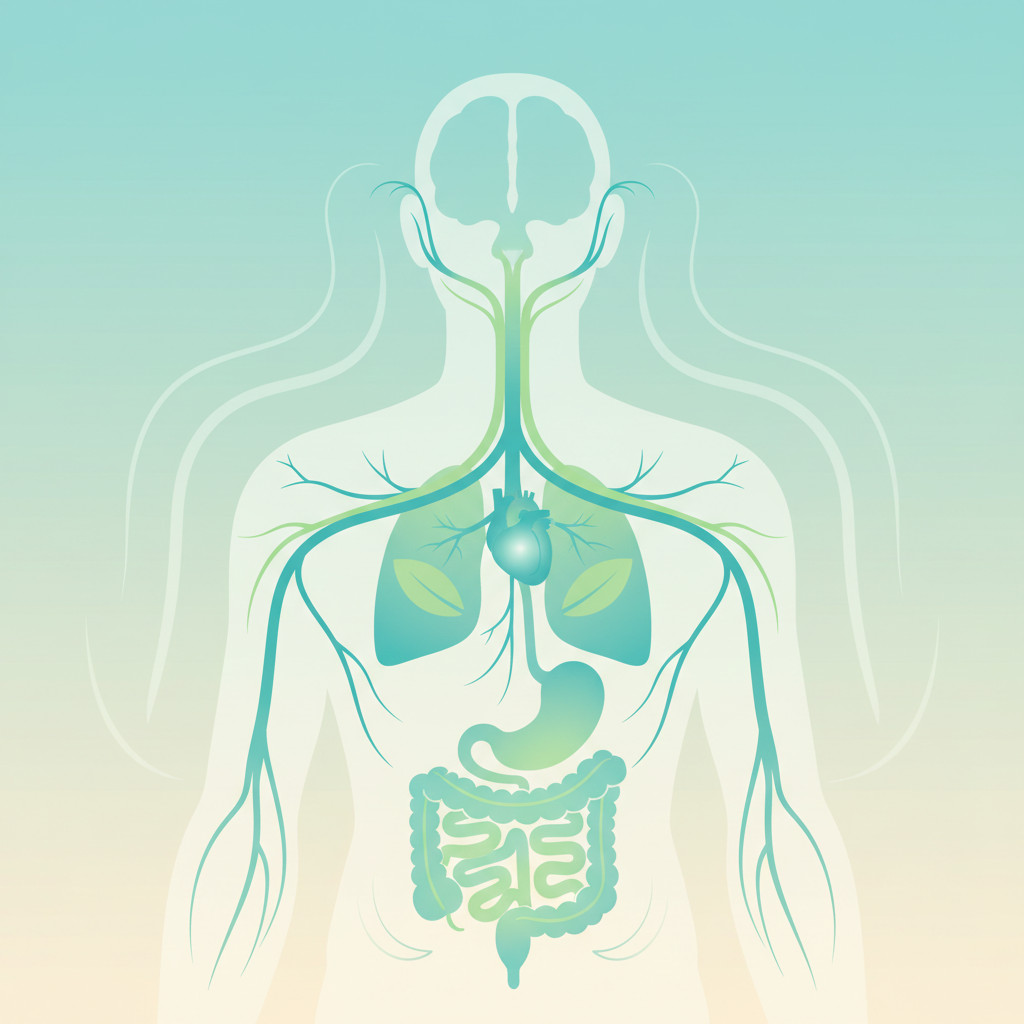
Parasympathetic nervous system versus Sympathetic nervous system
Both branches of the autonomic nervous system balance body responses. This table highlights clear differences. Therefore, you can quickly see which system supports rest and which prepares for action.
| System | Primary Functions | Effect on Heart Rate | Effect on Digestion | Role in Stress Response |
|---|---|---|---|---|
| Parasympathetic nervous system | Rest, digest, repair, energy conservation | Slows heart rate and lowers blood pressure | Stimulates digestion, enzyme release, and gut motility | Calms the body, reduces stress hormones, supports recovery |
| Sympathetic nervous system | Fight or flight, mobilize energy, heighten alertness | Increases heart rate and raises blood pressure | Inhibits digestion and diverts blood away from gut | Activates stress response, readies muscles and metabolism for action |
Quick examples and practical notes:
- After a meal your parasympathetic tone increases digestion and absorption. As a result, you feel relaxed and full.
- During exercise the sympathetic system raises heart rate and frees energy. Consequently, digestion slows.
- Slow breathing and gentle stimulation of the vagus nerve favor parasympathetic activation. Therefore, these practices help reset after stress.
Related keywords and synonyms: parasympathetic state, autonomic nervous system, vagus nerve, rest and reset, calm and balance, sympathetic activation.
How CBD interacts with the parasympathetic nervous system
Researchers propose several ways CBD and other cannabinoids may influence the parasympathetic nervous system. In short, CBD can modulate systems that influence vagal tone, heart rate variability, and stress physiology. Because these pathways affect calm and balance, CBD draws interest for relaxation and nervous system support.
Mechanisms and scientific theory
- Endocannabinoid system modulation. CBD interacts indirectly with cannabinoid receptors and enzymes. Therefore, it can shift signaling that affects autonomic balance.
- Neurotransmitter effects. CBD influences serotonin and GABA pathways, which relate to anxiety and calm. As a result, the body may favor parasympathetic responses.
- Vagal and sensory neuron activity. Emerging lab work shows CBD can activate vagal afferent neurons via TRPA1 channels, suggesting a direct route to parasympathetic circuits [source].
- Cardiohemodynamic effects under stress. Human studies show acute CBD can blunt stress-related blood pressure and heart rate rises, which supports parasympathetic dominance during recovery [source].
What the research shows
- Case series and clinical reviews report reduced anxiety and improved sleep with CBD in many users. However, larger controlled trials remain limited [source]; [source].
- Systematic reviews find CBD often reduces stress-driven cardiovascular responses but shows mixed effects at rest [source]. Therefore, context and dose matter.
Practical takeaways
CBD and other cannabinoids may support relaxation by nudging autonomic balance toward parasympathetic activity. In addition, combining CBD with calming practices often enhances results.
Because research is still emerging, start low and consult a clinician for dosing. Finally, expect individual differences in response, and use CBD as one part of a broader wellness routine.
Conclusion
The parasympathetic nervous system keeps the body in rest, digest, and repair mode. It slows heart rate, supports digestion, and helps you recover after stress. Understanding its role helps you choose routines that promote calm and better health. Therefore, small daily habits can change long term balance.
CBD and other cannabinoids may support parasympathetic activity by modulating the endocannabinoid system. In addition, CBD can influence serotonin and GABA, which relate to relaxation and stress relief. However, research is still emerging and effects vary by person. As a result, use CBD as part of a wider wellness plan.
MyCBDAdvisor offers clear, evidence minded information about CBD and health. We focus on accuracy, transparency, and education for the hemp and CBD industry. Explore more resources and practical guides at MyCBDAdvisor.
Start with small steps and track your progress. Finally, keep learning and experimenting carefully, because understanding this system empowers smarter self care and better outcomes.
Frequently Asked Questions (FAQs)
What is the parasympathetic nervous system?
The parasympathetic nervous system is the branch of the autonomic nervous system that promotes rest, digestion, and recovery. It slows heart rate, stimulates digestion, and supports repair. Because it conserves energy, it balances stress responses.
How does the parasympathetic system affect health?
It lowers stress hormones and improves sleep and digestion. Therefore, strong parasympathetic tone links to better mood and resilience. Poor tone can relate to chronic stress and digestive problems.
Can CBD influence the parasympathetic nervous system?
Emerging research suggests CBD can nudge autonomic balance toward rest. In addition, CBD may act via the endocannabinoid system, serotonin, and GABA pathways. However, evidence is still growing and varies by person.
How can I support parasympathetic function naturally?
Try slow breathing, gentle neck massage, and consistent sleep. For example, five minutes of deep diaphragmatic breathing helps. Also, combine calming routines with mindfulness and mild exercise.
Should I use CBD for relaxation?
CBD may help with relaxation for many people. Start with a low dose and consult a clinician. Finally, use CBD as one part of a broad wellness plan.