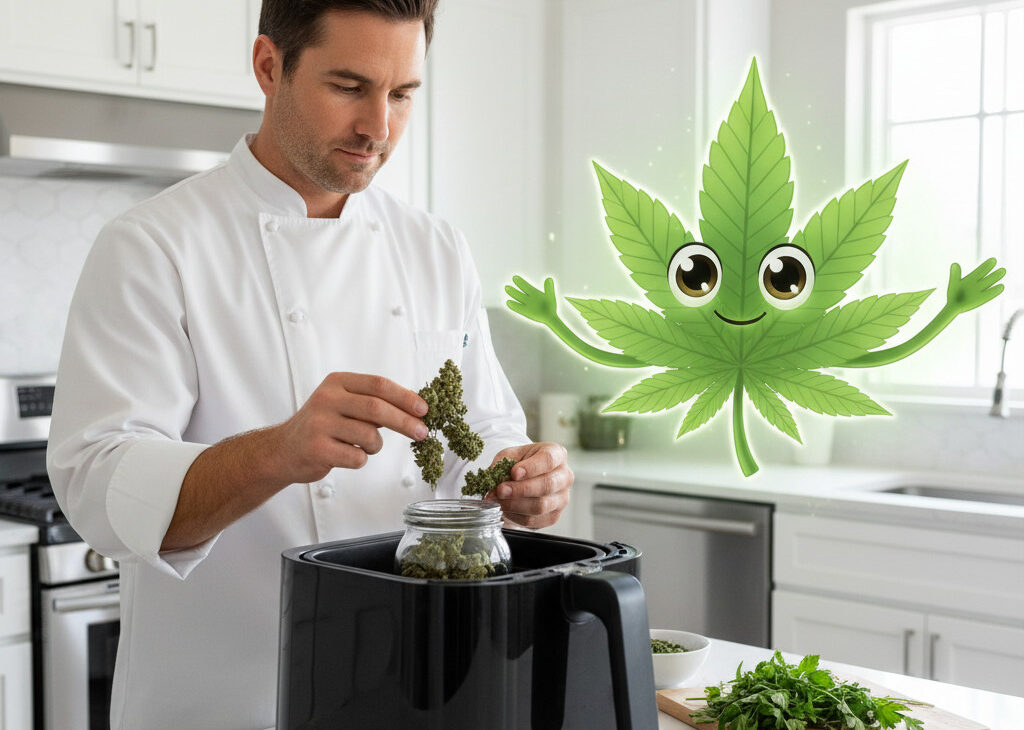
Air fryer decarboxylation of cannabis
Interest in air fryer decarboxylation of cannabis has surged among home cooks and cannabis users. People want faster decarb, better temperature control, and less odor. Because air fryers heat quickly and evenly, they promise consistent THCA conversion with less waste.
In this guide, we explain why an air fryer can outperform a standard oven or double boiler. We cover timing, 240°F benchmarks, container tips, and safety steps. Moreover we show simple steps for cannabutter and weed milk prep after decarb.
You will learn how to avoid overheating and green out risks. Therefore you can make reliable edibles and tinctures at home. Along the way we highlight related keywords like cannabinoids, THC activation, decarb, temperature control, and energy efficiency.
Air fryers use convection heat, so they reach target temps fast. As a result, decarb times often shorten compared with ovens. However proper containers and foil help prevent trichome loss and mess. Because precision matters, we include temperature tips and a safety checklist.
Air fryer decarboxylation of cannabis: The science and process
Decarboxylation converts acidic cannabinoids into active forms. THCA loses a carboxyl group and becomes THC, which produces psychoactive effects. This chemical reaction requires heat and time. Because raw cannabis contains mostly THCA and CBDA, decarb is essential for edibles and tinctures.
Why it matters
- THCA to THC conversion releases carbon dioxide and hydrogen, activating cannabinoids. Therefore edibles deliver predictable effects. See Project CBD for details.
- Optimal activation typically centers around 240°F (115°C). However times vary, with many guides recommending thirty minutes at that temperature. For more timing guidance, consult Leafly.
How an air fryer achieves decarb
- Convection heat circulates air for even temperatures. As a result, hotspots are rare.
- Most air fryers reach and hold target temps quickly, so you gain precise control.
- Because heating is fast, decarb times can shorten slightly. Moreover you reduce energy use and smell.
- Use an oven safe container and cover loosely with foil to retain trichomes and prevent mess.
Practical notes
- Start with coarsely ground buds and 240°F for 30 minutes. If material stays green, add ten minutes.
- Avoid high heat. Prolonged overheating degrades cannabinoids and terpenes. For kinetics and deeper science see PubMed.
Related keywords: cannabinoids, THCA, THC, decarboxylation, cannabutter, edibles, temperature control, convection heating

Air fryer decarboxylation of cannabis compared to other methods
Below is a quick comparison of common decarboxylation options. Therefore, the table highlights time, temperature, ease of use, and overall effectiveness. Use the comparison to choose a method based on precision, energy efficiency, and terpene preservation.
| Method | Typical time | Typical temperature | Ease of use | Overall effectiveness |
|---|---|---|---|---|
| Air fryer | 30 minutes | 240°F (115°C) | Very easy and fast. Precise convection heat and minimal odor. | High. Even heating, good THC activation, preserves terpenes when done correctly. |
| Oven | 30–40 minutes | 240°F (115°C) | Easy. Common method but slower. Possible hotspots and more odor. | Good. Reliable activation but less precise than air fryer. |
| Sous vide | 90–150 minutes | 203°F (95°C) in sealed bag | Moderate. Needs immersion equipment and vacuum bags. | Very good. Gentle, precise activation with strong terpene retention. |
| Slow cooker | 2–4 hours | Low heat, variable 200–225°F | Easy but inconsistent. Long times and poor temp control. | Moderate. Useful for infusions but not ideal as a primary decarb method. |
Quick tips
- Generally, start at 240°F for thirty minutes when using dry heat methods.
- Also, cover containers loosely with foil to retain trichomes and reduce smell.
- Avoid high heat because it degrades cannabinoids and terpenes.
Related keywords: air fryer, decarboxylation, THCA, THC, cannabinoids, temperature control, convection heating, energy efficiency, minimal odor, terpenes, cannabutter, edibles.
Air fryer decarboxylation of cannabis: Benefits and potential drawbacks
Air fryer decarboxylation of cannabis delivers clear benefits for home cooks and infusers. Because air fryers heat by convection, they give even temperature control. As a result, you get consistent THCA to THC activation. Therefore many users prefer air fryers over standard ovens for small batches.
Benefits
- Safety: lower combustion risk compared with smoking, and less open flame hazard.
- Efficiency: faster heat-up times and often lower energy use.
- Consistency: even airflow reduces hotspots and improves cannabinoid activation.
- Minimal odor: smaller footprint and contained baskets reduce smell during decarb.
- Preservation: gentle, controlled heat helps protect terpenes when you avoid overheating.
- Convenience: quick setup and easy cleanup make infusions less fiddly.
Drawbacks and safety notes
However air fryers have smaller capacity than full ovens, so you handle small batches. Also some models have recall or safety issues, so check your device before use. Overheating remains a risk because air fryers reach temperature quickly, so monitor time and temperature closely. Finally, improper containers or direct foil contact can interfere with airflow and cause uneven decarb.
Use an oven thermometer and stay nearby during decarb for best results.
Conclusion: Air fryer decarboxylation of cannabis
Air fryer decarboxylation of cannabis offers a fast, accurate, and low-odor path to activated cannabinoids. Because air fryers use convection, they heat evenly and reach target temps quickly. However, precise timing and temperature matter to protect terpenes and avoid degradation. Therefore, for small batches, an air fryer often outperforms an oven.
With careful technique, you can craft consistent cannabutter, tinctures, and treats. Moreover, using an air fryer makes the process approachable for beginners and busy cooks. Take the next step, try a small test batch, and measure results.
Frequently Asked Questions (FAQs)
What is decarboxylation and why do I need it?
Decarboxylation activates cannabinoids by removing a carboxyl group. Raw cannabis contains THCA and CBDA which are non-psychoactive. Heat converts THCA to THC, so you need decarb before making edibles or tinctures.
Can I decarb cannabis in an air fryer?
Yes. Most users set 240°F (115°C) for 30 minutes. Check color change and add ten minutes if plant stays green. However monitor temperature and use an oven-safe container.
Will an air fryer ruin terpenes?
Controlled heat can preserve many terpenes. But high heat or prolonged time degrades volatile compounds. Therefore avoid temperatures above recommended ranges.
What container and prep should I use?
Use an oven-safe glass or metal dish and spread buds evenly. Cover loosely with foil to retain trichomes and limit smell. Also do not pack too tightly so air circulates.
Is decarboxylation safe and legal at home?
Safety wise, air fryer decarb reduces combustion risks and limits odor. Use an oven thermometer and stay nearby during the process. For legality, check local laws before proceeding.