
Federal firearms ban for cannabis consumers: What the Supreme Court decision could change
The federal firearms ban for cannabis consumers sits at the center of a heated legal fight. It raises questions about 2nd Amendment rights, public safety, and federal power. Because the Supreme Court recently heard oral arguments in Hemani, this issue now demands urgent attention.
This article explains the controversy, legal stakes, and potential industry effects. We will unpack the Fifth Circuit ruling that overturned felony charges against Ali Daniel Hemani. Then we will analyze how the 2022 gun-rights precedent shaped the justices’ questions.
Experts, advocates, and regulators will have new guidance depending on the Court’s outcome. However, the decision could also prompt Congress to act on firearms and controlled substances. Because courts have compared marijuana use to historical prohibitions on habitual intoxication, precedent matters now.
Readers should expect a clear summary of the arguments and practical implications for consumers. As a result, we will examine compliance risks for cannabis businesses and owners. Finally, we will outline takeaways for patients, growers, and legal counsel.
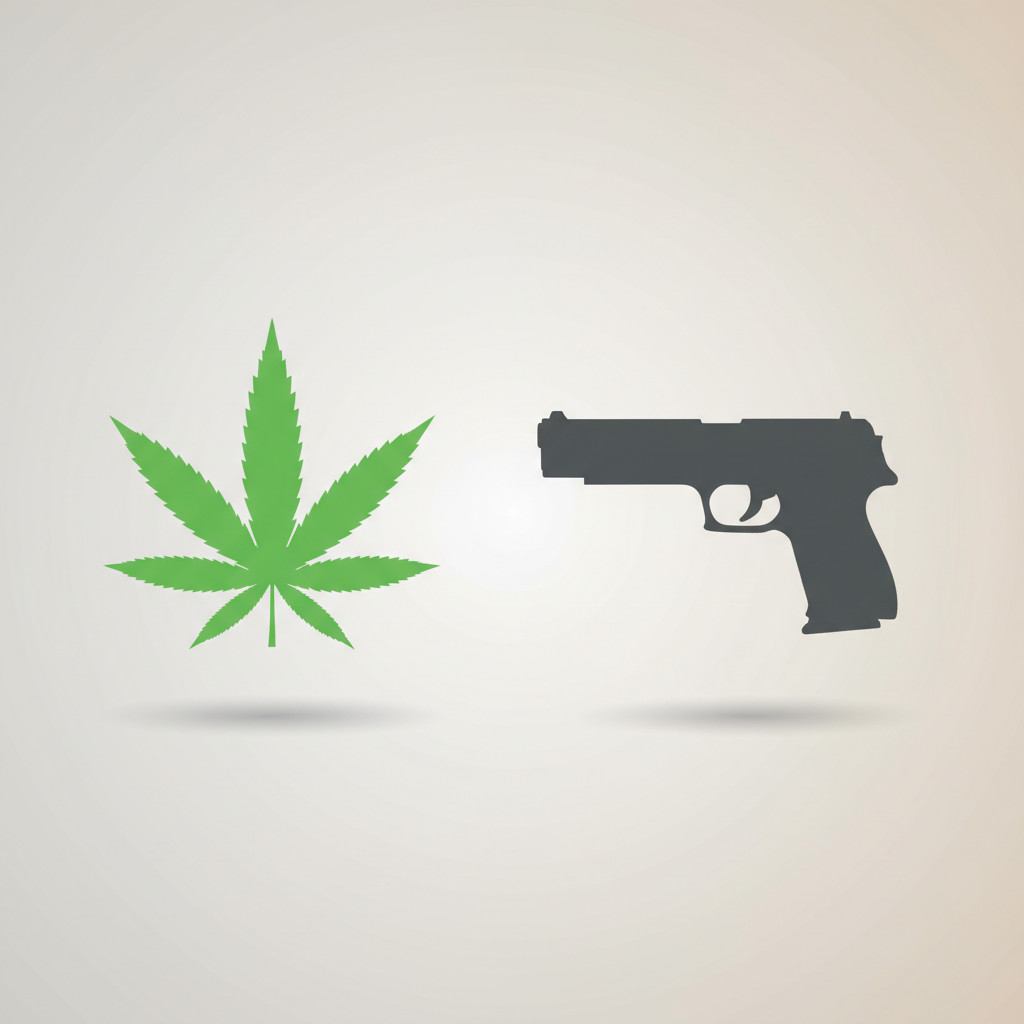
federal firearms ban for cannabis consumers
The federal firearms ban for cannabis consumers stems from 18 U.S.C. §922(g)(3). It bars any person who is an unlawful user of a controlled substance from possessing firearms. Marijuana remains a Schedule I substance under federal law. As a result, the prohibition covers cannabis users even in states where the drug is legal.
Legal background
The statutory basis appears in federal gun law. The key text is 18 U.S.C. §922, which sets prohibited person categories. For the full statute see here. Historically, Congress enacted the controlled-substance prohibition to keep firearms out of the hands the government deemed risky. As a result, enforcement tied drug use to public-safety concerns. Observers debate the ban’s constitutionality; see here for more.
For example, the Supreme Court heard oral arguments in Hemani. The case challenges the ban after the Fifth Circuit dismissed charges against Ali Daniel Hemani. See here for more background. Moreover, legal analysts question whether the 2022 gun-rights ruling changes how courts apply the ban. For more legal analysis see here.
Federal enforcement rationale
Federal prosecutors and regulators justify the rule on public-safety grounds. They argue that drug use can impair judgment and increase risk when firearms are present. Consequently, enforcement focuses on:
- Who is covered: unlawful users of controlled substances, including marijuana.
- How use is proven: lab tests, admissions, patterns of behavior, or reliable tips.
- Typical penalties: felony firearm charges with prison time and fines.
- Practical effects: loss of gun rights and legal exposure for cannabis consumers.
However, critics say the rule clashes with state legalization. They argue that it treats lawful state behavior as federally disqualifying. Therefore, the debate centers on federal power, Second Amendment rights, and how courts balance those interests.
For federal policy context, see the Department of Justice at here. Finally, expect ongoing litigation to refine who counts as an unlawful user and how the law applies in the cannabis era.
| State | State cannabis status | State level firearm rules or exceptions | How federal firearms restriction applies | Practical implication for residents |
|---|---|---|---|---|
| California | Recreational and medical legal under state law | State law legalizes use and possession, but it does not create a firearms exception | Federal law 18 U.S.C. Section 922(g)(3) still bars unlawful users of controlled substances from possessing firearms | Residents may legally use cannabis under state law, however they remain subject to federal firearm prohibitions and risk loss of firearm rights if prosecuted |
| Colorado | Recreational and medical legal | State does not exempt cannabis users from firearm prohibitions | Federal prohibition applies regardless of state legalization | As a result, cannabis consumers should know federal law can supersede state permissions |
| Oregon | Recreational and medical legal | State allows cannabis possession, no state safe harbor for gun ownership | Federal restriction remains enforceable | Practical conflict exists between state legal status and federal disqualification for firearms |
| New York | Recreational and medical legal | State law permits cannabis but offers no carve out for firearms | Federal ban continues to apply | Consumers may face federal charges if identified as unlawful users despite state legality |
| Florida | Medical only legal in most cases; recreational illegal statewide until recent changes | State issues medical marijuana cards, but cards do not shield holders from federal firearms rules | Federal law still disqualifies users including medical patients | Medical patients should avoid admitting use on federal firearm forms because they could trigger federal prohibition |
| Texas | Cannabis largely illegal; medical program limited | State law criminalizes non medical use and already restricts possession of weapons in some contexts | Federal prohibition overlaps with and supplements state penalties | In Texas, both state and federal rules can expose users to firearm charges, therefore risk is higher |
| Arizona | Recreational and medical legal | State allows use and possession, but it does not alter federal disqualification | Federal statute still governs firearm possession by users | Users should be aware that federal law can remove firearm rights even when state law permits cannabis use |
Legal and social implications of the federal firearms ban for cannabis consumers
The federal firearms ban for cannabis consumers raises legal and social tensions between state legalization and federal prohibition. Medical patients, recreational users, and gun owners each face different risks. Medical patients worry about losing firearms rights after honest medical disclosures. Recreational users can be federally disqualified despite state permissions. Federally regulated transfers and background checks force sellers and buyers into a complex compliance landscape.
Experts observed skepticism during oral arguments. For example, analysts at the Duke Center for Firearms Law noted that justices questioned historical analogues such as restrictions on habitual drunkards and appeared wary of applying §922(g)(3) to nonimpairing cannabis users. See the Duke preview for more context: Duke preview. The Rockefeller Institute also highlighted concerns about definitional and administrative burdens if courts try case by case. See Rockefeller Institute.
Impact pathways
Below are plausible scenarios mapping Court outcomes to likely congressional actions and stakeholder reactions. These pathways show how legal change could cascade across policy, practice, and industry.
- Narrow ruling limiting §922(g)(3)
- Congressional reaction: Targeted bills to protect medical patients or to clarify definitions of unlawful use. Some lawmakers may propose federal safe harbors for compliant state patients.
- Stakeholder reaction: Cannabis advocacy groups push for broader relief. Gun rights advocates celebrate restrictions being narrowed. Regulators issue updated guidance and law firms advise clients on compliance strategies.
- Ruling that upholds the ban broadly
- Congressional reaction: Introduction of incremental carve outs focused on medical patients while major reform stalls. Lawmakers call for enforcement guidance rather than repeal.
- Stakeholder reaction: Medical communities and state officials lobby Congress. Patients face continued uncertainty and legal counsel demand clearer policy for clinicians and sellers.
These impact pathways connect directly to how courts, Congress, and stakeholders will respond. The conclusion summarizes practical takeaways and next steps for consumers, clinicians, and industry counsel.
The federal firearms ban for cannabis consumers sits at the intersection of constitutional law, public safety, and shifting drug policy. Because marijuana remains illegal under federal law, the ban creates sharp tension with state legalization. The Supreme Court’s review in Hemani could change how courts treat that tension, and therefore millions of consumers face legal uncertainty.
The issue is complex in practice. Medical patients risk losing firearm rights even when they follow state rules. Recreational users face potential federal prosecution after admissions or testing. Gun sellers and owners must navigate confusing declarations and enforcement standards. Moreover, lawmakers have proposed targeted fixes, but no broad federal solution exists yet. As a result, legal counsel and policy watchers expect more litigation and legislative debate.
Frequently Asked Questions (FAQs)
Is it legal for cannabis consumers to own firearms?
At present federal law generally bars unlawful users of controlled substances from possessing firearms. Marijuana remains a Schedule I drug under federal law. Therefore state legalization does not automatically allow gun ownership. The Supreme Court’s Hemani case could change how courts read the ban, but uncertainty remains.
Do medical cannabis patients have an exemption?
Not under current federal law. Medical cards do not create a federal safe harbor. As a result patients can still face gun ownership restrictions and enforcement. Some lawmakers have proposed targeted relief, however no broad federal exemption exists yet.
What risks do consumers face when buying or transferring guns?
Federal transfer forms ask about unlawful drug use. Lying on those forms can be a felony. Moreover admissions or reliable evidence of regular use can trigger felony charges under 18 U.S.C. 922(g)(3). Therefore buyers and sellers face legal and compliance risks.
How can cannabis users reduce legal exposure?
First, know both state and federal rules. Second, consult a qualified attorney about your situation. Third, avoid making admissions that could be used as evidence. Finally, practice safe firearm storage and follow all state laws to reduce public safety concerns.
What should I watch next?
Track court rulings, congressional proposals, and agency guidance. If the Supreme Court narrows the ban, courts may change how cannabis and firearms law apply. Conversely, Congress could pass targeted bills to protect patients and certain users.