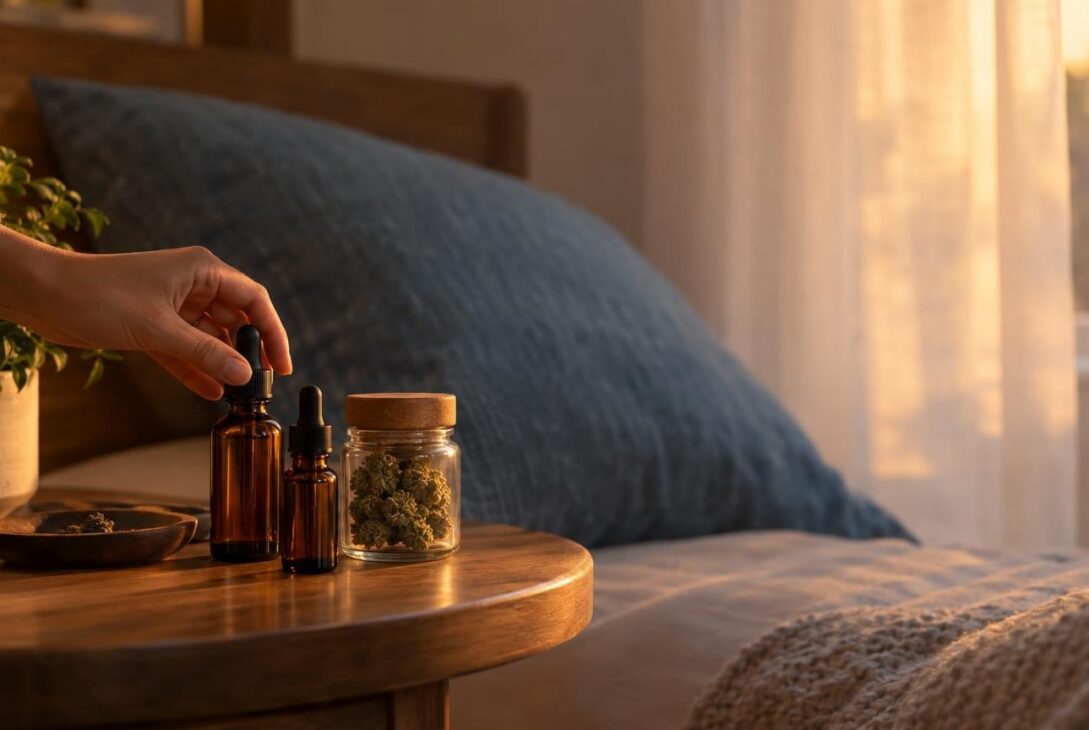
CBN for sleep is gaining attention as a natural option to help you fall asleep faster.
Recent trials show CBN can shorten sleep latency and improve subjective sleep quality in some users. Effects often increase when combined with CBD and sedative terpenes like myrcene and linalool. Start low, track effects, and choose third party tested products for accurate CBN dosing and safety.
What you’ll learn
- Direct answer about CBN for sleep and onset times.
- How CBN works plus clinical evidence for sleep effects.
- Safe dosing steps and selection tips.
- CBN dosage guidance for beginners and titration.
- CBN gummies vs tinctures timing and onset comparison.
Sources: PubMed Study and PMC Article
Direct answer
CBN for sleep is a mildly sedating cannabinoid formed when THC oxidizes that can shorten the time it takes to fall asleep. It lowers physiological arousal via cannabinoid signaling and is often combined with CBD or sedative terpenes for stronger onset CB1 receptor review, randomized sleep trial.
Onset: sublingual 15 to 20 min; gummies 60 to 90 min, Starting dose: 2.5 to 5 mg, Safety: Check drug interactions
How CBN Works for Sleep
Mechanisms of action
CBN forms when THC oxidizes with light and oxygen. The result is a less intoxicating cannabinoid with mild sedative properties.
CBN interacts with CB1 receptors to lower physiological arousal and modulate sleep regulation. Animal studies link CB1 signaling to changes in sleep architecture and arousal control endocannabinoid sleep mechanisms review.
The entourage effect can strengthen CBN impact when combined with other plant compounds. Below are sedative terpenes and how they modify onset and strength:
- Myrcene, often speeds onset and increases deep relaxation and supports faster sleep latency.
- Linalool, typically enhances sedation and reduces anxiety strengthening overall sleep quality.
Given these mechanisms, human trials have tested whether CBN shortens sleep latency. See Clinical evidence.
Clinical evidence
Randomized human trials report reduced time to fall asleep and improved next day sleep perception in some participants. Evidence is promising but limited and more research on long term effects is needed. See the controlled trial summary in the randomized CBN sleep trial.
Delivery and onset
Sublingual tinctures act in about 15 to 20 minutes for faster onset. Gummies take 60 to 90 minutes and tend to offer slower sustained release overnight. For fast sleep onset choose a sublingual option and for overnight maintenance consider an edible.
Benefits and Risks of CBN for Sleep
CBN can help shorten the time it takes to fall asleep but comes with three main risks to weigh. This quick list explains each risk in one line and then gives an immediate mitigation step to try. For regulatory and safety context consult the FDA guidance on cannabis product safety (look for safety warnings testing recommendations and consumer alerts): FDA guidance on cannabis product safety.
-
Next day drowsiness
Some users report residual sleepiness the morning after using CBN which can impair cognition and driving.
Immediate mitigation step: Reduce dose and take CBN earlier in the evening while avoiding driving until you know your personal response. -
Drug interactions and liver enzyme effects
Cannabinoids can affect cytochrome P450 enzymes which may alter levels of prescription medications.
Immediate mitigation step: Review current medications with your clinician or pharmacist and start CBN at a low dose while monitoring for changes. -
Limited long term data
Long term safety and chronic use effects for CBN remain poorly studied in humans at present.
Immediate mitigation step: Use short term trials only track sleep and daytime function and choose third party lab tested products for consistency.
Sources:
How to Use CBN Safely for Better Sleep
Use these steps to try CBN for sleep safely. Start low, track effects, and prioritize product quality. Adjust timing and avoid mixing with alcohol or sedatives.
- Start with a low dose such as 2.5 to 5 mg, and increase slowly while tracking effects.
- Take a sublingual tincture 15 to 20 minutes before bed for fast onset and quick effect.
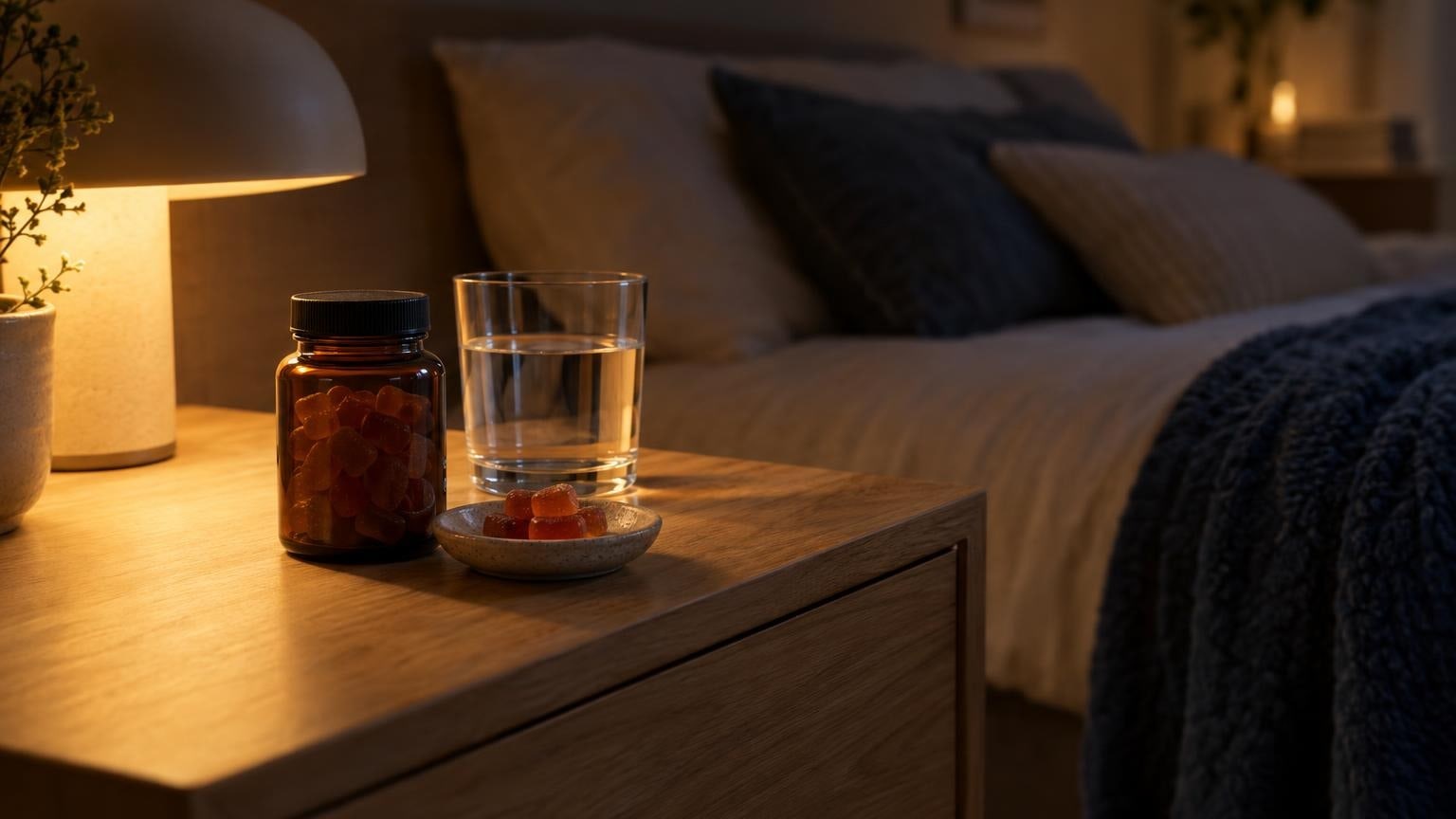
- Use a gummy 60 to 90 minutes before bed for slower, sustained CBN release overnight.
- Choose third party lab tested products labeled for CBN for sleep to ensure purity and accurate dosing.
- Monitor interactions and consult your clinician, because cannabinoids can affect liver enzymes and other medications.
- Adjust timing and dosing cautiously, and avoid driving if you feel drowsy the next day.
CBN
- Key sleep benefit: Reduces sleep latency and often improves subjective sleep quality.
- Typical effects: Gentle sedation and lowered physiological arousal via CB1 interaction; pairs well with CBD and sedative terpenes.
- Primary risks: Possible next day drowsiness; limited long term safety data; potential drug interactions.
CBD
- Key sleep benefit: Reduces anxiety and racing thoughts that interfere with sleep.
- Typical effects: Nonintoxicating calm and relaxation without heavy sedation; supports sleep indirectly.
- Primary risks: Drug interactions via liver enzymes; variable effects by dose; inconsistent sleep onset benefits.
THC
- Key sleep benefit: Shortens time to fall asleep and increases initial sedation.
- Typical effects: Intoxicating effects with stronger sedation and altered sleep architecture.
- Primary risks: Daytime impairment; REM suppression and fragmented sleep; legal or cognitive risks.
CBG
- Key sleep benefit: May reduce arousal and promote relaxation in some users.
- Typical effects: Mild calming properties; potential complement in full spectrum blends.
- Primary risks: Sparse clinical data; effects vary by individual; potential drug interactions similar to other cannabinoids.
See Delivery & onset for how formulations change timing.
Sources: randomized CBN sleep trial and endocannabinoid sleep mechanisms review.
CONCLUSION
CBN for sleep shows real promise as a natural sleep aid. It shortens sleep latency and often improves subjective sleep quality while working gently with the endocannabinoid system.
Moreover, pairing CBN with CBD and sedative terpenes can strengthen effects. Fast onset tinctures and slower gummies offer flexible dosing and tailored timing. Therefore, purity and third party testing remain crucial for safety and consistent results.
However, risks exist including daytime drowsiness and drug interactions. So consult your healthcare provider before use and start low while monitoring effects. Because individual response varies, document changes and adjust gradually.
Recent 2026 trials support CBNs benefits for falling asleep, though total sleep time may not increase. Ultimately choose tested products and evidence based protocols to find the right approach for your sleep goals.
Frequently Asked Questions
What is CBN for sleep
CBN for sleep is cannabinol used to reduce sleep latency by lowering physiological arousal via cannabinoid signaling.
How fast does CBN work
Sublingual tinctures act in about 15 to 20 minutes, while gummies typically take around 60 to 90 minutes.
Is CBN more effective than CBD or prescription sleep aids
CBN often shortens sleep onset more reliably than CBD alone but may not increase total sleep time compared with some prescription hypnotics. Combining CBN with CBD and sedative terpenes can improve results for many users.
Is CBN safe and what side effects should I expect
CBN is generally well tolerated; common risks include next day drowsiness and potential drug interactions, so consult your clinician.
How should I dose CBN for sleep and combine it with other cannabinoids
Start low at 2.5 to 5 mg and titrate slowly while tracking effects; timing depends on delivery. See How to Use CBN Safely for Better Sleep.
| Starting dose | Typical increment | Timing |
|---|---|---|
| 2.5 to 5 mg | +2.5 to 5 mg | Tincture 15–20 minutes; gummy 60–90 minutes |
Will CBN show up on a drug test
CBN itself is not typically screened for, but products containing trace Δ9 THC can trigger a positive drug test. Check third-party COA and avoid products with detectable Δ9 THC.
Is hemp derived CBN legal
Hemp derived CBN containing not more than 0.3% Δ9 THC is federally defined as hemp under the 2018 Farm Bill, but state rules vary so confirm local law.
References:
Related on CBD Advisor
- Why CBN for sleep and nightly recovery (2026 standard)
- CBD vs CBN for sleep: Which works best