Introduction
Hemp-derived bioplastic polycannabidiol carbonate (pCBDC) could reshape sustainable materials.
- Core technical claims About 92 percent bio-based content; PET like heat resistance and strength
- Main caveats Higher CBD feedstock cost; full LCA and techno economic analysis pending
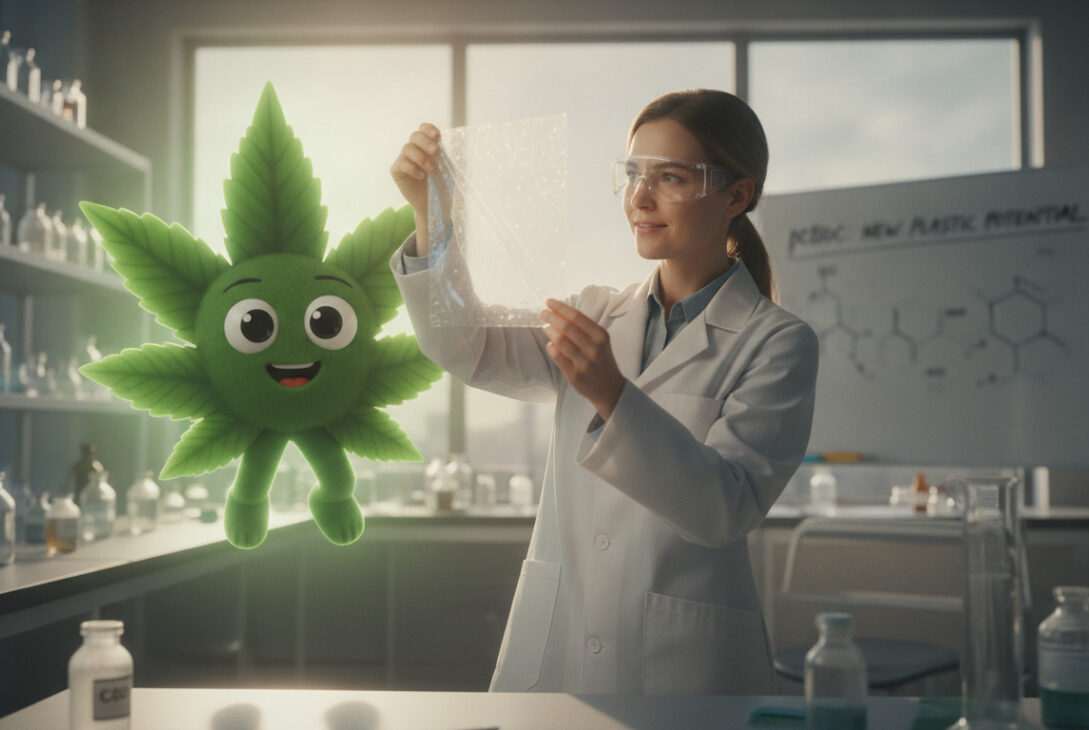
pCBDC is a renewable polymer that can match PET in heat resistance and strength while using plant based feedstocks. Made directly from cannabidiol, it avoids many conversion steps that other biopolymers require.
Researchers focus on technical feasibility rather than commercial readiness because lifecycle and economic assessments are incomplete and CBD feedstock costs remain higher than petrochemical alternatives. The material’s film stiffness and unusual stretchability during processing point to potential uses in packaging, fibers, electronics substrates and insulating materials.
Manufacturers, sustainability teams and materials scientists should watch greener production routes, recycling pathways and CO2 derived intermediates to judge real world viability. See How it’s made for process details and monitor cost reductions as scale and policy evolve.
What is CBD-based plastic (pCBDC)?
CBD-based plastic (pCBDC) is a polymer made directly from cannabidiol extracted from hemp. It offers renewable, plant-based feedstock and roughly 92 percent bio-based content. Researchers suggest uses in packaging, fibers and electronic substrates because it matches PET-like heat resistance and strength.
How is CBD-Based Plastic (pCBDC) Made?
Extraction (hemp → CBD)
Harvesters collect hemp biomass and dry or decorticate it. Producers extract cannabidiol using supercritical CO2 or ethanol extraction. They then purify CBD to polymer grade by distillation and chromatography.
For an accessible overview of the research, see University summary of pCBDC research: University summary of pCBDC research.
Monomer synthesis & polymerization
Researchers convert purified CBD into carbonate monomers or polymerize CBD directly to form polycannabidiol carbonate. Labs typically use carbonate forming reagents to build high molecular weight polymers.
- Reagent hazards: Triphosgene and related reagents pose toxicity and handling risks in lab scale.
- CO2 derived alternatives: Scientists explore CO2 based carbonate routes and other greener carbonyl sources to reduce hazards.
- Current R&D status: Ongoing work focuses on replacing hazardous reagents and demonstrating scalable, greener polymerization.
See the primary Chem Circularity article for experimental details: High-molecular-weight hemp-derived polycannabidiol carbonate thermoplastic with PET-like heat resistance, strength, and processability.
Processing & shaping
Producers process pCBDC by melt extrusion, film orientation and fiber spinning. Films show PET like stiffness and notable stretchability during orientation. Manufacturers can adapt existing extrusion equipment, but they must optimize processing windows and additives.
Safety note: triphosgene is hazardous; greener reagents required for scale up.
Benefits of CBD-Based Plastic (pCBDC)
- Very high renewable fraction (≈92% bio-based) which can reduce reliance on fossil feedstocks while supporting bio-based polymer strategies. see hemp-based plastic research summary
- PET comparable technical performance demonstrated in laboratories (PET-like thermal behavior and similar tensile strength in tests), indicating suitability for demanding applications.
- Enhanced processing flexibility from unusual stretchability during melt processing (enables advanced film orientation and novel manufacturing approaches).
- Uses non-food hemp feedstock linked to soil benefits and carbon uptake during cultivation (hemp retting lifecycle insights), supporting sustainable feedstock and renewable materials goals.
- Caution on environmental and end-of-life readiness: full life-cycle assessment is not yet available and recycling pathways remain undeveloped (LCA not published; recycling readiness unproven), so environmental claims are provisional.
Practical implication: Packaging, fiber and electronics substrate teams should prioritize pilot trials and rigorous LCA work because lab performance parallels PET while feedstock advantages could yield lower embodied fossil carbon if life-cycle and recycling gaps are closed.
CBD-Based Plastic (pCBDC) vs Traditional Plastics
Quick comparison: pCBDC shows PET-like properties but lacks proven end-of-life and commercial readiness
| Feature | pCBDC (polycannabidiol carbonate) | Typical Traditional Plastics (PET, PS, Acrylic) | Notes and Implications |
|---|---|---|---|
| Chemical origin | Hemp-derived cannabidiol and carbonate linkages; about 92 percent bio-based content | Petrochemical monomers such as terephthalic acid and ethylene glycol for PET; styrene for PS; methyl methacrylate for acrylic | Renewable hemp feedstock; avoids food crops |
| Mechanical properties | Heat resistance similar to PET; films show comparable strength and stiffness; unusually high stretchability during processing | PET offers high strength and good heat resistance; PS is brittle; acrylic is rigid and clear | PET-like performance; substitute potential with scale-up |
| Thermal resistance | Lab tests indicate PET-like thermal behavior | PET high; PS and acrylic moderate to low | Thermal parity supports packaging and film uses |
| Processability | Compatible with melt extrusion and film orientation; stretchability may enable advanced processing | Mature injection molding, extrusion and film processes are standard | Compatible with existing equipment; requires optimization |
| Biodegradability | Not yet demonstrated; biodegradation pathways unknown | PET, PS and acrylic are not readily biodegradable | Biodegradability not demonstrated; end-of-life unknown |
| Recyclability | Recycling routes undeveloped; chemical recycling research is suggested | PET widely recycled; PS and acrylic have limited recycling streams | Recycling routes undeveloped; chemical recycling needed |
| Environmental impact | Potential for lower fossil carbon because of bio-based feedstock; no full life-cycle assessment completed | Higher embodied fossil carbon from fossil feedstocks | Lower fossil carbon possible; full LCA required |
| Feedstock competition | Uses non-food hemp feedstocks, avoiding food supply pressure | Some bio-based plastics use food crops; petroplastics use fossil feedstocks | Uses non-food hemp; lowers food-supply pressure |
| Cost at scale | Currently higher due to CBD prices; costs may fall with scale and process improvements | Low and stable due to mature supply chains and economies of scale | Higher current cost; potential reductions with scale |
| Commercial readiness | Demonstrated technical feasibility in lab; not yet commercial | Fully commercial and globally produced at scale | Lab-scale feasibility; pilot plants and studies needed |
| Typical applications | Packaging films, fibers, electronics substrates and insulating materials | PET in packaging and fibers; PS in insulation and disposables; acrylic in displays and optics | Packaging films, fibers, electronics substrates, insulating materials |
pCBDC differs most from traditional plastics in three clear ways. It is hemp-derived and largely bio-based versus petrochemical origin for conventional plastics [1]. Recyclability and biodegradability remain unproven for pCBDC while PET has established recycling systems, and pCBDC is still at lab or pilot scale unlike commercially mature plastics [2].
Is CBD-Based Plastic (pCBDC) Sustainable?
CBD-based plastic (pCBDC) shows sustainability promise because it uses hemp and plant-derived cannabidiol. However, researchers stress that environmental claims remain provisional until a full lifecycle analysis is completed. Therefore the material’s lower fossil intensity is possible but not yet proven.
Hemp cultivation offers clear benefits for sustainable plastics. For example, hemp often requires less fertilizer and supports soil health, and hemp biomass can sequester carbon during growth, which may lower net greenhouse gas emissions. Additionally, pCBDC relies on non-food feedstocks, which avoids competition with food crops and supports sustainable feedstock strategies (see hemp retting lifecycle insights).
Nevertheless, significant challenges remain when scaling production. Current lab synthesis used triphosgene and solvents, so greener reagents and CO2-derived intermediates must replace hazardous inputs. Also, CBD feedstock costs currently raise resin prices, and recycling systems for pCBDC are undeveloped. Importantly, lifecycle outcomes for biopolymers vary with system boundaries, allocation choices, and end-of-life scenarios, as reviewed for biobased polymers, so robust LCA methods are essential: view detailed review.
In short, pCBDC could reduce embodied fossil carbon and support circular materials, but proving sustainability requires rigorous LCA, techno-economic analysis, and pilot-scale process improvements before commercial deployment.
CONCLUSION
CBD-based plastic (pCBDC) represents a promising renewable alternative to conventional plastics. Lab results show PET-like heat resistance and strength, which suggests practical uses in packaging, fibers and electronics substrates.
However, sustainability remains conditional. Full life-cycle analysis, greener production routes and viable recycling pathways must be demonstrated before commercial scaling. Therefore techno-economic studies and pilot plants are essential to lower feedstock costs and validate environmental benefits.
For materials scientists, sustainability teams and procurement professionals, stay informed about LCAs, process improvements and recycling research. As a result, pCBDC could become a high-value sustainable option within a decade if scale and greener chemistry reduce costs and impacts. We will continue to track developments and report clear, research-based updates.
Frequently Asked Questions (FAQs)
Is CBD-based plastic (pCBDC) safe for consumer products?
Early lab studies show CBD-based plastic (pCBDC) matches PET-like heat resistance and strength, which supports safe handling in many products. However, researchers stress safety testing at scale is incomplete, and further migration and toxicity studies are needed. Therefore manufacturers must validate safety before consumer use.
Is CBD-based plastic (pCBDC) biodegradable?
Current research does not yet confirm biodegradability for CBD-based plastic (pCBDC). Laboratory work focused on mechanical and thermal properties, not microbial breakdown. As a result, claims about biodegradation remain unproven until targeted end-of-life studies are published.
How much does CBD-based plastic (pCBDC) cost compared with conventional plastics?
Right now pCBDC costs more because CBD feedstock prices are higher than petrochemical monomers. Researchers note resin costs could fall for high-value uses; however, broad commodity pricing depends on scale and process improvements. Therefore, cost remains the main barrier to mass-market adoption.
When will CBD-based plastic (pCBDC) be commercially available?
The work demonstrates technical feasibility rather than commercial readiness. Pilot-scale production, greener reagent routes, and techno-economic analysis must come next. Consequently, commercial availability will depend on successful scale-up and cost reductions over several years.
Will CBD-based plastic (pCBDC) reduce environmental impact?
pCBDC could lower fossil carbon because it uses hemp-derived CBD and non-food feedstocks. However, no full life-cycle analysis has been published, so environmental benefits remain theoretical. Rigorous LCA, recycling pathways, and greener production methods must prove real-world impact.
Related on CBD Advisor
- Improper notarization of medical cannabis petition in Nebraska—stakes
- Will Idaho medical cannabis ballot petition signatures influence policy
- What is California Cannabis Awards Home Grow – Flower competition