
Cannabis policy, taxation reform, and public opinion in Alaska and Massachusetts: Why this moment matters
Cannabis policy, taxation reform, and public opinion in Alaska and Massachusetts are reshaping the legal market and public debate. Because both states face tax changes and ballot pressure, businesses and voters watch closely. This introduction previews how tax bills, cultivation levies, and public polls interact.
In Alaska, lawmakers propose HB 91 and SB 73 to overhaul the cultivation tax. HB 91 would replace the fifty dollars per ounce levy with a six percent sales tax paid by consumers. SB 73 would reduce the cultivation tax to twelve dollars per ounce. As a result, regulators aim to help licensed cultivators compete with illicit sellers and stabilize revenue.
Meanwhile in Massachusetts, a recent Cape Cod Times poll shows strong resistance to repealing adult use sales. However, signature gathering and legal steps keep the debate active. Moreover, Massachusetts records more than one point six five billion dollars in annual dispensary sales and nine billion dollars in total sales since 2018. Therefore, public opinion, policy choices, and tax design will determine market health and enforcement.
This article explores those dynamics and highlights implications for businesses, regulators, and voters. It will analyze tax design, market signals, and voter sentiment. Finally, readers will get clear takeaways to inform decisions across the legal cannabis landscape.
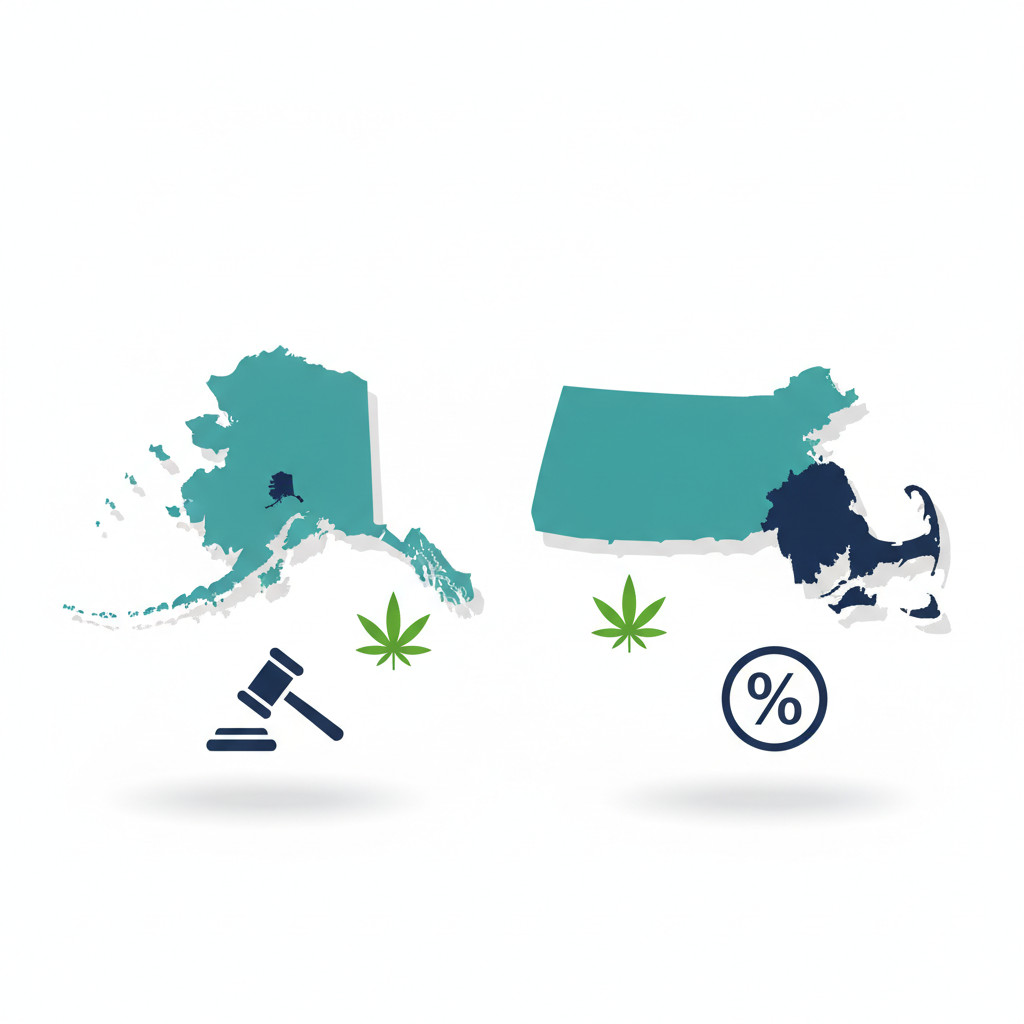
Cannabis policy, taxation reform, and public opinion in Alaska
Alaska has moved from flat cultivation levies toward bills that reshape tax burdens. Because prices fell and the illicit market grew, lawmakers now consider major changes. In short, the state faces a tradeoff between stable revenue and a healthy legal market.
Key legislative proposals
- HB 91 proposes replacing the existing $50 per ounce cultivation tax with a six percent retail sales tax paid by consumers. Details and fiscal notes show potential revenue shifts. See reporting at Ganjapreneur for bill context: Ganjapreneur report.
- SB 73 would cut the cultivation tax from $50 to $12 per ounce. The goal is to lower costs for licensed growers and improve competitiveness.
- Both bills respond to the Governor’s 2022 recreational marijuana task force recommendations. The task force reviews tax and regulatory design: Governor’s task force.
How taxation has evolved
- Alaska originally used a per-ounce cultivation tax that did not track market price changes. Therefore, cultivators paid the same levy even when wholesale prices dropped.
- As a result, revenue rose at first, then declined from roughly $30 million in 2021 to about $25 million in 2025. That decline increased pressure to rethink tax design.
Public reaction and industry signals
- Many licensed growers report financial stress. For example, 69 cultivators had past-due taxes totaling more than $5.5 million at the end of 2025. This data shows collection troubles and business strain.
- Legislators and industry advocates argue lower or different taxes will help legal businesses compete with illicit sellers. Ashley Carrick said regulatory inaction adds pressure and reduces revenue.
- However, fiscal analysts warn that shifting to a sales tax could reduce state receipts short term. Citizen Portal coverage summarizes fiscal notes and potential multi-million dollar revenue drops: Citizen Portal coverage.
Implications and next steps
- If enacted, these reforms may ease cultivation costs and shrink the illicit market. At the same time, policymakers must weigh revenue volatility.
- Therefore, lawmakers should pair tax changes with stronger compliance measures and targeted support for small cultivators.
Related keywords and synonyms: Alaska cannabis tax, HB 91, SB 73, cultivation tax, taxation impact, cannabis legalization, public opinion, industry viability.
Quick comparison: Cannabis policy, taxation reform, and public opinion — Alaska vs Massachusetts
| Aspect | Alaska | Massachusetts |
|---|---|---|
| Legal status | Adult-use legal and retail market active. | Adult-use legal and retail market active. |
| Current tax structure | $50 per ounce cultivation tax currently in place. | Retail excise and local taxes apply to adult-use sales. |
| Proposed reforms | HB 91 would replace $50 per ounce with a 6% retail sales tax. SB 73 would cut tax to $12 per ounce. | Ballot initiative seeks to ban retail adult-use sales if approved. Sales would end Jan 1, 2028, but possession would remain legal. |
| Revenue trend | Cannabis tax revenue fell from about $30 million in 2021 to about $25 million in 2025. | Strong retail growth. Dispensaries set a record with over $1.65 billion in annual sales. |
| Public opinion | Industry and some lawmakers back reform to protect businesses. Public sentiment varies across regions. | Cape Cod Times poll: 63% oppose repealing sales; 20% support; 7% unsure. Poll of 670 adults; margin of error ±3.8%. |
| Market size and impact | Licensed cultivators face collection issues; 69 had past-due taxes totaling over $5.5 million at end of 2025. | State has reached $9 billion in total sales since 2018. Regulators finalized on-site consumption rules. |
| Illicit market pressure | Policymakers say tax reform could help licensed businesses compete with illicit sellers. | Repeal could boost illicit sales, while current rules aim to limit diversion. |
| Key takeaways | Proposed tax shifts trade revenue stability for market competitiveness. | Public support favors keeping legal sales. Policy changes could reshape market dynamics. |
Cannabis policy, taxation reform, and public opinion in Massachusetts
Massachusetts follows a different path than Alaska on taxation and voter action. While Alaska debates per-ounce levies, the Bay State relies on retail excise and local taxes and has a larger, more mature market.
Policy framework
- State excise taxes and local option taxes apply to adult-use sales on top of standard sales taxes.
- Regulators finalized licensing rules for social use venues, allowing on-site consumption businesses to apply.
- These retail-focused levies contrast with Alaska’s cultivation-based approach and shape retailer pricing.
These design choices influence how taxes show up at the register and affect retailer margins.
Market signals
- The state set a new annual retail record with more than $1.65 billion in dispensary sales last year and roughly $9 billion in total sales since 2018.
- High sales suggest strong consumer demand but also raise questions about whether taxes drive consumers to illicit markets.
Public opinion
Public attitudes matter because they can stop or sustain policy changes. A Cape Cod Times–commissioned poll found 63 percent oppose repealing adult-use sales, 20 percent support, and 7 percent are unsure. The survey of 670 residents was conducted February 12 to 16, 2026. See reporting at Marijuana Moment.
The State Ballot Law Commission advanced the repeal initiative in January, and signature gathering has been controversial. NORML covers related developments: NORML.
Implications
- Voter support for legal sales reduces near-term repeal risk, but campaigns can shift sentiment.
- Policymakers should balance tax revenue needs with market competitiveness and consumer access.
- Consider targeted relief for small retailers and stronger compliance to limit illicit diversion.
Related keywords and synonyms: Massachusetts cannabis tax, retail excise, social consumption, ballot repeal, public opinion, market competitiveness
CONCLUSION
Cannabis policy, taxation reform, and public opinion in Alaska and Massachusetts show how law, money, and voters interact. Because Alaska faces per-ounce levies and potential HB 91 and SB 73 changes, lawmakers weigh revenue and market health. Meanwhile in Massachusetts, strong sales and public resistance to repeal keep the retail market robust.
Public opinion matters because voters can reshape market rules at the ballot box. For example, 63 percent of Massachusetts respondents opposed a repeal in a recent Cape Cod Times poll. Also, Alaska’s revenue drop from roughly 30 million in 2021 to 25 million in 2025 pressures legislators.
Therefore, policymakers should balance tax stability with market competitiveness and compliance incentives. However, any shift to sales taxes could alter short-term receipts and require monitoring. Consequently, targeted supports for small cultivators can reduce past-due tax issues and help the legal market compete with illicit sellers.
MyCBDAdvisor provides clear, research-driven coverage for industry stakeholders and consumers. As a full-spectrum, trusted CBD resource, it offers accessible guidance on cannabinoids and policy. Visit MyCBDAdvisor to learn more and stay informed.
Proposed Cannabis Tax Changes and Public Opinion Insights
What are the main proposed cannabis tax changes in Alaska?
Alaska lawmakers propose two major options. HB 91 would replace the $50 per ounce cultivation tax with a 6 percent retail sales tax. SB 73 would cut the cultivation tax to $12 per ounce. These proposals aim to lower grower costs and improve legal market competitiveness.
How has Alaska’s cannabis tax revenue changed recently and why does it matter?
Revenue fell from about $30 million in 2021 to roughly $25 million in 2025. Because wholesale prices dropped, the fixed per-ounce levy no longer matched market realities. As a result, the state faces pressure to redesign taxes to support licensed businesses and stabilize receipts.
Could changing Alaska’s tax structure boost the legal market?
Yes, changing taxes could help. Lower cultivation levies or a retail sales tax may reduce grower costs. Therefore, legal sellers could better compete with illicit operators. However, shifting to a sales tax may lower short-term state revenue, so policymakers must balance outcomes.
What is the public opinion climate in Massachusetts about adult-use sales?
A Cape Cod Times poll found 63 percent oppose repealing adult-use sales, 20 percent support, and 7 percent were unsure. The poll surveyed 670 residents and has a margin of error of plus or minus 3.8 percent. Consequently, voters currently favor keeping retail sales.
What are practical steps regulators and lawmakers should take now?
Policymakers should combine tax changes with compliance and support measures. For example, target relief for small cultivators, improve tax collection, and fund anti-illicit-market enforcement. Moreover, monitor revenues closely because tax shifts can change receipts and market behavior.