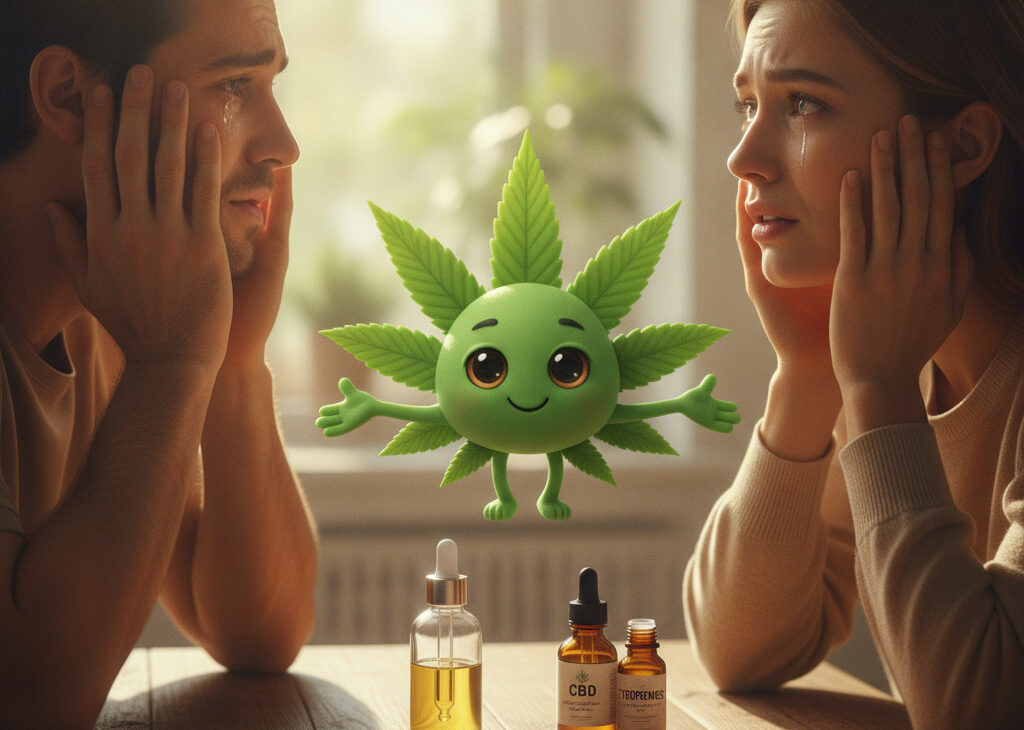
Cannabis and Emotional Boundaries
Cannabis and emotional boundaries sit at an odd crossroad for many of us.
We turn to cannabis to relax, and then feelings arrive with surprising force.
Because the herb alters how we sense, music, memory, and grief can surface fast.
As a result, simple nights can become intense lessons in emotional honesty.
I cry more than I expected when high, and you might too.
However, crying does not always feel like weakness; often it feels like clarity.
Vulnerability can open doors that sober walls keep shut.
Meanwhile, small triggers like a song or a smell can carry you back, vividly.
This piece explores how cannabis changes emotional flow in the body.
It looks at personal stories, science, and mindful usage so you can set safer boundaries.
Therefore, you will find tips to stay grounded and to respect your limits.
By the end, you may view being high as an honest mirror, not a threat.
Stay curious, set boundaries, and practice gentle self-care.
Cannabis and emotional boundaries: what they are and how cannabis affects them
Emotional boundaries are the limits you set around your feelings. They help you decide what you will carry and what you will let go. Because boundaries keep relationships and self-care healthy, they matter in moments of vulnerability.
Cannabis can change those limits in clear ways. For example, being high often lowers social filters and increases emotional availability. As a result, music, memory, and small triggers can feel larger than usual. However, those shifts can be either healing or destabilizing depending on context.
Positive ways cannabis can affect boundaries
- It can open access to buried feelings, which helps with emotional honesty and growth.
- It can boost empathy, so you listen more and judge less.
- It can create a safe space to process grief, memory, or creative insight.
Negative ways cannabis can affect boundaries
- It can blur limits, making you overshare at the wrong time.
- It can intensify sadness or anxiety without warning, especially if you lack coping tools.
- It can reduce social discretion, which may harm relationships or privacy.
Because the science shows cannabis alters emotion processing, set intentions before you use it. For an overview of biological effects, see this review: this review. Also, if you seek balance and joy while using cannabis, these practical reads can help: Joy Is Still a Valid Reason to Smoke Weed! and What Do Cannabis Moms Teach About Balance?. For mood-focused perspective, try What do February 2026 horoscopes reveal about your mood?.
Practical takeaway
- Set clear intentions before a session.
- Use grounding practices if emotions rise quickly.
- Check in with trusted people and create exit signals for social settings.
Related keywords: being high, emotional honesty, vulnerability, crying when high, emotional availability, music triggers, mindful usage
| Effect Type | Description | Potential Impact |
|---|---|---|
| Increased emotional access (Positive) | Cannabis can open access to buried feelings. | Promotes emotional honesty and healing. |
| Heightened empathy (Positive) | Users often feel more connected and understanding. | Strengthens communication and relationships. |
| Creative insight (Positive) | Shifts perspective and encourages novel thinking. | Boosts self-reflection and problem solving. |
| Lowered inhibition (Negative) | Reduces social filters and restraint. | May lead to oversharing or later regret. |
| Emotional amplification (Negative) | Sadness, nostalgia, or anxiety can intensify. | Can overwhelm coping skills and trigger crisis. |
| Blurred boundaries (Negative) | Limits between self and others become fuzzy. | Risks relationship strain and privacy loss. |
| Altered memory recall (Neutral) | Memories feel vivid or distorted during use. | Can be therapeutic or misleading depending on context. |
| Variable dose response (Neutral) | Effects depend on strain, dose, and setting. | Outcomes vary widely between sessions. |
Scientific insights: Cannabis and emotional boundaries
Research shows cannabis affects emotion processing in multiple ways. Because the plant contains many compounds, effects vary by compound, dose, and person. Acute THC often increases emotional reactivity, while cannabidiol CBD tends to reduce anxiety. For a broad review of human imaging studies, see this study.
Several studies link THC to greater amygdala activation when people view negative images. As a result, users may feel negative emotions more intensely. One review also highlights THC’s dose dependent risk for anxiety and paranoia. See this review for more detail: here.
In contrast, controlled studies show CBD can lower anxiety in social settings. For example, Bergamaschi et al. (2011) found a single dose of CBD reduced speech-related anxiety in people with social phobia. Read the study here.
Neuroimaging adds nuance. A 2019 study shows THC and CBD change brain activation in opposite directions during emotional tasks. Therefore, amygdala–prefrontal coupling and fusiform responses shift depending on compound. See the European Psychiatry analysis: here.
Key takeaways
- THC often amplifies emotional responses, sometimes causing anxiety.
- CBD can reduce acute anxiety and improve emotional regulation.
- Dose, strain, setting, and prior mental health shape outcomes.
- Neural effects involve the amygdala, prefrontal cortex, and memory systems.
Therefore, scientific evidence supports the idea that cannabis can both erode and strengthen emotional boundaries. Use lower THC doses and consider CBD ratios if you want more stability. Above all, prioritize safe settings and professional guidance when needed.
Conclusion
Cannabis and emotional boundaries interplay in complex ways.
Because cannabis alters emotion processing, it can open feelings or amplify them.
THC often increases reactivity, while CBD can calm anxiety.
As a result, outcomes vary by dose, strain, and setting.
Therefore, set clear intentions before a session.
Also, use grounding tools like breathwork, water, or a trusted friend.
If emotions become overwhelming, pause and seek support.
Practical steps help preserve emotional boundaries.
Start with lower THC doses and consider CBD ratios.
Keep sessions private when possible, and create exit signals for social settings.
Monitor patterns across time.
If past trauma or mood disorders exist, consult a professional.
MyCBDAdvisor offers research-driven guides on CBD, hemp, and cannabinoids.
Visit MyCBDAdvisor for reliable information and practical reads.
Finally, approach cannabis with curiosity and care.
With mindful use, cannabis can be a tool for insight, not a threat to your emotional limits.
Remember that boundaries can shift over time.
Therefore, check in with yourself after each session and adjust practices accordingly.
Frequently Asked Questions
Will cannabis make me more emotional?
Short answer: sometimes. Because THC can amplify emotions, some people cry or feel nostalgic when high. However, responses vary by dose, strain, and current mood.
Can cannabis help me process feelings safely?
It can. Low to moderate doses may open access to buried feelings and support reflection. Therefore, set intentions and use grounding practices to stay centered.
How do I avoid oversharing while high?
Plan in advance. Tell a trusted friend your limits, mute group chats, or use private spaces. As a result, you reduce regret and protect relationships.
Should I use CBD or THC if I worry about anxiety?
Consider CBD-rich products. CBD often lowers situational anxiety, while THC can increase it. Also consult a healthcare professional if you have mood disorders.
When should I seek professional help?
Seek help if cannabis repeatedly triggers panic, severe depression, or disrupts daily life. A clinician can advise safer use and therapeutic options.