
Introduction
A cannabis lending fund can unlock vital working capital for licensed operators facing limited bank access and heavy tax and regulatory burdens.
This article explains how funds raise and underwrite capital and common deal structures such as senior credit facilities and working capital lines. It also outlines regulatory and tax risks, underwriting challenges, and practical signs a lending facility will accelerate growth rather than increase risky leverage guidance on cannabis banking and state by state cannabis laws.
Picture a busy dispensary with staff processing orders, a visible cultivation room through glass, delivery vans loading, and a small finance team reviewing loan terms at a table.
What is a cannabis lending fund?
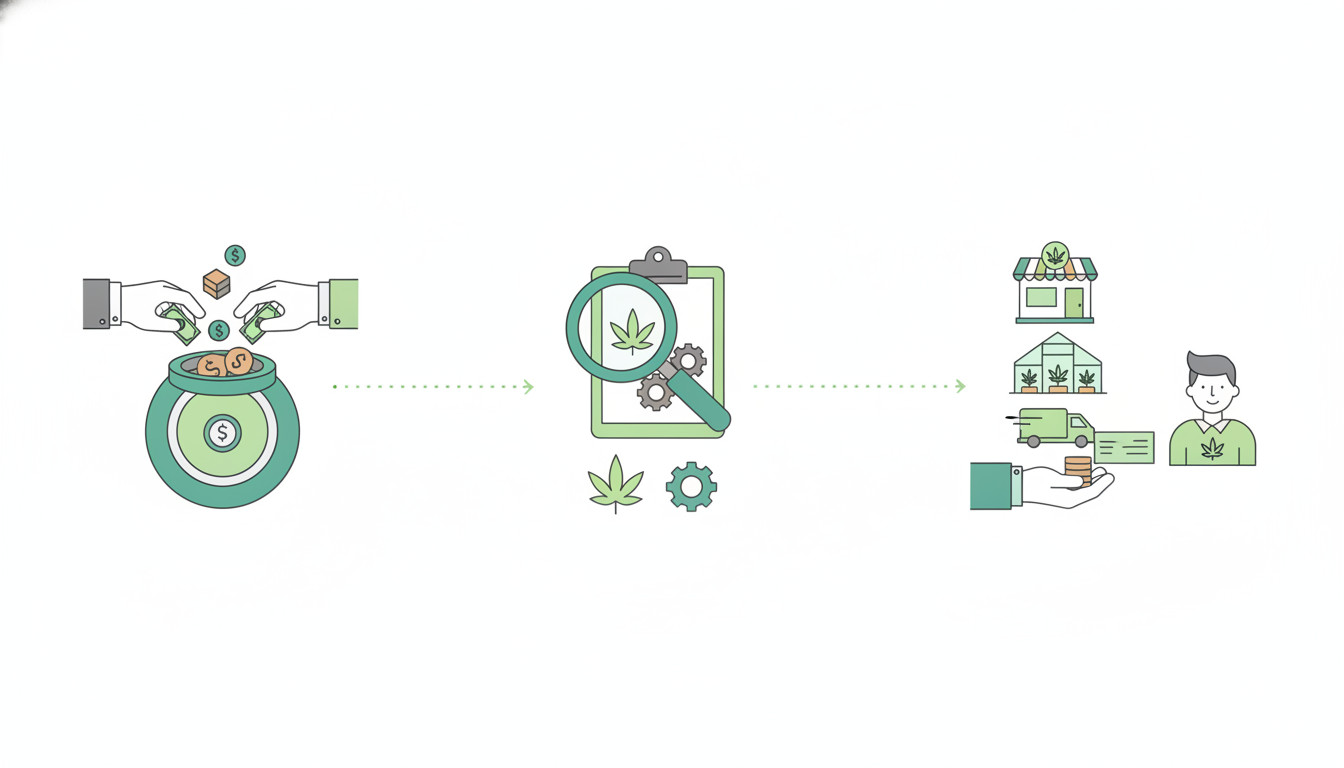
A cannabis lending fund provides loans and credit solutions to cannabis businesses. It pools capital from institutional and private investors and underwrites deals using sector data. As a result, borrowers gain working capital for inventory payroll and supplier payments. However, funds must manage regulatory uncertainty and 280E tax impacts to protect investors.
How cannabis lending funds operate
Raising capital
A cannabis lending fund raises capital from institutional investors, private credit managers and family offices. Firms often secure commitments through closed end funds or dedicated credit facilities that pool investor capital for senior and subordinated loans. For context on why this model matters in practice, read a legal and financing analysis of lender approaches to cannabis funding: legal and financing analysis.
Underwriting and loan products
Lenders perform state law reviews, verify licenses and run robust cash flow underwriting. Underwriting relies on bank statements, tax returns and site visits to evaluate repayment capacity. Funds monitor loans with covenants, reporting requirements and periodic audits to identify early warning signs. For compliance and suspicious activity considerations consult FinCEN guidance on cannabis banking: FinCEN guidance on cannabis banking.
Common loan products include working capital lines, supply chain financing, inventory loans and senior secured term loans. Many loans are short term, often under two years, because lenders price for regulatory and operational uncertainty. Collateral ranges from receivables and equipment to real estate mortgages depending on loan type and lien priority.
| Fund type | Typical interest rate APR | Typical loan term | Common collateral or structure |
|---|---|---|---|
| Working capital and supply chain fund | 8% to 18% | 3 to 18 months | Receivables or inventory financing |
| Senior secured private credit fund | 10% to 16% | 1 to 3 years | Senior lien on assets or cash flows |
| Real estate backed lender | 6% to 12% | 3 to 7 years | Property mortgage or leasehold interest |
| Revenue based or merchant cash advance | 20% to 40% APR equivalent | 1 to 12 months | Future sales or daily remittance |
Takeaway: In cannabis financing the primary distinction is structure and risk profile. A senior secured loan typically provides longer terms and lower APRs backed by asset liens, while working capital lines deliver shorter term liquidity at higher rates to cover inventory and payroll needs.
Legal landscape of cannabis lending funds
Federal law still classifies cannabis as a controlled substance. As a result, lenders face federal legal risk even when state law permits sales. Therefore, funds must build compliance controls to avoid charges like money laundering or aiding unlawful activity. FinCEN guidance on cannabis banking explains federal reporting expectations and risk factors.
State regulation shapes who may receive finance. States set licensing requirements, track inventory, and require compliance reporting. Consequently, a lender’s legal review focuses on license validation, local ordinances, and transfer restrictions. For a state by state summary of laws and regulatory differences, see the National Conference of State Legislatures.
Major legal challenges and compliance requirements
- Bank access and correspondent relationships remain limited because federal law increases counterparty risk. Therefore, funds often rely on private credit or dedicated facilities.
- Tax code section 280E disallows common business deductions for federally illegal drug trafficking. As a result, borrowers pay higher effective tax rates and lenders must stress test cash flows.
- Anti money laundering and suspicious activity reporting are mandatory. Lenders must file and monitor Suspicious Activity Reports when required by FinCEN guidance.
- Licensing changes and local enforcement actions can reduce collateral value. Therefore, contracts include covenants tied to compliance and prompt remediation steps.
In short, a cannabis lending fund must integrate robust legal, tax, and regulatory due diligence. As a result, lenders price deals to reflect political and compliance risk while seeking structures that protect capital and support cannabis financing growth.
Secure funding from a lending fund
Follow these five steps when you apply to a cannabis lending fund, and assemble documentation and forecasts before you contact a lender. Lenders focus on license validation, cash flow, and tax treatment such as 280E, so be ready to show compliance and realistic repayment paths. Use concise pro formas and clear covenant plans to shorten diligence and speed approval.
- Gather licenses, financial statements, and recent tax returns to prove revenue and compliance; for example provide the last three years of CPA prepared federal tax returns, year to date profit and loss statements, and 12 months of bank statements for every business account.
- Prepare a clear business plan with cash flow forecasts and specific growth milestones; for example include a 12 month rolling cash flow model and a three quarter sales projection tied to new product launches or store openings.
- Identify collateral or receivables and propose a repayment plan; acceptable examples include METRC tracked inventory, accounts receivable, cultivation equipment, or a leasehold interest with documented assignment rights.
- Shop multiple fund offers and compare APR, covenants, reporting requirements, and prepayment penalties; ask for sample loan agreements and an itemized fee schedule to compare true cost.
- Negotiate terms and clarify covenants, default remedies, and borrower reporting obligations; for example seek defined cure periods, limits on springing covenants, and narrow audit rights to reduce operational disruption.
Documents & prep checklist
- CPA prepared federal tax returns past three years plus year to date financials
- 12 months of bank statements for all accounts and reconciliations
- Active state licenses, METRC or seed to sale reports, and insurance certificates
- 12 month cash flow forecast that models 280E impact and debt service coverage
- Legal and tax advisor contacts and a reviewed sample loan agreement
For a detailed list of due diligence expectations consult FinCEN customer due diligence guidance: FinCEN customer due diligence guidance. For a practical lender style checklist see a cannabis loan document checklist: cannabis loan document checklist.
Conclusion
A cannabis lending fund can deliver the liquidity many operators need to scale operations and stabilize cash flow. Therefore they matter not just for growth but for day to day survival.
These funds combine disciplined underwriting, specialized structures, and strict compliance to lower risk. However regulatory and tax issues like 280E remain critical, so prudent operators manage leverage and improve margins. For example, see a recent large debt financing case in the sector: GTI borrows $50M debt.
Adopt transparent reporting conservative forecasts and rigorous compliance to access better rates and larger facilities. Also learn more about industry finance and trends at this official resource on cannabis finance: official resource on cannabis finance. As a result, sustainable practices help lenders and businesses build long term capital relationships today.
Frequently Asked Questions (FAQs)
Who can apply to a cannabis lending fund?
Most licensed cannabis operators can apply for cannabis loans if they hold valid state permits. Lenders expect proof of compliant operations, bank statements, and tax returns, and many funds favor borrowers with established revenue or repeat borrowing history.
What regulatory and business risks exist?
Regulatory uncertainty and tax rules like 280E raise cash flow and compliance risks for borrowers and lenders. Borrowers should plan for higher effective tax rates and possible license changes, while lenders price deals to offset political and enforcement risk.
How much can a business borrow from a cannabis lending fund?
Loan sizes range from small working capital lines to multi million private credit facilities depending on the fund type and business track record. Working capital and supply chain loans often cover tens of thousands to low millions, whereas senior credit structures can underwrite larger multi million commitments.
How long does approval take for cannabis loans?
Approval timelines typically span two weeks to several months depending on documentation and legal reviews. Deals with complete licenses, tax returns, and bank records can close in two to six weeks, while complex legal or escrow requirements extend the process.
How do lenders reduce compliance and legal risk?
Lenders perform deep due diligence, ongoing reporting, and state law reviews and follow federal guidance on reporting and monitoring suspicious activity. For authoritative guidance see the FinCEN cannabis banking guidance and the state cannabis policy database for state differences.
Related on CBD Advisor
- Why Cannabis industry developments matter for investors now
- What Is Cannabis Industry News and Trends Telling Investors
- What does the NYT cannabis op-ed critique get wrong