Introduction
CBC and CBG synergy with silver, particularly when delivered as silver nanoparticles, is emerging as a promising strategy to disrupt biofilm and tackle antibiotic resistant wound infections. Antibiotic resistance threatens modern medicine and makes wound care increasingly difficult, especially for chronic and hard-to-heal wounds in elderly and diabetic patients. Biofilm formation on wounds impedes healing and raises hospitalization rates, creating urgent demand for new antimicrobials and antibiofilm therapies.
- Lab results: in vitro antimicrobial and antibiofilm assays
- Clinical implications: wound care strategies for diabetic ulcers and resistant infections
- Formulation and safety: topical delivery, cytotoxicity, and regulatory considerations
New laboratory data demonstrates that the minor cannabinoids cannabichromene (CBC) and cannabigerol (CBG) dramatically boost silver’s antibacterial activity, lowering the effective silver concentration up to 64-fold and clearing established biofilms in vitro. The Oxford study published in 2026 in the Journal of Applied Microbiology used in vitro biofilm models and tested strains including methicillin-resistant Staphylococcus aureus, Escherichia coli and Pseudomonas aeruginosa. Notably, the triple combination eradicated resilient strains and produced no detectable MRSA resistance over a 20-day laboratory trial; experiments explicitly combined CBC and CBG with silver nanoparticles to amplify bactericidal effects and measure antibiofilm outcomes.
In the sections that follow readers will find a detailed review of the lab methods and quantitative results, plus an assessment of potential clinical development plans, wound care applications, formulation strategies and scalability. We examine safety considerations, regulatory pathways and practical implications for biofilm eradication in diabetic ulcers, including how lower silver doses could cut toxicity and costs. Key takeaway: this work highlights a path to clinically relevant dose-sparing silver.
Direct answer
An in vitro lab study found CBC and CBG produced antimicrobial synergy with silver, yielding up to 64-fold reduction in required silver concentration and clearing resilient biofilms including MRSA and E. coli. The results come from laboratory assays only; no clinical trials yet. Clinical validation is needed to confirm effectiveness in patients. Safety and toxicity profiles must be assessed before clinical use.
Origins & Chemistry
Cannabichromene (CBC) and cannabigerol (CBG) are nonintoxicating cannabinoids found in Cannabis sativa. CBG serves as a biosynthetic precursor; CBC accumulates in select strains.
- Nonintoxicating cannabinoids with distinct chemotypes and botanical origins
- Lipophilic small molecules that interact with membranes and receptors
- Chemistry guides breeding, extraction, and topical product development
Antimicrobial Mechanisms
In vitro studies show antibacterial and antibiofilm effects against Gram positives. These actions are relevant to AMR (antimicrobial resistance).
- Membrane interaction: disrupt bacterial membranes and increase permeability
- Biofilm penetration: reduce biofilm biomass and enhance agent access
- Synergy with metals: amplify silver activity and lower required doses
Formulation Considerations
Both molecules are lipophilic, which affects topical delivery and formulation. Permeation enhancers can boost skin uptake and alter topical pharmacokinetics.
- Select vehicles that solubilize lipophilicity, such as creams, gels, or lipid nanoparticles
- Consider stability, extraction methods, and dose consistency for manufacturing
- Design using permeation enhancers to optimize topical pharmacokinetics and efficacy
Safety & Clinical Status
Early toxicity screens show low acute cytotoxicity at topical concentrations. Human safety data are limited and need controlled trials.
- Existing evidence is mainly in vitro and animal models
- Clinical trials must define systemic safety, long term effects, and dose limits
- Evaluate potential impact on AMR and resistance development in clinical settings
How does silver fight superbugs?
Silver acts as a broad spectrum antimicrobial used in wound care and coatings. It disrupts bacterial structures and functions through multiple mechanisms listed below.
- Membrane disruption that increases permeability and collapses electrochemical gradients.
- Protein and enzyme binding that inactivates vital metabolic pathways.
- Reactive oxygen species generation that damages DNA lipids and proteins.
- Biofilm matrix destabilization that improves penetration and kills embedded cells often aided by silver nanoparticles (AgNPs).
See clinical review on silver in wound care here. See mechanistic review on silver antimicrobials here.
High dose silver can increase cytotoxicity and may select for resistance mechanisms, while dose sparing when combined with cannabinoids like CBC and CBG can lower toxicity while preserving antimicrobial potency. Formulation choices that use AgNPs should balance potency safety and penetration for practical wound applications.
Comparison of CBC, CBG, and Silver Against Superbugs
MIC and biofilm eradication data in vitro show AgNPs activity; CBC and CBG lower MICs and boost biofilm eradication.
| Agent | Antimicrobial effectiveness | Unique properties and keywords | Synergy effects when combined |
|---|---|---|---|
| CBC | MIC: micromolar–low millimolar; Biofilm: significant (in vitro) | Nonintoxicating; lipophilic; topical; keywords: antibiofilm, antiinflammatory | Lowers AgNPs MIC; enhances biofilm eradication |
| CBG | MIC: micromolar; Biofilm: significant (in vitro) | Precursor cannabinoid; wound healing; keywords: antimicrobial synergy | Reduces AgNPs dose; no MRSA resistance (20 day); supports clearance |
| Silver (AgNPs) | MIC: nano–micromolar; Biofilm: effective (in vitro) | Established antiseptic; AgNPs; cytotoxicity risk | AgNPs MIC reduced up to 64 fold with CBC+CBG; improved clearance |
| Evidence level | In vitro; preclinical | In vitro; preclinical | In vitro; preclinical |
Table summary: in vitro data only — clinical efficacy unproven.
Source: Broad spectrum bactericidal synergy of silver cannabichromene cannabigerol triple combinations. J Appl Microbiol. 2026;137(4):lxag092. DOI:10.1093/jambio/lxag092.
CONCLUSION
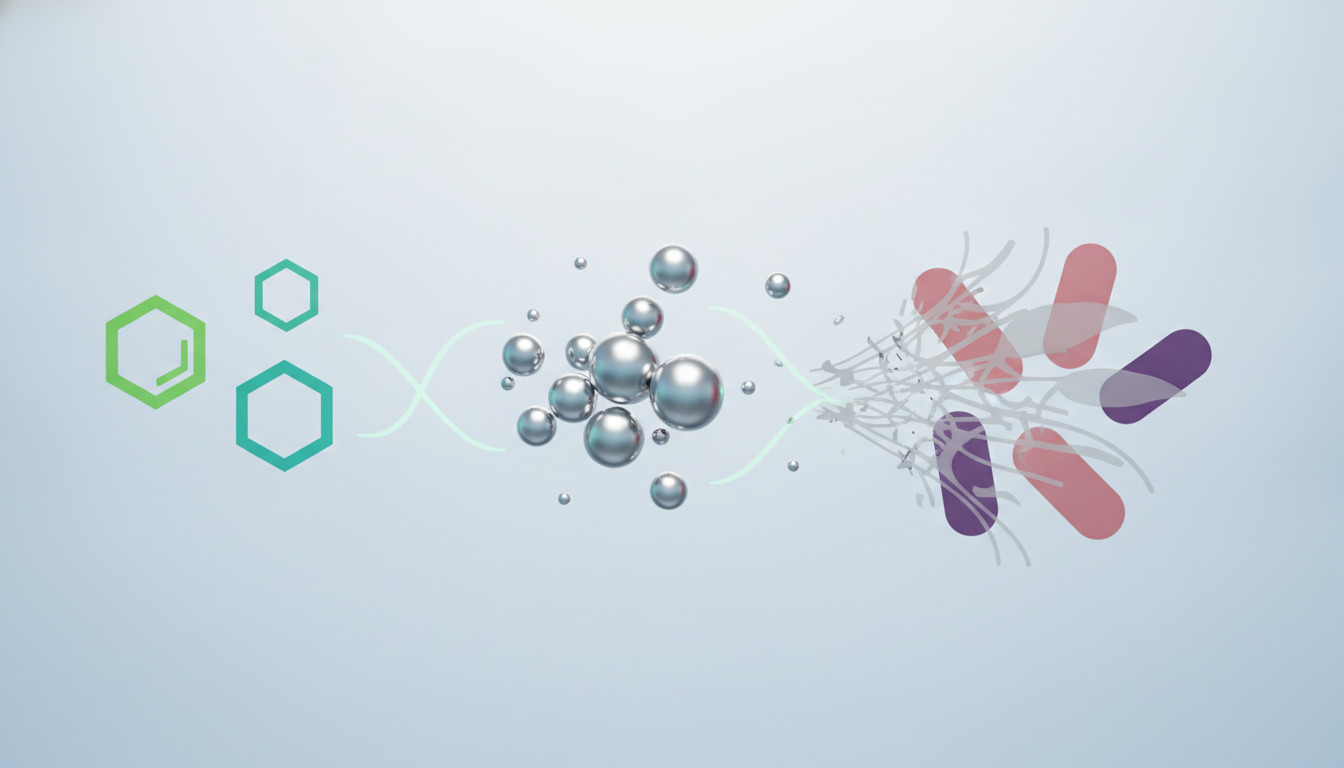
The Oxford study shows CBC and CBG enhance silver’s antimicrobial action, cutting required silver doses up to 64-fold. They cleared biofilms and prevented resistance over twenty-day lab trials, so the combination may transform wound care. Therefore this synergy could lower toxicity and reduce hospital-acquired infections if clinical trials confirm safety and efficacy. Moreover the method revives an established antimicrobial, offering a practical path amid rising antibiotic resistance. Because diabetic ulcers involve biofilms, this research matters for wound healing and cost savings.
As a result researchers and clinicians should watch upcoming Silvanex Topical trials and regulatory steps closely. However clinical validation remains essential before clinical adoption. Consequently policymakers and funders should prioritize trials that test both safety and effectiveness. Stay informed and follow trial updates.