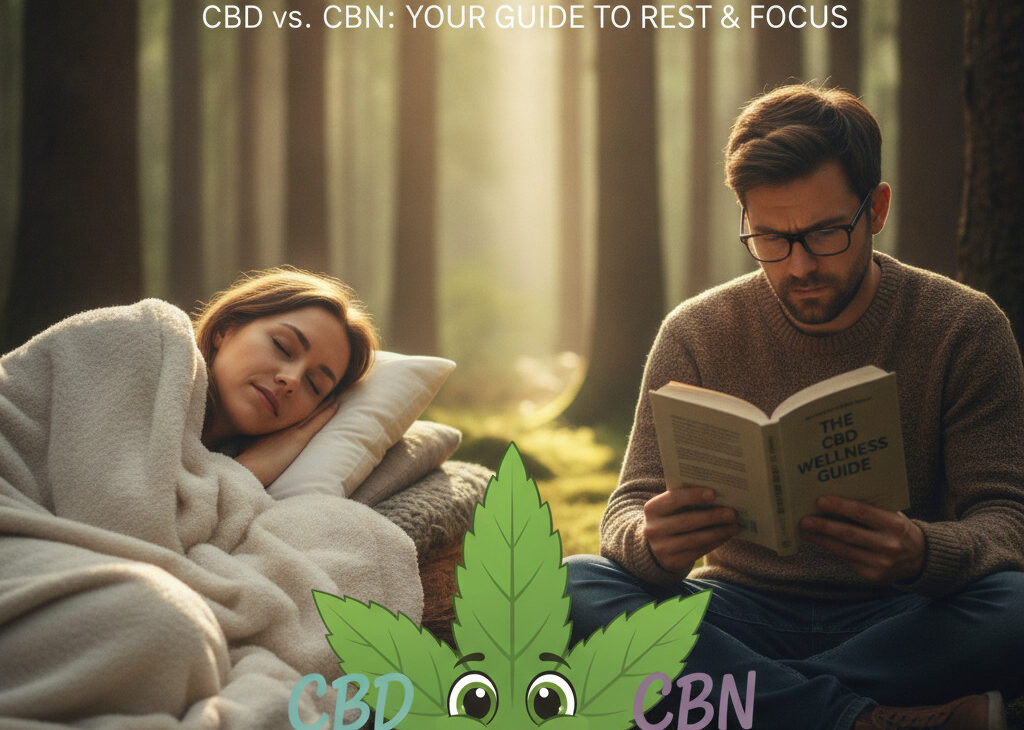
CBD vs. CBN for Sleep
CBD vs. CBN for sleep is a growing question as more people look for natural sleep aids.
Millions now prefer plant-based options over nightly prescriptions.
However, choosing the right cannabinoid matters because effects differ.
This introduction explains what to expect from each compound.
CBD tends to calm the nervous system without causing heavy sedation.
By contrast, CBN often produces stronger, sedative effects that help induce sleep.
Therefore, both cannabinoids can play roles in sleep routines.
We will compare how they work, safety, and recommended products.
Also, we include practical tips on timing, dosage, and stacking with melatonin or other aids.
Finally, you will find simple guidance for beginners and people with chronic insomnia.
Because everyone’s body reacts differently, testing small doses first remains essential.
Moreover, we highlight product examples and when to consult a healthcare provider.
This guide uses evidence-based, consumer-friendly advice you can trust right now.
CBD vs. CBN for sleep: Effects and Benefits
Cannabidiol (CBD) and cannabinol (CBN) are cannabinoids derived from hemp and cannabis plants. CBD forms naturally in the plant, whereas CBN develops when THC breaks down with age or heat. Because they interact differently with the endocannabinoid system, their sleep effects vary.
Research suggests CBD supports sleep by reducing anxiety and easing quiet wakefulness. For example, clinical reviews highlight CBD’s calming effects and how it may improve sleep quality for some people (source). By contrast, CBN is often described as more sedative. Early studies and anecdotal reports show CBN can promote drowsiness and more immediate sleep onset.
Key points about cannabinoids for sleep
- CBD sleep benefits include lowered nighttime anxiety and improved sleep continuity.
- CBN sleep effects tend toward direct sedation and longer sleep drive.
- CBD is largely non intoxicating, whereas CBN can feel heavier when combined with THC.
- Onset ranges from 30 minutes to 2 hours, with peak effects around 3 to 4 hours.
Potential benefits and uses
- Use CBD to reduce racing thoughts and promote relaxation before bed.
- Use CBN for hard to fall asleep nights when sedation is desired.
- Combine CBD and CBN for a balanced approach, because the compounds can complement each other.
- Consider full spectrum products to access the entourage effect. Learn more at this link.
Because evidence remains limited, start with low doses and track results. Also compare alternatives like Delta 9 effects on sleep here. Finally, read about minor cannabinoids and CBN benefits at this page.
| Factor | CBD sleep benefits (CBD vs. CBN for sleep) | CBN sleep effects (CBD vs. CBN for sleep) |
|---|---|---|
| Origin | Naturally abundant in hemp; forms from CBDA through decarboxylation | Forms when THC ages or oxidizes; found in aged cannabis and hemp products |
| Mechanism | Modulates the endocannabinoid system; influences serotonin and GABA signaling | Binds weakly to cannabinoid receptors; may enhance sedative signaling and sleep drive |
| Typical effects on sleep | Reduces anxiety; improves sleep continuity and quality for some users | Promotes drowsiness; helps shorten time to fall asleep for many users |
| Onset and duration | Onset 30 to 120 minutes; peak 3 to 4 hours; effects up to 12 hours | Onset 30 to 120 minutes but often felt sooner with edibles; peak 3 to 4 hours |
| Sedation level | Mild to moderate relaxation; not strongly sedating | Moderate to strong sedation, especially when combined with THC |
| Psychoactivity | Non intoxicating when isolated; usually 0.0% THC | Low alone; can feel heavy if paired with THC or other sedatives |
| Common side effects | Dry mouth, drowsiness, potential drug interactions | Increased drowsiness, dry mouth, possible daytime grogginess |
| Legal status | Typically legal if hemp derived and <0.3% THC; verify local law | Often sold as hemp derived; legal status varies by state—verify before buying |
| Typical usage | Nighttime tinctures, gummies, or capsules for anxiety driven insomnia | Nighttime edibles or combined gummies for tough sleep onset nights |
| Best for | People who need calm, reduced nighttime anxiety, and better sleep continuity | People who need stronger, sedative support to fall asleep fast |
| Recommended products | 3-2-1 Sleep Gummies; 2000mg CBD Warming Gel for relaxation | Deep Sleep CBN + THC Gummies; stack with CBD for balanced sleep |
Safety, Dosage, and Considerations for Using CBD and CBN for Sleep
Quick safety overview
- CBD vs. CBN for sleep generally shows favorable safety profiles. However, both compounds can cause side effects in some people. Common effects include dry mouth, drowsiness, and temporary changes in appetite. Because evidence is still evolving, use caution and start low.
Dosage guidelines and CBD vs. CBN for sleep dosage
- Begin with a low dose and titrate slowly. For CBD, many people start at 10 to 25 mg at night. For CBN, start lower, often 2.5 to 5 mg, because it can feel more sedating.
- Increase by small increments every three to seven days until you reach the desired effect. Also keep a journal to track dose and sleep quality.
- For edibles, remember onset ranges from 30 minutes to two hours and peak effects at three to four hours.
Potential side effects and CBD sleep safety
- CBD side effects may include drowsiness, gastrointestinal upset, and interactions with prescription drugs. See clinical reviews for details: here.
- CBN side effects can include stronger drowsiness and possible daytime grogginess. Evidence remains limited, so monitor tolerance closely.
Interactions and medical considerations
- Both cannabinoids can interact with medications metabolized by CYP450 enzymes. Therefore consult your healthcare provider before combining with blood thinners, anticonvulsants, or other prescription drugs.
- Pregnant or breastfeeding people should avoid cannabinoids because safety data are insufficient.
- Do not drive or operate heavy machinery while under the influence. Remember impairment onset can take 30 minutes to two hours.
Practical tips and warnings
- Start with single ingredient products to assess response before combining compounds. For example, try a CBD only tincture first. Then, if needed, try a low dose CBN gummy.
- If you experience severe side effects, contact Poison Control at 1-800-222-1222 or SAMHSA at 1-800-662-HELP.
- Because research continues, use products from reputable brands and check third party lab reports. For additional context on minor cannabinoids and safety, see: here.
Conclusion
CBD vs. CBN for sleep offers two distinct paths to better rest. CBD usually reduces nighttime anxiety and improves sleep continuity without heavy sedation. CBN more often produces direct drowsiness and faster sleep onset. Therefore, choose CBD for calm and longer sleep quality, and choose CBN when falling asleep is the main issue.
Safety matters. Start with low doses and increase slowly. Also consult your healthcare provider if you take prescription medications. Remember both cannabinoids can cause drowsiness and interact with drugs metabolized by CYP450 enzymes. If you feel severe side effects, contact Poison Control or your medical provider right away.
Hemp is a common source of both CBD and CBN, and product quality varies. MyCBDAdvisor is committed to clear, trustworthy cannabinoid information and practical guidance. Visit MyCBDAdvisor for more articles, product guides, and evidence based tips.
Frequently Asked Questions (FAQs)
How effective are CBD and CBN for sleep?
CBD vs. CBN for sleep shows different strengths. CBD often eases anxiety and quiets the mind. Therefore, it can improve sleep continuity and reduce awakenings. CBN tends to be more sedating. As a result, CBN often helps people fall asleep faster. Research is still emerging. Because studies vary, results differ by person.
Are CBD and CBN legal?
Hemp derived CBD and many CBN products are legal when under 0.3 percent THC. However, state laws vary. Therefore check local rules before buying. Also confirm product lab reports to verify THC content.
Are CBD and CBN safe? What are the side effects?
Both compounds are generally well tolerated. Common side effects include dry mouth and drowsiness. CBN may cause stronger morning grogginess. CBD can interact with certain prescription drugs. Because of this, consult your healthcare provider if you take blood thinners or anticonvulsants.
What dosage should I try for sleep?
Start low and increase slowly. For CBD, many people begin at 10 to 25 mg nightly. For CBN, start at 2.5 to 5 mg. Increase by small steps every three to seven days. Also keep a sleep log to track effects and timing.
How do I choose between CBD and CBN for sleep?
Choose CBD if anxiety keeps you awake. Choose CBN if you struggle to fall asleep. You may combine them for balanced results. However, test single ingredients first to see how your body reacts. If you have medical concerns, consult a clinician.