
Hemp dispute overview and stakes
Asterra Labs and MC Nutraceuticals face allegations of fake wire transfers amid a dispute over more than $1.5 million in unpaid invoices. The case also includes reported threatening messages and counterclaims that broaden the litigation.
This article walks readers through the timeline, identifies the parties involved, and explains the legal and regulatory implications for contracts, fraud claims, and compliance. Sources include a detailed court report and political coverage.
Quick summary
* Asterra Labs sued MC Nutraceuticals and related principals alleging unpaid invoices topping $1.5 million, forged wire confirmations, and civil racketeering claims under RICO. MC filed counterclaims, turning a vendor dispute into multiclaim litigation.
* The allegations create potential wire fraud exposure and parallel civil liability while state and federal regulators intensify scrutiny of intoxicating hemp products such as delta 8 and HHC. This raises enforcement and reputational risk for distributors and suppliers.
* Suppliers face halted shipments, disrupted cash flow, costly discovery, and elevated compliance demands as litigation unfolds. Immediate operational impacts include paused orders and increased due diligence.
* Actionable next steps for affected suppliers:
- Verify bank confirmations directly with issuing banks as part of robust payment verification.
- Pause shipments until funds clear and you have counsel advice.
- Preserve message logs, contracts and transaction records and notify legal counsel promptly.
See reporting and analysis: detailed court report and political coverage.
Background of the hemp business dispute
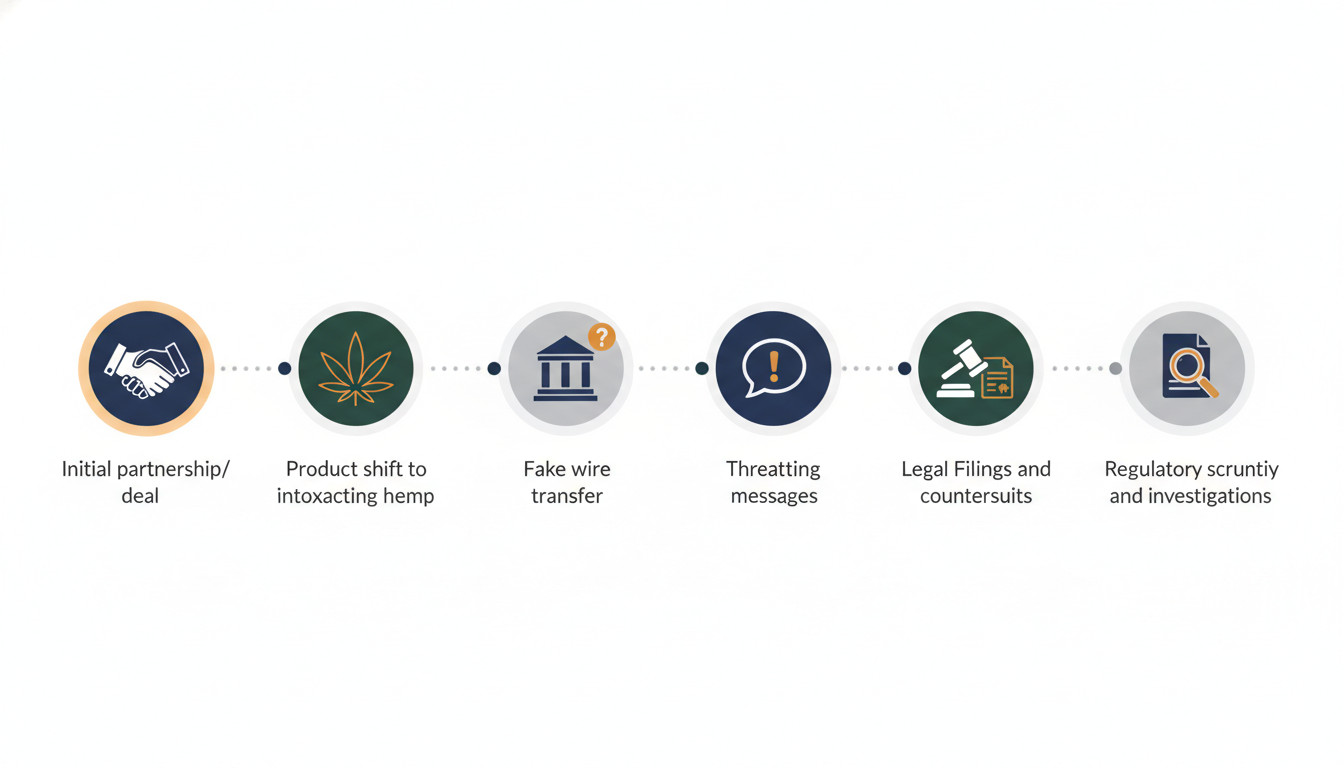
Asterra Labs and MC Nutraceuticals entered a commercial partnership that soured after payment and product disputes led to multiple lawsuits and regulatory inquiries. The disagreement centers on unpaid invoices, alleged fake payment confirmations, threats reported in court filings, and a shift by the distributor into intoxicating hemp products. Reporting and court documents provide the timeline below.
- Sep 2023 — First Citizens extended a loan to MC Nutraceuticals that later became the subject of litigation (bank lawsuit report: legal coverage of the bank suit).
- Late 2024 — Asterra began supplying white-label and branded products to MC under a commercial distribution arrangement (detailed report: court filing summary).
- Early 2025 — MC shifted sales toward delta-8, HHC, and THCa products after CBD demand declined (regulatory and political context: news analysis).
- May 2025 — Asterra alleged MC failed to pay invoices and that the unpaid balance exceeded $1.5 million (court filing summary: detailed report).
- May 2025 — Asterra alleged MC submitted fake wire-transfer confirmations while payments remained due (evidence and claims: detailed report).
- May 2025 — MC settled an investigation by the Colorado attorney general with a payment agreement related to product representations (settlement coverage: news analysis).
- May 2025 — Parties discussed a proposed daily payment of $50,000 that did not materialize according to filings (court filing summary: detailed report).
- July 2025 — MC sued Asterra alleging threats and coercion, and Asterra and investors filed counterclaims alleging fraud and racketeering (litigation coverage: news analysis).
- March 2026 — First Citizens filed a federal suit seeking roughly $1 million for an unpaid loan tied to MC and its principals (bank lawsuit report: legal coverage of the bank suit).
Key players and roles
Condensed roles and status for quick scanning. Sources listed below.
| Party Name | Role | Allegations | Current Status | Last updated |
|---|---|---|---|---|
| Asterra Labs | Manufacturer and white label supplier | Nonpayment; forged confirmations[1] | Filed counterclaims; seeking damages[1] | May 2025[1] |
| MC Nutraceuticals | Distributor and buyer | Nonpayment; forged confirmations[1] | Defending suits; counters filed[1] | May 2025[1] |
| Bret Worley and Jeffrey Worley | Founders and company operators | Named in debt claims[1] | Named defendants; contested liability[1] | May 2025[1] |
| Rise Capital and Harry Smith | Investor and co plaintiff | Joined fraud claims[1] | Co plaintiffs in litigation[1] | May 2025[1] |
| First Citizens Bank and Trust Co | Lender | Loan default claim[1] | Sued in federal court[1] | May 2025[1] |
| Regulators and State Attorney General | Oversight and enforcement | Regulatory scrutiny; compliance review[1] | Investigations; settlement activity[1] | May 2025[1] |
Sources:
How fake wire transfers escalate disputes
Fake wire transfers and threats in a $1.5 million hemp business dispute amplify friction quickly. When a buyer supplies false payment confirmations, sellers lose trust and cash flow. As a result, ordinary contract fights turn into fraud and racketeering claims that demand urgent legal and regulatory responses.
How fake transfers worsen conflicts
- They destroy credibility immediately, because suppliers cannot rely on incoming funds and may halt shipments. In the Asterra and MC Nutraceuticals case, alleged fake confirmations coincided with more than $1.5 million unpaid.
- They complicate discovery and evidence, however auditors and courts then must sort real transfers from forgeries. Fake documents lengthen litigation and increase legal costs.
- They trigger criminal exposure, therefore parties face potential wire fraud investigations under 18 U.S.C. § 1343. See the federal wire fraud statute at the federal wire fraud statute and the legal overview at the legal overview.
- They invite regulatory scrutiny and reputational harm, as companies selling delta-8, HHC, or other intoxicating hemp products risk license and enforcement actions.
In short, fake transfer claims convert contract disputes into multipronged legal battles. Consequently, the Asterra matter shows how a single alleged forgery can expand into threats, counterclaims, and broader regulatory fallout.
Conclusion
Few disputes escalate faster than allegations of Fake wire transfers and threats in a $1.5 million hemp business dispute. They convert commercial friction into litigation, regulatory probes, and reputational damage. As a result, suppliers, investors, and regulators now question business practices across the intoxicating hemp market.
Therefore firms must tighten payment verification, use escrow or verified banking channels, and require dual authentication for transfers. Audit trails and clear white-label agreements reduce ambiguity and slow fraudulent claims. However, contracts alone do not stop threats or intimidation; firms must document all communications.
Preserved evidence strengthens civil remedies and helps trigger criminal investigations when appropriate. In short, the Asterra-MC matter shows the cost of lax controls and aggressive tactics. Companies should adopt stricter compliance, quick legal response, and transparent reporting to mitigate risk. Only with vigilance can the industry avoid costly disputes and restore market trust.
Frequently Asked Questions
Was this wire fraud or fake payments?
Asterra alleges MC provided forged wire confirmations while invoices over $1.5 million remained unpaid. Courts will assess intent and documentary evidence under federal wire fraud standards, which guide whether electronic confirmations amount to criminal conduct 18 U.S.C. 1343.
Can wire fraud charges apply?
Prosecutors focus on intent to defraud and use of electronic communications in a scheme. Parallel civil litigation can proceed while criminal inquiries develop, so preserve records and consult counsel early.
How to improve payment verification?
Use escrow or verified banking channels and require independent bank confirmations before releasing goods. Implement dual authorization for high value transfers and keep immutable audit trails to reduce disputes.
What remedies exist for alleged fraud and RICO?
Victims may seek monetary damages, injunctive relief, and civil RICO claims where a pattern of racketeering acts is alleged. Early forensic accounting and targeted discovery help trace funds and support claims.
How to preserve evidence after threats?
Secure messages and transaction records offsite and notify counsel promptly to protect privilege and chain of custody. Avoid direct confrontations and report credible criminal threats to law enforcement.
What regulatory risks should sellers expect?
Intoxicating hemp products face heightened enforcement on labeling, safety, and marketing that can trigger administrative actions or settlements. Public health reviews have flagged delta 8 and related compounds for closer oversight.
What should I watch next? Regulatory and litigation signs to monitor
* Settlement or consent decrees resolving civil or administrative claims.
* Indictments or criminal filings that escalate enforcement.
* Administrative enforcement actions including recalls or license suspensions.
Further reading: Fake wire transfers threats alleged in $1.5 million U.S. hemp business dispute.