Introduction
The November Change creates a 0.4 milligram Total THC per container cap for hemp products, effective November 12, 2026 (Public Law 119 37 statutory text). It keeps the 0.3 percent dry weight threshold and forces labs to convert percent results into per container milligrams (USDA laboratory testing guidance).
- Common package noncompliance: many 1 gram pre-rolls and 3.5 gram bags will exceed 0.4 mg Total THC.
- Testing conflicts: labs must include decarboxylation and measurement uncertainty in calculations.
- Cost and access risks: small producers may face repackaging costs and consumers may lose affordable flower.
Immediate actions: retest SKUs and recalc container mg totals. Producers and consumers risk higher costs and reduced access if products become noncompliant.
TLDR Checklist
- Retest SKUs — deadline Q4 2026. Obtain accredited lab results with post-decarboxylation Total THC and measurement uncertainty to compute milligrams per container; see USDA laboratory testing guidelines.
- Recalculate and label SKUs — within 30 days of a COA update. Convert reported Total THC to milligrams per container, include measurement uncertainty on the certificate of analysis, and update packaging to meet the 0.4 mg per container cap; reference the statutory cap in Public Law 119-37 statutory text.
- Quarantine suspect inventory — immediate. Halt sales, trace affected batches, and retest using standardized sampling procedures to prevent distribution of noncompliant product; follow the USDA Sampling Guidelines for Hemp.
Why it was introduced
The November Change adds a 0.4 milligram Total THC per container cap while retaining the 0.3 percent dry weight threshold. Regulators framed the cap as a way to curb products that can produce intoxicating delta-9 THC when heated and to close perceived loopholes in hemp derivatives.
Why critics object
Critics argue the cap ignores plant biology and product realities, effectively penalizing whole-plant flower and common retail sizes. For example, 0.3 percent of 3.5 g = 10.5 mg total THC; cap = 0.4 mg, which highlights the mismatch between percent-based limits and per-container milligram ceilings.
Legal text: view legal text
Key impacts include:
- Ban on raw hemp flower: Typical package sizes will exceed 0.4 mg and be rendered noncompliant.
- Testing burdens: Laboratories must calculate total THC per container and account for decarboxylation and measurement uncertainty per USDA guidance view USDA guidance.
- Retail relabeling costs: Sellers will need new labels, certificates of analysis, and possibly repackaging.
- Small farm losses: Independent growers risk inventory write-offs and market exclusion.
- Consumer access reduction: Low-cost whole-plant CBD and pre-roll options could disappear.
Recommended next steps:
- Delay implementation to allow stakeholder input and avoid sudden market disruption.
- Standardize measurement methodology across labs and clarify Total THC calculation for containers.
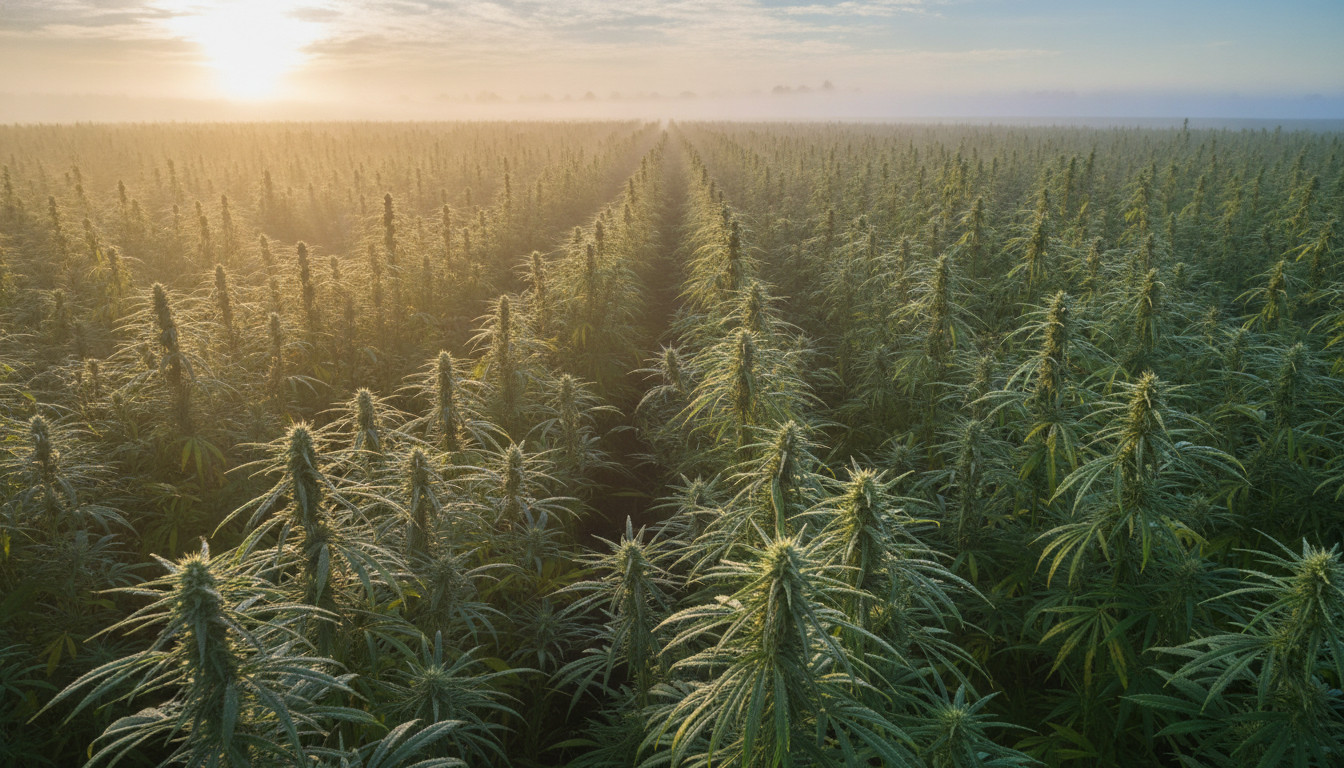
Hemp field — illustrative image for coverage of the Nov 12, 2026 0.4 mg Total THC per-container rule; image source: high resolution hemp field image.
References:
THC caps before and after The November Change (0.4 mg Total THC cap)
This table uses pre-decarboxylation percent THC values and simple percent-to-milligram conversions. It does not include decarboxylation or measurement uncertainty which can alter reported Total THC; see the Public Law 119-37 text here and USDA laboratory testing guidelines here for methodology and definitions.
| Product Type | Previous THC Limit | New Limit | Consumer Impact |
|---|---|---|---|
| Whole hemp flower | 0.3% dry weight | 0.4 mg per container | Likely banned at common sizes; loss of raw flower availability |
| Single pre-roll (1 g) | 0.3%, ~3 mg Total THC per 1 g at 0.3% | 0.4 mg per container | Exceeds cap; noncompliant |
| 3.5 g bag (common retail size) | 0.3%, ~10.5 mg per 3.5 g | 0.4 mg per container | Prohibited at common sizes |
| Edibles (single serving) | Variable; often per serving | 0.4 mg per container | May require reformulation |
| Tinctures and concentrates | Compliant if overall percent <0.3% | 0.4 mg per container | Recalculate dosing and labels |
| Footnote | Assumes pre-decarboxylation percent THC; Totals may rise after decarboxylation; Decarboxylation and measurement uncertainty can change reported mg totals; include uncertainty in compliance calculations. | ||
Testing and calculations
Use the formula below to convert reported total THC percent into milligrams per container for compliance checks. Calculate post decarboxylation totals when available and always include measurement uncertainty in COAs.
mg_total = (reported_total_percent / 100) × container_grams × 1000Worked example
Lab values: THC 0.15 percent, THCA 0.20 percent, measurement uncertainty 5 percent, container 3.5 grams. Convert THCA to THC using factor 0.877: total percent = 0.15 + 0.20 × 0.877 = 0.3254 percent. Convert to milligrams per container: 0.3254 divided by 100 × 3.5 × 1000 = 11.389 mg. Apply 5 percent uncertainty: ±0.569 mg yields a compliance range of 10.82 to 11.96 mg. Compare to the 0.4 mg cap: lower bound 10.82 mg exceeds 0.4 mg so not compliant.
Mini checklist
- Obtain THC and THCA percents and uncertainty from an accredited lab
- Compute total percent using factor 0.877 for THCA
- Apply formula to get mg per container
- Calculate uncertainty bounds by applying uncertainty percent
- Compare lower bound to 0.4 mg cap and document COA
- Quarantine and retest if lower bound is within 10 percent of 0.4 mg
Summary table
| Reported % | Converted mg | Uncertainty range | Compliant (Y/N) |
|---|---|---|---|
| 0.3254% total | 11.389 mg | 10.82 to 11.96 mg | N |
References
See the Public Law 119 37 statutory text for the legislative language. Consult USDA laboratory testing guidance for methods and measurement uncertainty.
Conclusion
The November Change (0.4 mg Total THC cap) will reshape hemp markets and consumer access across the United States. Because it adds a 0.4 milligram Total THC per container ceiling, many whole-plant products will become noncompliant. Therefore consumers could lose affordable hemp flower and pre-roll options, and farms and retailers face inventory losses.
Producers must adapt quickly by retesting, resizing packages, or reformulating products. As a result, regulatory clarity and measured delay remain critical to prevent economic harm and preserve safer, tested products. Industry groups and consumers should stay informed and engage with policymakers.
For ongoing coverage and resources on compliance, advocacy, and local Safe Harbor updates visit myCBDadvisor. Act now to support sensible testing standards and protect small businesses.
Legislative steps like the proposed Klobuchar Delay matter because they buy time for USDA and FDA rulemaking. Meanwhile, state Safe Harbor programs can provide temporary relief for licensed businesses. Because uncertainty threatens growers and rural economies, coordinated advocacy matters more than ever.
Frequently Asked Questions (FAQs)
What is The November Change (0.4 mg Total THC cap)?
The November Change (0.4 mg Total THC cap) is a federal provision that adds a 0.4 milligram Total THC limit per container to existing hemp rules. It keeps the 0.3 percent dry weight threshold, but it also creates a strict container-based cap that can prohibit common hemp flower products. See the statutory text for details: statutory text.
Why was The November Change introduced?
Lawmakers and regulators introduced The November Change to address concentrated hemp products that can convert cannabinoids into intoxicating delta-9 THC when consumed or heated. However, critics argue it does not reflect hemp biology and will unduly burden whole-plant producers. For testing context, consult USDA lab guidance: USDA lab guidance.
Which products will the November Change impact most?
Whole hemp flower, single pre-rolls, and common retail bags will face the greatest impact because typical packages exceed 0.4 mg per container. Edibles, tinctures, and concentrates may also require reformulation depending on container volume. Therefore consumers may lose low-cost, whole-plant options.
How can consumers and businesses respond to The November Change?
Manufacturers should retest SKUs, adjust package sizes, or reformulate to meet the 0.4 mg cap. Retailers should check certificates of analysis and pause sales of suspect inventory. Meanwhile, consumers should buy from trusted sources and follow state Safe Harbor guidance.
Will this rule immediately ban hemp flower nationwide?
The November Change could effectively ban many hemp flower products at the federal level because typical flower packages exceed 0.4 mg per container. However, legislative delays and state Safe Harbor programs may provide temporary protection. Therefore the outcome depends on legal challenges and forthcoming USDA and FDA rules.
Related on CBD Advisor
- How is Canadian cannabis sales November 2025 trending
- How Have Canadian cannabis sales in November Shifted
- Why Canadian cannabis sales in November surged