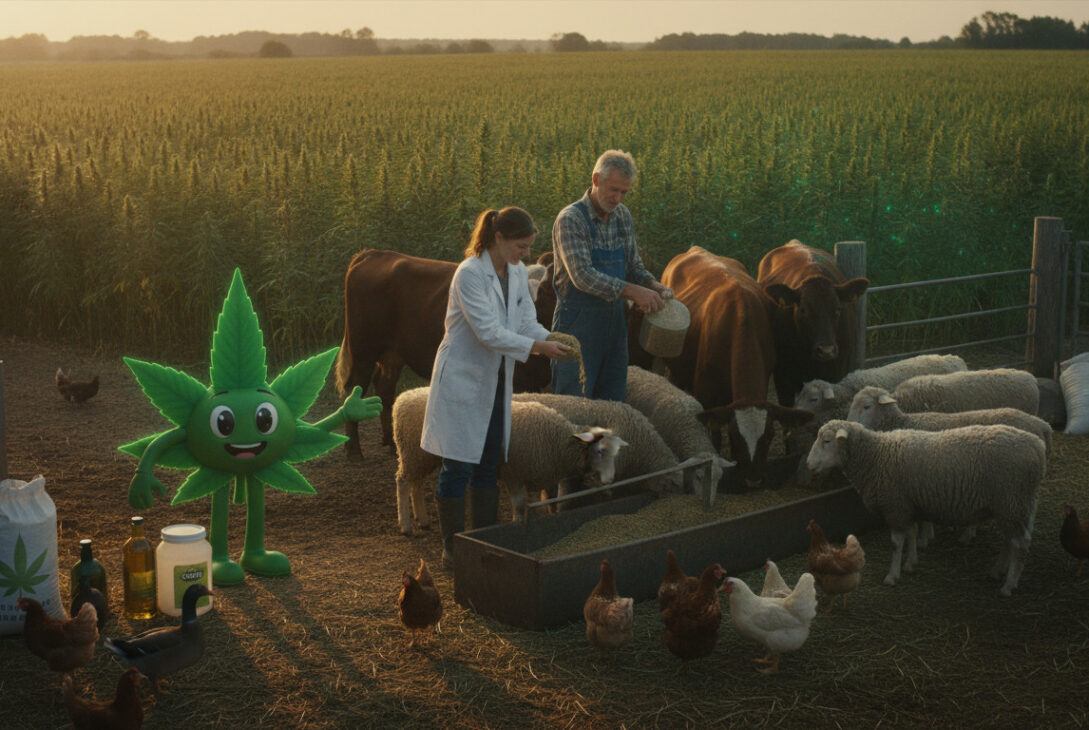
Hemp-derived feed ingredients for livestock are gaining attention for improving product nutrition and farm sustainability. Moreover, recent trials show boosts in omega-3s, alpha-linolenic acid and other polyunsaturated fats. Therefore, this article reviews peer-reviewed evidence and practical trials from multiple regions that examine hempseed meal, hempseed cake, hemp oil and other hemp by-products in cattle, sheep, goats, pigs, chickens and dairy herds, summarizing how these inputs alter fatty-acid composition to raise omega-3 and ALA levels in meat, eggs and milk while generally maintaining growth rates, feed efficiency and yields comparable to soybean meal and canola products, explaining observed benefits for meat quality, storage stability and shelf life, and noting environmental and sustainability signals such as potential reductions in nitrogen emissions, while also detailing safety considerations, sensory effects at very high inclusion levels, regulatory questions and the key knowledge gaps guiding future research, and we highlight practical feeding recommendations for producers seeking nutritional and economic value.
What are hemp-derived feed ingredients for livestock?
Hemp-derived feed ingredients for livestock are processed hemp products such as hempseed meal, cake and oil used in animal diets. They aim to supply protein and healthy fats, especially omega-3s like ALA, and can improve meat, egg and milk fatty-acid profiles while maintaining growth and feed efficiency, adding nutritional and sustainability value.
Benefits of Hemp-Derived Feed Ingredients
Hemp-derived feed ingredients for livestock offer measurable nutritional, animal-health and environmental benefits. Research shows hempseed meal and hemp oil boost omega-3s such as alpha-linolenic acid in meat, eggs and milk, while typically preserving growth and feed efficiency. Therefore, farmers and nutritionists view these inputs as a tool to improve product quality and sustainability.
- Nutritional enrichment and fatty-acid balance
- Hemp inputs raise omega-3 and total polyunsaturated fat levels, improving the omega-6-to-omega-3 ratio in animal products. For example, dairy and poultry studies reported clear increases in ALA and related long-chain omega-3s (see dairy ruminants review: dairy ruminants review).
- Animal performance and feed value
- Hempseed meal and cake provide protein and energy comparable to soybean meal and canola products. As a result, studies generally report no loss of growth, feed conversion or milk yield at practical inclusion rates.
- Product quality and shelf life
- Hemp oil and seed derivatives can enhance meat and egg fatty-acid profiles and slow lipid deterioration, thereby extending shelf life and preserving flavor during storage.
- Environmental and sustainability advantages
- Using hemp by-products can reduce reliance on imported protein meals and may lower nitrogen emissions and waste. Recent reviews of industrial hemp byproducts in ruminants discuss these potential sustainability gains (see article: article on sustainability gains).
- Practical and economic value
- Because hemp co-products often come from local processors, they can offer cost-effective, higher-value outlets for grain and milling residues, especially where regulations allow their use. However, careful formulation is required to avoid sensory or digestive changes at very high inclusion levels.
Safety and Regulations for Hemp Feed Ingredients
Regulatory oversight and strict quality controls matter for hemp-derived feed ingredients for livestock. Therefore, producers must confirm legal status, test results and supplier practices before use. This section summarizes current safety expectations and practical controls.
The U.S. Food and Drug Administration has stated that cannabinoids such as THC and CBD are not authorized additives in animal food without a premarket pathway. However, the FDA also explains that animal-food ingredients need a food-additive approval, a GRAS finding, or an AAFCO ingredient definition. See FDA regulation of cannabis-derived products and CBD for details: FDA regulation of cannabis-derived products and CBD.
Government research supports careful residue testing even when feeds appear safe. For example, the USDA Agricultural Research Service found very low cannabinoid residues after feeding hempseed cake to cattle, yet noted that legal authorization for feed use remains unresolved. Review that study here: Review that study.
Practical quality controls include certificates of analysis, third-party testing for THC and CBD, supplier audits and batch traceability. In addition, formulate diets with species-appropriate inclusion rates and monitor animal health and product sensory traits. As a result, farms can reduce regulatory risk and protect consumer safety.
Finally, remember that laws vary by country and state. Therefore consult local regulators and accredited laboratories before adding hemp co-products to rations.
Comparison of Hemp-Derived Feed Ingredients and Traditional Livestock Feed
This table compares hemp-derived feed ingredients for livestock with conventional options across key metrics. However, local supply and regulation vary widely.
| Aspect | Hemp-derived feed ingredients | Traditional livestock feed |
|---|---|---|
| Typical forms | Hempseed meal, hempseed cake, hemp oil, seed hulls | Soybean meal, canola meal, corn, barley |
| Protein content | Moderate to high protein with good amino profile | High protein; amino balance varies by source |
| Fatty-acid profile | Rich in polyunsaturated fats and alpha-linolenic acid | Typically higher in omega-6 and lower in omega-3s |
| Omega-3 impact | Raises omega-3s in meat, eggs and milk | Low direct omega-3 contribution unless supplemented |
| Animal performance | Comparable growth and feed efficiency at practical levels | Proven performance and predictable feed conversion |
| Cost and variability | Regionally variable; often linked to local processors | Generally stable commodity pricing and broad markets |
| Environmental impact | Uses by-products; potential to lower nitrogen emissions | Conventional crops can require more land and inputs |
| Safety and testing | Needs THC and CBD testing and certificates of analysis | Standard feed safety testing and clear regulatory paths |
| Regulatory status | Jurisdiction dependent; documentation required | Widely authorized with established regulations |
| Shelf life and stability | Can improve meat oxidative stability when formulated right | Stability depends on fat; antioxidants commonly added |
| Availability | Growing, limited where processing exists | Widely available through established supply chains |
CONCLUSION
Hemp-derived feed ingredients for livestock show consistent benefits for product nutrition and quality. Numerous studies report higher omega-3 and ALA levels in meat, eggs and milk. Moreover, growth rates, feed efficiency and yields generally match conventional feeds when inclusion rates stay practical.
Using hemp co-products can improve shelf life and reduce waste, and they offer local value streams for processors. However, legal status and residue testing remain important, and very high inclusion rates can alter moisture or flavor. Therefore producers should source certified ingredients and follow feed formulation best practices.
As research grows, hemp inputs appear poised to become a useful tool in sustainable livestock nutrition. Consequently, veterinarians, nutritionists and regulators should collaborate on trials and standards. In the meantime, cautious adoption backed by third-party testing will protect animal performance and consumer safety.
Frequently Asked Questions (FAQs)
Are hemp-derived feed ingredients safe for livestock?
Studies generally report low cannabinoid residues and no major health issues at practical inclusion rates. However, because THC and CBD carry regulatory and food-safety concerns, test results and third-party analysis matter. For example, USDA research found very low residues in cattle fed hempseed cake but recommended careful monitoring USDA research.
What nutritional and product benefits can I expect?
Hemp-derived feed ingredients often increase omega-3s, especially ALA, and improve fatty-acid balance in meat, eggs and milk. Consequently, producers may see better shelf life and oxidative stability, while growth and feed efficiency usually remain comparable to conventional feeds. Systematic reviews of hemp byproducts in ruminants summarize these effects and practical limits Systematic reviews.
How should I source and verify hemp feed ingredients?
Buy from suppliers who provide certificates of analysis and batch traceability, because quality varies. Moreover, insist on third-party tests for THC and CBD, and perform periodic supplier audits. Finally, work with a nutritionist to integrate hemp co-products within balanced rations.
Are there regulatory restrictions I must know?
Yes, laws and feed approvals vary by jurisdiction, and cannabinoids are tightly regulated in many markets. The U.S. Food and Drug Administration notes that adding CBD or THC to animal food is not authorized without a premarket pathway FDA regulation.
How do I introduce hemp ingredients on my farm?
Start with low inclusion levels and monitor animal performance and product quality. Then adjust formulations gradually, because very high levels can change moisture or flavor. In addition, document testing and retain samples, so you can respond quickly to any regulatory or quality questions; consult extension services or a veterinary nutritionist for species-specific advice species-specific advice.
Related on CBD Advisor
- What Makes Green Era Gummies a Limited-Edition Collaboration
- What Makes Green Era Gummies a Limited-Edition Masterpiece
- What Makes Green Era Gummies a Limited-Edition Drop