Introduction
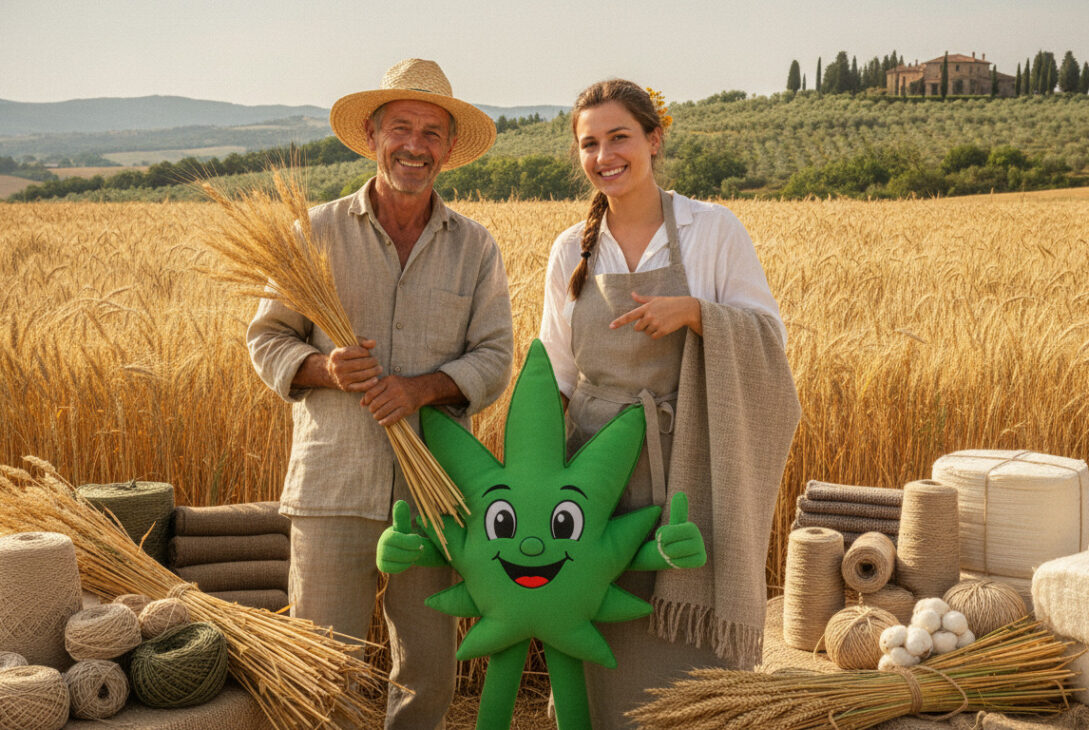
Italian hemp food and fiber is reclaiming industrial roots as growers shift toward edible seed and bast fiber.
- Market map for edible seed, oil, protein and fiber processing
- Bottlenecks in dehulling, decortication and logistics and scaling strategies
Read the market map and supply chain analysis below to explore concrete food and fiber opportunities.
Industry estimates point to an estimated €500M turnover and roughly 15,000 jobs as food and fiber value chains scale. This growth centers on grain, seed oil, protein ingredients and bast fiber for textiles and green building (national cultivation statistics: national cultivation statistics; grain hemp breeding programs: grain hemp breeding programs).
Direct answer
The figure of roughly €500 million in annual turnover and about 15,000 jobs is a cautious sector estimate, not a single-source audit. It relies on assumed grain hemp yield and processing multipliers to scale farm gate value into final turnover.
The estimate combines national agricultural area and employment data with hemp-specific inputs. National statistics supply planted area and employment baselines (ISTAT). CREA provides grain hemp yield trials, processing parameters and product-value inputs (CREA).
Key quantitative assumptions behind the €500M / 15,000 jobs sector estimate
- Assumed planted area range 20,000 to 40,000 hectares (source ISTAT).
- Average grain hemp yield assumed 600 to 1,200 kg per hectare (grain hemp yield) based on CREA trial ranges (CREA).
- Farm gate price used for hulled seed €1.80 to €3.00 per kilogram reflecting conventional to organic premiums (sources ISTAT and CREA).
- Processing and value-add multiplier 3x to 8x farm gate value to capture oil, protein, bast fiber and downstream products (sources CREA and industry summaries EIHA).
- Employment intensity assumed 0.25 to 0.5 full-time equivalent jobs per hectare across farming and processing, yielding roughly 10,000 to 20,000 jobs at assumed scale (source ISTAT and CREA).
These assumptions are flagged where primary data were limited. For original datasets and methodology consult ISTAT and CREA.
Why the Shift to Food and Fiber
The Italian hemp sector shifts toward food and fiber because farmers and processors see clearer commercial routes. Demand for edible hemp seed, plant proteins and bast fiber is rising. Therefore producers are moving from cannabinoids to grain and stalk to capture stable markets.
Key reasons driving the change
- Economic opportunity: edible hemp seed sells for about €1.80 to €3.00 per kilogram, so growers can earn a steady premium for organic and specialty crops. As a result investors and Dutch buyers show renewed interest.
- Environmental advantage: hemp needs fewer inputs than many crops and improves soil health. Consequently builders and brands prefer hemp hurds and bast fiber for green building and sustainable textiles.
- Market structure and regulation: tighter food safety rules narrowed the CBD pathway, which shifted activity toward industrial uses. Therefore supply chains now focus on predictable volumes and processing for food and fiber.
An industry perspective
“Italy has a real opportunity to build strong hemp value chains, but this requires clear rules, institutional dialogue and the courage to treat hemp as an agricultural and industrial resource,” says Jacopo Paolini, reflecting industry calls for policy clarity (source).
Policy and research support
Research groups such as CREA are breeding grain hemp varieties to boost yield and omega fatty acids, which should strengthen food and fiber value chains (source). Official land statistics provide context on planted area and trends (source).
Italy’s Hemp Food and Fiber Products Table
Quick reference for hemp products, hemp seed oil, hemp protein, hemp textiles.
| Featured snippet | Product type | Common uses | Benefits | Market trends |
|---|---|---|---|---|
| Hulled hemp seed — snacks and baking | Edible hemp seed (grain) | Hulled seeds for snacks, baking, cereals | Rich in omega-3 and omega-6, high plant protein and fiber | Price: €1.80–€3.00/kg, rising demand for plant proteins, expanding dehulling capacity |
| Cold pressed hemp oil — culinary and cosmetic uses | Hemp seed oil | Salad dressings, culinary oil, supplements, cosmetics | High essential fatty acids, antioxidant polyphenols, cold pressed quality | Premium niche pricing, growing interest in omega-rich oils and culinary uses |
| Hemp protein powder — vegan sports nutrition ingredient | Hemp protein powder | Protein shakes, bars, fortified foods, baking | Concentrated plant protein, low allergenicity, good amino acid profile | Increasing vegan sports nutrition demand, more processors entering market |
| Bast fiber for textiles and composites | Bast fiber (long fiber) | Textiles, technical fabrics, reinforcements, composites | Strong tensile strength, durable, breathable, pest resistant | Interest in Italian textile applications, limited processing scale |
| Hemp hurds for insulation and bedding | Hemp hurds (short fiber) | Building insulation, hempcrete, animal bedding, particle boards | Good thermal and acoustic insulation, biodegradable, low carbon | Uptake in green building projects, supply constrained by processing capacity |
| Hemp insulation panels for low carbon retrofit | Hemp based insulation materials | Insulation panels, loose fill, composite boards, retrofit products | Low embodied carbon, moisture regulating, long lasting | Growing among sustainable builders, supply limited by decortication capacity |
| Hemp fabrics for apparel and blends | Hemp textiles (processed fabrics) | Apparel, upholstery, home textiles, blended fabrics | Breatheable, durable, sustainable, improves with age | Potential via Italian textile heritage, needs coordinated supply chains |
Sources: national grain hemp research, official land statistics, industrial hemp lifecycle overview.
Environmental Benefits of Hemp
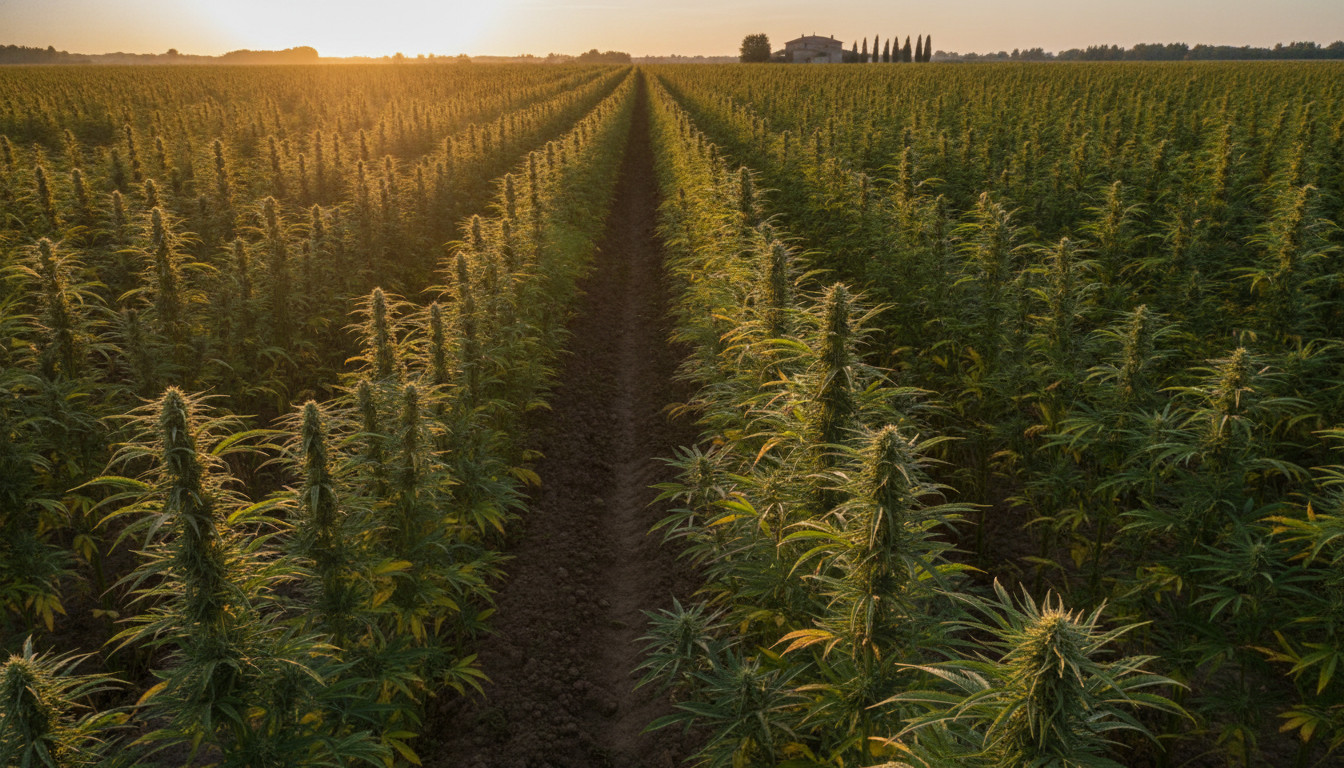
Italian hemp sector shifts toward food and fiber because hemp cultivation offers clear environmental advantages. Farmers and builders value hemp for lower inputs, fast growth and useful co-products. Therefore the crop supports more sustainable supply chains for food seed and fiber.
Key sustainability gains
- Lower chemical use: Hemp typically needs fewer pesticides and herbicides than many cash crops. As a result farmers reduce chemical runoff and protect local waterways.
- Soil health improvements: Hemp has deep roots that break compacted soil layers and add organic matter. Consequently rotation with hemp can boost soil structure and fertility.
- Carbon footprint reduction: Hemp sequesters atmospheric carbon in both stalks and soil. When used in long-lived products, such as insulation or textiles, hemp stores carbon longer and lowers lifecycle emissions.
- Circularity and waste use: Hemp hurds and bast fiber create multiple revenue streams. Therefore processing residues become insulation, animal bedding or bio-composite feedstock.
Evidence and sources
Research institutions and industry groups highlight these benefits. CREA documents breeding programs to improve grain hemp yield and nutrition, which supports sustainable food production (source). The European Industrial Hemp Association outlines environmental advantages and lifecycle findings for hemp materials (source). For national context, official land and cultivation statistics guide policy and planning (source).
Conclusion
Italian hemp sector shifts toward food and fiber and creates new opportunities for business, sustainability and consumer markets. This pivot reconnects Italy to industrial roots and to value chains that reward grain and stalk.
Companies can build seed oils, protein ingredients and hemp textiles to reach new markets. Moreover green building materials and insulation cut emissions and add local circular value. Therefore policy clarity, research and investment can scale processing, logistics and training.
With courage and coordination Italy could revive textile traditions and lead sustainable supply chains. Visit mycbdadvisor to learn more and support Italy’s green hemp future.
Is the Italian hemp industry growing?
Yes, hemp seed and fiber cultivation is expanding across Northern and Central Italy with rising planted area and production reported in regional surveys. Official land and agricultural statistics track these trends and provide the best baseline for planning and investment: national cultivation statistics and grain hemp breeding research.
What hemp products are common?
Common products include hulled seed, cold pressed oil, protein powder, bast fiber and hurds used in insulation and composites. For detailed product uses, benefits and market trends see the product specifics table: Italy’s Hemp Food and Fiber Products Table.
Why choose hemp products?
Producers and buyers value hemp for stable farm returns, low input costs and strong sustainability credentials that suit organic and circular markets. These advantages support premiums for traced seed oils, plant protein and green building materials in domestic and export channels.
Is hemp legal for food and fiber?
Yes, when grown from approved varieties and operated under EU and Italian food safety and cultivar certification rules that require traceability and THC testing. Consult regulatory and variety guidance for compliance and market access: grain hemp breeding research and national cultivation statistics.
How does hemp help the environment?
Hemp improves soil structure, sequesters carbon and typically requires fewer pesticides, supporting lower lifecycle emissions for textiles and insulation. Lifecycle and environmental summaries are available from industry and research groups with material analyses: industrial hemp lifecycle findings and CREA breeding studies.
What are the processing bottlenecks?
Limited dehulling, decortication and drying capacity fragments supply chains and raises unit costs, creating the main barrier to scaling operations. To read the article discussion on solutions and logistics, review the processing bottlenecks discussion: processing bottlenecks and solutions.
What are the THC and regulatory limits?
Growers must use approved low THC cultivars and maintain records to meet EU thresholds and national enforcement, with specific limits and testing protocols varying by authority. For cultivar lists, testing guidance and legal details consult CREA and national statistics for up to date rules: grain hemp breeding research and national cultivation statistics.
How do I scale processing capacity?
Forming regional processing hubs, accessing rural development funds and partnering with service providers are the fastest practical steps to build dehulling and decortication capacity. Start by exploring EU rural development funding guidance and shared asset models to reduce capital barriers: EU rural development funding guidance.
Is hemp legal for food in Italy?
Yes, hemp is permitted for food use if sourced from approved varieties and produced under food safety rules that require traceability and THC limits. Confirm cultivar approval and food regulatory requirements with CREA and national authorities: grain hemp breeding research and national cultivation statistics.
How much does hemp seed cost per kilogram in Italy?
Typical farm gate prices for edible hemp seed have been reported roughly in the range of about $2 to $3.30 per kilogram depending on quality, certification and market channel, with organic and specialty seeds commanding the higher end; consult market sources and the product table for category specifics: Italy’s Hemp Food and Fiber Products Table and national statistics.
Related on CBD Advisor
- Moldova hemp framework for seeds and fiber value chains? 🚀
- Explore CBD-Infused Functional Foods: Beyond Oils and Gummies
- Why Cannabinoid regulation policy and industry advocacy matters now