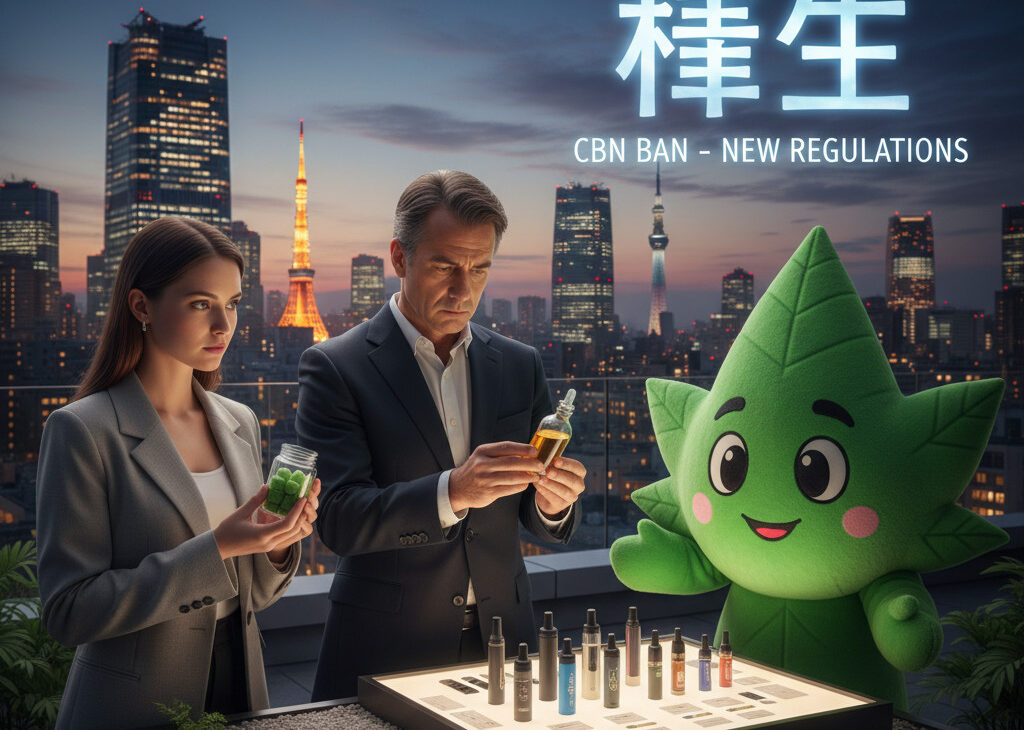
Japan Bans Cannabinol (CBN)
Japan bans cannabinol (CBN), a move that surprised consumers, retailers, and global cannabinoid manufacturers across Asia. The Ministry of Health reclassified CBN as a designated controlled substance under the new ordinance, citing health concerns. Because of the decision, production, import, sale, and consumption now face strict criminal and administrative limits nationwide.
This change aims to close a regulatory loophole that previously let hemp derivatives appear on shelves. As a result, popular CBN products like gummies, oils, vapes, and edibles will quickly disappear from the market. Retailers, online platforms, and overseas suppliers must now reassess inventory, compliance, and distribution strategies.
However, the ban also signals a broader tightening of cannabinoid rules across Asia and other restrictive jurisdictions. Therefore, manufacturers should update testing protocols, legal reviews, and labeling to avoid severe penalties. This article explains the ban, practical steps for consumers, and the global business implications for CBN, CBD, and CBG markets.
Image source: https://mycbdadvisor.com/wp-content/uploads/2026/06/img-japan-cbn-ban-symbolic-image.jpg
Japan bans cannabinol (CBN) — What CBN is and its uses
Cannabinol, commonly called CBN, is a minor cannabinoid found in hemp and cannabis plants. It forms when THC breaks down after plant aging or exposure to heat and oxygen. As a result, CBN often appears in aged or poorly stored hemp material. Researchers study CBN for its pharmacology because it interacts with the endocannabinoid system in ways distinct from THC and CBD.
Common uses and claimed benefits
- Sleep support: Many brands market CBN as a sleep aid. However, clinical evidence remains limited; some trials examine CBN with CBD for sleep effects (see trial details).
- Anti-inflammatory and topical uses: Early lab studies show CBN can reduce inflammatory markers in skin cells, possibly via TRPV1 modulation (study).
- Pain and recovery: Because CBN interacts with cannabinoid receptors, manufacturers promote it for mild pain relief. Yet rigorous human data remain scarce.
- Product formats: Before recent regulatory moves, sellers offered CBN in gummies, oils, vapes, and topical creams. These formats targeted wellness and functional snack markets.
Legal and consumer context
Because Japan bans cannabinol (CBN), consumers and suppliers face urgent compliance choices. For more reporting on the regulatory change, refer to The Japan Times coverage.
Related keywords and synonyms: CBN (cannabinol), hemp-derived cannabinoid, minor cannabinoid, CBD, CBG, hemp derivatives.
| Country | Legal status of CBN | Notes | Source |
|---|---|---|---|
| Japan | Banned and classified as a designated drug and controlled substance | Production, import, sale, and consumption prohibited as of June 1, 2026. Consumers must dispose of products. Penalties can include imprisonment. | Source |
| United States (federal) | Ambiguous at the federal level | Hemp-derived CBN may be tolerated when Δ9 THC is below 0.3 percent under agricultural law. However federal agencies still regulate cannabis-derived products and state rules vary. | Source |
| Canada | Regulated under the Cannabis Act | CBN products fall within existing cannabis rules. Licensed producers can sell regulated CBN products subject to testing and marketing restrictions. | Source |
| European Union | Varies by member state; no single EU-wide rule | Some countries treat CBN as a novel food or control it under national drug laws. Regulatory uncertainty remains across Europe. | Source |
Related keywords and terms: CBN (cannabinol), hemp-derived cannabinoid, CBD, CBG, hemp derivatives, Δ9 THC limits, controlled substance, novel food, regulatory uncertainty.
Japan bans cannabinol (CBN): reasons and implications
Legal, cultural, and health reasons behind Japan bans cannabinol (CBN)
Japan’s decision reflects legal caution and strict drug policy. The Ministry of Health framed CBN as a designated drug and controlled substance. As a result, lawmakers closed a perceived regulatory loophole that allowed hemp derivatives on shelves. Moreover, Japan’s December 2023 reform tightened rules for cannabis-derived medicines and increased penalties for unauthorized use. For reporting on the policy and penalties, see The Japan Times and the Ministry of Health site.
Culturally, Japan maintains low tolerance for psychoactive substances. Therefore, regulators favor preventive bans over case-by-case approvals. This approach aims to limit public health risks and social harms linked to cannabis derivatives. Because evidence on CBN’s long-term safety remains incomplete, officials chose a conservative path.
Health concerns also played a role. Authorities cited limited clinical data and the risk that CBN products could mask illicit THC contamination. Consequently, regulators prioritized strict controls over market access.
Practical implications for consumers and businesses
- Consumers: People must dispose of CBN products before the deadline or face fines and penalties. They should check product labels and retailer notices.
- Retailers and importers: Stores must remove CBN items and update compliance protocols. Therefore, supply chains need audits and tighter lab testing.
- Manufacturers: Global brands must reassess Japan market entries and labeling. They should increase third-party testing and legal reviews.
- Global market: The ban may slow innovation and shift R&D to permissive markets. However, it could also create stricter testing norms worldwide.
Related keywords: CBN (cannabinol), hemp-derived cannabinoid, controlled substance, regulatory loophole, THC contamination, testing protocols, CBD, CBG.
Conclusion: Japan bans cannabinol (CBN) — key takeaways and outlook
Japan bans cannabinol (CBN), marking a swift and consequential policy shift. As a result, production, import, sale, and consumption now face strict limits. Consumers must act quickly to comply with disposal rules. Retailers and online platforms will face immediate stock and compliance changes.
The move reflects legal caution, cultural attitudes, and unresolved health questions. Therefore, companies should tighten testing, labeling, and legal reviews. Because penalties can be severe, supply chains need audits and stronger quality controls. In addition, manufacturers should consider alternative markets and reformulation where legal.
Globally, the ban may reshape how regulators view minor cannabinoids. However, research and product development will continue in permissive jurisdictions. Over time, harmonized testing standards and clearer rules may emerge. Meanwhile, businesses will weigh risk against opportunity when planning R&D and market entry.
For up-to-date resources, expert analysis, and regulatory tools, visit MyCBDAdvisor. We will continue monitoring this story and reporting actionable guidance.
Frequently Asked Questions (FAQs)
What does it mean that Japan bans cannabinol (CBN)?
The Ministry of Health classified CBN as a designated drug and controlled substance. Therefore, production, import, sale, and consumption are prohibited. Consumers must follow disposal rules and businesses must stop sales.
Do I need to dispose of products that contain CBN?
Yes. The ministry requires consumers to dispose of CBN products before the set deadline. For official reporting and guidance, see The Japan Times.
Is CBN unsafe or illegal elsewhere?
CBN is legal or regulated differently around the world. However clinical evidence on safety and efficacy remains limited. For research summaries, review trials at PubMed Study 1 and PubMed Study 2.
Will the ban affect CBD, CBG, or other hemp products?
It may. Regulators may tighten testing and labeling rules. As a result, manufacturers should increase lab testing and legal reviews.
What should consumers and companies do now?
Check product labels, confirm third-party testing, and follow disposal rules. Also consult legal counsel and stay updated through trusted industry resources.