
Minnesota cannabis supply chain reform aims to simplify how medical and adult-use products move from grower to patient or consumer. Lawmakers moved quickly to remove the combination license and to cap indoor plant canopy at 38,000 square feet.
However, these changes create immediate challenges for cultivators, manufacturers and distributors. Smaller operators worry about access to licenses, while larger firms must recalibrate capacity limits and production plans. Additionally, the new cannabis microbusiness license and the allowance to hold both hemp and cannabis licenses add complexity.
For consumers, reform could improve product availability and safety, especially for medical cannabis patients. For businesses, reform means shifting investments and compliance systems, and therefore new operational costs. Supporters say the goal is a more equitable, competitive market.
The Office of Cannabis Management will lead implementation and conduct a psilocybin feasibility study. As a result, stakeholders should prepare for regulatory updates through 2027. In short, Minnesota cannabis supply chain reform restructures licensing, capacity and market access.
What is Minnesota cannabis supply chain reform?
Minnesota cannabis supply chain reform streamlines distribution and licensing for medical and adult-use cannabis. Therefore, it eliminates the combination license, caps indoor canopy at 38,000 square feet, and creates a microbusiness license. As a result, businesses must adjust operations while patients may see steadier product access. Regulators will implement changes through 2027 and study psilocybin program feasibility.
Key Challenges in Minnesota Cannabis Supply Chain Reform
Minnesota cannabis supply chain reform introduces several major hurdles for regulators, businesses and patients. Because the law changes licensing structures and capacity limits, stakeholders face fast-moving compliance demands. Therefore, operators must reassess production, distribution and capital plans to remain competitive.
Major challenges include
- Regulatory complexity and uncertainty. The Office of Cannabis Management rewrote license types and endorsements, which raises interpretive and compliance questions (see state licensing guidance: state licensing guidance).
- Capacity and canopy constraints. The law sets an initial indoor plant canopy cap of 38,000 square feet, forcing cultivators to redesign facilities and forecasts (full statute: full statute).
- Distribution inefficiencies and transitional bottlenecks. Merging medical and adult-use supply chains may disrupt wholesale and retail logistics, so delays can occur.
- Product availability for patients. Although the bill reserves canopy for medical products, shortages remain possible for specific formulations and dosing.
- Market access and small business pressure. New macrobusiness and microbusiness rules may favor better-funded firms, and therefore limit smaller entrants.
- Implementation timing and regulatory risk. Agencies must finalize rules by 2027, and concurrently study therapeutic psilocybin feasibility.
Finally, readers can compare regional policy moves in related analysis of Wisconsin’s adult-use bill: Wisconsin adult-use legalization bill analysis.
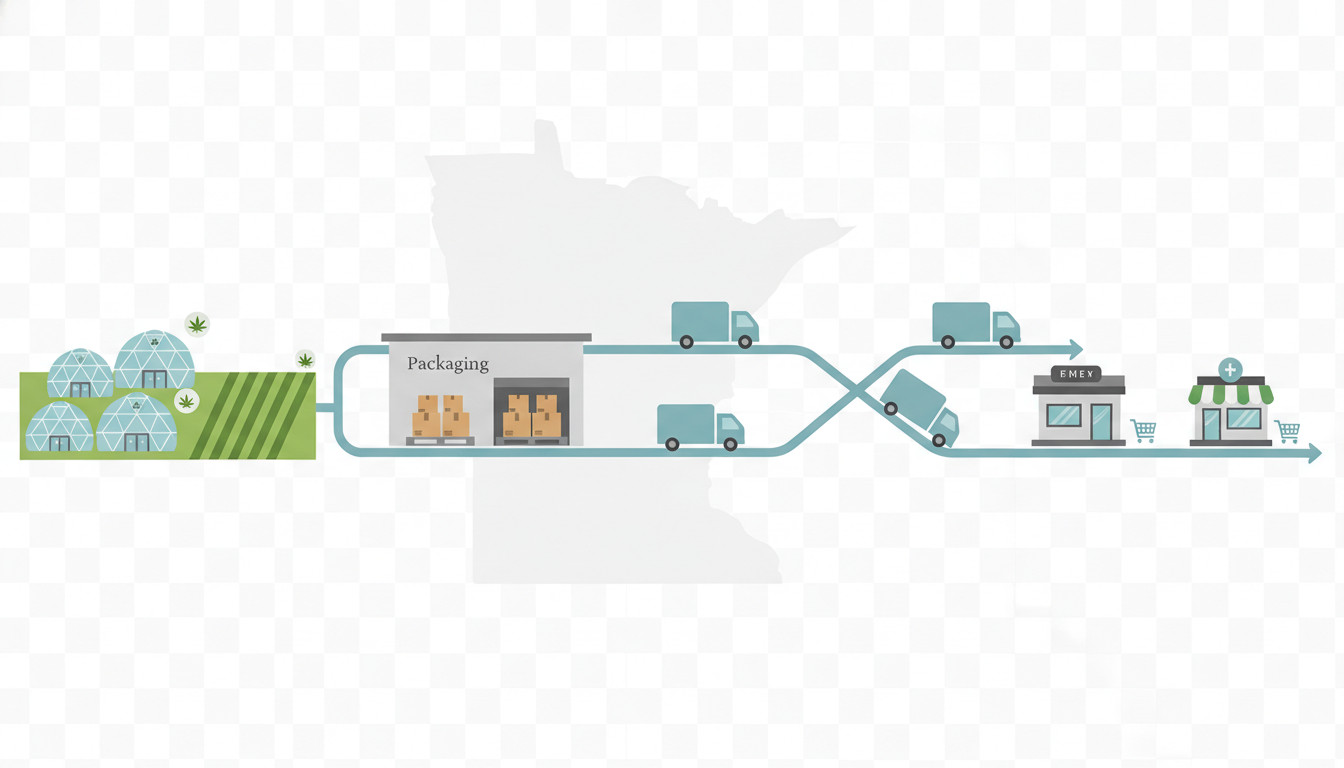
5 Steps in Minnesota Cannabis Supply Chain Reform
- Implement final licensing rules and guidance. The Office of Cannabis Management must publish clear license categories, endorsements and application timelines, so operators can apply with confidence (see OCM license types and licensing guidance).
- Finalize cultivation capacity and medical allocation. Regulators should confirm the 38,000 square foot indoor canopy cap and the 60,000 square feet reserved for medical products, therefore giving growers a firm planning baseline (full statute text).
- Phase in compliance and permitting transitions. Offer phased deadlines and clear permit conversion rules, because businesses need time to update facilities, staffing and tracking systems.
- Coordinate distribution logistics and inventory controls. Align wholesalers, transporters and retailers to prevent bottlenecks, and compare regional models like the Wisconsin adult-use legalization analysis.
- Support small businesses and monitor outcomes. Provide technical assistance and targeted grants, and therefore regulators can measure product availability, equity outcomes and supply shortfalls.
Comparison of Minnesota Cannabis Supply Chain Before and After Reform
| Feature | Before reform | After reform |
|---|---|---|
| Regulatory compliance | Fragmented rules, combination license confusion, slow approvals | Simplified license categories, clearer OCM guidance, faster application paths |
| Product availability | Spotty supply, shortages of medical formulations | Reserved medical canopy and better allocation for steadier stock |
| Price stability | Volatile pricing from bottlenecks and limited competition | Greater competition and capacity controls expected to moderate prices |
| Distribution efficiency | Parallel chains, logistics bottlenecks, inconsistent tracking | Unified supply chain, coordinated logistics, improved inventory tracking |
| Market access and equity | High entry barriers; market concentrated among large firms | Microbusiness license, hemp-cannabis dual licensing to expand small business access |
Benefits and Outlook: Minnesota cannabis supply chain reform
Minnesota cannabis supply chain reform promises clearer regulation and improved product quality for medical and adult-use consumers. Because the law unbundles the combination license and sets canopy limits, regulators can enforce consistent testing and labeling. As a result, patients should see safer, more predictable products from licensed producers.
The reform also aims to boost consumer access and price stability. By reserving canopy for medical products and creating microbusiness licenses, the law supports broader distribution and more competitive retail markets. Therefore, consumers may benefit from steadier inventories and lower price volatility over time.
Economically, the changes can spur new business formation and jobs. For example, streamlined licensing and dual hemp-cannabis allowances reduce barriers for entrepreneurs, and therefore encourage investment in cultivation, processing and logistics. Policy reviews from national experts suggest that clear state frameworks help markets mature while protecting public health (see regulatory overview: regulatory overview).
Looking ahead, expect phased rulemaking through 2027 and targeted supports for small firms. Regulators will monitor supply metrics and equity outcomes, and adjust rules as needed. Overall, stakeholders should feel cautiously optimistic that Minnesota cannabis supply chain reform will produce safer products, better access, and steady economic gains.
CONCLUSION
Minnesota cannabis supply chain reform restructures licensing, caps indoor canopy, and creates microbusiness pathways. Because regulators removed the combination license, businesses must adapt production and compliance systems. As a result, consumers can expect steadier medical supply and clearer product testing standards.
The law also promotes market access and economic growth by enabling dual hemp-cannabis licenses and reserving canopy for medical products. Therefore, smaller firms gain new entry points while investors see clearer rules. Overall, the reform balances public health goals with market development.
Stay informed about rulemaking, phased implementation and the psilocybin feasibility study through 2027. For ongoing updates and state analysis, visit Minnesota cannabis coverage: Minnesota cannabis coverage. Sign up for alerts and engage with regulators, because active participation helps shape fair outcomes.
Frequently Asked Questions (FAQs)
What is Minnesota cannabis supply chain reform?
Minnesota cannabis supply chain reform is a law that restructures licensing and distribution. It eliminates the combination medical and adult-use license and sets canopy and allocation rules. As a result, the state aims to simplify compliance and improve product safety for patients and consumers.
How will reform affect medical product availability?
The reform reserves canopy space and prioritizes medical allocations, so patients should see steadier supplies. Regulators will monitor inventory and adjust rules if shortages appear. Therefore, clinical formulations and dosing availability should improve over time.
What business changes should operators expect under the reform?
Businesses must adapt to new license types and capacity caps, and microbusiness licenses will launch in 2027. Because companies can hold both hemp and cannabis licenses, some operators will diversify operations. As a result, firms should review capital plans and compliance systems immediately.
Will the reform improve distribution efficiency and prices?
The law intends to unify parallel supply chains, and therefore reduce logistics bottlenecks. Greater market competition from microbusinesses should help moderate price volatility. However, transitional disruptions may cause short term price swings until systems stabilize.
What is the implementation timeline and future outlook?
Regulators will phase in rules through 2027 and complete related studies, including a psilocybin feasibility report due January 15, 2027. Stakeholders should expect phased permit conversions and public comment periods. Overall, the outlook favors safer products, broader access, and steady economic growth as the market matures.