Meta description: Minnesota hemp edible serving size limits clarified, per serving and per package THC caps, COA and LPHE compliance, plus labeling requirements.
Minnesota hemp edible serving size limits shape product design and consumer safety; see Minnesota OCM LPHE guidance for official rules. This guide explains 5 mg per serving and 50 mg per package caps and practical steps for compliance.
Producers should maintain batch records and third party COAs to verify delta9 THC potency for each lot. Consumers and retailers will learn how to read labels, count servings, and avoid overconsumption.
- Step by step dose calculations for per serving and total package LPHE compliance.
- COA handling, batch records, labeling, and QR linked potency verification procedures.
Sources: Minnesota Statute 342.46 and Minnesota OCM LPHE guidance.
MN: 5 mg delta‑9 THC per serving; 50 mg per package.
- Legal limits: 5 mg delta‑9 per serving; 50 mg per package.
- Testing: third‑party lab COA per batch; retain and link QR see MN LPHE guidance.
- Labeling: show servings per container; mg THC per serving; total mg THC; batch ID; COA link.
Minnesota hemp edible serving size limits
Quick facts
- 5 mg delta9 THC per serving
- 50 mg delta9 THC per package
- Ready to drink beverages treated as one serving and may contain up to 10 mg per container
MN hemp edibles are limited to 5 mg delta9 THC per serving and 50 mg per package, which affects formulation, packaging, and retail decisions. These hemp edible THC limits MN require producers to calculate dose per serving and total package potency to stay compliant. Producers should design servings with consistent dosing and keep accurate records for LPHE compliance.
Legal limits
State law caps delta9 THC at 5 mg per serving and 50 mg per package for Lower Potency Hemp Edibles. Confirm the statutory text at Minnesota Statute 342.46. Operational guidance and implementation details are published by the state in the MN Office of Cannabis Management LPHE guidance.
How to calculate servings
- Inputs Number of servings per package and milligrams THC per serving
- Formula Number of servings times milligrams per serving equals total package THC
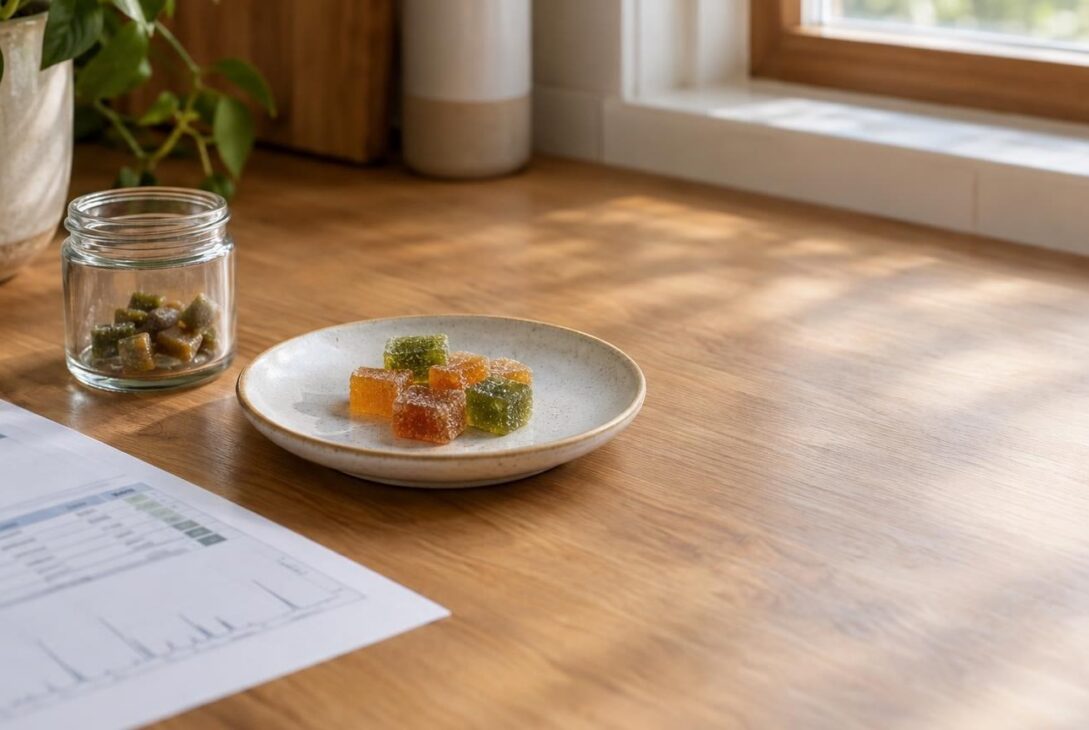
- Example result 20 gummies times 2.5 mg per gummy equals 50 mg total which meets the package cap
Example Beverage treated as 1 serving 1 container times 10 mg per container equals 10 mg total
Labeling & testing
Label every package with servings per container, mg THC per serving, and total mg THC per package. Provide a third party Certificate of Analysis for each batch and retain records for inspections. Include a visible QR code on the principal display panel linking to the COA. Make the batch ID visible on the principal display panel so consumers and inspectors can trace potency and lot information.
Health effects of THC in hemp edibles
How edibles behave
Edibles absorb slowly through digestion, producing delayed onset of effects. Peak effects often occur one to three hours after ingestion and last longer. Oral bioavailability varies widely; see the marijuana factsheet and overview.
Potential benefits
Low doses can relieve pain and reduce inflammation for some people. Some users report improved sleep and reduced anxiety at controlled doses. Benefits depend on dose, formulation, and individual biology.
Risks & sensitivity
Overconsumption may cause anxiety, dizziness, or rare temporary psychosis. Novice users and smaller individuals face higher sensitivity to THC. Combining edibles with alcohol or sedatives increases impairment and risk.
Practical dosing guidance
Start with 1 to 2.5 milligrams and wait at least two hours before taking more. If needed, increase in 1 to 2 milligram increments on later occasions, and track effects. Keep away from children and pets. For pharmacokinetic details, see the edible pharmacokinetics review.
THC Limits by State
Last verified: July 25, 2026
This table summarizes THC per serving and per package caps for selected states. Rules change frequently, so consult the linked agency pages for full regulatory text and implementation guidance.
| State | THC per serving | THC per package | Source |
|---|---|---|---|
| Minnesota | 5 mg | 50 mg | Minnesota OCM LPHE guidance |
| California | No detectable THC per serving | Up to five servings per package (serving limit applies) | California Title 17 §23100 regulations |
| New York | 1 mg | Up to 100 mg | NY OCM product forms guidance |
| Oregon | 2 mg | 20 mg per container | Oregon OLCC Hemp Registry Guide |
| Colorado | 1.75 mg | No specified per package cap for nonintoxicating hemp products | Colorado SB23-271 definitions and limits |
Notes
[a] California regulations treat any amount above a laboratory limit of detection as detectable THC per serving; the rule also limits packages to a maximum of five servings. See the Title 17 regulations for details.
[b] Colorado uses a “nonintoxicating” product definition that sets a per serving THC threshold and a CBD to THC ratio; consult SB23-271 for the statutory criteria and exceptions.
[c] State definitions and testing methodologies differ. Always verify the official state agency guidance before manufacturing, labeling, or selling products across jurisdictions.
Primary sources
- Minnesota Office of Cannabis Management LPHE guidance
- California Title 17 regulations §23100
- New York Office of Cannabis Management product forms guidance
- Oregon OLCC Hemp Registry Guide
- Colorado SB23-271 statutory text
Conclusion
Understanding Minnesota hemp edible serving size limits (5 mg per serving; 50 mg per package) protects consumers and businesses. Because these caps standardize dosing, they reduce accidental overconsumption and improve safety. Therefore clear labeling and testing are essential for public health.
Businesses must design servings and labels to meet the limits and maintain compliance. In addition they should keep batch testing records and update labels when formulations change. As a result they preserve customer trust and avoid enforcement.
Consumers benefit when they read labels, count servings, and start with low doses. Consequently safe and predictable experiences become more likely.
For ongoing guidance and industry resources visit My CBD Advisor. Stay informed and prioritize safety.
Frequently Asked Questions (FAQs)
What are MN limits?
Minnesota caps delta-9 THC at 5 mg per serving and 50 mg per package, setting THC per serving MN and package limits for Lower-Potency Hemp Edibles. These limits govern product formulation and labeling. (See: MN LPHE guidance)
How does serving size affect package labeling?
Serving size determines mg THC per serving and total package THC, which must appear on the label under Minnesota rules. Include servings per container and total mg THC to meet COA requirements. (See: Minnesota Statute 342.46)
Can I purchase higher potency edibles in nearby states?
Some states allow higher per serving or package THC caps, so out-of-state products may exceed Minnesota limits and transporting hemp across state lines may be illegal. Verify both state rules before buying or moving products. (See: MN LPHE guidance)
What should consumers know about dosing and safety?
Edibles have delayed onset and longer duration, so wait at least two hours before redosing and start low to avoid overconsumption. Individual effects vary due to oral bioavailability; see the edible pharmacokinetics review for context. (See: edible pharmacokinetics review)
How can businesses stay compliant?
Keep batch records, retain third party COAs, and ensure labels reflect tested potency to satisfy COA requirements and inspections. Make COAs accessible via QR code and update labels when formulations change. (See: MN LPHE guidance)
What documentation (COA) must be provided to retailers and consumers?
Provide a third party Certificate of Analysis showing delta-9 potency and contaminant testing, include batch identifiers, and make COAs available to consumers and retailers. Retain COAs for inspections and link them from packaging. (See: MN LPHE guidance)
What is the legal penalty for noncompliance in MN?
Violations can trigger administrative enforcement, fines, and product seizure under Minnesota law. Refer to Minnesota Statute 342.46 for specifics. (See: Minnesota Statute 342.46)
Related on CBD Advisor
- Can CBN for sleep improve sleep quality tonight
- Can botanical synergy in functional gummies boost daily performance
- What Do over-40 cannabis shoppers Want Now