
Why Microdosing Matters
Clinicians, patients, and industry need to monitor cannabis microdosing as a rising clinical and commercial trend (9.4% of U.S. adults reported microdosing at least once in a 2023 national survey). Trends affect care decisions, product formats, and patient education.
The article explains clinical benefits and gives practical how-to guidance for safe low-dose titration. It also examines how medical program growth influences access and product design.
Sources
Executive summary
This executive summary focuses on cannabis microdosing for clinicians, patients, and industry.
Clinicians
- Screen for low-dose cannabis use; record THC and CBD amounts and effects.
- Advise conservative starts such as 1 to 2 mg and document titration.
Patients
- Begin with 1 to 2 mg low-dose tincture, wait two hours before adjusting.
- Keep a daily symptom and dose log and consult your clinician first.
Industry
- Offer standardized low-dose formats with clear per-dose labeling.
- Invest in clinician education and monitor state registry changes to align supply.
See dosing guide at dosing guide
Program reports at program reports
Sources
What Are the Benefits of Cannabis Microdosing?
Clinical context
Cannabis microdosing refers to using very low, controlled amounts of cannabis to gain symptom relief while minimizing intoxication. A 2023 national survey found about 9.4 percent of U.S. adults reported having microdosed cannabis at least once, highlighting growing patient interest [1].
Patient benefits
Many patients choose low dose formats for symptom control and daily functioning. Below are common reported benefits:
- Reduced anxiety with fewer pronounced psychoactive effects [2].
- Pain reduction for some chronic conditions, particularly neuropathic pain [2].
- Fewer side effects compared with higher doses, improving tolerability [3].
- Better daytime functioning because symptom control often comes without sedation [3].
- Easier dose titration that supports individualized care and safer use [2].
References
- Prevalence of microdosing among U.S. adults (PubMed)
- Systematic reviews of medical cannabis for pain and related symptoms (PubMed)
- Clinical overview of cannabis and cannabinoids (NCCIH)
How to Start Cannabis Microdosing
Begin with measured, repeatable micro-steps that prioritize safety and reliable symptom tracking. These numbered steps provide a concise clinical pathway for patients and clinicians to start low and titrate slowly.
- Consult a clinician. Discuss goals, current medications, and contraindications so clinicians can identify drug interactions and tailor monitoring.
- Select a consistent product format. Prefer labeled tinctures, capsules, or single dose lozenges because predictable concentration supports safe dosing and reproducible effects.
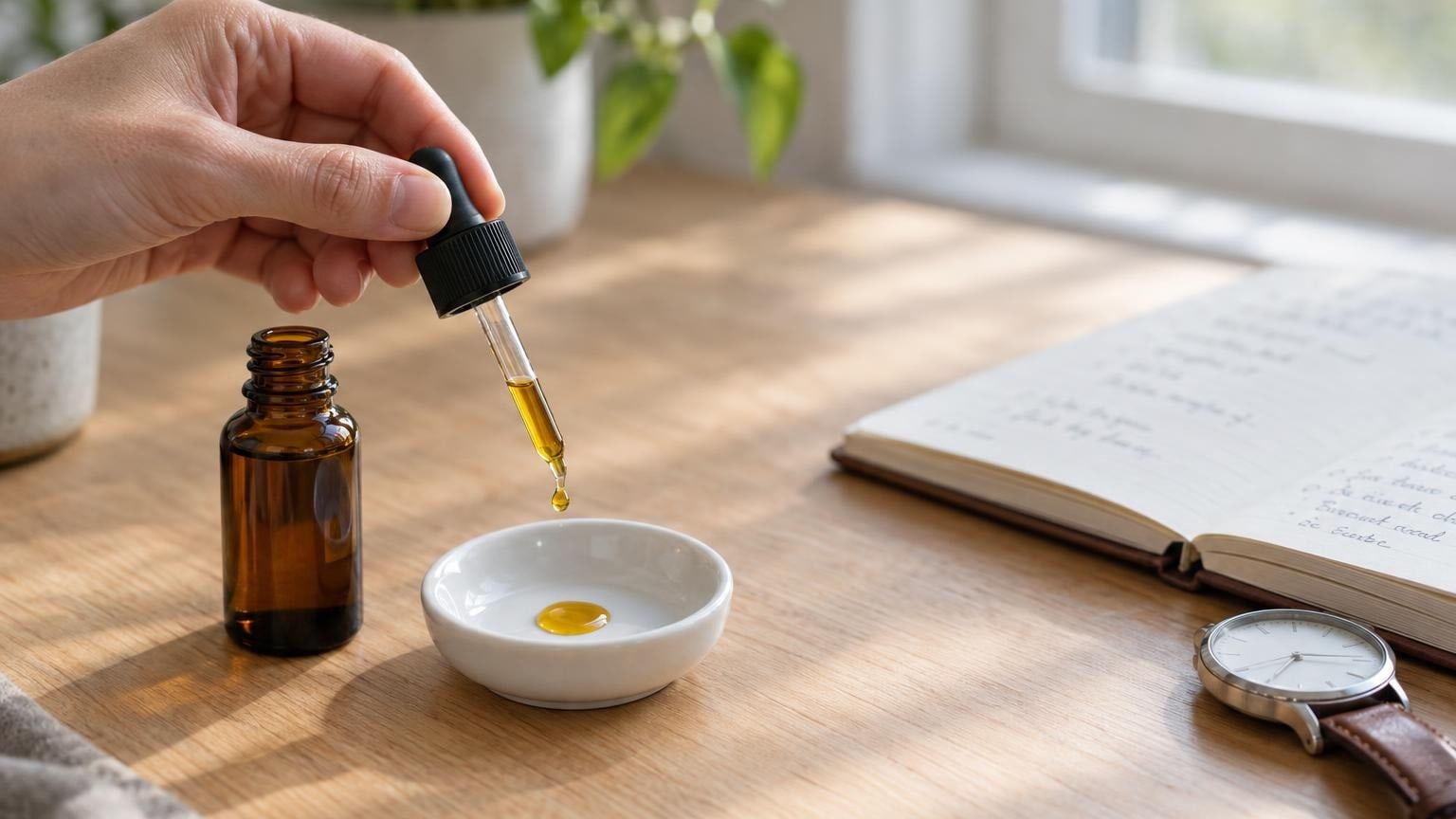
- Start very low. Begin with 1 to 2 mg of THC or an equivalent low dose CBD formulation and wait at least two hours to capture delayed oral onset and avoid accidental overuse.
- Keep a daily log. Record dose, timing, symptoms, and context to help distinguish therapeutic effect from placebo and guide dose adjustments.
- Titrate slowly. Increase by small increments only after several days of stable observation so adverse effects can be detected early and minimized.
- Reassess with your clinician. Regular review ensures appropriate dose, monitors interactions, and aligns treatment with changing symptoms or goals.
Practical dosing example
Use the formula: mg per mL × mL taken = mg. For example, with a tincture that is 10 mg per mL, calculate needed volume as desired mg ÷ mg per mL; therefore 10 mg per mL × 0.1 mL = 1 mg. A 1 mL dropper contains 10 mg in this example, so 0.1 mL roughly equals 1 mg.
Safety callout High risk groups including people who are pregnant, breastfeeding, have heart disease, or a history of psychosis should avoid cannabis or consult a specialist before use.
Sources
- Clinical guidance on medical cannabis
- Cannabis pharmacology overview
- Tincture dosing calculations and practical guidance
Growth of Medical Cannabis Programs
This table summarizes recent patient enrollment counts across selected state medical cannabis programs to illustrate program scale and variation.
| State | Year Medical Cannabis Was Legalized | Estimated Patient Enrollment |
|---|---|---|
| New Hampshire | 2013 | 17,000 (2025) |
| New York | 2014 | 72,161 (2026) |
| Arizona | 2010 (Prop 203 passed) | 86,074 (2025) |
| Florida | 2016 (Amendment 2) | 929,360 (2025) |
| Pennsylvania | 2016 (Act 16) | 441,530 (2025) |
| Oregon | 1998 (Measure 67) | 12,601 (2025) |
The table shows wide variation in program size with a few very large registries and several smaller programs. Florida and Pennsylvania account for the largest enrollments while states such as New Hampshire and Oregon show much smaller registries. Policy differences and program rules often explain regional variation so consult state registry pages for current counts and trends.
Sources: New Hampshire program report and New York medical cannabis program page.
Trends in Medical Cannabis Programs
Nationally, enrollment patterns show steady but uneven program growth: some states report pronounced increases while others plateau or decline after recreational legalization. Regionally, shifts often follow policy changes and access rules rather than uniform patient demand, as New Hampshire’s 14.5 percent jump after 2024 recommendation reforms illustrates New Hampshire program report.
Primary drivers of enrollment shifts
- Policy changes that expand who can recommend or streamline referrals, for example New Hampshire’s 2024 rule updates that coincided with higher registrations New Hampshire program report.
- Recreational legalization that moves some patients to adult markets, contributing to medical registry declines in certain states national enrollment analysis.
- Provider authorization and clinical access barriers such as clinician availability and recommendation requirements, which directly shape patient enrollment trends; consult state registry pages for program counts and updates state registry example.
Program managers should watch percent enrollment change, new clinician authorizations, and patient age distribution for early signals. Monitor state registry dashboards and legislative trackers to align outreach, supply planning, and clinician engagement.
Conclusion
Cannabis microdosing and medical cannabis program growth in the U.S. reflect shifting patient needs and evolving policy. Recent surveys show rising interest in low-dose cannabis for anxiety and chronic pain. State registries report uneven but often steady enrollment growth. Therefore clinicians and patients face growing demand for clear dosing guidance.
For patients, microdosing offers potential benefits such as symptom relief with fewer side effects, but evidence remains limited. Consequently patients should consult clinicians, track effects, and follow state program rules before starting.
For industry and clinicians, these trends signal product and education opportunities. As a result, brands should prioritize consistent dosages, clear labeling, and clinician outreach. Policy watchers should monitor registry updates and legislative changes. For ongoing updates and practical guidance, visit My CBD Advisor for reliable resources and program reports.
Frequently Asked Questions
What is microdosing?
Cannabis microdosing means taking very small, consistent amounts of cannabis to ease symptoms while minimizing intoxication. Low-dose cannabis focuses on maintaining daytime function and symptom control rather than producing a strong high; see a concise review of cannabis pharmacology for clinical context: cannabis pharmacology review.
Who uses microdosing and why is it relevant?
People with anxiety, chronic pain, or sleep disruption often choose microdosing to reduce side effects and preserve function. Medical marijuana programs deliver regulated access, clinician oversight, and registry data that help shape treatment and policy; review state program summaries: state program summaries.
Is there scientific support for microdosing?
Evidence is limited but growing; some trials and observational studies report modest benefits for anxiety and pain while results remain variable. More randomized controlled trials and standardized dosing guidance, including attention to THC/CBD ratio, are needed to inform clinical protocols; see a trial on CBD and THC ratios: CBD and THC ratios trial.
How do I start microdosing safely?
Begin with a clinician consultation, choose a consistent low-dose product format such as a labeled tincture, and keep a dose and symptom log while titrating slowly. Follow your state program rules and review outcomes regularly with your provider to reduce risks and interactions.
Will program growth affect availability and cost?
Expansion of medical marijuana programs tends to increase standardized low-dose options, clearer labeling, and clinician resources, which can improve access. Costs and coverage differ by state, so check your registry and local rules for specifics.
When to consult a clinician
- Before starting microdosing or changing your THC/CBD ratio
- If you experience new or worsening symptoms or suspect medication interactions
- When pregnant, planning pregnancy, or if you have heart disease or a history of psychosis
Related on CBD Advisor
- Star signs and cannabis strains: May 2026 horoscopes decoded
- Medical card holders switching to recreational cannabis in Minnesota
- What is Light cannabis for incremental growth (low-dose cannabis)