New York cannabis market: Why it could reshape the US cannabis landscape
The New York cannabis market is poised to reshape the U.S. cannabis landscape. Early investment, strong wholesale partnerships, and growing local brands drive this momentum. Because operators focus on brand storytelling, beverages, and high-quality flower, New York could become a national leader.
However regulatory challenges remain, and price compression will affect margins. The expected track-and-trace system will bring transparency and help licensed operators compete with the hemp channel. As a result, consumers will gain confidence in product safety and origin, which supports the regulated market.
Curaleaf and other MSOs see opportunity in this market, and investments are flowing in. Therefore the state’s mix of microbusinesses, outdoor farms, and processors creates a diverse supply base. With collaboration growing, true New York brands may emerge and scale.
This article examines trends, risks, and the strategies operators use to win customers. We will explain how hemp beverages, edibles, and wholesale channels interact. Finally, we will show why investors and operators should watch New York closely.
New York cannabis market: trends, regulation and economic impact
The New York cannabis market sits at a rare intersection of rapid demand and evolving rules. Investors and operators see scale potential, because the state combines a huge consumer base with fresh retail and cultivation capacity. However the market faces price compression and competition from the expanding hemp channel, which already reached roughly $30 billion in retail value nationwide. As a result licensed operators must build trust and distinct brands to win.
Current trends
- Growing wholesale partnerships drive supply diversity and speed to shelf. For example Curaleaf focuses on wholesale deals and local brand work to reach more consumers. See more on beverage brand strategies at cannabis beverage brand building.
- Product innovation centers on beverages, edibles and premium flower. Therefore brands emphasize story, genetics and consistent experiences.
- Hemp channels pull first-time buyers. Consequently regulated sellers prioritize education and quality control.
Regulatory environment
- The statewide track-and-trace system is slated for early 2026. It will track product movement and tighten licensing, which helps reduce illicit sales.
- Regulators aim to support microbusinesses, processors and outdoor farms. This approach should broaden participation and local brand growth.
Economic impact and facts
- Significant capital already targets New York; investors have deployed large sums in multi-state plays, with examples of more than $550 million invested across portfolios. This investment signals confidence.
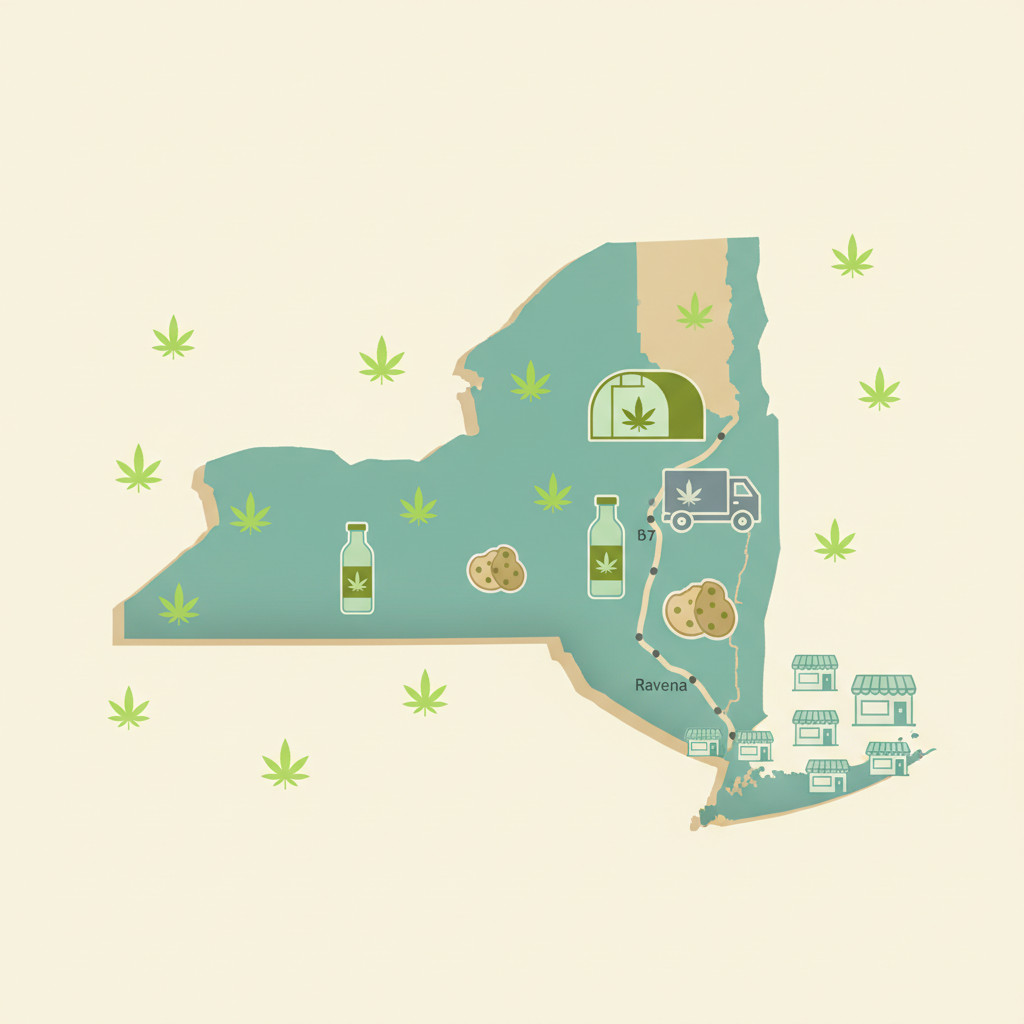
- Curaleaf’s local footprint includes four medical dispensaries and a Ravena cultivation center opened in 2018, which highlights early operator commitment.
- Price compression is likely as supply scales. However greater transparency via the track-and-trace system and focused brand building can preserve margins.
For further context on pricing and sales dynamics see the Cannabis Price Index and recent sales trends at cannabis sales in January. For official regulatory updates visit the New York Office of Cannabis Management.
New York cannabis market segment comparison
Below is a side-by-side comparison of key segments in the New York cannabis market. It highlights market size, growth, consumers, regulation, top players and product focus.
| Segment | Estimated market size | Typical growth rate | Consumer demographics | Regulatory notes | Major players or brands | Product focus |
|---|---|---|---|---|---|---|
| Medical program | Established revenue stream; steady since 2018 (example: Curaleaf opened four medical dispensaries and a Ravena cultivation facility) | Moderate and steady as patient base grows | Patients and older adults seeking consistent dosing and medical guidance | Governed by New York Office of Cannabis Management; see https://cannabis.ny.gov/ for licensing and rules | Curaleaf and local medical operators | Flower, tinctures, measured-dose edibles |
| Adult-use recreational | Rapidly expanding toward multi‑billion potential as retail rolls out | Fast early growth, then normalization due to price compression | Younger adults and occasional users, plus tourists | Subject to MRTA rules and expanding retail licensing; track-and-trace planned for early 2026 https://cannabis.ny.gov/ | Multi-state operators and emerging New York brands | Beverages, edibles, premium flower, pre-rolls |
| Hemp retail channel | Part of a roughly $30 billion nationwide hemp market; widely available in stores | High growth nationally; outpacing some regulated channels | Casual users and new consumers seeking convenience | Regulated under federal hemp rules and state retail laws; less strict labeling than regulated cannabis | National hemp brands and mainstream retailers | Hemp beverages, CBD edibles, topicals |
| Product type: Flower | Core revenue driver in regulated channels | Stable unit growth; price compression likely as supply increases | Experienced consumers and connoisseurs | Requires lab testing and seed-to-sale tracking in regulated market https://cannabis.ny.gov/ | Craft cultivators and MSOs | High-THC and craft genetics |
| Product type: Edibles and beverages | Fast innovation category with high marketing value | High product innovation and adoption growth | Broader demographic including health and lifestyle buyers | Strict dosing, packaging and testing rules in regulated market | Beverage-focused brands; see beverage brand strategies at MyCBDAdvisor for insights | Low-dose edibles, functional beverages |
| Product type: Concentrates | Premium segment with higher margins | Rapid growth among experienced users | Adults seeking potency and specific effects | Tightly regulated for potency and testing in regulated market https://cannabis.ny.gov/ | Extract houses and specialty brands | THC concentrates, dabs, cartridges |
Notes
- The New York cannabis market will evolve quickly as more retail licenses and the statewide track-and-trace system roll out. Therefore operators need strong brands and wholesale partnerships to compete.
- Investment momentum exists; investors have deployed large capital into portfolios, which supports scale and product innovation.
- Because the hemp channel pulls new customers, regulated operators must emphasize safety, origin and storytelling to retain market share.
Challenges and opportunities in the New York cannabis market
Stakeholders face tangible hurdles, but clear payoffs exist. Because rules and market forces change quickly, operators must adapt fast. However those who build strong brands and supply networks can win.
Key challenges
- Regulatory complexity. Licensing and compliance remain uneven across regions. The statewide track and trace rollout in early 2026 will help. Yet operators must invest in systems and training now.
- Price compression. As supply grows, prices will fall. As a result margins will tighten for cultivators and retailers.
- Competition from the hemp channel. The hemp market now approaches thirty billion dollars in retail value nationally. Consequently Curaleaf warns that “The hemp channel is stealing our new customers.”
- Illicit market and enforcement. Until enforcement improves, the black market will depress legal sales and undercut brand trust.
Opportunities ahead
- Wholesale partnerships and collaboration. For example Curaleaf focuses on wholesale deals to increase shelf presence. Therefore local brands can scale faster through partnerships.
- Product innovation. Beverages, edibles, and premium flower offer high consumer appeal. Investors such as Measure 8 Partners have shown confidence with large capital deployments.
- Local brand building. Because cultivators open doors for partnerships, true New York brands can emerge and lead the market.
- Improved transparency. The track and trace system will boost consumer confidence in safety and origin.
If operators navigate regulation and prioritize quality, the payoff can be large. In short, challenges are real, yet opportunity rewards strategic players.
Conclusion
The New York cannabis market promises large consumer demand and rapid evolution. Because the state blends medical history, new retail rollout, and strong investment, opportunity exists for operators and consumers alike. However stakeholders face regulatory complexity, price compression, and competition from the expanding hemp channel. Therefore brands that focus on quality, transparency, and partnerships will find the best path to scale.
MyCBDAdvisor serves as a trusted, full spectrum, research driven CBD knowledge source. We provide clear, accurate coverage and actionable guidance for businesses and consumers. For ongoing updates and deeper reporting, visit MyCBDAdvisor at MyCBDAdvisor. Stay informed, because the market will continue to change rapidly and smart choices matter.
Frequently Asked Questions (FAQs)
Is cannabis legal in New York?
Yes. Adult-use and medical cannabis are legal under state law. However adult-use retail licensing is still rolling out across the state. The Office of Cannabis Management oversees rules and licensing.
What product types can consumers buy?
Regulated markets sell flower, edibles, concentrates and beverages. In addition hemp-derived products like CBD beverages appear in many stores. Therefore consumers will see broad product choice.
How does hemp differ from regulated cannabis?
Hemp products often contain low THC and face looser rules. National hemp sales approach thirty billion dollars, so competition is intense. As a result regulated sellers emphasize testing and brand trust.
Are New York products safe and tested?
Licensed products require lab testing and packaging standards. The statewide track-and-trace system will add transparency in early 2026. Consequently consumers can expect clearer origin and safety signals.
What is the market outlook?
The New York cannabis market shows strong investor interest and fast early growth. Price compression will pressure margins, yet innovation and wholesale partnerships create routes to scale. Brands that focus on quality and storytelling will likely win. Stay tuned for updates as the New York cannabis market evolves.