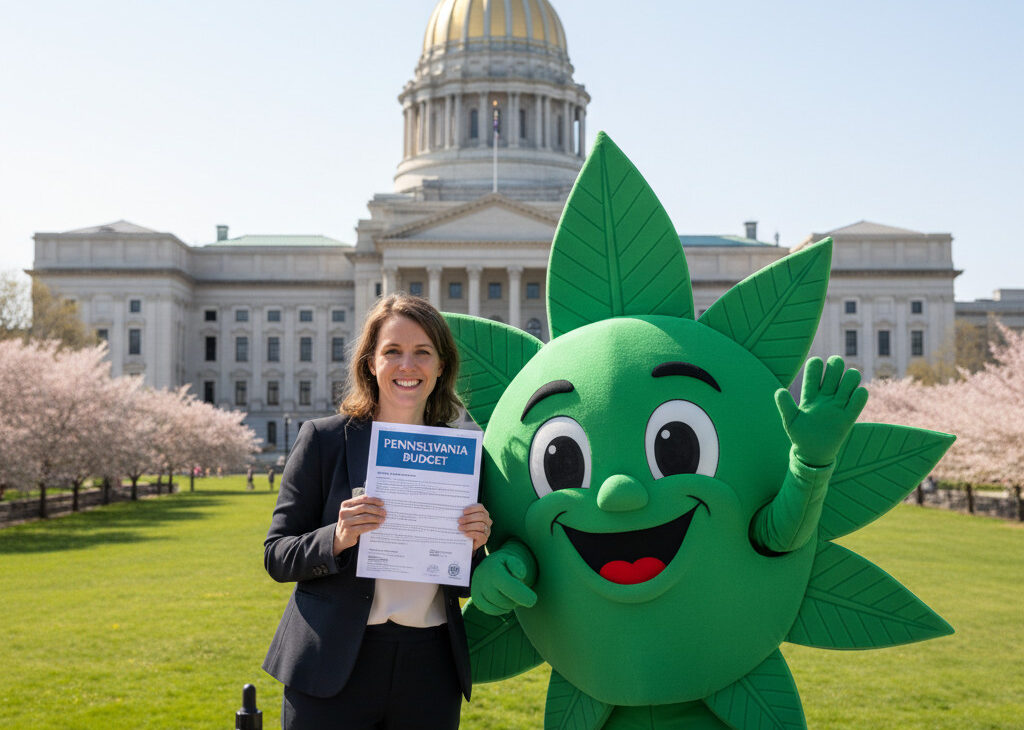
Pennsylvania adult-use cannabis legalization in executive budget: What the 2026 proposal means
Pennsylvania adult-use cannabis legalization in executive budget appears again in Gov Josh Shapiro’s 2026 proposal. The plan estimates 729.4 million dollars in new taxes and fees during the first year. Because of that projected revenue, the proposal deserves close attention from residents and businesses. However, lawmakers rejected similar measures in prior sessions, leaving passage uncertain.
Advocates say the budget language keeps momentum alive and frames future negotiations. Yet critics point to political splits over state stores and regulation as major obstacles. Therefore the outcome will affect public safety, tax policy, and small business opportunities statewide. Moreover, neighboring states’ markets change the competitive landscape for Pennsylvania retailers. As a result, residents should watch how lawmakers balance revenue goals with regulatory design.
This introduction lays out the stakes and sets the scene for the analysis that follows. Stakeholders include patients, local governments, retailers, and public health experts. Ultimately, the budget shows legalization remains a live political and economic issue in Pennsylvania.
Key details: Pennsylvania adult-use cannabis legalization in executive budget
Proposed regulations under Pennsylvania adult-use cannabis legalization in executive budget
The executive budget proposes a regulated adult-use market with state oversight. The plan creates a licensing system for cultivators, processors, and retailers. It also outlines social equity and restorative justice investments. Because the budget sets guardrails, regulators would write detailed rules after enactment. Key points include:
- State licensing for cultivation, processing, distribution, and retail
- Social equity provisions and $10 million for restorative justice programs
- Support for small and diverse businesses with $25 million in assistance
- Regulatory authority placed with a new state control board or agency
Taxation in Pennsylvania adult-use cannabis legalization in executive budget
Shapiro’s budget estimates $729.4 million in year one from taxes and fees. The proposal assumes a 20 percent wholesale tax on cannabis. In addition, licensing fees and local taxes would add revenue. See the executive budget document for details: Executive Budget Document.
Potential timeline and legislative hurdles
The budget anticipates sales could begin on January 1, 2027. However, passage depends on the legislature. Last session the House passed a bill for state-run store sales, but the Senate Law and Justice Committee blocked it. For context, read reporting at PhillyVoice and analysis at Ganjapreneur.
What stakeholders should watch next
- Committee movement in the Senate and House
- Draft regulatory language from any new control board
- Negotiations over retail model and local opt-in rules
- Economic impacts on jobs and patient access; see related coverage: CBD Advisor on Cannabis Policy and CBD Advisor on Pennsylvania Cannabis Patient Decline.

Comparative table: Pennsylvania and neighboring states
| State | Legal status | Taxation (headline) | Regulatory body | Market launch timeline | Source |
|---|---|---|---|---|---|
| Pennsylvania | Proposed in executive budget; not yet enacted | Estimated $729.4 million first year; proposal assumes a 20 percent wholesale tax plus licensing fees | Proposed new state control board or agency (to be created by legislation) | Potential sales target January 1, 2027; passage depends on legislature and committee action | Budget document |
| New York | Legal for adults 21 and over | Wholesale excise nine percent; retail excise nine percent; local excise up to four percent | Office of Cannabis Management (OCM) | Sales began in late 2022 and expanded through 2023 and 2024 | OCM |
| New Jersey | Legal for adults 21 and over | State sales tax six point six two five percent plus additional excise and local levies; social equity fees apply | New Jersey Cannabis Regulatory Commission (NJ-CRC) | Sales began April 2022 | NJ CRC |
| Delaware | Legal for adults 21 and over | State excise and sales taxes apply; rates set by statute and regulation | Office of the Marijuana Commissioner | Legal sales launched August 1, 2025 | State announcement |
| Maryland | Legal for adults 21 and over | State excise and sales taxes collected; details set by Maryland Cannabis Administration | Maryland Cannabis Administration (MCA) | Sales began July 1, 2023; phased licensing continued through 2024 and 2025 | MCA |
| West Virginia | Adult-use remains illegal as of 2026 | Not applicable | West Virginia Office of Medical Cannabis oversees medical program | No adult-use market launch date | OMC |
| Ohio | Legal for adults 21 and over | Ten percent excise tax on retail adult-use sales plus state and local sales taxes | Ohio CompassionateCare or relevant state agencies per statute | Legal sales expected to begin in 2026 under statutory timelines | Ohio Revised Code |
Notes: Table summarizes headline status and is not exhaustive. Readers should consult each state regulator for full tax rate schedules, local options, and licensing details.
Top summary
Legalizing adult-use cannabis would create jobs and tax revenue while raising social equity and public-health tradeoffs that hinge on regulatory choices.
Economic impacts
Legalization reshapes state finances and local economies through new businesses, jobs, and fiscal streams. Key effects include:
- Job growth in cultivation, processing, retail, delivery, and ancillary services, boosting local employment and small business opportunities
- Projected state revenue and fees such as the $729.4 million estimate in the executive budget, which could fund schools and infrastructure
- Cross-border competition and pricing pressure from neighboring states that can affect retail demand and illicit market persistence
- Need for stable tax design and forecasting to avoid volatile receipts and to undercut unregulated sales
Sources: Tax Foundation on cannabis tax design and revenue considerations and Pennsylvania executive budget document
Social impacts
Reform may reduce criminalization but outcomes depend on implementation and restorative programs. Considerations include:
- Reduced arrests and case backlogs with potential expungement and collateral relief for past low-level offenses
- Targeted restorative justice funding and social equity grants intended to assist communities harmed by prohibition
- Risk that licensing complexity and capital barriers could limit access for intended equity applicants
- Local opt-in rules and zoning that shape how benefits and burdens are distributed across neighborhoods
Sources: American Civil Liberties Union on criminal justice impacts and policy context at MyCBDAdvisor
Health impacts
Public-health outcomes require monitoring because evidence is mixed and context specific. Main points are:
- Increased emergency visits and high potency exposures have been observed in some states, raising concerns for acute care
- Driving impairment and public-safety monitoring are key regulatory priorities
- Adolescent prevalence shows mixed trends, so prevention and youth education remain essential
- Ongoing surveillance, dose limits, and packaging rules help mitigate health risks
Sources: CDC marijuana public health guidance and National Academies review on public-health impacts
CONCLUSION
Gov Josh Shapiro placed Pennsylvania adult use cannabis legalization in executive budget at the center of this year’s fiscal plan. The proposal projects about 729.4 million dollars in year one. However, lawmakers remain divided and committee action will determine the outcome. As a result, the timeline and retail model remain uncertain.
If enacted, the plan could boost jobs and local revenue. Yet social equity, public health, and enforcement tradeoffs require careful rulemaking. Therefore policymakers must balance revenue goals with community protections. Stakeholders should watch draft regulations from any new control board.
Frequently Asked Questions (FAQs)
What does Pennsylvania adult-use cannabis legalization in executive budget propose?
The executive budget proposes a regulated adult-use market with state licensing. It estimates about $729.4 million in year one from taxes and fees. Regulators would create licensing rules for cultivation, processing, and retail. In addition, the budget funds social equity and restorative justice programs. For full budget details see the state document: full budget details.
When could sales begin if the budget becomes law?
The budget targets January 1, 2027 for the start of sales. However, legislators and committees must approve enabling law. Therefore the timetable could slip if lawmakers disagree on retail models or licensing.
How would taxation and revenue work?
The budget assumes a 20 percent wholesale tax plus fees and local levies. Consequently officials estimate $729.4 million in the first year. Yet final rates will depend on enacted statute and regulator rules.
What social and public health protections are included?
The proposal includes funding for restorative justice and equity programs. Moreover regulators would set age limits and packaging rules. For health guidance see CDC resources: CDC resources and research from the National Academies: National Academies research.
How can residents stay informed and involved?
Watch committee hearings and draft rulemaking. Also follow trusted coverage from MyCBDAdvisor at MyCBDAdvisor. In addition, sign up for regulator newsletters and public comment periods to shape implementation.