
Psychedelicatessen: Jewish culture meets cannabis art
Psychedelicatessen: Jewish culture meets cannabis art arrives as a carnival of Torah, pipes, and pop icons. Steve Marcus folds rabbinic imagery into psychedelic color. He blends humor and halacha, reverence and rebellion. As a result, the work shocks, delights, and invites deeper thought.
Marcus paints Shabbat candle holders that double as glass bongs. He tapes tzitzit to a roach clip and prints rabbis on LSD blotter paper. This playful collision of sacred objects and cannabis culture reshapes how we see both. Therefore the pieces act as mirrors for faith and counterculture.
In this article we trace Psychedelicatessen’s roots and impacts. First, we visit the Oregon Jewish Museum exhibition and Marcus’s pop Judaica. Then we examine how art changes public perception of cannabis and psychedelics. Finally, we reflect on humor, tradition, and cultural conversation.
Expect close readings of kosher pop art, Rabbinic Trips, and cultural critique. Also we discuss public debates around cannabis stigma and psychedelic aesthetics. As a result, readers will gain a new lens on faith and counterculture.
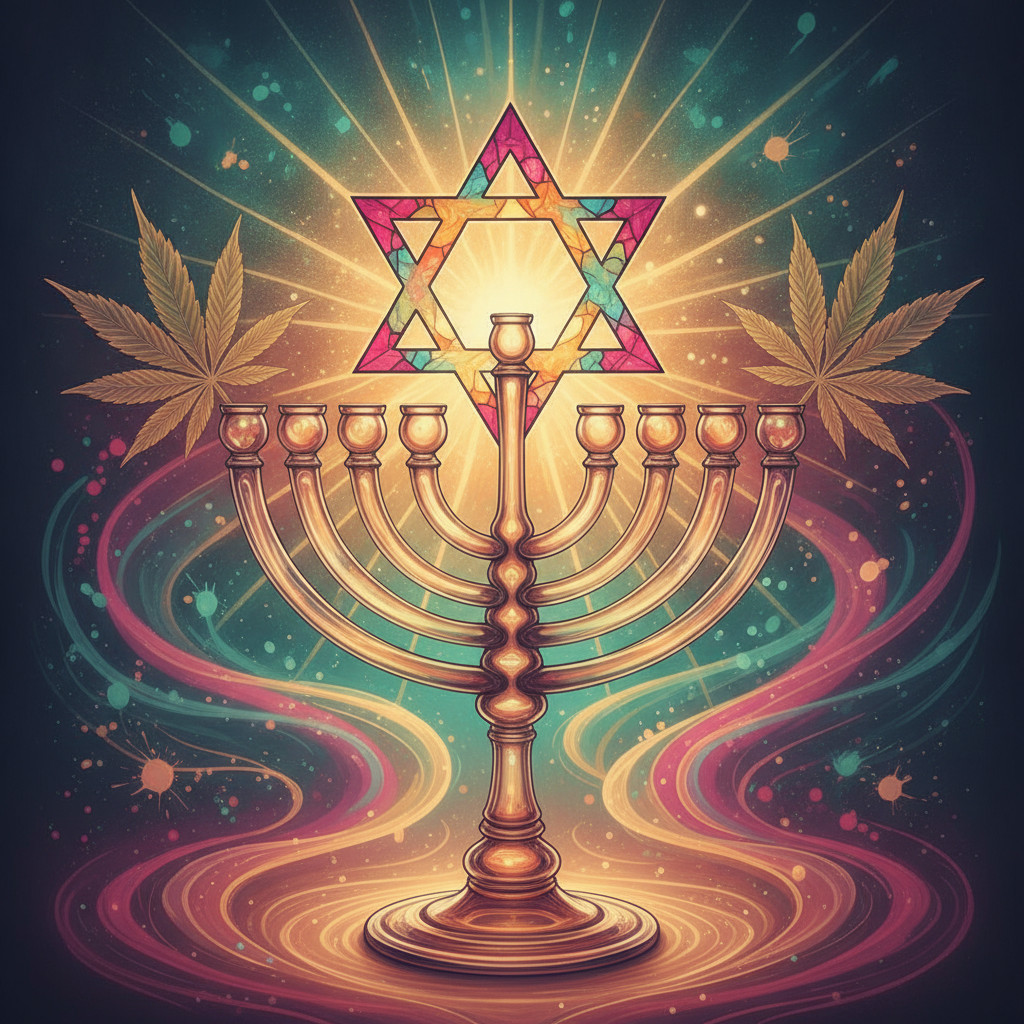
Psychedelicatessen: Jewish culture meets cannabis art
Steve Marcus stages a visual dialogue between ritual and counterculture. His work blends halacha and humor with pop Judaica and psychedelia. However, it does more than shock; it opens fresh conversations about identity and stigma.
At the Oregon Jewish Museum exhibition (Oregon Jewish Museum), viewers saw sacred objects reimagined. For example, Shabbat candle holders took on glasslike, bong‑adjacent forms. Moreover, Marcus printed rabbis on LSD blotter paper in his Rabbinic Trips series. Therefore the pieces work as playful critique and cultural bridge.
Key insights
- Ritual reworked: Sacred objects gain comic and contemplative edges.
- Aesthetic fusion: Kosher pop art mixes stained glass color and cannabis leaf motifs.
- Political effect: Artwork humanizes cannabis users and softens stigma in public debate.
- Historical layering: Marcus ties rabbinic motifs to 1960s counterculture and folk art.
- Community reaction: Some praise the humor and renewal, while others call it challenging.
- Cultural reach: Marcus’s posters for cannabis events connect to wider cannabis culture (High Times).
Together these points show how Psychedelicatessen reframes Jewish symbolism and cannabis imagery. As a result, the exhibit pushes viewers toward new interpretations and dialogue.
Art styles and cultural elements: a comparison
| Art Style | Cultural Symbolism | Cannabis Influence | Emotional Impact |
|---|---|---|---|
| Pop Judaica / Kosher pop art | Uses menorahs, mezuzot and rabbinic faces in playful colors. | Blends pop motifs with cannabis iconography like leaves and rolling papers. | Feels wry, nostalgic, and accessible; often makes viewers smile. |
| Psychedelic / blotter art | Layered symbols, stained-glass palettes, and mystical Rabbis. | Uses saturated gradients and fractal patterns echoing psychedelic experiences. | Evokes wonder, disorientation, and spiritual curiosity. |
| Folk / kosher folk art | Handcrafted look; ties to everyday ritual and memory. | Reworks household ritual objects into cannabis-adjacent forms. | Feels intimate and familiar; invites reflection. |
| Street / poster art | Bold typography, protest aesthetics, event posters. | Connects to cannabis activism and counterculture gatherings. | Energizes viewers; prompts political and communal response. |
| Religious iconography repurposed | Sacred objects are recontextualized without erasure. | Objects like Shabbat candles become visual puns next to bongs. | Provokes debate; balances reverence and irreverence. |
Cannabis in Jewish Art: Insight and Evidence
Cannabis has moved from subculture to subject in contemporary Jewish art. Steve Marcus stands at that intersection. Because he draws from Torah study and counterculture, his work feels layered. For example, Marcus turned Shabbat candle holders into glass bongs and attached tzitzit to a roach clip, which reframes ritual objects with cannabis imagery.
Historical threads help explain this shift. In the 1960s and 1970s, artists like Ken Kesey and peers mixed psychedelic aesthetics into American folk scenes. Marcus links that lineage to pop Judaica and blotter art through collaborations with Craig Kesey and friendships with Allen Ginsberg and Timothy Leary. As a result, his Rabbinic Trips series ties rabbinic portraits to LSD blotter paper and wider psychedelic art history. The Oregon Jewish Museum exhibition showed how these histories meet in a museum space, making an institutional conversation possible Oregon Jewish Museum.
Cultural and social effects also matter. Artists reshape stigma by humanizing cannabis users. Therefore event posters and High Times collaborations connect Jewish symbols to cannabis activism and public discourse High Times. Moreover the art invites complex feelings. Some viewers laugh, while others feel challenged or moved. Because the images touch on faith, viewers often experience cognitive dissonance and emotional curiosity.
Key evidence and impacts
- Visual proof: Sacred objects reimagined into cannabis-referent forms.
- Named entities: Steve Marcus, Craig Kesey, Allen Ginsberg, Timothy Leary appear in the backstory.
- Public reach: Museum exhibitions, cannabis cups, and magazine work broaden exposure.
- Psychological effect: Humor lowers defenses, while ritual imagery provokes reflection.
Together these points show how cannabis influences Jewish art. As a result, the work expands cultural vocabulary and opens new dialogue about identity, humor, and spirituality.
CONCLUSION
Psychedelicatessen: Jewish culture meets cannabis art shows art’s power to reframe stigma and ritual. Marcus blends pop Judaica, rabbinic motifs, and cannabis imagery. The results feel playful and provocative.
Because the work mixes halacha with counterculture, viewers face new perspectives. Some laugh, while others pause and reflect. As a result, the exhibition invites honest conversation about identity, faith, and substance culture.
MyCBDAdvisor provides calm, research-driven context for readers curious about cannabinoids. Visit MyCBDAdvisor for evidence-based guides, expert reviews, and trusted resources. Therefore readers can move from aesthetic curiosity to informed understanding.
Finally, Psychedelicatessen models how art can bridge communities. It shows that laughter and reverence can coexist. In closing, these works expand cultural language and invite ongoing, respectful conversation.
Frequently Asked Questions (FAQs)
What is Psychedelicatessen: Jewish culture meets cannabis art?
Psychedelicatessen: Jewish culture meets cannabis art is Steve Marcus’s fusion of pop Judaica and cannabis aesthetics. He mixes rabbinic imagery, ritual objects, and psychedelic color. As a result, the work reads as humorous, sacred, and provocative at once.
Is Marcus’s work sacrilegious or disrespectful to Jewish tradition?
Marcus follows halacha in his practice and calls himself shomer shabbat. However, his work intentionally challenges expectations to spark dialogue. Therefore viewers often feel a mix of laughter and reflection.
How does cannabis influence themes in Psychedelicatessen: Jewish culture meets cannabis art?
Cannabis enters as motif and history. Marcus uses leaves, rolling papers, and blotter aesthetics to reference psychedelia. Moreover, these symbols connect Jewish ritual to 1960s counterculture. Because of that link, the art reframes stigma and invites empathy.
Where was Psychedelicatessen shown and who curated the exhibit?
The exhibition ran at the Oregon Jewish Museum and Center for Holocaust Education in Portland. For details visit Oregon Jewish Museum.
Where can I read more about cannabinoids, cultural context, and related art?
For trustworthy cannabinoid guides visit My CBD Advisor. Also High Times covers cannabis culture and event history at High Times. These resources help move from curiosity to informed understanding.