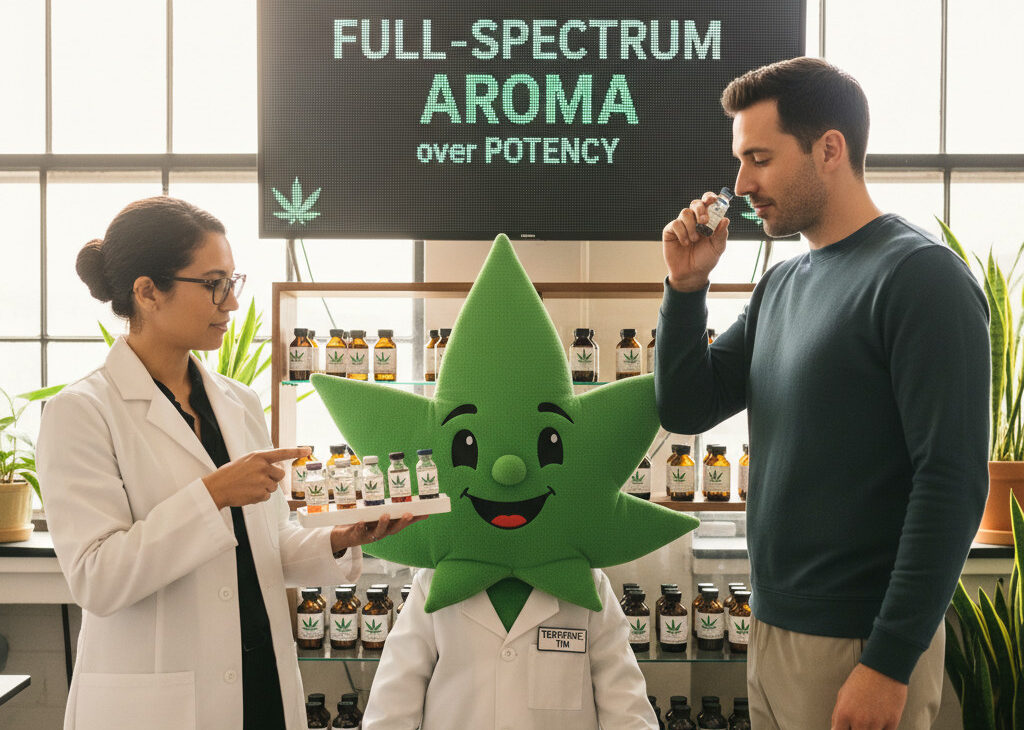
Smell Over Potency: Why Aroma Should Guide CBD Choices
Smell Over Potency matters more than you think when choosing CBD products. Many shoppers chase high THC numbers and assume more is better. Yet scent often predicts satisfaction in real use.
Popular potency myths push labels to shout percentages. However aroma draws people in because it connects to memory and mood. Meanwhile terpenes and ultra light volatiles shape that scent in subtle ways. As a result aroma can signal quality that numbers miss.
This article explores why aroma can outrank potency for many users. We will examine sensory studies EEG data and terpene science to explain the effect. Along the way we show practical tips for choosing CBD by scent rather than by raw percentages.
Emerging tools now preserve full spectrum aroma during processing. For example some systems restore volatiles lost in production to keep scent true. Therefore brands can offer predictable aromatic fidelity across vapes edibles and concentrates.

Why Smell Over Potency Matters
Aroma often shapes first impressions more than numbers do. Because scent ties directly to memory and mood, it can predict enjoyment. Moreover research shows aroma can be the strongest predictor of subjective experience. For details see the Psychoactives study at Psychoactives study and the Oregon State University aroma lexicon at Oregon State University aroma lexicon.
How aroma influences perception and experience
- Aroma guides expectations. When a product smells vibrant, users report deeper satisfaction. As a result aroma can improve perceived potency and effect.
- Terpenes drive scent and modulate experience. For example delta 3 carene and other terpenes add pine citrus and herbal notes. The MyCBDAdvisor deep dive on that terpene is at MyCBDAdvisor deep dive.
- Ultra light volatiles such as thiols esters and aldehydes affect aroma at trace levels. Therefore tiny chemical shifts can change quality dramatically.
Why smell can beat THC or CBD numbers
- Potency only shows concentration. It does not reflect full spectrum aroma or terpene preservation.
- Aroma signals how well a product retained its natural compounds during processing. As a result smell often indicates manufacturing care and aromatic fidelity.
- Brands that focus on scent build trust and repeat buyers. For strategy guidance see strategy guidance.
In short smell offers sensory clues that potency numbers miss. Therefore choose with your nose and use terpene informed cues for better results.
Smell Over Potency: CBD Product Comparison Table
| Product Type | Smell Intensity | Typical Aroma Profiles | Typical Potency Range | Notes on Smell versus Potency |
|---|---|---|---|---|
| Flower | High | Pine, citrus, diesel, earth | Low to moderate THC/CBD depending on cultivar | Aroma is direct and richest; therefore smell often predicts quality |
| Oils and tinctures | Moderate | Herbal, sweet, earthy; depends on extraction and carrier | Low to high CBD; labeled potency is common | Terpene loss can occur during processing; choose full spectrum for scent |
| Vapes and cartridges | Variable | Bright, immediate terpenes; citrus and berry common | Moderate to high THC/CBD | Vapor preserves volatile terpenes but additives can mask scent |
| Edibles | Low | Flavor-added profiles; baked, fruity, or chocolate notes | Low to moderate CBD per serving | Taste replaces aroma; as a result smell gives less information |
| Concentrates (wax, shatter) | Moderate to high | Intense terpene-driven profiles, diesel, floral, spicy | High THC/CBD | Concentrates concentrate both cannabinoids and terpenes; therefore aroma can be powerful |
Scientific Evidence: Why Aroma Can Outweigh Potency
Recent research shows that aromatic compounds shape user experience differently than potency alone. For example a blinded analysis found aroma predicted enjoyment better than THC content. Read the Psychoactives report at here. Moreover a controlled EEG study led by PAX and Zentrela revealed stronger brain responses from a lower THC full spectrum product. The paper is at this link.
Terpenes and ultra light volatiles act on the brain through scent pathways. As a result they change mood memory and perceived intensity. Preserved terpene expression correlated with deeper brain engagement in EEG data. Therefore aroma can amplify or modulate effects that potency numbers miss.
Key facts to remember
- Ultra light volatiles such as thiols, esters and aldehydes shape distinctive notes at trace levels.
- Full spectrum products retain a broader terpene mix and often deliver richer subjective effects.
- Oregon State research shows small shifts in aromatic composition alter perceived quality. See this article.
As Daniel Cook said “Cannabis is one of the most aromatic plants on Earth.” Therefore scent deserves a place on your shopping checklist. Because aroma signals both plant quality and thoughtful processing it helps predict real world experience.
Conclusion: Smell Over Potency
Aroma often predicts real world satisfaction more than raw potency numbers. Terpenes and ultra light volatiles shape mood memory and perceived intensity. Therefore scent can signal plant quality and careful processing better than percentage labels.
MyCBDAdvisor serves as a full-spectrum research-driven resource for shoppers. Because it blends lab findings with sensory guides readers learn to choose by aroma. Visit MyCBDAdvisor for profiles, terpene primers, and buying tips.
This article covered studies, EEG data, and sensory science to reframe potency. Keep scent in your checklist for pre rolls, vapes, oils, and concentrates. Explore further and let scent guide smarter CBD choices.
Frequently Asked Questions (FAQs)
Does smell predict effects?
Aroma often signals terpene profile and delivery of ultra light volatiles. Therefore scent can predict mood and perceived intensity better than percentage labels.
Should I choose CBD by smell?
Yes, prioritize full spectrum aroma when possible. Also check lab reports and source for safety.
Can terpenes change effects?
Terpenes modulate experience and interact with cannabinoids in the entourage effect. As a result they can alter subjective outcomes even at low concentration.
Is high potency always better?
No, potency shows concentration only. Aroma and terpene preservation often matter more for enjoyment and consistency.
How to shop using smell?
Smell products when safe, compare aroma notes and prefer full spectrum labels. Finally trust your nose and confirm third party testing.
Use aroma and lab data together to guide safe, consistent, repeatable product choices today.