
Cannabis Impact on Sperm
The cannabis impact on sperm is a pressing concern for men planning to conceive. New research now links THC and CBD to changes in sperm count, motility, and morphology.
However, studies show mixed results because some preclinical work points to CatSper channel inhibition, epigenetic changes during sperm production, and altered Sertoli cell signaling that may reduce sperm motility, concentration, and shape, while other human and animal models report minimal fertility impact at low exposure levels, which complicates clear guidance for patients and doctors in real-world reproductive planning.
Therefore, researchers recommend careful timing of abstinence because spermatogenesis takes roughly 74 days and a 2 to 3 month washout may improve semen parameters, so clinicians should weigh dose, frequency, coexisting tobacco or alcohol use, and body weight when advising men, and couples should consider stopping cannabis together to maximize chances of conception.
This article reviews the latest evidence and offers cautious, practical takeaways for couples and clinicians.
Cannabis impact on sperm: Count and concentration
Several human studies link cannabis use to lower sperm count and concentration. For example, a systematic review found associations between marijuana use and reduced sperm concentration, abnormal morphology, and lower motility. The review is available at this review. However, results vary by study because dose, frequency, and study design differ.
Cannabis impact on sperm: Motility, CatSper channels, and function
Laboratory research suggests a clear mechanism for reduced sperm motility. Major phytocannabinoids interact with sperm ion channels. Specifically, compounds like THC and CBD can inhibit CatSper calcium channels, which sperm need for vigorous swimming and the acrosome reaction. For a practical summary of these mechanisms, see this review of cannabinoids and fertility.
Cannabis impact on sperm: Morphology and overall quality
Cannabis use also associates with poorer sperm morphology and overall semen quality. Some preclinical studies suggest cannabinoids change epigenetic marks during spermatogenesis. These changes can affect Sertoli cell signaling, which supports sperm development. Yet animal models show mixed fertility outcomes at low exposures, so real-world impacts remain complex.
Key findings at a glance
- Sperm count and total sperm number often decline with more frequent cannabis use. Therefore heavy or chronic users tend to show larger reductions.
- Sperm motility may fall because CatSper inhibition reduces swimming vigor. As a result, the sperm may have less ability to penetrate an egg.
- Sperm morphology and DNA quality show inconsistent but concerning signals. Consequently some studies report worse shape and increased epigenetic changes.
- dose matters more than the method of use. Smoking, vaping, or oral ingestion produce similar biological effects when doses match.
What clinicians and couples should know
- A sensible washout period equals one full spermatogenesis cycle, about 2 to 3 months. Therefore abstinence for that time can improve semen parameters.
- Coexisting risks like tobacco, obesity, and heavy alcohol use amplify fertility harm. Because of that, clinicians should address all lifestyle factors when advising patients.
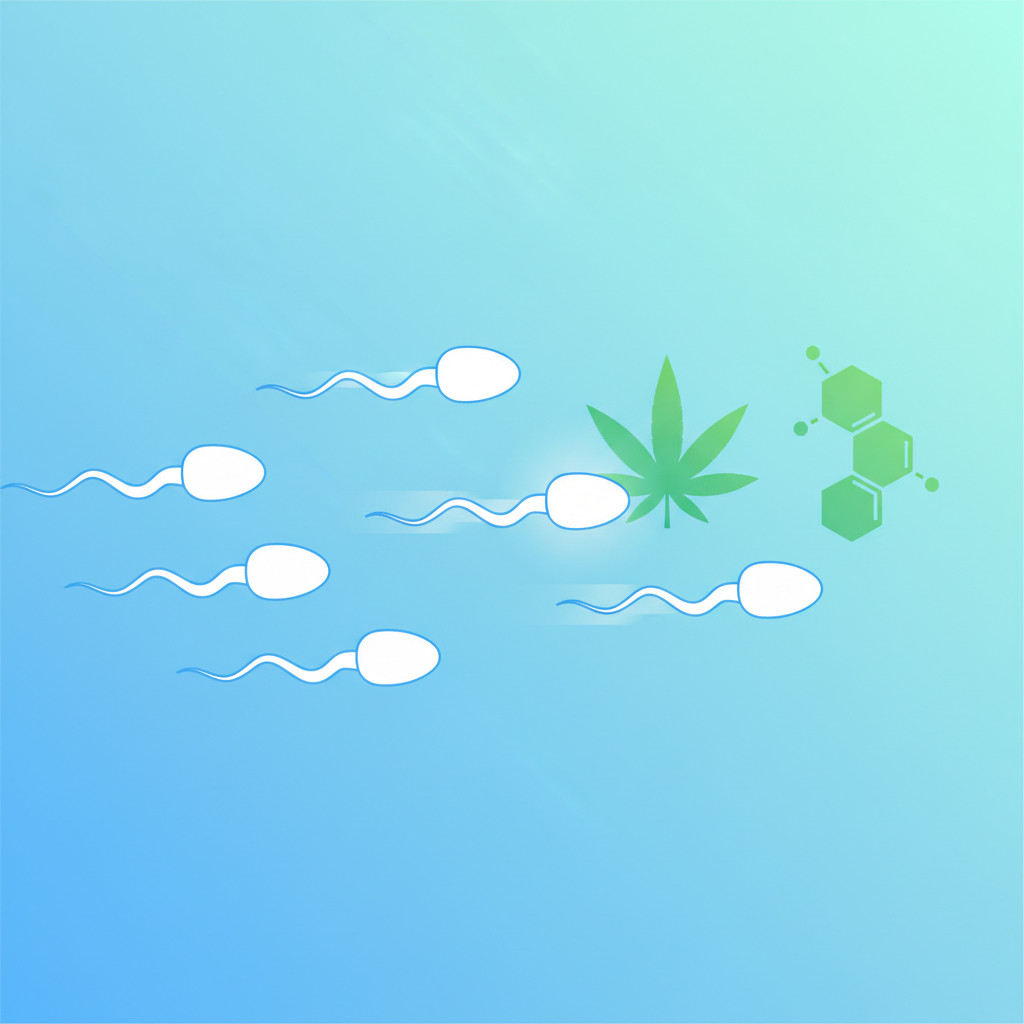
Illustrative image to be added showing sperm cells and cannabis interaction (image generation scheduled in a later task).
Cannabis impact on sperm: Comparative effects by compound
This table summarizes how major cannabis compounds influence key sperm reproduction parameters. It highlights evidence from lab, clinical, and review studies. Use this to compare effects on count, motility, morphology, and likely mechanisms. Links in the notes point to primary studies and trusted reviews.
| Compound | Typical source | Sperm count | Motility | Morphology | Mechanism and notes with sources |
|---|---|---|---|---|---|
| THC (delta-9-THC) | Plant phytocannabinoid; smoked, vaped, or ingested | Associated with lower sperm concentration in many clinical studies; greater reductions with chronic use | Frequently reported reduction; in vitro studies show CatSper inhibition which lowers progressive swimming | Often linked to poorer morphology in observational studies | Inhibits CatSper channels and activates CB1/CB2 in testicular tissue. See CatSper study: CatSper study and systematic review: systematic review. Practical summary: mycbdadvisor. |
| CBD (cannabidiol) | Isolate or broad spectrum oils and products | Effects mixed; some studies show little change, while preclinical work suggests epigenetic modulation | In vitro CBD can inhibit CatSper; clinical motility findings are inconsistent | Mixed signals; preclinical epigenetic changes reported but human data vary | CBD has anti-inflammatory and antioxidant actions which may protect sperm. However, lab work shows CatSper interaction. See review: review and CatSper evidence: CatSper evidence. |
| THC plus CBD (combined exposure) | Whole-plant use or combined products | Clinical associations often show reduced semen quality when combined exposure is frequent | Additive or synergistic CatSper inhibition reported in vitro; therefore motility can fall | Clinical reports suggest worse morphology more often with heavier use | Combined phytocannabinoids may reduce fertilizing capacity in vitro. Clinical relevance needs more study. Relevant sources: source and source. |
| Other phytocannabinoids (CBG, CBN etc.) | Minor cannabinoids in cannabis | Poorly studied; some associations reported | Limited lab data suggest potential CatSper effects but evidence is scarce | Unknown; insufficient human data | Early biochemical studies raise concern, but more research is required. See review: review. |
| Endocannabinoids (anandamide, 2-AG) | Endogenous signalling molecules in reproductive tissues | Important for spermatogenesis regulation; imbalance may alter counts | Regulate motility via CB receptors and local signalling | Influence maturation; disturbances can change morphology | Endogenous cannabinoids act via CB1/CB2 and influence Sertoli cells. For mechanistic context see: mechanistic context. |
Key quick takeaways
- THC shows the most consistent negative associations with semen concentration and motility. Therefore heavy users should consider abstinence when planning conception.
- CBD effects are mixed; however laboratory evidence of CatSper inhibition warrants caution in reproductive planning.
- Overall dose and chronicity matter more than the route of administration. Consequently a 2 to 3 month washout often helps improve semen parameters.
Additional factors shaping cannabis impact on sperm
Several factors change how cannabis affects sperm health. These factors also help explain why studies report mixed results.
- Dosage and frequency
- Higher doses and chronic use show stronger links to lower sperm count and reduced motility. Therefore heavy or daily users face higher risk. For a detailed review see this article.
- User age and baseline health
- Younger men may recover faster because their spermatogenic system is more resilient. However older age, metabolic disease, or hormonal imbalances can worsen baseline semen quality.
- Lifestyle factors and coexposures
- Tobacco, excessive alcohol, and obesity amplify harm to sperm quality. Because of that, clinicians should address these risks alongside cannabis use. Practical counseling resources are available at this resource.
- Product composition and administration route
- Route of administration matters less than the overall dose. In contrast, product composition matters because whole plant products contain multiple phytocannabinoids that may act together.
- Reversibility and washout periods
- Spermatogenesis takes about 74 days. Therefore a 2 to 3 month washout often improves semen parameters. Some clinical reports show measurable recovery after abstinence, which supports timed cessation before conception. See underlying clinical data at this study.
- Genetic and epigenetic susceptibility
- Preclinical work suggests cannabinoids can change epigenetic marks during sperm production. As a result individual susceptibility and long term effects may vary.
- Study design and evidence limits
- Most human studies are observational and show associations. However randomized trials are rare, and this limits causal claims.
Practical takeaway
Clinicians should personalize advice based on dose, coexisting risks, and patient goals. Because of that, couples planning conception should consider stopping cannabis together for at least one spermatogenesis cycle to maximize chances of recovery.
Conclusion
This article reviewed the cannabis impact on sperm. Recent studies link THC and CBD to lower sperm count, reduced motility, and poorer morphology. Laboratory work shows THC and CBD inhibit CatSper calcium channels and alter Sertoli cell signaling. However, evidence across human studies remains mixed because dose, frequency, and study design vary. Importantly, heavier and chronic use shows larger effects. Therefore dose and duration matter more than the use method.
Frequently Asked Questions (FAQs)
Is it safe to use cannabis when trying to conceive?
Not recommended. Studies associate THC and CBD with lower sperm count. They also link reduced motility and poorer morphology. However, evidence varies by dose and frequency. Therefore many clinicians advise stopping cannabis when planning pregnancy.
How long do effects last on sperm?
Spermatogenesis takes about 74 days. As a result a 2 to 3 month washout is commonly recommended. Short term users often see improvement after this period. Conversely heavy chronic use may take longer to recover.
Can stopping cannabis reverse sperm changes?
Yes, recovery is possible. Clinical reports show semen parameters often improve after abstinence. However some epigenetic changes need more research, so full reversibility is not guaranteed in all cases.
Does the method of use matter for sperm health?
No major difference when dose is equal. Smoking, vaping, and ingestion produce similar biological effects. Instead dose and chronicity predict impact.
Should I get tested or speak with a doctor?
Yes. If you plan conception, get a semen analysis and discuss lifestyle factors. Moreover clinicians can advise tailored timelines and risk management.