Cannabis impact on male fertility and sperm health
Cannabis impact on male fertility and sperm health is drawing growing attention as cannabis use rises worldwide. Because legalization and changing norms increased access, more men use cannabis. However, researchers report mixed evidence about how cannabinoids affect sperm quality and fertility. Some studies link regular use to lower sperm count, reduced motility, and poorer morphology. Other studies find little effect at low doses or in short-term use. Therefore, the debate matters for men planning to conceive and their partners.
This article summarizes the latest science. It highlights mechanisms such as CatSper inhibition and Sertoli cell changes and explains practical steps. Additionally, we discuss dose, frequency, and timing because these factors shape outcomes. As a result, men can make informed choices about cannabis when planning conception.
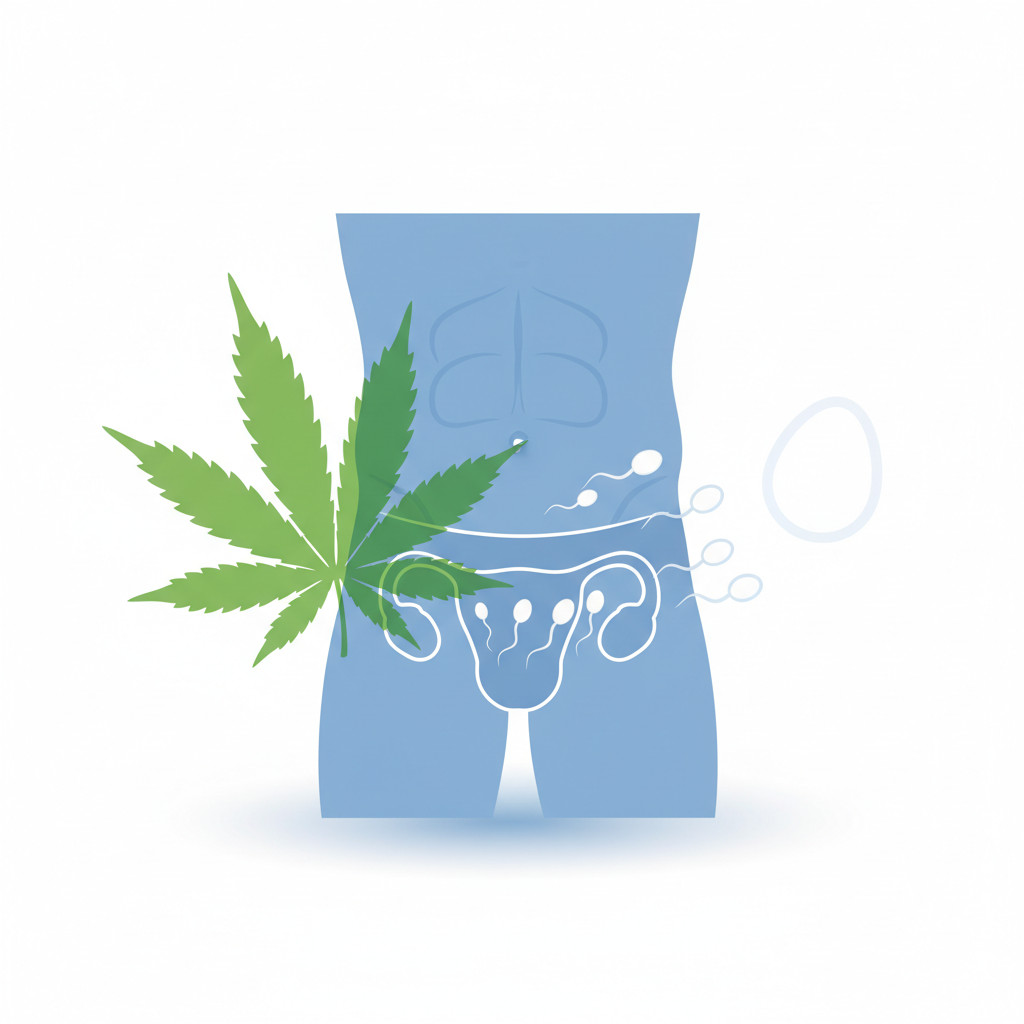
Below is an image concept. It shows a tasteful medical-style silhouette of the male lower torso with simplified testicles. Small sperm icons appear beside semi-transparent cannabis leaves to suggest interaction. The image avoids text and maintains a calm scientific tone.
Cannabis impact on male fertility and sperm health: effects on sperm quality and fertility
Researchers increasingly study Cannabis impact on male fertility and sperm health. Because use has risen, clinicians worry about real reproductive effects. However, evidence is mixed. Some studies show clear changes in sperm count, motility, and DNA. Others show little effect at low doses. Therefore, understanding mechanisms helps men plan for conception.
Sperm motility and movement
Several lab and clinical studies report reductions in sperm motility. For example, major phytocannabinoids inhibit the CatSper calcium channel. As a result, sperm show weaker swimming and reduced ability to penetrate an egg. One review noted, “CBD and THC inhibit CatSper ion channels, which are necessary for more vigorous swimming, thus reducing the sperm’s ability to penetrate the egg.” For the primary study, see PubMed.
Sperm count and morphology
Evidence suggests heavier or chronic cannabis use links with lower sperm count. Additionally, researchers report poorer morphology in some users. However, low-dose or occasional use may not show the same effects. A rat study also found that low doses did not impair male fertility in preclinical models. For rat data, see BMC study.
Changes to sperm DNA and epigenetics
With chronic exposure, sperm can show lower DNA quality and reduced chromatin integrity. Therefore, offspring risk and epigenetic changes are active research areas. One expert summary states that cannabinoids may modify the epigenetics of sperm production, potentially lowering sperm quality.
Key effects at a glance
- Reduced sperm motility because of CatSper inhibition
- Lower sperm concentration with frequent, heavy use
- Poorer sperm morphology reported in several cohorts
- Reduced DNA quality and chromatin integrity with chronic use
- Possible dose-response relationship; abstinence can help recovery
Quotes and clinical guidance
- “THC and CBD reduced the effectiveness of human sperm by inhibiting CatSper channels.” See PubMed.
- “Washout or cleansing period of about 2 to 3 months” can align with spermatogenesis and aid recovery. For practical guidance, see: My CBD Advisor.
Because evidence remains nuanced, couples trying to conceive should discuss cannabis use with their clinician. Additionally, lifestyle factors such as tobacco, obesity, and alcohol often play larger roles and should be managed too.
Research summary: Cannabis impact on male fertility and sperm health — selected studies
| Study Name | Year | Sample Size or Model | Key Findings | Conclusion and Source |
|---|---|---|---|---|
| Wehrli et al. — Human Reproduction | 2025 | Human sperm (in vitro) | THC and CBD altered CatSper calcium channel function and reduced sperm responsiveness | Phytocannabinoids reduced sperm effectiveness by inhibiting CatSper. Full study: https://pubmed.ncbi.nlm.nih.gov/40078063/ |
| Systematic review and meta-analysis — Andrology | 2020 | 4,014 men (9 studies) | Mixed results; higher proportion of abnormal semen in users but no clear clinical effect on hormones | Evidence heterogeneous; authors call for better studies. Full text: https://pubmed.ncbi.nlm.nih.gov/33251770/ |
| North American preconception cohort | 2025 | 921 men; 1,654 semen samples | No appreciable association between current cannabis use and standard semen parameters | Large cohort found little effect on semen quality. See: https://pubmed.ncbi.nlm.nih.gov/40326424/ |
| BMC Complementary Medicine and Therapies (ELEC rat study) | 2022 | Wistar rats (doses 5–20 mg/kg) | Low doses sometimes showed protective antioxidant effects; higher doses altered sperm parameters | Animal data show dose-dependent effects; low doses may not impair male fertility. URL: https://link.springer.com/article/10.1186/s12906-022-03704-z |
| BMC Molecular and Cell Biology — THC and capacitation | 2023 | Bovine sperm in vitro model | THC altered capacitation markers and changed transcript levels in sperm | Mechanistic evidence suggests THC can alter sperm function. Read: https://bmcmolcellbiol.biomedcentral.com/articles/10.1186/s12860-023-00468-3 |
Notes
- Studies use different designs and models. Therefore, results vary.
- Many human studies show associations rather than causation.
- Animal and in vitro studies offer mechanisms but may not reflect real-world use.
Use this table to compare evidence and guide further reading.
Fertility health: prevention measures
- Stop or reduce cannabis use especially when planning conception and aim for a two to three month washout to match spermatogenesis.
- Avoid tobacco and heavy alcohol because both harm sperm quality and compound risk.
- Seek a semen analysis for baseline assessment and follow up to track improvements.
- Limit exposure to toxins and reduce vaping or smoking of any kind.
- Time conception attempts after the washout period to allow recovery.
Healthy lifestyle and diet considerations
- Eat antioxidant rich foods such as berries, leafy greens and nuts to support sperm DNA integrity.
- Add omega three rich foods like salmon, walnuts and flaxseeds to improve sperm membranes.
- Maintain healthy weight and exercise regularly while avoiding extreme diets to support hormones.
- Limit hot exposure by avoiding frequent hot baths, saunas and tight underwear that raise scrotal temperature.
- Prioritize sleep and stress reduction because hormones and spermatogenesis depend on recovery.
These practical, evidence informed steps often improve sperm motility, count and DNA quality and can make conception planning more effective.
Conclusion: informed choices matter for reproductive planning
Cannabis impact on male fertility and sperm health remains nuanced and important. Because studies show mixed results, men should not assume no effect. However, evidence links frequent cannabis use to lower sperm count, reduced motility, and altered DNA quality.
Scientists have identified likely mechanisms such as CatSper inhibition and Sertoli cell changes. Additionally, epigenetic shifts appear possible with chronic exposure. Therefore, dose and frequency matter more than a single use. As a result, a two to three month period of abstinence can improve sperm measures.
Practical steps are simple and effective. Stop or reduce cannabis use when planning conception. Also address tobacco, alcohol, weight, and sleep because these factors greatly affect fertility. Finally, get a semen analysis and talk to your clinician for personalized advice.
Frequently Asked Questions (FAQs)
Does cannabis affect sperm count and cause fertility issues?
Evidence is mixed, but many studies link heavier cannabis use to lower sperm concentration. However, occasional use may show smaller effects. Because study designs differ, researchers caution against broad conclusions. Therefore, men who use cannabis heavily should consider testing and medical advice.
Can cannabis reduce sperm motility or sperm function?
Yes. Laboratory work shows THC and CBD can inhibit CatSper calcium channels. As a result, sperm swimming strength and the ability to penetrate an egg may fall. For this reason, motility and capacitation are key concerns when assessing reproductive risk.
How long after stopping cannabis will sperm health improve?
Sperm regenerate approximately every two to three months. Consequently, many clinicians recommend a two to three month washout period before trying to conceive. In addition, improvements are often measurable after abstinence.
Is CBD safer than THC for male fertility?
Not necessarily. Although CBD has antioxidant and anti-inflammatory effects, it also shows similar action on CatSper channels in some studies. Therefore, treat CBD and THC cautiously when planning conception.
What prevention measures improve fertility health?
Stop or reduce cannabis use and avoid tobacco and heavy alcohol. Also get a semen analysis, manage weight, eat antioxidant rich foods, and prioritize sleep. Finally, consult a clinician for personalized guidance.