
UK CBD Novel Foods Status and Article 4 Challenge
The UK CBD novel foods status and Article 4 challenge sits at the center of a bitter debate over hemp regulation in Britain. Regulators, producers, and lawyers now face legal and scientific questions about whether whole plant hemp foods are truly novel. The dispute matters because it affects thousands of products and millions in sales. As a result, consumers and retailers wait for clarity.
For years the Food Standards Agency has treated most CBD and hemp extracts as novel foods. However, industry groups argue that some hemp preparations have a history of safe use before May 1997. Hemp Hound filed a formal Article 4 submission to assert that point. This challenge asks whether historical consumption removes the novel-food barrier, and whether the FSA applied rules correctly.
Why does this fight matter now? If the Article 4 challenge succeeds, many products could avoid lengthy approvals and return to market. If it fails, firms may face continued delays and more costs. Either outcome will set precedent, affect governance trust, and shape the UK CBD market for years.
Regulatory context: UK CBD novel foods status and Article 4 challenge
The UK regulates foods that lacked significant consumption before May 1997 under the novel foods framework. As a result, products without a clear history must pass a novel-food authorisation. The Food Standards Agency enforces these rules in the UK and provides industry guidance here: novel-foods guidance. Therefore, CBD and many hemp extracts were treated as novel following a 2019 EU interpretation.
Hemp Hound’s Article 4 submission argues that whole-plant hemp foods should not automatically be novel. In short, the submission claims some hemp preparations have documented use before May 1997. If accepted, that argument could remove the novel-food requirement for qualifying products. The FSA’s CBD guidance explains the agency position and shows how businesses must apply: CBD guidance.
Key regulatory dates, bodies and recent developments
- 1997 deadline established for pre-market consumption history under novel foods law
- 2019 European Commission interpretation listing CBD and hemp extracts as novel (EU Novel Food Catalogue)
- Feb 2020 FSA public register process began, listing CBD products linked to applications (FSA public list)
- Oct 3, 2025 meeting occurred after CTA request, per FOI results
- Early 2026 register snapshot: 11,456 products listed; roughly 10,200 awaiting evidence, 900 in safety assessment, 250 in risk management, 106 authorised or green-lighted, 409 removed
Legal implications
If Article 4 succeeds, qualifying hemp foods could avoid lengthy authorisations. Conversely, a rejection would reinforce strict novel-food control for full-spectrum and broad-spectrum CBD products. Therefore, the challenge will shape market access, compliance costs, and governance trust across the UK hemp sector.
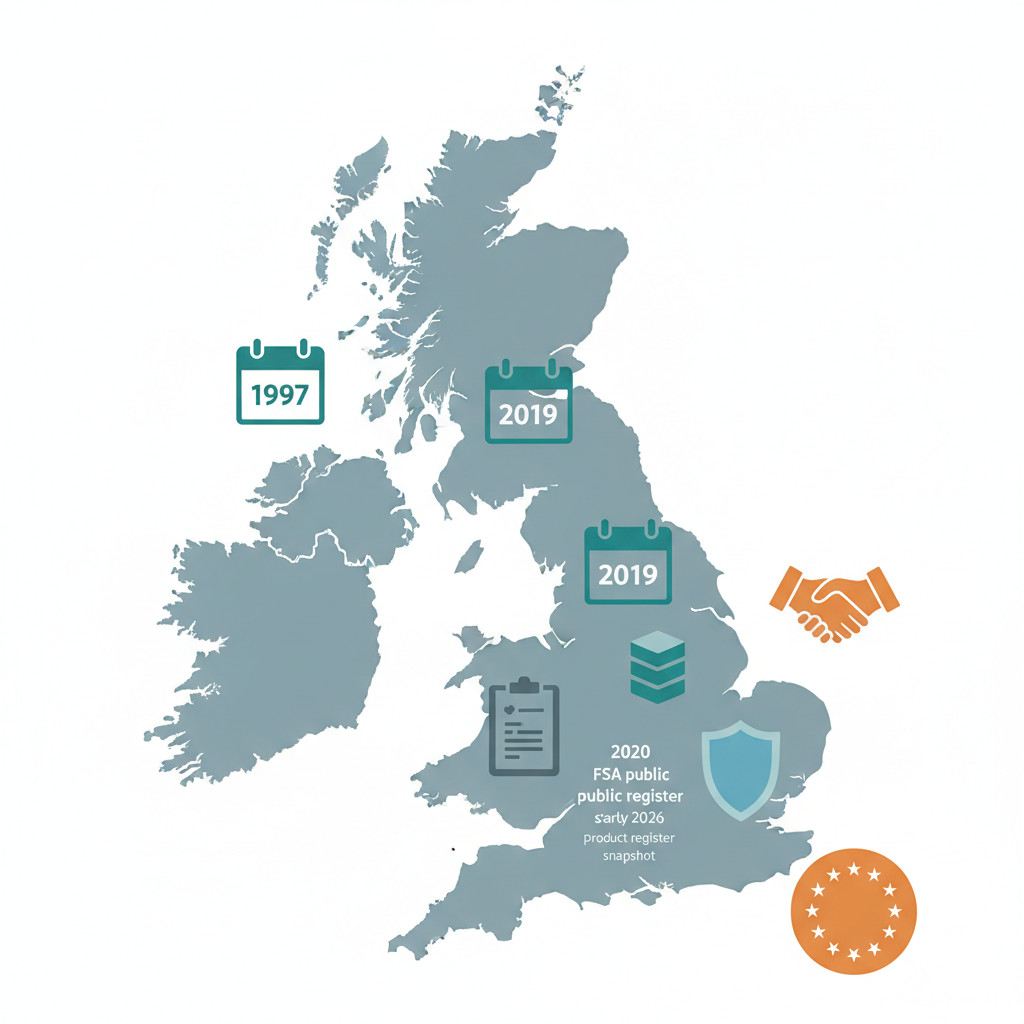
ImageAltText: Simple UK map visual marking key CBD novel food regulation points and timeline milestones
Comparison: UK CBD novel foods status and Article 4 challenge versus EU framework
After Brexit the UK kept the novel foods framework but gained regulatory independence. Therefore the Food Standards Agency now interprets and enforces novel foods rules in the UK. However the EU still follows the European Commission and EFSA processes. As a result, the two systems share the same pre-1997 cutoff. Yet they differ in implementation and precedent because of Brexit and later guidance.
Key differences and similarities
- Both systems treat foods without significant consumption before May 1997 as novel. However the EU published a 2019 interpretation that listed CBD and hemp extracts as novel in the Novel Food Catalogue. See the EU Novel Food Catalogue. The UK enforces novel foods through the Food Standards Agency. For the FSA CBD guidance see this link.
- The UK allows an Article 4 submission arguing historical use removes the novel label. Hemp Hound filed such a submission. Therefore the UK process can be tested by legal challenge and industry evidence.
- The EU system relies on centralized authorisations and EFSA safety assessments. Conversely the UK has adopted the retained EU law approach but can diverge over time.
- Both systems maintain public records of applications and statuses. Yet the UK register shows a backlog and many products marked awaiting evidence.
Practical effects of Brexit
Brexit created room for regulatory divergence. Therefore the UK can change interpretation and enforcement independently. As a result, a successful Article 4 claim in Britain would not automatically change EU law. Conversely, EU precedent still influences UK decisions because of shared history and technical guidance.
Summary table
| Aspect | UK (post Brexit) | EU (European Commission and EFSA) |
|---|---|---|
| Legal basis | Retained novel foods law enforced by the Food Standards Agency; Article 4 submissions possible | Regulation (EU) 2015/2283 with centralised EFSA assessments and Novel Food Catalogue updates |
| Authority | Food Standards Agency (FSA) | European Commission and European Food Safety Authority (EFSA) |
| CBD designation | Treated as novel in practice; subject to Article 4 challenges such as Hemp Hound’s filing | Designated novel in 2019 interpretation; central authorisation route applies |
| Historical use route | Article 4 submission argues pre-1997 use can exempt some whole-plant hemp foods | Prior consumption evidence may be considered but EU has listed CBD as novel |
| Market impact | UK can diverge, offering potential faster relief if Article 4 succeeds | Consistent EU-wide authorisations required for market access |
Taken together the systems start from similar legal roots. However Brexit and policy choices now drive substantive divergence. The Article 4 challenge therefore matters for legal precedent, market access, and regulatory trust.
Key differences between UK and EU CBD novel foods regulation
| Regulatory Body | Approval Process | Key Legal Articles | Compliance Dates | Notable Regulatory Outcomes |
|---|---|---|---|---|
| United Kingdom | Food Standards Agency led process. Novel foods assessed under retained EU law. Article 4 submissions allow historical use claims. | Retained Regulation (EU) 2015/2283 principles; UK novel foods and CBD guidance. | Pre 1997 consumption cutoff applies. FSA public register launched 2020. | Backlog of thousands of products on the FSA register. Hemp Hound’s Article 4 challenge could change market access. |
| European Union | Centralised EFSA risk assessments and European Commission authorisations. Applicants seek EU wide approval. | Regulation (EU) 2015/2283 and Novel Food Catalogue entries. 2019 interpretation listed CBD and hemp extracts as novel. | Pre 1997 cutoff applies EU wide. Central authorisations progressed since 2018 2019. | EU designated CBD as novel in 2019. Authorisation is required for EU market access. |
Comparison table: UK versus EU CBD novel foods regulations
| Regulatory Body | Approval Process | Key Legal Articles | Compliance Dates | Notable Regulatory Outcomes |
|---|---|---|---|---|
| United Kingdom | Food Standards Agency (FSA) oversight. Retained Novel Foods law; Article 4 submissions allow historical use claims; national assessment and public register. | Retained Regulation (EU) 2015/2283 principles; UK novel foods guidance and FSA CBD guidance. | Pre-1997 consumption cutoff; FSA register launched 2020; ongoing updates through 2026. | Large backlog on FSA register; 11,456 products listed early 2026; Hemp Hound Article 4 challenge could alter market access. |
| European Union | European Food Safety Authority (EFSA) safety assessments and European Commission authorisations; centralised EU authorisation route. | Regulation (EU) 2015/2283 and Novel Food Catalogue entries; 2019 interpretation listed CBD and hemp extracts as novel. | Pre-1997 consumption cutoff applies EU-wide; central authorisations progressed since 2018-2019. | EU designated CBD as novel in 2019; authorisation required for EU market access; harmonised but slower central process. |
Frequently Asked Questions (FAQs)
What is an Article 4 submission and why does it matter for CBD?
An Article 4 submission argues that historical consumption removes novel-food status. Therefore it challenges automatic classification of whole-plant hemp foods as novel. If accepted, some CBD products could avoid lengthy authorisations and regain market access.
Is CBD officially a novel food in the UK?
Yes in practice. The FSA has treated most CBD and hemp extracts as novel. This follows the EU 2019 interpretation and the pre-1997 consumption cutoff under the novel foods framework.
What would a successful Article 4 outcome change?
A successful Article 4 claim could exempt qualifying hemp foods from novel-food approval. As a result firms may face lower costs and faster routes to market, but changes would apply mainly within the UK.
How many CBD products are affected right now?
Early 2026 FSA data lists 11,456 products. Roughly 10,200 await evidence, 900 are in safety assessment, 250 in risk management, and 106 are authorised or green-lighted.
What should businesses do now to prepare?
Gather historical use evidence and robust safety data. Monitor the FSA guidance and public register. Also consult legal and regulatory advisers, because governance and precedent may shift quickly.