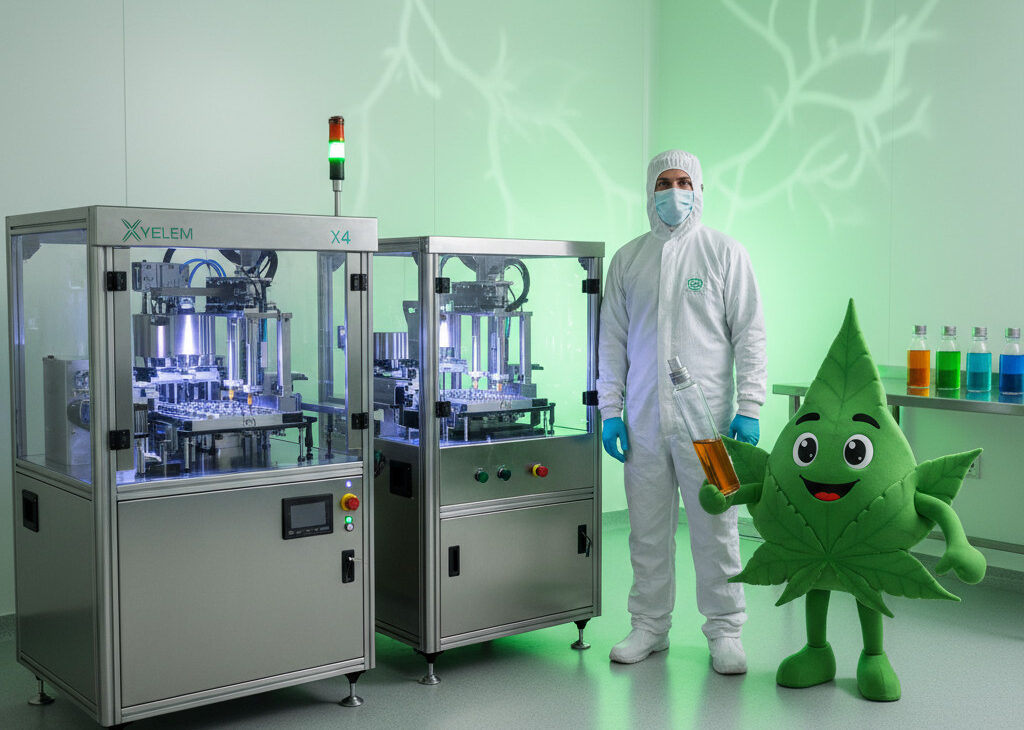
Xylem Robotics automation for cannabis manufacturing
Xylem Robotics automation for cannabis manufacturing is revolutionizing how vape carts and pre rolls get made. Because the company pairs precision robotics with industry low temperature dispensing, brands preserve terpene profiles and product consistency. The result is faster throughput with repeatable quality. However, automation also cuts labor costs and reduces human error.
The machines deliver production scale without shrinking quality. For example, Xylem X4 speeds cartridge filling while the Xylem Y2 handles infused pre rolls. As a result, manufacturers can scale supply chains and meet higher demand. In this article we explain how cartridge production systems, temperature control, and automated quality checks enable safe, efficient output. You will learn about throughput metrics, material compatibility, and real world impacts on manufacturing lines.
This guide highlights the X4 and Y2 performance specs and practical case uses. Furthermore, we cover compliance strategies and integration steps for modern manufacturing lines. Read on to see why automation matters for quality, speed, and cost control.
Xylem Robotics automation for cannabis manufacturing: Innovation and benefits
Xylem Robotics brings industrial robotics and precision pumps to cannabis lines. Because the systems dispense at industry low temperatures, they protect terpenes and prevent oxidation. As a result, brands keep flavor and aroma while scaling output.
Key advantages include:
- Dramatically higher throughput: the Xylem X4 fills up to 1650 units per hour, while the Xylem Y2 makes 500 to 700 infused pre rolls per hour.
- Preserved product quality: fill temperatures can be as low as 45°C for carts and 35°C for pre rolls, which reduces terpene loss.
- Labor and cost savings: one X4 can replace roughly 20 workers, therefore lowering labor spend and error rates.
- Consistent dosing and reduced waste: automated pumps and sensors enforce repeatable fills and quality checks.
- Scalability and compliance: modular design allows easy integration with packaging and traceability systems, so manufacturers meet GMP and regulatory needs.
Manufacturers also gain faster time to market because machines run long and steady. Moreover, Xylem’s approach to automation uses AI and modular add ons to adapt to different concentrates and formats. For more technical coverage and industry context, see Cannabis Now and MJBizConference.
This drives measurable ROI.
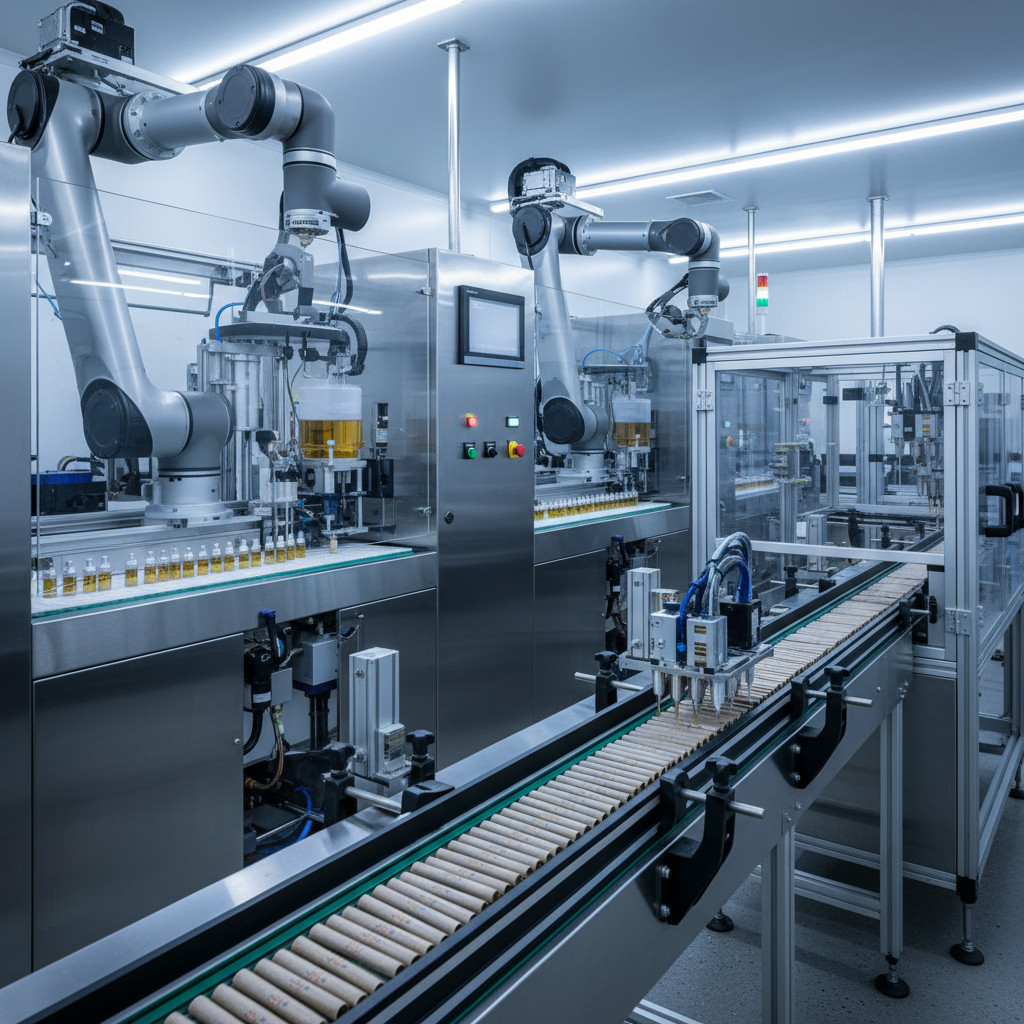
Comparison: Before and After Xylem Robotics automation for cannabis manufacturing
This table shows how production lines change when brands adopt robotics. Because automation standardizes fills and capping, teams gain predictable results. However, the biggest wins appear in speed and cost control.
| Attribute | Before Xylem Robotics | After Xylem Robotics |
|---|---|---|
| Efficiency | Manual batching, variable speeds | Continuous runs, steady high throughput |
| Accuracy | Hand fills, variable dosing | Precise metering and consistent dosing |
| Labor Costs | High labor dependence and turnover | Reduced headcount, lower labor spend |
| Product Quality | Inconsistent terpene retention | Preserved terpenes and aroma |
| Throughput | Limited to small shifts | X4 up to 1650 carts per hour |
| Temperature Control | Limited monitoring, higher oxidation risk | Low temp fills down to 35°C to 45°C |
| Waste | Frequent rejects and overfills | Less waste due to exact fills |
| Compliance | Manual trace logs, error prone | Automated logging and traceability |
Related keywords and synonyms: Xylem X4, Xylem Y2, cartridge production systems, automated solutions, temperature control.
- Faster scaling with consistent batches.
- Lower per unit cost within months.
- Better terpene and aroma retention.
- Simpler audits and traceability.
These gains translate into stronger margins and brand trust. Therefore, adoption offers measurable ROI and safer product lines.
Future implications of Xylem Robotics automation for cannabis manufacturing
Automation will reshape cannabis manufacturing at scale. Because systems like the X4 and Y2 raise throughput and consistency, brands can expand production quickly. Moreover, robotics frees staff to focus on innovation and quality control.
Key opportunities include:
- Scalability: Manufacturers can add modular lines to meet demand without long hiring ramps.
- Sustainability: Automated metering reduces waste and energy use, therefore lowering environmental impact.
- Quality and innovation: Low temperature fills preserve terpenes, so brands can develop premium, differentiated products.
- Compliance and traceability: Automated logging simplifies audits and enforces batch records for regulators.
- Supply chain resilience: Consistent output stabilizes inventory and retailer relationships, which reduces stockouts.
For technical details on X4 and Y2 performance and specs, see Xylem Robotics and Xylem Robotics Preroll Infusion System. For broader industry context about automation and growth, read Cannabis Now.
Looking ahead, Xylem Robotics could add predictive maintenance and AI driven quality inspection. Consequently, downtime will fall and yields will rise. Additionally, modular attachments will support new formats like rosin, live resin, sauce, and distillate cartridges. As a result, product variety expands without sacrificing consistency. Finally, workers shift to technical roles for oversight, training, and process optimization.
As a result, factories will run leaner and greener. Therefore, early adopters gain a clear competitive edge in speed, cost, and product quality.
Conclusion
Xylem Robotics automation for cannabis manufacturing has shifted production from manual craft to scalable precision. Because robots deliver consistent fills at low temperatures, brands keep terpenes and reduce waste. Manufacturers gain throughput, lower labor costs, and stronger audit trails.
MyCBDAdvisor stays committed to research driven guidance for CBD brands and consumers. Therefore, we track technology trends, verify performance claims, and assess real world ROI. For reliable analysis and practical resources, visit our site at MyCBDAdvisor. We will continue to cover automation, temperature control, and cartridge production systems in depth.
In short, Xylem Robotics and its platforms promise faster, cleaner, and more consistent cannabis manufacturing. Early adopters gain cost savings and product differentiation. Looking ahead, automation will raise quality standards and expand innovation opportunities across the industry.
Frequently Asked Questions (FAQs)
What is Xylem Robotics automation for cannabis manufacturing?
Xylem Robotics builds robotic systems that automate vape cart filling and pre roll infusion. The systems focus on precision, low temperature dispensing, and repeatable dosing.
What is EMP0?
How fast are Xylem machines?
The Xylem X4 fills up to 1650 cartridges per hour. The Xylem Y2 produces 500 to 700 infused pre rolls per hour. Also, both run at industry low temperatures to preserve terpenes.
Will automation eliminate jobs?
Automation reduces manual tasks. However, it creates technical roles for maintenance, programming, and quality oversight. Therefore, staff move into higher skill positions.
Does automation affect product quality?
Yes. Because fills stay cold and repeatable, terpene and flavor retention improves. As a result, brands see fewer rejects and tighter tolerances.