
Carmanecta hemp variety: A new benchmark for European fiber hemp
The Carmanecta hemp variety has emerged as a notable entrant in European fiber hemp. Approved for the Dutch national catalog this week, it now moves toward EU-level listing. This approval followed structured VCU trial testing in the Netherlands. As a result, regulators cleared the genetics for broader evaluation across the bloc.
In VCU trials, Carmanecta posted an estimated dry biomass yield of about 16.9 tons per hectare. Moreover, it outpaced three French varieties and a Ukrainian cultivar. It could also outperform Carmagnola, Italy’s flagship fiber hemp. Seed availability begins for the 2028 growing season.
For growers and fiber processors, Carmanecta offers a potential boost in raw material supply. Therefore farmers may consider its higher biomass and robust performance data. However, commercial scaling depends on seed marketing rules and cross-border catalog listing. Still, the listing marks a cautious but meaningful step for European hemp.
Overview of the Carmanecta hemp variety
The Carmanecta hemp variety represents a new cultivar aimed at fiber hemp production in Europe. Approved for listing after VCU trials in the Netherlands, it opened the path to EU catalog recognition. In trials, researchers recorded an estimated dry biomass yield of about 16.9 tons per hectare. As a result, Carmanecta outperformed several French varieties and a Ukrainian strain, and it may rival Italy’s Carmagnola.
The Dutch board for plant varieties oversees the VCU process, which assesses value for cultivation and use. For details on the Dutch VCU framework see Dutch VCU Framework. Meanwhile trial partners included research agencies that collected agronomic data; project summaries are available at CREA Project Summaries.
Carmanecta hemp variety agronomic and cannabinoid profile
Carmanecta is primarily presented as a fiber hemp strain. Therefore breeders emphasized stalk strength, biomass, and uniformity. The cannabinoid profile appears typical for fiber cultivars, with low THC expected, and modest CBD content reported in some VCU analyses. However official cannabinoid ranges will appear on seed dossiers before 2028.
Key agronomic highlights
- Estimated dry biomass yield 16.9 tons per hectare
- Strong competition performance versus French and Ukrainian varieties
- Seed availability planned for the 2028 growing season
Implications for hemp cultivation
- Growers may gain access to higher raw material yields
- Fiber processors could see expanded raw supply across borders
- Regulatory listing simplifies seed marketing within the EU
In summary, Carmanecta offers a research-driven step forward for European fiber hemp. However commercial success will depend on seed scaling, market uptake, and continued trial validation.
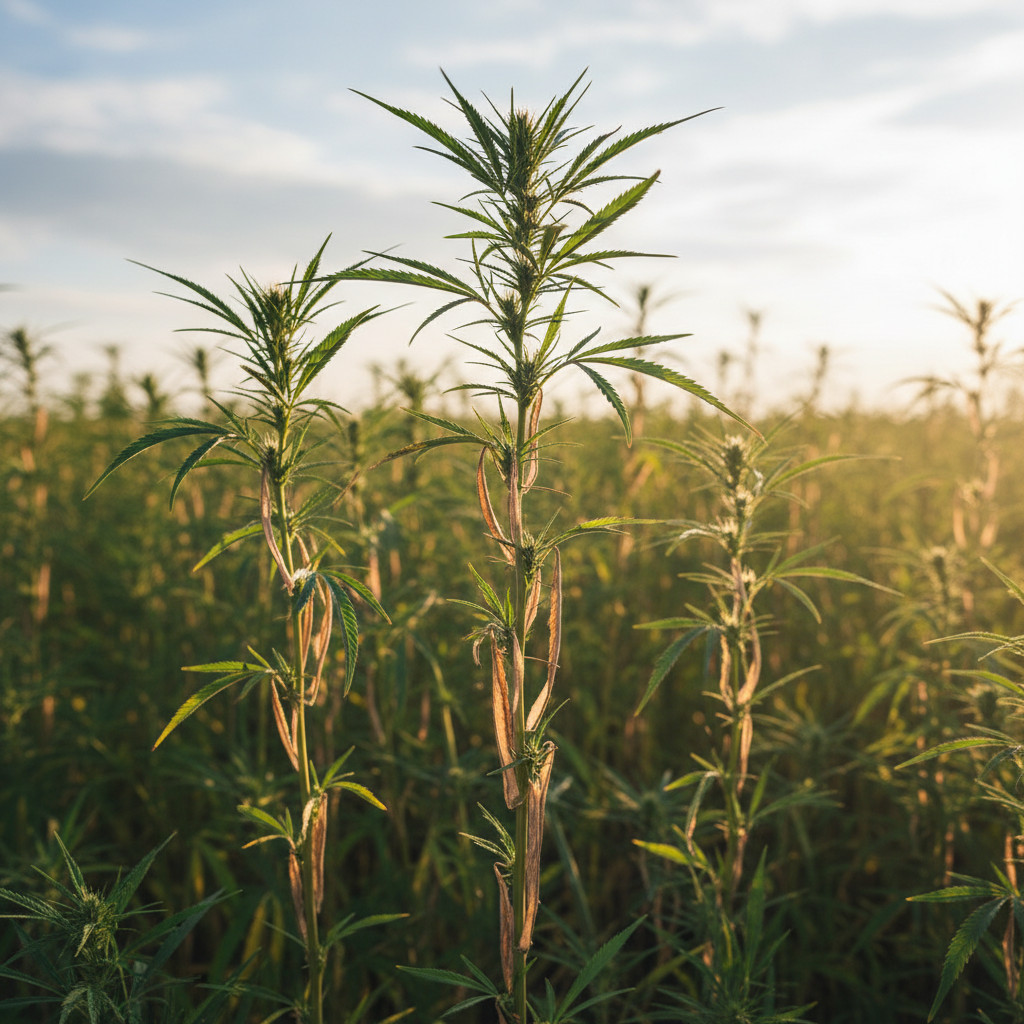
Comparison: Carmanecta hemp variety versus established cultivars
Below is a quick comparison of the Carmanecta hemp variety with three established cultivars. It highlights cannabinoid profile, typical uses, cultivation needs, and yield, so growers can decide quickly.
| Variety | Typical use | Cannabinoid profile | Cultivation requirements | Typical yield (dry biomass) |
|---|---|---|---|---|
| Carmanecta hemp variety | Fiber-focused; suited for large-scale fiber processing | Low THC, modest CBD reported in VCU analyses; EU-compliant | Temperate-adapted; therefore suited to many EU regions; strong stalks; uniform stands; standard fertility needs; seed available for 2028 | Estimated dry biomass 16.9 tons per hectare in Dutch VCU trials |
| Carmagnola | Traditional Italian fiber and dual-use | Low THC, low to moderate CBD; EU-compliant | Best in Mediterranean climates; tall stalks; moderate inputs | Moderate to high; however, recent trials suggest lower biomass than Carmanecta |
| Futura 75 | Dual-purpose for fiber and seed | Low THC, modest CBD potential | Adaptable to continental climates; good disease resistance; moderate inputs | Moderate fiber and seed yield; widely cultivated across Europe |
| Felina 32 | Fiber and grain; French industry standard | Low THC, low CBD | Prefers French temperate sites; uniform flowering; low to moderate inputs | Moderate and reliable across regions |
Notes
- Yield figures are trial-based estimates or common commercial ranges.
- Carmanecta stands out for its higher recorded dry biomass in Dutch VCU testing.
- Growers should compare local trial data before large-scale adoption.
Benefits and applications of the Carmanecta hemp variety
The Carmanecta hemp variety brings tangible benefits for industry, wellness, and research. Trials show higher dry biomass, which translates to more usable stalk fiber. Therefore processors can expect larger volumes per hectare. This change matters for fiber mills and composite manufacturers.
Industrial benefits
- Higher fiber yield boosts raw material supply for textiles and biocomposites. For example, automotive panel makers can use hemp fiber for lighter, greener parts.
- Strong stalks improve tow quality, which reduces processing waste. As a result, mills may lower costs and increase throughput.
- Versatile biomass supports insulation, animal bedding, and bio-based paper products.
Wellness and cannabinoid applications
- Carmanecta is a fiber-first strain with low THC and modest CBD in some analyses. However, growers seeking CBD should compare cultivar cannabinoid ranges before investing.
- For regulatory clarity, VCU trial data and seed dossiers will show official cannabinoid windows. See the Dutch registry at Dutch Plant Variety Registry for registration procedures.
- Meanwhile industry groups publish guidance on hemp uses and compliance at EIHA.
Research and agronomy
- Researchers can use Carmanecta to study high-biomass genetics and fiber quality. Moreover, breeders can cross it with other strains to improve traits.
- VCU trial methods and trial partners are documented by national research centers such as CREA at CREA.
In short, Carmanecta offers growers a practical route to higher fiber output. However, commercial uptake will depend on seed supply, local trials, and market demand.
Conclusion
Carmanecta hemp variety marks a significant step for European fiber hemp development. Trials show robust agronomic performance and an estimated dry biomass yield of 16.9 tons per hectare. Therefore farmers and processors may soon access larger volumes of consistent stalk fiber. Moreover, the EU catalog listing process clears the way for cross-border seed marketing and commercial scaling.
However, commercial impact will depend on seed availability, local trial confirmation, and market demand. Growers should run small-scale trials first, because local soil and climate affect outcomes. Meanwhile researchers can use Carmanecta to study fiber quality and breeding potential. As a result, Carmanecta may influence textiles, biocomposites, insulation, and other industrial uses.
Frequently Asked Questions (FAQs)
What is the Carmanecta hemp variety and why does it matter?
Carmanecta hemp variety is a new EU-listed fiber cultivar that showed strong VCU trial performance in the Netherlands. It matters because trials recorded an estimated dry biomass yield of about 16.9 tons per hectare. As a result, growers and processors may access higher volumes of consistent stalk fiber. This change could affect textiles, biocomposites, and other industrial supply chains.
When will Carmanecta seeds become available to growers?
Seeds for commercial planting are expected for the 2028 growing season. Therefore farmers have time to plan trials and adjust rotations. Meanwhile regulatory listing clears the route for cross-border seed marketing across the EU.
What yields and agronomic traits can growers expect?
VCU trials reported an estimated dry biomass yield of 16.9 t/ha under Dutch conditions. However local yields will vary with soil, climate, and management. Key traits include strong stalks, uniform stands, and temperate adaptation. For the VCU framework and registration details see the Dutch registry at Dutch Registry. Also research partners such as CREA track trial methods and results at CREA.
Is Carmanecta suitable for CBD production or wellness uses?
Carmanecta is a fiber-first strain with low THC and modest CBD reported in VCU analyses. Therefore it is not primarily bred for high-CBD extraction. Growers who target cannabinoids should compare official seed dossiers before investing. For industry guidance on compliance and uses see the European Industrial Hemp Association at EIHA.
How should a grower evaluate Carmanecta for their farm?
Run small-scale trials first, because local conditions matter. In addition, compare processing requirements and end markets. Consider the following checklist:
- Test seed in representative fields for one season
- Measure dry biomass and fiber quality on harvest
- Confirm THC and CBD windows from seed dossiers
- Talk with local processors about fiber specs