
New Jersey cannabis cultivation market: Scaling from craft to commercial opportunity
The New Jersey cannabis cultivation market is shifting fast, driven by strong consumer demand and rising investment. As a result, cultivators face new pressures around genetics, quality, and consistent terpene expression. However, supply remains constrained even as the market shows billion dollar growth potential. Because of canopy caps and price compression, producers must optimize yield and flavor. Breeding and hybrid seeds have become strategic levers in the last five years.
IgniteIt events and industry forums highlight practical techniques like controlled stress to boost cannabinoids. Meanwhile, export opportunities to Europe demand GMP like facilities and strict testing. Therefore, New Jersey growers can choose to focus on craft potency or scalable consistency.
This article will explore cultivation tactics, genetic preservation, and market strategies to stay competitive. It will offer pragmatic guidance for growers, investors, and policymakers in this evolving landscape. You will learn how plant observation and nutrient strategies influence terpene and cannabinoid expression. Finally, we examine workforce protections and logistics that shape operational viability. By the end, readers will understand where opportunity and risk intersect in New Jersey cultivation.
Overview of the New Jersey cannabis cultivation market
New Jersey cannabis cultivation market dynamics are shifting rapidly. Because consumer demand outpaces supply, prices remain high. However, investors and operators see clear opportunity in genetics, breeding, and scaled production. This section outlines market size, regulation, and leading participants.
New Jersey cannabis cultivation market size and growth
The market reached notable scale after adult use launched in 2022. Moreover, retail sales and investor interest drove the industry toward billion dollar potential. For context, industry reporting and conversations at events show pressure on supply chains and pricing. See Cannabis Industry Journal coverage for industry perspectives.
Key growth signals
- Rapid retail roll out and rising consumer spend
- Increased breeding activity and use of hybrid seeds
- Undersupply on the East Coast creating premium pricing
Regulatory environment and operational challenges
Regulation shapes cultivation strategy. The New Jersey Cannabis Regulatory Commission sets licensing and testing standards at https://www.nj.gov/cannabis/. Therefore, cultivators must meet strict facility and compliance rules. In addition, labor protections and workforce rules affect operations. For analysis of worker protections, see https://mycbdadvisor.com/nj-cannabis-cultivation-labor-protections/ and https://mycbdadvisor.com/labor-protections-cannabis-nj/.
Costs, canopy caps, and municipal opt outs raise barriers to scale. As a result, cultivators focus on yield optimization, genetic preservation, and tissue culture banking. Meanwhile, European demand favors exporters who build GMP level facilities and rigorous testing.
Key players and strategic levers
Cultivators, MSOs, and input suppliers lead the charge. Growers who read plants and refine nutrient strategies win market share. Finally, breeding and export ready processes will determine long term winners.
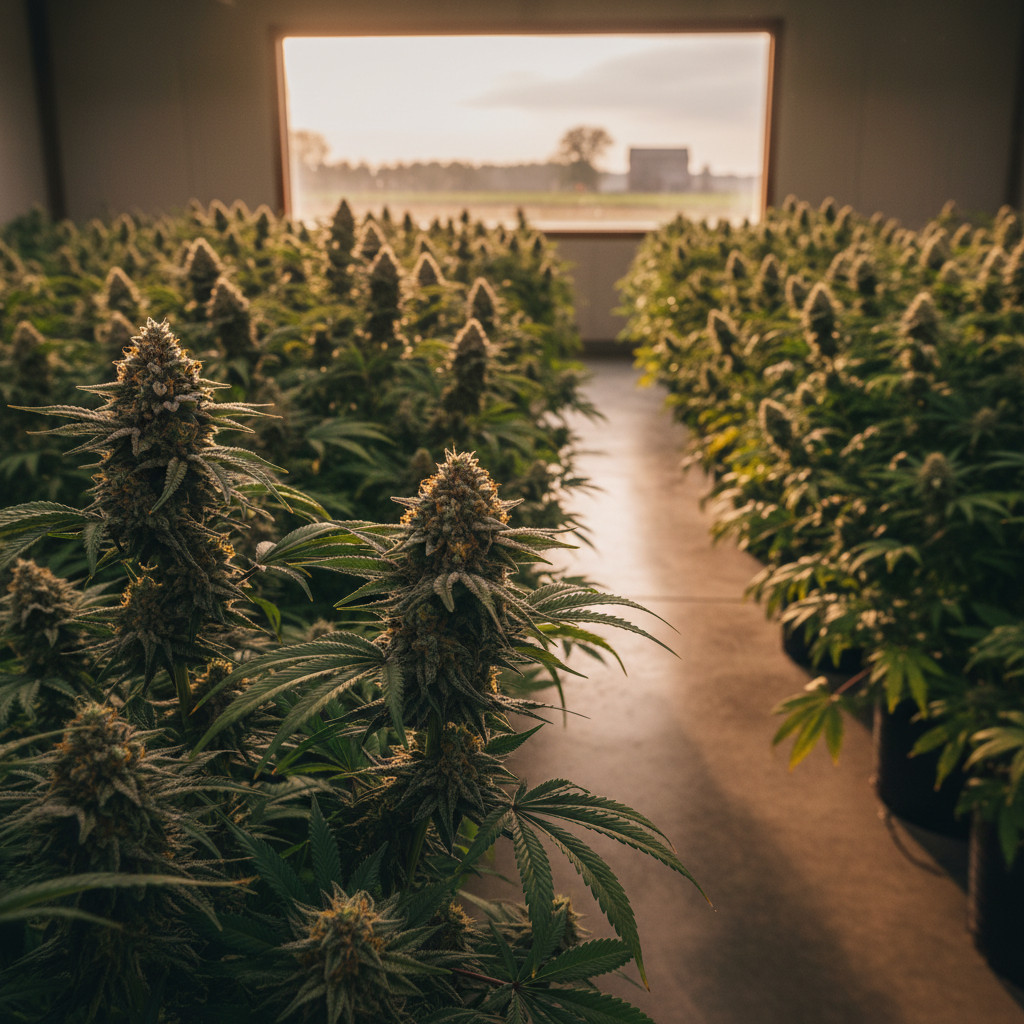
Challenges in the New Jersey cannabis cultivation market
The New Jersey cannabis cultivation market faces immediate structural limits that affect growers and investors. Because supply lags demand, prices remain volatile and margins compress. Key challenges include
- Undersupply and canopy caps that limit scale and revenue. As a result, operators must chase efficiency and yield.
- High compliance costs and strict testing rules set by regulators. For regulatory details see this link.
- Municipal opt outs and zoning hurdles that add time and expense to site selection.
- Workforce and labor protections that raise operating costs and require stronger HR systems. Analysis of labor protections is available at this link.
- Export level requirements and GMP like standards for international markets, which raise capital needs.
Grower quotes capture the pressure. For example, one expert warned “Ultimately, we’re all going to hit our canopy cap. Then it’s going to be a race to see who can stay economically viable.” This reality forces tough choices on product mix and investment.
Opportunities in the New Jersey cannabis cultivation market
Despite constraints, several clear opportunities exist. Therefore, savvy operators can build differentiated, profitable businesses. Opportunities include
- Advanced breeding and hybrid seeds to improve uniformity and terpene profiles. Notably, breeding has accelerated over the past five years.
- Seed uniformity at scale; 500 to 1,000 seeds indoors could replace clones and cut costs.
- Value added exports of cultivation knowhow and inputs to Europe, which seeks American expertise and IP.
- Premium craft niches where cultivators can command higher prices for unique terpene expression.
- Adoption of controlled stress and nutrient strategies to amplify cannabinoids and flavor, creating product differentiation.
Finally, industry forums such as IgniteIt show cultivators learning and sharing tactics. For market context and conversations, see this link.
| Metric | Current snapshot | Recent trend (since 2022) | Implication for growers and investors | Related keywords |
|---|---|---|---|---|
| Market size | Billion dollar market potential after adult use launch | Rapid expansion in retail sales and investor interest | Strong demand, premium pricing, but supply constrained | market size, retail sales, revenue projections |
| Licensing and cultivator count | Phased licensing with limits and municipal opt outs | Slow rollout and careful regulatory approvals | Site selection and license strategy matter | licensing data, canopy cap, zoning |
| Revenue projections | Continued growth expected; sector remains highly profitable | Upside as retail footprint expands | Investors seek scale and product differentiation | revenue projections, growth potential |
| Growth rate | Fast year over year since 2022 | High growth though uneven by segment | Opportunity for early movers and innovators | growth rates, market expansion |
| Genetics and breeding | Breeding activity accelerated in last five years | More hybrid seeds and seed uniformity trials | Potential to replace clones and lower costs | breeding, hybrid seeds, genetic preservation |
| Compliance and testing | Strict testing standards required for market access | Increasing compliance costs and facility standards | Capital needed for labs and GMP like operations | testing standards, GMP facilities |
| Export potential | European demand for U.S. cultivation IP and inputs | Growing interest in export of cultivation solutions | Export readiness favors consistent, high yield models | export markets, European demand |
| Labor and workforce | Workforce protections increasing operational costs | Labor rules shape scheduling and HR systems | Labor strategy affects margins and scalability | labor protections, workforce |
Conclusion
The New Jersey cannabis cultivation market sits at a clear inflection point. Demand and retail growth drive billion dollar potential, yet canopy caps and regulatory costs limit scale. Therefore, cultivators must balance craft quality with efficiency. Meanwhile, advances in breeding, seed uniformity, and controlled stress techniques create pathways to higher terpene and cannabinoid expression.
For growers, the message is pragmatic. Read the plants, refine nutrient and light strategies, and protect genetics with tissue culture banking. As a result, teams can capture premium niches and scale where allowed. Finally, policy and labor decisions will shape margins and long term viability.
MyCBDAdvisor offers full spectrum, research driven guidance for this evolving market. For reliable, practical insights and ongoing coverage, visit MyCBDAdvisor.
Frequently Asked Questions about the New Jersey cannabis cultivation market
What is the current state of the New Jersey cannabis cultivation market?
The market shows rapid retail growth and billion dollar potential. However, supply remains constrained by canopy caps and phased licensing. Breeding and hybrid seeds have picked up in the last five years. Therefore, early movers that focus on consistency and genetics can capture premium niches.
How do state regulations and local rules affect cultivators?
Regulators set strict testing and licensing requirements. In addition, municipal opt outs and zoning complicate site choice. As a result, compliance adds capital and time to operations. Growers should plan budgets for testing and facility upgrades.
What are the main risks growers and investors face?
Key risks include price compression, regulatory costs, and labor rules. Moreover, canopy limits can cap revenue regardless of demand. Therefore, investors must model scenarios for restricted scale and rising compliance expenses.
Where are the best opportunities in New Jersey cultivation?
Opportunities include advanced breeding, seed uniformity, and premium terpene focused products. Exports of cultivation expertise and inputs to Europe also present upside. Finally, controlled stress and nutrient strategies offer product differentiation.
How can cultivators boost terpene and cannabinoid expression?
Read the plants closely and iterate by cultivar. Use targeted controlled stress, tuned light cycles, and nutrient strategies. As one grower put it, cultivation is “half science, half art.” Small, measured tweaks often yield the best expression.