
Struggling to fall asleep, despite exhaustion?
Aromatherapy for Sleep offers a gentle, sensory route to deeper rest. Through inhaled essential oils and terpene-rich blends, the nose sends calming signals to the brain. As a result, heart rate and breathing can slow, and stress often eases.
Lavender, bergamot, linalool and myrcene are among familiar aromas linked with relaxation. However, aromatherapy does not cure sleep disorders. Instead, it supports routines and nervous system downshifts that make sleep more likely.
Because scent travels through the olfactory limbic pathway, it connects directly to emotion and memory centers. Imagine a warm collarbone balm or a soft pillow mist that calms your breath. In this article, you will learn evidence, practical tips, and product ideas to try tonight.
We also explore how CBD and targeted terpenes may deepen that calming effect. Read on for safe application tips, timing advice, and simple at-home recipes. Sweet dreams start with small sensory cues.
How Aromatherapy for Sleep Works
Aromatherapy for Sleep taps scent to guide the nervous system toward rest. Because smell connects straight to limbic brain regions, inhaled aromas can shift mood almost instantly. As a result, heart rate, breathing and perceived tension often fall.
Researchers increasingly support inhalation strategies. For example, a 2021 meta analysis found aroma inhalation often improved sleep quality and reduced stress measures. You can read the full study at this link.
How the effect happens
- Olfactory limbic signaling: Aromatic molecules travel through the nose and stimulate the olfactory bulb. Consequently, this route links directly to emotion and autonomic centers, which helps explain rapid mood shifts.
- Terpene and oil profiles: Compounds such as linalool and myrcene act as calming signals. Therefore, essential oils for sleep like lavender and bergamot appear frequently in clinical protocols.
- Autonomic downshift: Inhalation can lower sympathetic activity and raise parasympathetic tone, so breathing slows and muscles relax.
- Mood and stress relief: Because aromatherapy often reduces perceived anxiety, people report easier sleep onset and better sleep continuity.
- Delivery matters: Inhalation methods tend to show more consistent sleep benefits than massage alone, and placement such as the chest or under the nose changes intensity.
Soothing imagery suggestions
- Imagine a faint lavender pillow mist as you exhale slowly. This sensory cue signals the brain that bedtime has arrived.
- Picture a warm collarbone balm that releases a soft, steady aroma as you sink into sheets.
Practical notes and resources
For more on terpene mood links, visit this link. For terpene profiles and flavor context, see this link. If you enjoy DIY rituals, try this terpene rich bath bomb guide this link. These natural sleep aids and aromatherapy benefits pair well with gentle bedtime routines.
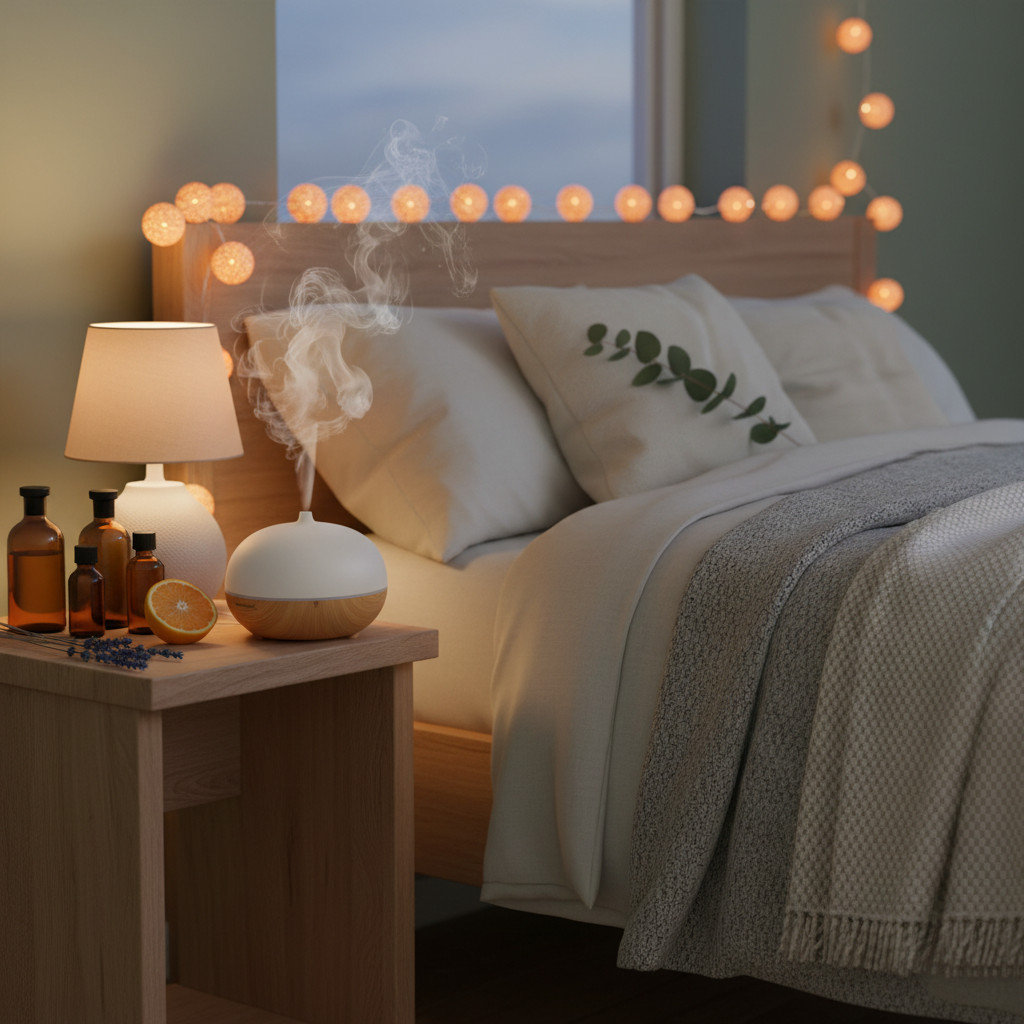
Aromatherapy for Sleep Essential Oil Quick Reference
Use this table to compare essential oils for sleep and their scent, benefits, and recommended methods. Therefore, you can choose blends that fit your bedtime routine.
| Essential Oil | Sleep Benefits | Scent Profile | Recommended Usage Method |
|---|---|---|---|
| Lavender | Promotes relaxation and sleep onset; reduces anxiety | Floral, fresh, herbaceous | Diffuser, pillow mist, chest-applied diluted balm |
| Chamomile (Roman) | Calming; soothes nervous tension and promotes sleep | Sweet, apple-like, herbaceous | Steam inhalation, diffuser, diluted topical application |
| Bergamot | Lowers perceived stress and improves sleep perception | Citrus, bright with floral-herbal undertones | Diffuser, pillow spray, diluted in carrier oil for chest rub |
| Cedarwood | Grounding; supports deeper sleep and relaxation | Warm, woody, balsamic | Diffuser, diluted chest balm, foot soak blends |
| Ylang Ylang | Reduces stress and creates a calming mood | Rich, floral, slightly sweet | Diffuser in low concentration, inhalation, blended roll-on |
Safety and Best Practices for Aromatherapy for Sleep
Aromatherapy can support sleep when used safely. However, simple precautions reduce risk and improve results.
Dilution and carrier oils
- Always dilute essential oils before topical use. For bedtime blends, use about 1 percent dilution for adults. For example, add 6 drops of essential oil to one ounce of carrier oil. This reduces irritation and allergic reaction.
- Because skin sensitivity varies, test a small patch before regular use.
Allergies and sensitivities
- Stop using an oil immediately if you feel burning, rash, or breathing difficulty. Seek medical help for any severe reaction.
- Because children and pets can react differently, keep oils out of reach and consult a pediatrician or veterinarian when needed.
Quality and labeling
- Choose 100 percent pure essential oils from reputable brands, because adulterated oils may cause harm. Look for batch numbers and GC MS testing when available.
Timing and placement
- Use diffusers 30 to 60 minutes before bed to cue the nervous system. Then turn off or set a low timer for all-night comfort.
- For topical placement, favor the upper chest or collarbone for gentle inhalation. Alternatively, apply small amounts to the soles of the feet.
Expert tips and reassurance
In short, start slow and track effects. If you have respiratory or medical concerns, consult a healthcare professional. Overall, aromatherapy for sleep is low risk when used thoughtfully.
Aromatherapy for Sleep
Aromatherapy for Sleep can offer a gentle, nonpharmacological route to calmer evenings and improved rest. Because scent signals the limbic system, targeted essential oils help lower stress and ease the body toward sleep. As a result, many people find sleep onset becomes faster and sleep quality improves.
MyCBDAdvisor supports this holistic view with research-driven guidance and transparent information. Therefore, MyCBDAdvisor focuses on educational content, lab-backed insights, and full-spectrum CBD context. Their work helps readers connect terpenes, aromatherapy benefits, and cannabinoid science.
When combined thoughtfully, aromatherapy and hemp products can act in synergy. For example, pairing a linalool-rich lavender mist with a full-spectrum CBD sleep salve often enhances relaxation. However, always follow safe dilution and consult a healthcare professional when needed.
In short, aromatherapy for sleep fits into practical bedtime routines. Try small sensory cues, track your response, and refine blends for your needs. For trusted cannabinoid and wellness resources, visit MyCBDAdvisor.
Frequently Asked Questions (FAQs)
What are the best essential oils for sleep?
Lavender, chamomile, bergamot, cedarwood and ylang ylang are common choices. These essential oils for sleep support relaxation, reduce perceived stress and help cue bedtime routines. For many people, a single scent or a simple blend works best.
Is Aromatherapy for Sleep actually effective?
Studies increasingly show inhalation aromatherapy often improves subjective sleep quality. However, responses vary. Therefore, try small tests and track your sleep, because personal scent preferences influence outcomes.
Is aromatherapy safe to use at night?
Yes, when you follow basic precautions. Always dilute oils for topical use, test a small skin patch and avoid strong concentrations near children or pets. Choose high quality oils and stop use for any irritation.
How do I use aromatherapy for insomnia?
Use a diffuser 30 to 60 minutes before bed, apply a diluted chest balm, or mist pillows lightly. For under the nose use, add only a tiny amount and inhale gently.
Can aromatherapy work with CBD or hemp products?
Many people combine aromatherapy with hemp products for deeper relaxation. Because they act through different pathways, they can complement each other.