
Federal Firearms Ban for Cannabis Consumers
The federal firearms ban for cannabis consumers has ignited fierce debate across the country. Because the U.S. Supreme Court heard the Hemani challenge, the law now tests gun rights and federal drug policy. Many see the rule as controversial because it can strip firearms rights from lawful adults who use cannabis in states that legalized it, and critics argue this creates a confusing clash between state reforms and old federal statutes that treats cannabis users differently than other medication or substance users, and it raises questions about fairness, stigma, and medical patients’ access to care.
As a result, consumers, retailers, and the cannabis industry face real legal uncertainty today. Therefore, understanding the case’s context, potential Second Amendment implications, and the court’s reasoning matters for public safety, individual liberty, and businesses, because outcomes could shape enforcement priorities, criminal records, and whether cannabis users can exercise rights without federal penalties.
federal firearms ban for cannabis consumers
firearms laws and cannabis
The federal ban traces to the Gun Control Act of 1968 and later regulations. Because the law bars “unlawful users” of controlled substances, it covers cannabis despite state legalization. As a result, federal policy can conflict with state reforms. Legal scholars note this tension, and Eric Ruben explained the federal scheduling issue in Time: Time article.
legal implications
The Supreme Court heard United States v. Hemani in 2026. During oral arguments, Justice Amy Coney Barrett asked, “Is it the government’s position that if I unlawfully use Ambien or I unlawfully use Xanax, then I become dangerous?” See the transcript: Supreme Court transcript. Civil rights lawyers warned the statute is vague. Cecillia Wang said, “We’re deeply concerned with the potential of this statute to basically give federal prosecutors a blank check.” Source.
gun ownership restrictions for cannabis users
Enforcement data remain limited, however, federal filings show many firearms charges. The DOJ reported over 14,200 firearms related charges in fiscal year 2020. See DOJ report. Background check reports found roughly 398,000 denials in 2019 and 2020, with about 34,000 linked to drug use. See background check analysis. For more background read these analyses: federal firearms analysis, Hemani case analysis, cannabis consumers analysis.
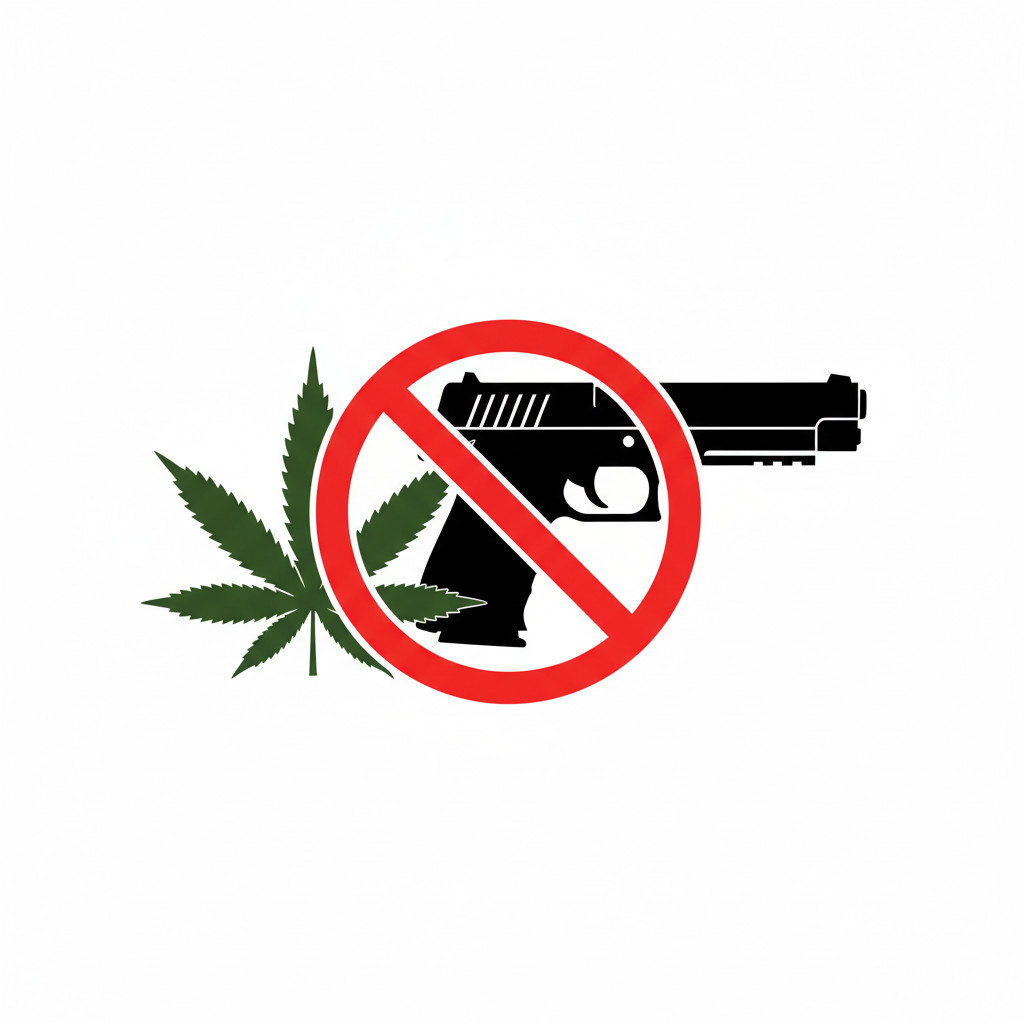
Impact on individuals of the federal firearms ban for cannabis consumers
The federal firearms ban for cannabis consumers can change daily life in clear ways. For many users the rule creates legal fear and uncertainty. Because enforcement is uneven, people often cannot predict consequences. As a result, ordinary choices can carry heavy penalties.
Key impacts
- Self-defense and safety concerns: Some users say they avoid buying firearms for protection. However, others feel forced to choose between personal safety and legal compliance.
- Criminal records and collateral consequences: A single charge can lead to felony records. Therefore, convictions can cost jobs, housing, and voting rights.
- Medical patients and caregivers: Patients who use cannabis for pain or anxiety face special risk. Thus, they may skip needed medicine to keep gun rights.
- Confusion and compliance challenges: Laws differ by state and federal levels. As a result, honest people struggle to know when they break federal rules.
- Stigma and discrimination: Employers, landlords, and courts may treat cannabis users harshly. Consequently, the ban can reinforce negative stereotypes.
Many people report stress and isolation because of the law. In short, the ban affects social standing, legal stability, and daily choices for cannabis users.
Federal firearms ban for cannabis consumers
| Law Level | Cannabis Status | Firearms Ownership Allowed | Key Restrictions and Federal Preemption |
|---|---|---|---|
| Federal | Federally listed Schedule I controlled substance | Prohibited for unlawful users (18 U.S.C. 922(g)(3)) | Federal law bars unlawful users nationwide; preempts state legalization; NICS may flag drug use |
| State — Recreational Legal | Legal under state law for adult use | Permitted under state rules but can trigger federal prohibition | State legalization does not override 922(g)(3); federal preemption means no federal shield for users |
| State — Medical Legal | Legal for qualifying patients under state programs | Often permitted by state law but subject to federal ban | Medical cards do not exempt users from federal law; preemption leaves patients at federal risk |
| State — Prohibition (Cannabis Illegal) | Use and possession criminalized under state law | Firearm rights may be lost after conviction; possession often restricted | State convictions can bar firearm rights and federal consequences remain possible |
CONCLUSION
The federal firearms ban for cannabis consumers sits at the crossroads of gun rights and drug policy. Because the Supreme Court’s Hemani case could change precedent, millions must watch for legal shifts. Understanding this issue helps people protect rights and avoid unintended penalties. MyCBDAdvisor supports clear, research driven, and trustworthy cannabinoid information to guide readers through complex topics. Visit MyCBDAdvisor for resources and updates: MyCBDAdvisor.
Frequently Asked Questions (FAQs)
Is it legal for cannabis users to own firearms under federal law?
No. Federal law 18 U.S.C. 922(g)(3) bars unlawful users of controlled substances from possessing firearms. Because cannabis remains a Schedule I drug federally, use can trigger the ban. However, courts and experts debate how to define “unlawful user.” As a result, outcomes can vary by case.
What penalties could someone face if charged under this law?
Penalties can include felony charges, fines, and prison time. In addition, convictions can lead to loss of firearm rights, job problems, and housing denials. Therefore, even allegations can carry heavy collateral consequences. Seek legal help quickly if you face charges.
Are there exceptions for medical cannabis patients or prescribed drugs?
Not clearly. Because federal law does not recognize state medical cannabis programs, patients can still be barred. By contrast, lawful prescriptions for FDA approved medicines usually do not trigger the ban. Consequently, the legal picture remains uneven and uncertain.
How can cannabis users stay compliant and reduce legal risk?
First, know that state legalization does not change federal law. Second, avoid possessing firearms if you use cannabis to reduce exposure to charges. Third, do not admit illegal drug use on federal forms without counsel. Finally, consult a qualified attorney to assess your situation and plan next steps.
What might change after the Supreme Court’s Hemani decision?
The court could uphold, narrow, or strike down the federal rule. If it narrows the rule, many users may regain rights. Alternatively, Congress could act to clarify the law. Therefore, monitor the ruling and seek legal guidance as rules evolve.