The Minnesota 8-plant Home Grow Rule
The Minnesota 8-plant home grow rule (home cannabis cultivation) reshapes how Minnesotans can grow cannabis at home. This change matters because it balances personal freedom with clear legal limits. As a result, curious gardeners and experienced growers both must learn practical compliance.
Under the 8-plant rule adults 21 and older may cultivate at home. However, only four plants can be mature and flowering at once. Therefore, growers should plan staggered cycles and consider autoflowers or feminized seeds to maximize yield in limited space. Additionally, indoor versus outdoor cultivation rules affect privacy and fencing requirements, so choose wisely.
Beyond rules, good practices matter because they protect your harvest and your legal standing. For example, use a quality organic potting mix and filtered water to improve plant health. Meanwhile, stagger plantings and document strains to keep your garden compliant and productive.
This guide will explain what to expect from home cannabis cultivation in Minnesota. It will walk you through timelines, seed types, indoor setups like 4×4 grow tents, and outdoor screening tips. Therefore, you can plan a safe, legal, and enjoyable cultivation experience.
Minnesota 8-plant home grow rule (home cannabis cultivation)
The Minnesota 8-plant home grow rule (home cannabis cultivation) sets the basic legal framework for adults who want to cultivate cannabis at home. This rule matters because it balances personal use and public safety. Therefore, knowing the limits helps you plan a compliant and productive grow.
Key points at a glance
- Who can grow: Adults 21 and older may cultivate cannabis at their primary residence.
- Plant limits: Up to eight plants per residence; no more than four may be mature and flowering at any time.
- Location and security: Plants must remain in an enclosed, locked space that is not visible to the public.
- Caregivers: Registered caregivers have special cultivation allowances under state law.
- Prohibitions: Home extraction using volatile solvents is illegal because it creates fire and health risks.
Legal context and recent updates
These provisions come from Minnesota statute and recent adult-use rules. For the official legal text, read the statute at Minnesota Statute. Also review guidance from the Office of Cannabis Management at Office of Cannabis Management. Meanwhile, local ordinances can add restrictions, so check city or county codes before you plant.
Practical implications
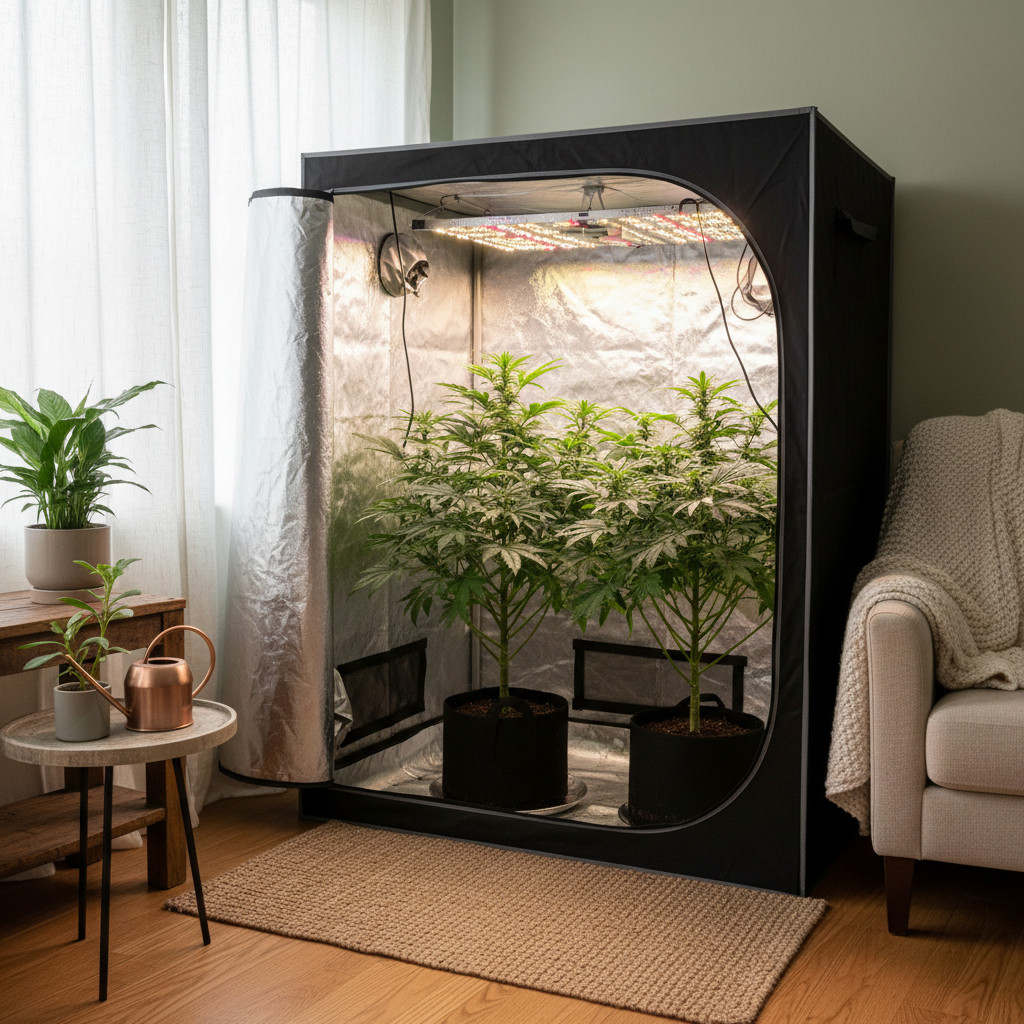
Because only four plants may be mature, stagger your plantings to maintain continuous harvests. Autoflowers and feminized seeds help maximize limited space. Indoor growers often use a 4×4 grow tent or a locked closet for privacy and security. Outdoors, plants must be screened from the street and kept behind a locked fence.
Compliance tips and related keywords
Finally, document strains and plant counts because compliance matters. Keep simple records, use quality organic potting mix, and water with filtered water to improve plant health. These steps protect both your harvest and legal standing. Related keywords to remember include home grow Minnesota, 8-plant rule, autoflowers, and feminized seeds.
Consequences and next steps
Violating these rules can lead to fines or criminal charges, depending on severity. Therefore, when in doubt consult legal counsel or local regulators. Grow responsibly and stay informed.
Quick comparison of home cannabis cultivation rules across states
| State | Max Plants Allowed | Special Conditions and Source | Effective Date |
|---|---|---|---|
| Minnesota | Up to 8 plants per residence; no more than 4 mature flowering plants | Adults 21 plus. Plants must be in an enclosed locked space not visible to the public. Local rules may add restrictions. See official guidance: Minnesota Official Guidance and statute: Minnesota Statute | August 1, 2023 |
| California | Up to 6 plants per residence | Adults 21 plus. Local jurisdictions may ban or restrict home grows. See state summary: California State Summary | November 9, 2016 |
| Colorado | Up to 6 plants per adult; household cap 12 plants | No more than 3 flowering plants per adult. Plants must be in a locked, enclosed area. Local limits may apply. See legislative brief: Colorado Legislative Brief | January 1, 2018 |
| Oregon | Up to 4 plants per residence | Adults 21 plus. Possession and local limits apply. Local jurisdictions may prohibit cultivation. See Oregon guidance: Oregon Guidance | July 1, 2015 |
| New York | Up to 6 plants per person; max 12 per household | Adults 21 plus. Must take reasonable steps to secure plants and limit odor nuisance. See state guidance: New York State Guidance | March 31, 2021 |
Related keywords and synonyms for SEO
- home cannabis cultivation
- 8-plant rule, home grow Minnesota, home grow laws
- autoflowers, feminized seeds, 4×4 grow tent
Benefits and considerations of the Minnesota 8-plant home grow rule (home cannabis cultivation)
The Minnesota 8-plant home grow rule gives residents legal clarity and limited personal access to cannabis. Because of this, home growers can plan harvests and reduce reliance on retail shops. It also encourages safer, regulated practices at home.
Personal and household benefits
- Autonomy and savings. Growing at home reduces purchase costs and ensures strain choice.
- Predictability and continuity. Staggered planting keeps supply steady, because only four plants may be mature.
- Educational value. Home growing teaches plant care and terpene appreciation.
Legal and compliance advantages
- Clear limits reduce enforcement risk when followed. However, you must document counts and secure plants.
- Age requirement and location rules matter. For official guidance consult the Office of Cannabis Management and the statute at Minnesota Statutes.
Community and public-safety benefits
- Limits help prevent large-scale diversion to illegal markets. Therefore, neighborhoods see fewer unregulated grows.
- Rules about locked, screened growing spaces reduce odor and visibility complaints.
Practical considerations and challenges
- Space constraints. Eight plants max means small grows need good planning.
- Staggering cycles can be complex. Autoflowers and feminized seeds simplify continuous harvests.
- Local rules may add restrictions. As a result check city ordinances before planting.
Tips to reduce risk
- Keep simple records of plant counts and harvest dates.
- Use a locked 4×4 grow tent or secure closet for indoor grows.
- Avoid home extractions with volatile solvents, because they pose fire hazards.
In summary, the rule balances personal freedom and safety. Grow responsibly and stay informed.
CONCLUSION
The Minnesota 8-plant home grow rule (home cannabis cultivation) gives Minnesotans a clear, workable path to grow responsibly at home. It balances personal freedom and public safety because it limits plant counts and requires secure, screened growing spaces. Therefore, residents can plan predictable harvests while staying within the law.
This article summarized the rule, legal context, and practical tips for indoor and outdoor grows. As a result, you should now understand plant limits, staggered cycles, and why autoflowers or feminized seeds help maximize small spaces. Additionally, we highlighted simple compliance steps like locked tents, filtered water, and basic record keeping.
However, local ordinances may add rules beyond the state law, so always check city or county codes before planting. When in doubt, consult local regulators or legal counsel to avoid fines or other penalties.
MyCBDAdvisor remains committed to clear, research-driven cannabinoid knowledge. EMP0 supports that mission by providing evidence-based tools and guidance for safe home cultivation. For more resources and ongoing updates visit MyCBDAdvisor.
Grow responsibly, stay informed, and enjoy the learning process.
Frequently Asked Questions (FAQs)
Who can legally grow cannabis at home in Minnesota under the 8-plant rule?
Adults age 21 and older may grow cannabis at their primary residence. However, you must follow the Minnesota 8-plant home grow rule (home cannabis cultivation). In addition, plants must stay on private property and out of public view. Finally, caregivers may have separate allowances under specific state programs.
What exactly counts as a plant and what does mature mean?
A plant is any individual cannabis organism in a pot or the ground. Mature plants are those in or past the flowering stage and ready to harvest. Because only four plants may be mature at once, plan staggered cycles. For example, use autoflowers or feminized seeds to speed turnover and maximize space in a 4×4 grow tent.
Can I sell or give away plants or cannabis I grow at home?
No. Selling homegrown cannabis without the proper license is illegal. You may give small amounts to other adults only if state law permits. Therefore, check state rules before sharing. Remember that distribution can lead to fines or criminal charges if you do not comply.
What safety and location rules must I follow for an indoor or outdoor grow?
Keep plants in an enclosed, locked space that is not visible from the street. Outdoors, plants must be screened and behind a locked fence. Additionally, avoid home extraction with volatile solvents because these methods create fire and health risks. As a result, use safe, licensed processing if you want concentrates.
What should I do to stay compliant and reduce risk?
Keep simple records of plant counts and harvest dates. Use quality organic potting mix and filtered water to protect plants. Also, stagger plantings to remain within the four-mature-plant cap. Finally, consult official state guidance at Minnesota State Guidance when rules change.