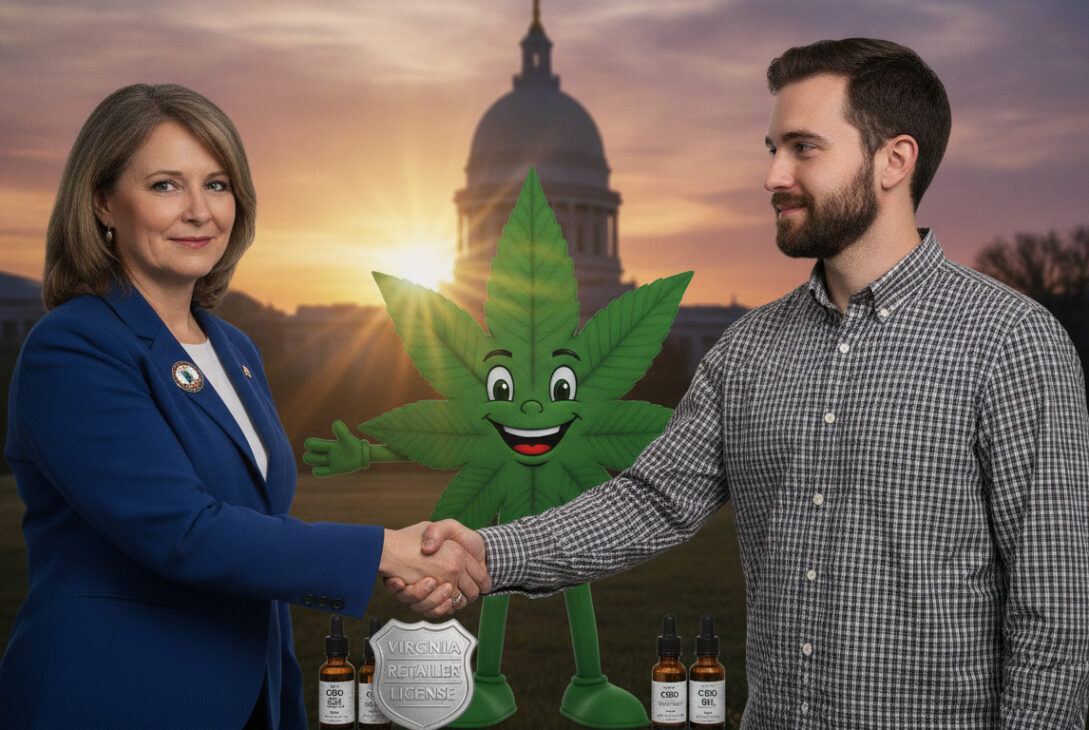
The Virginia cannabis sales July 2027 compromise finally sets a clear path for legal stores and growers. Negotiators narrowed contentious choices, and the result balances public safety, tax revenue, and market access. This article explains what the agreement means for adult-use cannabis consumers, small retailers, and commercial cultivation plans.
Because the start date moved to July 1, 2027, licensing timelines and supply chains will shift. The deal caps commercial licenses at 350, a significant change to earlier proposals. The compromise sets an initial state tax of 6 percent and then it rises to 8 percent in 2029. Localities may add up to 3.5 percent in local tax; therefore, final prices will vary by town.
For consumers, this means clearer access but uncertain prices and rules for public consumption. For small retailers, however, the compromise trades broader access for stricter license limits and compliance costs. Read on to learn how taxes, licensing, and penalties like a $250 public consumption fine shape the market.
What is the Virginia cannabis sales July 2027 compromise?
The Virginia cannabis sales July 2027 compromise delays legal retail launches to July 1, 2027. It sets a 6 percent state tax initially, then raises it to 8 percent in 2029. It limits commercial licenses to 350, allows local taxes up to 3.5 percent, and adds a $250 public consumption fine.
Key Details of the Virginia Cannabis Sales July 2027 Compromise
The Virginia cannabis sales July 2027 compromise lays out dates, taxes, licenses, and rules for retail and cultivation. It gives regulators a clear timeline while balancing fiscal and social goals. Because stakeholders sought stability, the package narrows earlier proposals and sets firm guardrails.
Key points
- Start date and timing: Retail sales begin July 1, 2027. Agencies get more time to license businesses.
- Tax structure: The state tax starts at 6 percent. Then it rises to 8 percent on or after July 1, 2029.
- Local tax authority: Localities may add up to 3.5 percent, therefore final prices will vary by locality.
- License cap and phase in: The compromise limits commercial retail licenses to 350. Licenses will be phased in to manage supply.
- Microbusiness and equity funding: The plan reserves microbusiness slots. It directs early license fees to equity loan funds.
- Public consumption and penalties: Public use carries a $250 civil fine. It avoids the criminal penalty that was once proposed.
- Zoning and safeguards: The law requires 1,000 foot buffers from schools and treatment centers. It also mandates strict age verification rules.
Regulators and stakeholders must now translate the compromise into enforceable rules. For details on the start date and tax schedule see start date and tax schedule. The state Cannabis Control Authority outlines implementation priorities at state Cannabis Control Authority summary. Finally, the agreement summary explains license and penalty choices in depth at agreement summary and license details.
The Virginia cannabis sales July 2027 compromise will shape prices, access, and the long term marketplace across Virginia.
Virginia Cannabis Sales Market Projection Comparison
| Metric | Before compromise (Jan 1, 2027 launch) | After compromise (July 1, 2027 launch) |
|---|---|---|
| Launch date | January 1, 2027 (proposed full-year start) | July 1, 2027 (enacted start) source |
| Year 1 expected legal market share | Legal sales expected to capture about 16 percent of overall market in year one (JLARC) source | Similar 16 percent capture rate, but FY2027 is a partial year so implied taxable sales are roughly half of a full-year projection (JLARC, CCA) source source |
| Year 5 projected industry sales | Legal commercial sales could exceed $1 billion by year five under full rollout (JLARC) source | Same long-run potential exceeding $1 billion, but market maturity shifts later because of the six-month delay (JLARC) source |
| Year 5 projected state and local tax receipts | Estimated $150 to $300 million annually by year five under full capture scenarios (JLARC) source | Same multiyear revenue range, but collections are delayed one fiscal period given the July start (JLARC, CCA) source source |
| License cap and rollout | Earlier proposals varied on caps and phasing; some drafts called for fewer initial licenses | Compromise caps commercial retail licenses at 350 and phases issuance with equity set asides (state summary) source |
| Market access and pricing implications | Full-year launch supports faster supply growth and quicker downward price pressure | Half-year launch slows supply ramp; initial 6 percent state tax (rising to 8 percent in 2029) plus local taxes up to 3.5 percent will affect retail prices and local variation |
How Will the Virginia Cannabis Sales July 2027 Compromise Affect Consumers?
The Virginia cannabis sales July 2027 compromise reshapes access, prices, and safety rules for adult users. Because the start moved to July, the initial product supply will arrive more slowly. As a result, early selection may be limited while retailers ramp up inventory.
Product availability and selection
- Expect fewer storefronts initially due to a 350 license cap, therefore fewer retail outlets will open in every county.
- Small producers and microbusinesses gain reserved slots, which may increase local craft offerings later.
- Supply chain timing means popular products like high potency concentrates and specialty edibles could appear later.
Pricing and taxes
- The state tax starts at 6 percent and rises to 8 percent in 2029, therefore base prices will be higher than untaxed black market rates.
- Local taxes of up to 3.5 percent will cause price variation between localities.
- Because the market ramps slowly, early retail prices may stay elevated until competition grows.
Safety and regulation
- Consumers will see regulated, tested products with required labeling, which improves quality and dosing clarity. For evidence on regulated product safety and public health impacts, see the CDC guidance on health effects.
- Research shows potency and consumption methods affect risks, therefore regulated testing matters; see the NIDA Marijuana Research Report.
Practical consumer tips
- Plan for price differences across towns and shop around.
- Check product testing and potency labels before purchase.
- Avoid public use to prevent a $250 fine, and keep products away from children.
Overall, the Virginia cannabis sales July 2027 compromise gives consumers safer, legal options. However initial supply limits and layered taxes mean higher prices and uneven access during the first year.
CONCLUSION
The Virginia cannabis sales July 2027 compromise sets a practical roadmap for legal retail and cultivation. It delays launch to July 1 and limits commercial licenses to 350. It phases state taxes from 6 percent to 8 percent.
Consumers will see safer, tested products and clearer rules, but prices may remain elevated initially. However, small producers and equity applicants gain reserved opportunities, therefore local craft offerings could grow over time.
Regulators must still write implementing rules, and municipalities will set local taxes and zoning. For a detailed guide to post-compromise compliance and timelines visit My CBD Advisor. Because enforcement and licensing timelines matter, stakeholders should track rulemaking closely. Expect gradual price declines as supply and competition increase over two to three years.
Finally, the compromise balances public safety, revenue, and access, and it will shape Virginia’s long-term cannabis marketplace.
Frequently Asked Questions (FAQs)
What is the Virginia cannabis sales July 2027 compromise?
The Virginia cannabis sales July 2027 compromise delays retail launches to July 1, 2027. It sets an initial 6 percent state tax and raises it to 8 percent in 2029. It also caps commercial retail licenses and includes equity provisions, therefore it balances access, revenue, and public safety.
When will legal retail sales start and why was the date changed?
Retail sales now begin July 1, 2027, because lawmakers agreed to give regulators more rulemaking time. The Cannabis Control Authority published an implementation timeline and key milestones at Virginia’s New Marijuana and Hemp Laws. As a result, licensing and inspection steps will proceed in a phased schedule.
How will taxes affect retail prices and state revenue?
The compromise starts state tax at 6 percent, then increases it to 8 percent in 2029. Localities may add up to 3.5 percent, therefore final prices will vary by location. Long term revenue estimates and market capture scenarios appear in JLARC’s analysis at JLARC’s analysis, which projects significant multiyear tax receipts.
How many licenses will be available and who benefits?
The law caps commercial retail licenses at 350 and phases issuance over time. It reserves microbusiness and equity slots, so smaller operators and justice-impacted applicants may gain priority. However limited initial licenses mean access will concentrate in early markets until expansions occur.
Are legal products safer than black market options?
Yes. Regulated products require testing, labeling, and child-safe packaging, which improves quality and dosing clarity. For public health context, the CDC explains cannabis health effects and harm reduction guidance at CDC Cannabis Health Effects. Therefore consumers will gain clearer safety protections under the new regime.
If you still have questions about timelines, licensing, or pricing, track CCA rulemaking and JLARC reports. They provide the most current details as the market moves toward launch.
Related on CBD Advisor
- Virginia cannabis sales amendment in state budget proposal
- Massachusetts ballot measure to end adult-use cannabis sales explained
- What factors drove Canada adult-use cannabis sales revenue 2025