Introduction
Ukraine hemp 2026, cannabis showcases, hemp supply chain and traceability now intersect to reshape how brands and buyers source industrial hemp and tested cannabis products; this convergence raises expectations for chain-of-custody, lab verification and clearer logistics for long fiber and shives. It also exposes compliance bottlenecks that buyers must manage with documented provenance and sample testing.
Local farm showcases in New York let small cultivators sell tested products at public events, gather consumer feedback and pilot retail rules; read the report on New York’s first cannabis showcase for event details. Simultaneously, Ukrainian firms rebuilt processing plants, scaled acreage for textile-grade long fiber and shives and moved toward export markets targeting yarn and denim industry specifications and nonwoven buyers, as described in the industrial hemp processing plant reconstruction announcement, so these pilots and growing processing capacity broaden sourcing options across the hemp supply chain while making traceability, chain-of-custody documentation, certified lab testing and reliable logistics decisive for buyers; see the Direct answer section below for a short summary.
Direct answer
Cannabis showcases and Ukraine’s 2026 hemp expansion signal stronger event-driven transparency and scaled long-fiber supply, but regulatory and logistics gaps persist. U.S. buyers should demand verifiable traceability and testing before contracting and build extra lead time for certification and shipment.
- Require ‘chain-of-custody’ documentation covering cultivation, processing and transport and verify custody logs.
- Request ‘lab-certified fiber’ samples and review lab accreditation and test reports for compliance.
- Add buffer time for international certification and verify ‘hemp fiber traceability’ through sample-to-shipment records.
Sources:
- New York growers showcase report (2026). Both provide context for buyer due diligence.
- Ukrainian industrial hemp plant reconstruction (2025).
Role of cannabis showcases
Cannabis showcases are temporary, regulated events where licensed producers display and sometimes sell tested cannabis products. These events let cultivators connect directly with consumers, and they offer real world feedback on product preferences. Because municipalities and regulators must approve them, showcases also act as compliance tests for new retail models.
In practice, New York’s pilot showcase at Lincoln Hill Farms showed how small farmers can reach buyers. For context, read the report on New York’s first cannabis showcase at Lincoln Hill Farms: New York’s first cannabis showcase. Meanwhile regulators issued detailed permit guidance to manage safety, sales and partnerships: Permit guidance for cannabis showcase events.
Key roles and benefits
- Test regulatory frameworks and retail rules in live settings. Consequently regulators can refine rules before wider rollout.
- Drive direct-to-consumer marketing and brand exposure for small growers. Therefore producers build loyalty and gather product feedback.
- Improve traceability and product testing transparency. Because licensed retailers often handle sales, traceability chains strengthen.
- Open new revenue streams and local partnerships. As a result, dispensaries, cultivators and processors can pilot collaborations.
Cannabis showcases and Ukraine hemp industry in 2026
Showcases influence buyer expectations abroad because they highlight quality standards and traceability. Therefore U.S. buyers seeking Ukrainian hemp fiber will look for similar assurances when sourcing long fiber and yarn inputs.
Overview
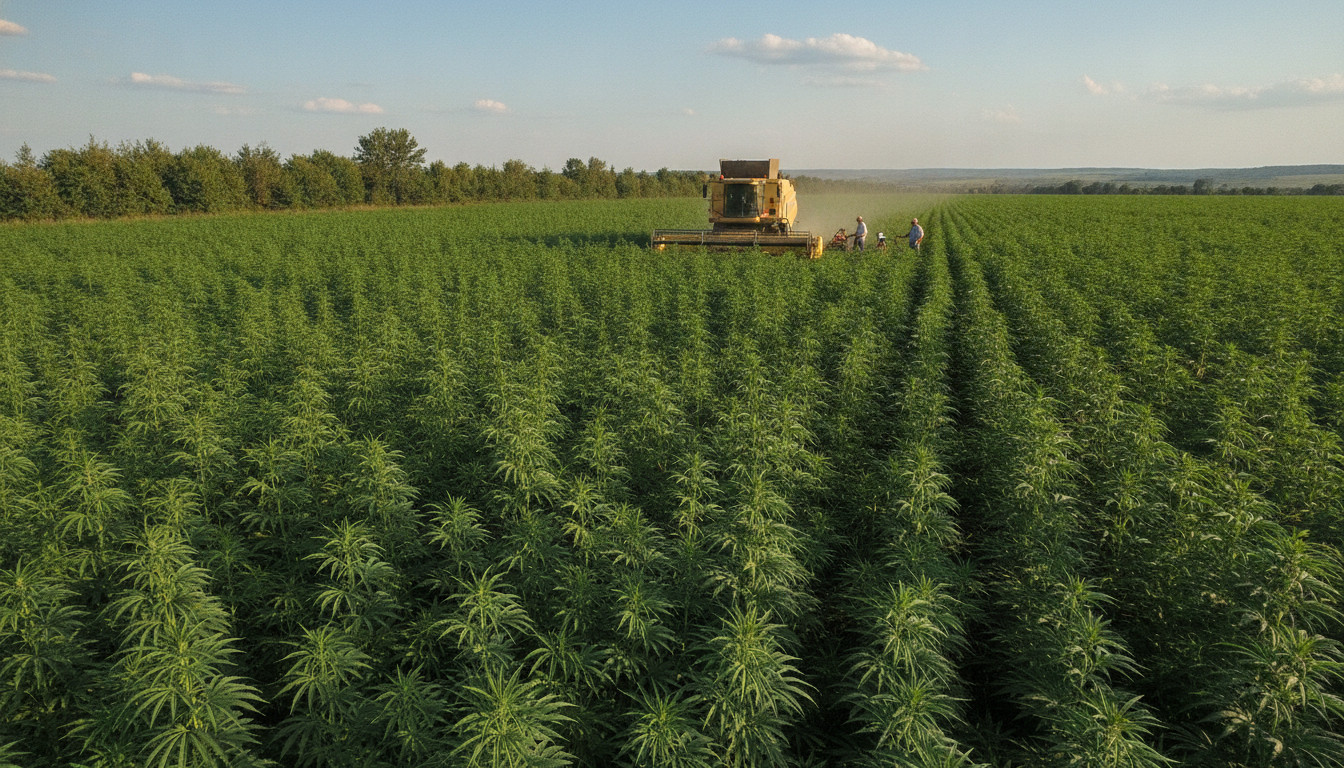
Ukrainian fiber exporters scaled acreage and processing capacity after fresh investments, creating more visible supply chains for long fiber, bast fiber and shives. At the same time processing remains uneven, with corporate targets often outpacing national lab and logistics systems.
Overall buyers gain more sourcing options and traceability, but should plan for variable lead times and verification steps.
Processing capacity
Large projects reopened former flax mills and added modern equipment to increase theoretical throughput. For example an official announcement cites a plant with installed capacity of 14,000 t/yr (2024) official plant launch announcement (2024).
Independent reviews use measured operational throughput and conservative scaling assumptions and therefore report lower figures of about 3,000 to 5,000 t/yr (2025) capacity review and lab analysis (2025). The discrepancy reflects methodological differences such as nameplate versus actual processing rates, inclusion or exclusion of shives in totals and differing uptime assumptions.
Production trends
Cultivation expanded from pilot plots to commercial farms, with company reports noting roughly 1,200 hectares sown in 2025. Producers aim to scale to multiple thousands of hectares as demand for long fiber grows.
Regulatory gaps
Testing capacity and certified labs remain bottlenecks for export certification and quality assurance. Reports highlight lab shortages, inconsistent chain of custody protocols and paperwork delays that slow shipments and add cost capacity review and lab analysis (2025).
Export markets
Producers target EU textile hubs, select Asian buyers and the U.S., prioritizing compliance with yarn and denim specifications. Consequently companies invest in traceability, third party sample testing and bonded sampling to meet buyer standards.
Risks
- Limited certified labs → allow four to six weeks extra lead time and require bonded third party sampling to protect quality and quarantine risk
- Machinery and skilled labor shortages → include productivity clauses, staged deliveries and price escalation buffers to manage margin volatility
- Logistics and geopolitical volatility → negotiate clear force majeure terms, use split shipments and insure consignments for transit risk
Comparison of top hemp-producing countries
Last updated: 2026
Quick buyer reference for hemp fiber quality, production scale and export markets. Each row is one-line for fast scanning.
| Country | Production scale | Main export destinations | Legal status | Economic notes | Fiber quality / grade | Typical certifications/notes | Sources |
|---|---|---|---|---|---|---|---|
| China | Very high annual volumes and large domestic processing | Asia, Europe (selected) | Provincially regulated industrial hemp licensing | Major raw fiber and seed supply; price leader | mixed | GOTS availability limited; large mill capacity | Textile Exchange (2023) |
| France | Medium to high; established EU fiber sector | EU textile hubs (Italy, Germany) | EU low-THC hemp rules, national licensing | Strong fiber/seed markets; export oriented | long | GOTS and OEKO-TEX common; good lab access | KSE (2025) |
| Canada | Medium; provincially distributed licensed producers | United States, EU, Asia | Federally licensed industrial hemp program | Growing fiber processing investment | mixed | OEKO-TEX available; Health Canada licensing and labs | Health Canada (2021) |
| United States | Medium; state-by-state programs since 2018 | Domestic processors; select exports | Federally legalized hemp with state programs | Mixed regional capacity; rising investment in fiber | mixed | Variable lab capacity by state; some GOTS supply | USDA NASS (2022) |
| Ukraine | Rapidly growing after 2024 investments; expanding hectares | EU textile hubs, India, selected U.S. buyers | Permitted low-THC industrial hemp; evolving testing | New processing plants and seed programs scaling | long | Limited certified labs; some exporters seek OEKO-TEX | Marijany (2025) |
| Netherlands | Small to medium; niche high-value production | EU textile and seed buyers | EU rules with national licenses for industrial hemp | Focus on niche seed and specialty fiber markets | niche | Strong seed programs; GOTS possible for specialty lots | FAO (2021) |
Conclusion
Cannabis showcases and Ukraine hemp industry in 2026 highlight growing alignment between transparent local markets and large-scale fiber supply. These developments improve traceability and open sourcing options for U.S. buyers. Therefore brands and buyers gain clearer pathways to quality hemp fiber.
Ukraine’s investments in processing and seed programs boost export potential. However, certified testing, logistics and labor shortages still constrain growth. With stronger labs, training and international partnerships, exporters can meet buyer standards.
Looking forward, cannabis showcases will raise consumer expectations and accelerate market visibility. For sourcing guidance and industry updates visit My CBD Advisor. Overall the outlook is positive if policy and investment keep pace.
Opportunities include high-quality long fiber for textiles and shivs for construction materials. Consequently U.S. brands can diversify suppliers and reduce risk. Therefore monitoring compliance milestones remains essential before committing large purchases.
Frequently Asked Questions (FAQs)
What are Cannabis showcases and Ukraine hemp industry in 2026?
Cannabis showcases and Ukraine hemp industry in 2026 describe regulated U.S. event-sales pilots and Ukraine’s expanding hemp fiber sector. They connect consumer-facing transparency with large-scale processing and exports. As a result buyers can compare quality and traceability across markets.
How do cannabis showcases work in the U.S.?
States permit licensed cultivators to display tested products at approved events. For example New York requires multiple licensed growers and a partnering dispensary. Consequently showcases test retail rules and offer direct sales in controlled settings.
Why does Ukraine matter for global hemp supply?
Ukraine farms thousands of hectares of low-THC hemp and invests in processing facilities. Companies target European textile hubs, India and the United States. Therefore Ukraine can supply long fiber for textiles and shivs for construction markets.
What challenges face Ukrainian hemp exporters?
Limited certified labs slow export certification and compliance. In addition machinery, skilled labor and logistics remain constrained. Therefore political risk and supply-chain volatility require careful due diligence.
How should buyers evaluate Ukrainian hemp suppliers?
Prioritize chain-of-custody documentation and lab certificates. Request sample fiber tests and verify harvest methods. Finally include logistics buffers and clear contract terms for delivery and quality disputes.
Related on CBD Advisor
- Vlasic Classic charity golf for Jarred Shaw and cannabis justice
- What makes IgniteIt Cannabis Capital Conference a capital accelerator
- What Lessons Does 6 Point Cannabis Teach Operators