
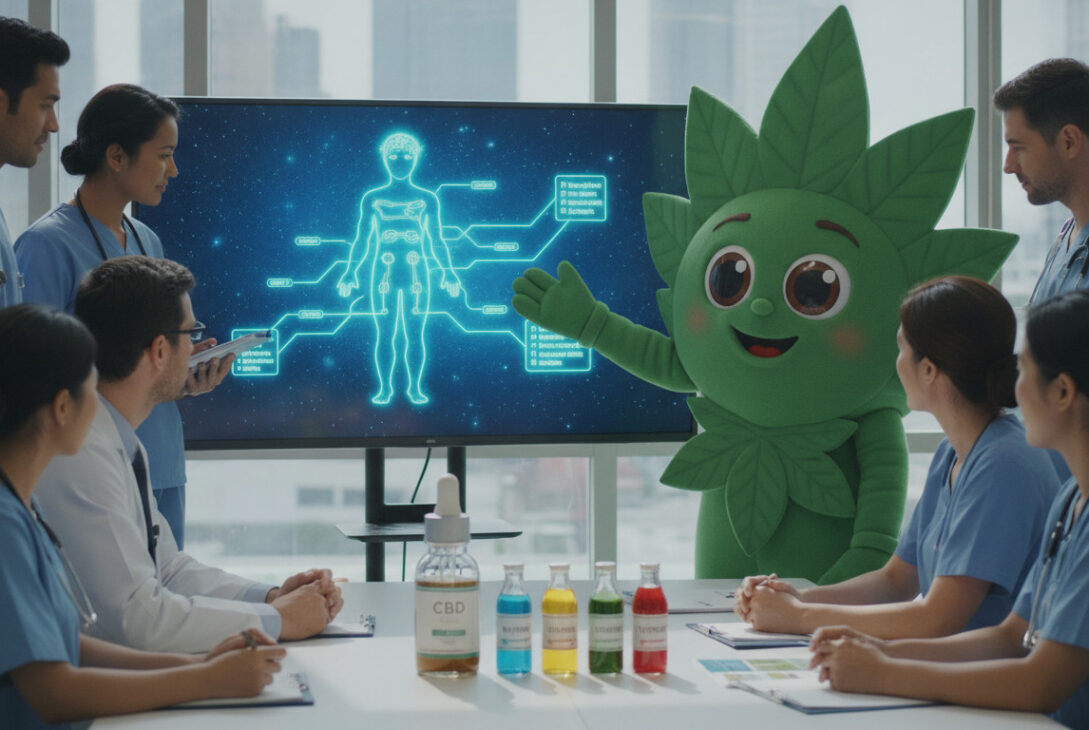
Urgent need and center mission
Medical cannabis training is scarce, leaving clinicians unprepared to counsel patients safely in underserved communities. This gap creates treatment delays, dosing errors, safety risks, and widens inequities in access across communities.
The Center of Excellence for Cannabis Care and Health Equity trains clinicians and community staff in evidence based medical cannabis care. It standardizes curricula, promotes rigorous research, and measures outcomes to reduce disparities. This approach responds to a report on cannabis health effects and to guidance on social determinants of health.
- Asynchronous modules on dosing, safety, and the endocannabinoid system.
- Hands on workshops for culturally competent patient counseling.
- Data systems and equity metrics to track outcomes by race and income.
Related terms include medical cannabis training, cannabis clinician education, cannabinoid therapeutics, and endocannabinoid system.
Quick answer
A Center of Excellence for Cannabis Care and Health Equity standardizes training, advances equity-focused research, and partners with communities to improve safe cannabis care. It offers medical cannabis prescribing guidance and dispensary staff training to expand access and improve outcomes.
- Primary audiences: clinicians; dispensary staff; public health workers.
- Core activities: training, research, community partnerships, equity monitoring.
- Outcomes: standardized dosing guidance, culturally competent care, measurable access improvements.
Read implementation steps: Establish guide and implementation steps
Evidence and context: National Academies report highlights and CDC social determinants overview
Keywords: medical cannabis training; medical cannabis prescribing guidance; dispensary staff training; equity-focused clinician education; endocannabinoid system
Why Health Equity Matters in Cannabis Care
Health inequities shape who accesses cannabis care and who benefits. The Center of Excellence for Cannabis Care and Health Equity will target those gaps through training, research, and community partnerships. Marginalized groups face higher barriers, so programs must link clinical education with outreach and policy change.
Key disparities at a glance
- Unequal access to certified providers and dispensaries in low income neighborhoods, reducing treatment options.
- Limited clinical research involving diverse populations, which weakens evidence for specialty care.
- Stigma and provider bias that discourage patients from disclosing cannabis use, harming care coordination.
- Legal and economic barriers that increase harm in communities with high incarceration rates.
Centers of Excellence close these gaps by standardizing training for clinicians, dispensary workers, and public health staff. Statewide curricula can teach the endocannabinoid system, dosing, and culturally competent communication. They also collect standardized outcome data for quality improvement National Academies chapter highlights.
Social determinants like housing and income drive unequal outcomes and must be addressed alongside clinical programs CDC social determinants overview. For example, a study in Oklahoma found census tracts with dispensaries had higher shares of residents below the poverty line and without insurance Oklahoma dispensary study. In bivariate analyses, Hispanic residents were 52 percent more likely to live in a tract with a dispensary.
By combining evidence based education, community engagement, and equity metrics, the Center can make cannabis care safer and fairer for all patients. Policymakers and clinicians should support centers that reduce disparities and improve public health outcomes.

CoE vs Traditional Models
The CoE model expands medical cannabis training and equity monitoring; it prioritizes standardized clinician training, integrated data systems for equity tracking, and sustained community partnerships.
| Features | CoE model | Traditional models |
|---|---|---|
| Focus | Clinical guidance and equity | Commercial access and sales |
| Research and evidence | Rigorous studies and standard protocols | Limited fragmented studies |
| Equity and access | Proactive outreach and demographic tracking | Uneven access and minimal metrics |
| Clinical training | Standard curricula and ongoing continuing education | Ad hoc training and variable quality |
| Patient support | Patient navigation and culturally competent counseling | Transactional retail support and limited coordination |
| Integration with health systems | Integrated with hospitals and public health | Siloed from mainstream healthcare and limited data sharing |
| Data and quality improvement | Centralized outcomes tracking and continuous improvement | Sparse tracking and variable quality |
| Funding and sustainability | Public grants and institutional support | Market driven revenue and private investment |
Related keywords include medicinal cannabis, endocannabinoid system, and equity focused care. See National Academies committee conclusions for evidence gaps and a recent cannabis policy and equity review.
How to Establish a Center of Excellence for Cannabis Care and Health Equity
Define the Center of Excellence for Cannabis Care and Health Equity mission, linking clinical excellence with community justice. Next, build a governance team with clinical leaders, public health experts, community representatives, and academic partners for diverse oversight. Then create standardized curricula, asynchronous online modules, and continuing education tied to rigorous research and safety protocols. Finally, partner with community organizations and measure equity outcomes so programs reduce disparities and improve access over time.
- Assemble multidisciplinary partners, including hospitals, public health schools, and community groups, to share expertise and resources.
- Design evidence-based training modules on the endocannabinoid system, dosing, and culturally competent communication.
- Secure sustainable funding through public grants, institutional support, and targeted philanthropy to ensure long-term operations.
- Implement data systems that track outcomes by race, income, and geography for continuous quality improvement and equity audits.
- Engage communities with outreach, navigation services, and feedback loops so programs stay responsive and reduce access barriers.
Prioritize equity metrics and community voices to maintain trust, transparency, and long-term engagement. Therefore invest in evaluation, dissemination, and policy alignment to scale impact statewide and beyond.
Current Research on Cannabis Care and Health Equity
The Center of Excellence for Cannabis Care and Health Equity builds on growing evidence about cannabis access, outcomes, and policy impacts. Recent reviews show large evidence gaps and inconsistent protections that worsen outcomes for underserved groups. For example, a consensus review on cannabis policy and equity highlights uneven state protections and surveillance gaps.
Equity oriented clinical analyses document racialized differences in pain care toward reducing racialized pain care disparities, and systematic evidence links retail availability to uneven health outcomes systematic review on cannabis retail availability and health harms.
One concrete study example found that Black patients were twice as likely as White patients to have long term opioid therapy discontinued after testing positive for cannabis, signaling potential care disruptions and differential consequences of drug testing toward reducing racialized pain care disparities. Equity focused practice should monitor these patterns and implement protocols that preserve continuity of pain management while addressing substance use safely.
Track three measurable equity metrics race and ethnicity, income level, and patient geography and report them quarterly. Use these indicators in program evaluation to identify disparities, assess outreach effectiveness, and guide continuous quality improvement.
Conclusion
The Center of Excellence for Cannabis Care and Health Equity can transform clinical practice, research, and community partnerships. It standardizes clinician training, funds equity centered studies, and supports culturally competent patient services. Because of clear disparities, these centers prioritize access, data collection, and measurable outcomes.
Moreover, they connect hospitals, public health agencies, and community groups for coordinated care. Policy alignment and sustainable funding ensure long term impact and continuous quality improvement. Therefore stakeholders should support a Center of Excellence for Cannabis Care and Health Equity to advance fair, evidence based care. The future looks hopeful as research and community voices guide practice.
Related on CBD Advisor
- Which Cannabis Career Certificate programs Lead to Higher Pay
- How does Vermont State University educational partnership with the Vermont Cannabis Convention empower careers
- Are Online Cannabis Certificate Programs Fast-Track Careers