
Cannabis appetite is the heightened desire to eat after cannabis use, commonly called the munchies. Understanding cannabis appetite matters for both recreational users and patients with appetite loss. Researchers link the effect to THC acting on the endocannabinoid system and brain reward circuits. As a result, food looks and tastes more appealing, and motivation to seek snacks increases.
Animal and human studies now map these mechanisms and help guide medical use. However, the munchies are often acute, not necessarily causing sustained increases in daily calories. Route and dose influence outcomes, because inhaled THC tends to act faster than edibles. Therefore patients, caregivers, and clinicians should weigh benefits and risks carefully before use.
This article explains the biology, summarizes recent studies, and offers practical tips to manage appetite. Read on to learn how cannabis appetite might help treat nausea or complicate weight management. We aim to provide balanced, science forward guidance grounded in evidence and safety.
What is cannabis appetite?
Cannabis appetite is the short term rise in hunger after using cannabis. It occurs when THC activates CB1 receptors in the endocannabinoid system and reward circuits. It increases motivation to eat and snack, but effects are usually short and may not raise daily calories.
Cannabis Appetite: How It Affects Hunger
Cannabis appetite stems from THC acting on the endocannabinoid system, therefore changing hunger and reward signals. THC binds CB1 receptors in the brain and gut, and this interaction increases food motivation and pleasure. As a result, users often feel stronger cravings and quicker food seeking.
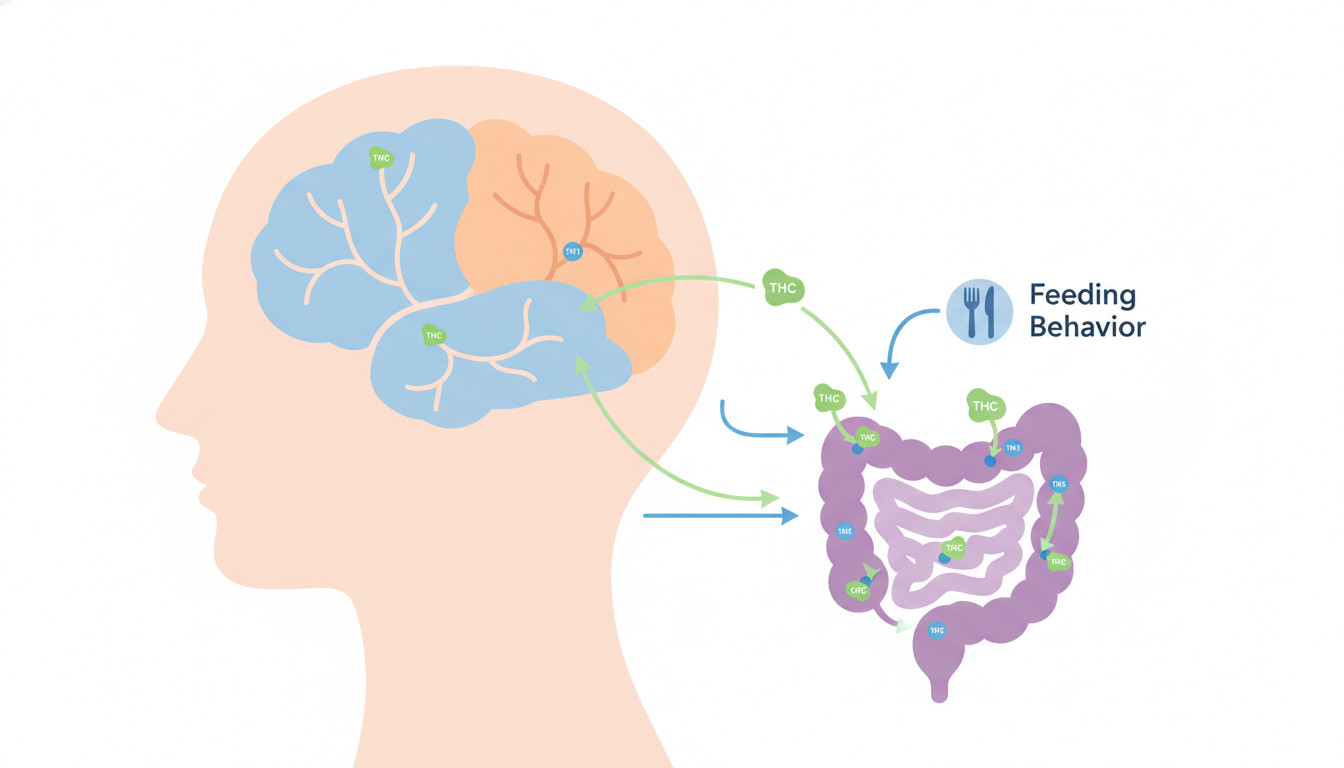
Key mechanisms in simple terms
- CB1 receptor activation: THC attaches to CB1 receptors on neurons, and this increases appetite signaling in the hypothalamus and reward centers.
- Reward circuit boost: THC raises activity in the nucleus accumbens and related pathways, therefore making food feel more rewarding and desirable.
- Peripheral signals: Endocannabinoid activity in the gut affects hunger hormones, so digestion and appetite cues change as well.
Evidence and timing
- Animal and human data show inhaled THC increases short term intake, especially in the first hour after use, however it may not raise daily calorie totals. See the translational PNAS study for the detailed methods and findings at the PNAS study.
- Practical factors such as route and dose shape effects because inhalation delivers rapid THC peaks, whereas edibles act slower and last longer. For a lay summary of dosing and appetite timing see this article.
Clinical implications
Understanding these mechanisms helps clinicians decide when cannabis could aid nausea or weight loss, and how to limit unwanted snacking. Therefore treatment choices should consider route, dose, and patient health.

Cannabis Appetite Benefits and Risks
Cannabis appetite describes how cannabis can raise short term hunger and food motivation. It can help people who struggle to eat, however it also carries trade offs and side effects. Below we outline likely benefits, known risks, and clinical context so readers and clinicians can weigh choices.
Benefits
- Appetite stimulation for wasting and nausea: THC can boost short term intake in people with chemotherapy related nausea or disease related weight loss. See the National Cancer Institute review for clinical context.
- Faster onset with inhalation: Inhaled THC produces rapid appetite stimulation, therefore it can help when quick relief is needed.
- Improved meal enjoyment and motivation: THC enhances reward circuit activity, so food tastes better and patients may eat more willingly.
Risks and concerns
- Limited and mixed clinical evidence: Randomized trials yield inconsistent results for long term weight gain and appetite outcomes, therefore benefits are not guaranteed (systematic review).
- Cognitive and psychiatric side effects: THC can cause dizziness, sedation, anxiety, and memory issues, and therefore may worsen mental health in vulnerable people.
- Route and safety trade offs: Inhalation risks the lungs, while edibles act unpredictably and last longer, therefore clinicians often prefer non inhaled options for medically fragile patients.
Clinical takeaway
Cannabis appetite effects can be beneficial for selected patients, but clinicians should consider evidence, dose, route, and patient risk factors. Therefore shared decision making and monitoring are essential when using cannabinoids for appetite issues.
Cannabis vs Other Appetite Stimulants
| Stimulant | Effectiveness | Onset time | Side effects | Typical use cases |
|---|---|---|---|---|
| Cannabis (THC dominant) | Moderate acute stimulation; raises food motivation but may not increase total daily calories | Inhalation: minutes, peaks 15 to 30 minutes; edibles: 30 to 120 minutes onset, longer duration | Cognitive impairment, anxiety, dry mouth, increased heart rate, possible lung risk with smoking | Short term appetite boosting for nausea, chemotherapy related appetite loss, or transient anorexia |
| Dronabinol (synthetic THC) | Moderate; clinically used and approved for some chemo and AIDS related indications | Oral: 30 to 120 minutes | Sedation, euphoria, dizziness, GI upset, potential mood changes | Chemotherapy induced nausea and vomiting refractory to other meds; AIDS related anorexia/cachexia |
| Megestrol acetate (progestin) | High for producing weight gain in wasting patients; stronger long term effects than cannabinoids | Days to weeks for noticeable weight gain | Increased thromboembolism risk, edema, adrenal suppression, hormonal side effects | Cancer cachexia and severe, chronic weight loss management |
| Mirtazapine (antidepressant) | Moderate appetite increase and weight gain as a common side effect | Days to weeks for sustained appetite changes | Sedation, dry mouth, weight gain, metabolic changes | Depression with poor appetite, patients needing combined mood and appetite support |
| Natural remedies and nutritional supplements (caloric shakes, herbal remedies) | Variable and generally mild; nutritional supplements reliably add calories when used properly | Immediate for oral supplements; variable for herbal remedies | Usually low risk but possible GI upset, allergies, and drug interactions | Mild appetite loss, complementary support, short term caloric supplementation |
How to Safely Use Cannabis for Appetite
Cannabis appetite affects hunger and food motivation, so safe use matters for beginners and medical patients. Below are five practical steps to use cannabis for appetite safely and effectively.
- Begin with a low THC dose and increase gradually to find the minimal effective amount that boosts appetite.
- Choose the route carefully and prefer non inhaled options for medically fragile patients to reduce lung risks.
- Time dosing by using cannabis close to meals when an appetite boost is needed, thereby improving calorie intake.
- Plan healthy portions, pick protein and fiber rich snacks, and stay hydrated to reduce impulsive overeating.
- Consult a clinician before starting cannabis for appetite, discuss medications, mental health risks, dosing strategies, monitoring plans, and adjust use as medical guidance dictates to ensure safety and effectiveness.
Start slowly and track effects in a simple journal to note appetite changes and side effects. If symptoms worsen or new concerns appear, stop use and contact your healthcare team promptly.
Conclusion
This article summarized how cannabis appetite emerges, the endocannabinoid mechanisms involved, and evidence from animal and human studies. Understanding these findings helps users and clinicians weigh benefits and risks. Because THC reliably raises short term food motivation, it can help people with nausea or treatment related appetite loss.
However clinical results remain mixed, and effects are often acute rather than long lasting. Therefore choosing route, dose, and timing matters, and monitoring is essential to reduce unwanted side effects. Ultimately informed decisions, clinician guidance, and careful tracking improve safety and outcomes.
Research is advancing quickly, and future trials should clarify long term benefits and best practices. Stay curious and cautious because reliable knowledge empowers your wellness journey.
Frequently Asked Questions (FAQs)
Is cannabis appetite a real effect?
Yes. Cannabis appetite reliably increases short term food motivation after THC exposure. Studies show rapid appetite rises in humans and rodents, especially after inhalation, and link effects to reward circuits and CB1 receptor activation. See the translational PNAS paper for experimental details here.
Can cannabis help people with medical appetite loss?
Possibly, in selected patients. Evidence supports short term appetite boosts for chemotherapy related nausea and wasting, however long term benefits remain mixed. Therefore clinicians compare cannabinoids with approved drugs and consider risks. The National Cancer Institute summarizes clinical context and guidance here.
How long do the munchies usually last?
They are often acute and short lived. Inhaled THC causes appetite spikes within minutes and commonly peaks in the first hour. In contrast edible effects begin later and last longer, so timing and route shape duration. For trial results and timing data see the PubMed entry here.
What are the main safety concerns and side effects?
THC can impair cognition and coordination, and therefore risk anxiety, dizziness, and memory issues in vulnerable users. Chronic or heavy use may worsen mental health for some people. Also choose routes carefully because smoking harms lungs. The National Institute on Drug Abuse details common harms and dosing cautions here.
How should beginners approach cannabis for appetite safely?
Start low and go slow with THC, and prefer clinician approved plans for medical use. Time doses near meals and pick non inhaled formulations for fragile patients. Track appetite and side effects in a simple journal, and consult your healthcare provider to adjust dose and route as needed.
Related on CBD Advisor
- Khalifa Kush expands into the Australian medical cannabis market
- How to pack cannabis camping gear safely
- How did Cannabis and LGBTQ+ connections shape policy