
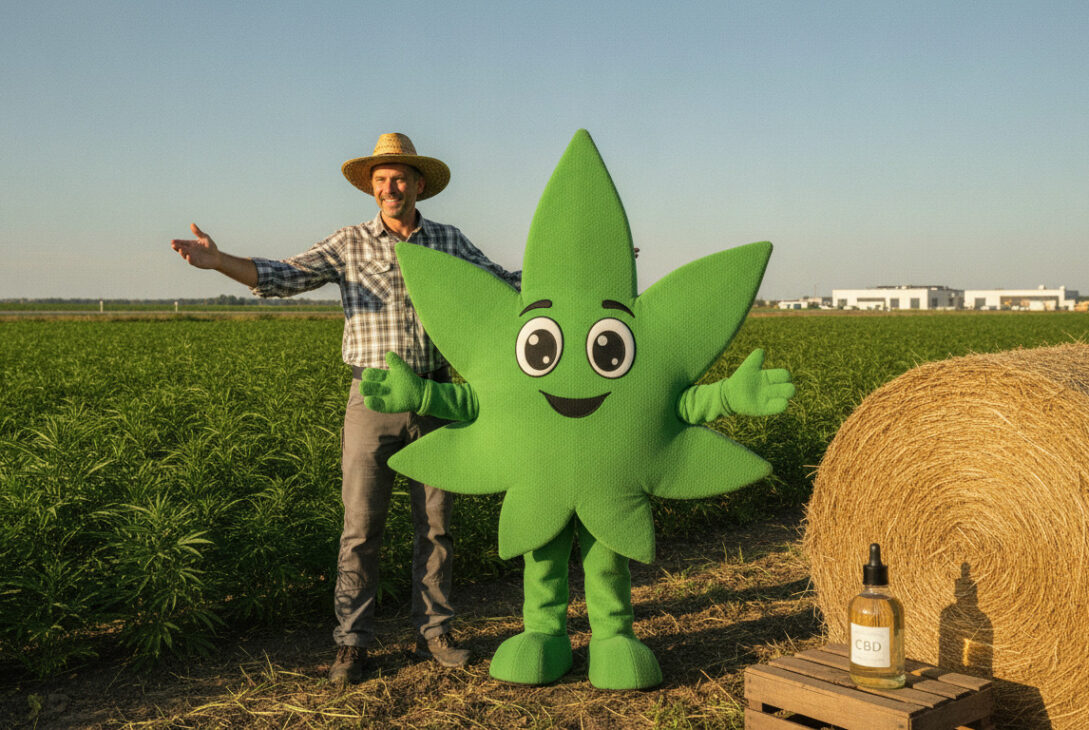
Draft introduction paragraph
State hemp rules can determine whether a farmer sells a profitable crop or must destroy it due to a failed THC test. Such uncertainties drive high-stakes decisions for farmers and rural economies. Gaps between cannabinoid oversight and rules for hemp fiber and grain create market confusion and provide openings for bad actors. Farmers grapple with unpredictable THC testing windows, compliance costs, and income loss when rules clash or testing fails.
Key takeaways:
- Clear rules protect farmer income and reduce compliance risk.
- The main friction is unpredictable THC testing and unclear market access rules.
- This article covers policy elements, a state by state comparison, and remediation pathways.
The article outlines key policy elements, a state-by-state comparison, and major regulatory challenges. It also delves into remediation, market access pathways, and coordination opportunities like the USDA hemp program and FDA oversight.
Industrial hemp policy and regulation
Industrial hemp policy determines market access, public safety, and investment across farming and processing. This short overview highlights core definitions, governance tools, and regulatory touchpoints such as hemp regulation and cannabinoid oversight.
Legal hemp is Cannabis sativa L. containing no more than 0.3 percent delta-9 THC by dry weight, typically assessed as total THC after decarboxylation to reflect real world potency. Clear statutory definitions and THC thresholds support consistent product classification and reduce enforcement uncertainty.
A distinct statutory line between fiber and cannabinoid products protects supply chains, encourages investment in processing infrastructure, and helps manage compliance risk across markets. Consistent rules also reduce testing disputes and lower compliance costs for growers.
The Key Elements below summarize licensing, testing protocols, laboratory accreditation, interstate movement, and remediation options to provide practical guardrails for growers, processors, and regulators. For federal context see the USDA hemp program and FDA regulation of cannabis products.
Who benefits and how
- Farmers benefit through predictable harvest windows and reduced crop loss risk
- Processors gain investment certainty and clearer pathways to markets such as fiber and grain
- Regulators obtain better traceability and fewer enforcement disputes
Key Elements of Industrial Hemp Policy
Licensing and registration
Licenses and registrations create traceability from seed to sale and clarify legal accountability for producers and handlers. Producers should apply early, keep seed source and lot records, and renew licenses on schedule to avoid gaps in compliance. See federal program details for model requirements at USDA Hemp Rules and Regulations.
- Apply to state, tribal, or USDA programs and keep certificates on file
- Document seed lots, genetic source, and planting maps
THC limits and testing protocols
Regulations define legal hemp as Cannabis sativa L containing no more than 0.3 percent delta 9 THC measured as total THC after decarboxylation. Sampling should occur within the hemp testing window and use validated laboratory methods so results reflect realistic potency at harvest. Maintain chain of custody and retain lab reports to reduce disputes.
- Sample representative plants within the approved harvest window
- Use ISO/IEC 17025 accredited labs and validated methods for total THC
Cultivation and crop management
Good agronomic records lower compliance risk and simplify audits and insurance claims. Track planting dates, lot maps, agronomic inputs, and harvest actions to support defensible testing outcomes.
- Map lots, record planting and harvest dates, and log inputs
Laboratories and compliance systems
Laboratory accreditation and method validation are essential for enforceable results and buyer confidence. Choose labs accredited to ISO/IEC 17025 and confirm method validation before relying on results for market movement, see ISO Standard for Accreditation.
Interstate commerce and transport
Federal law permits interstate hemp movement but states may require documentation and differing sampling rules. Carry lab reports, transport manifests, and verify destination state requirements before shipment.
Market access and regulatory overlap
Consumable hemp products face separate FDA and state oversight that can limit channels for food and feed. Confirm product approvals, labeling requirements, and coordinate with FDA guidance at FDA Regulation of Cannabis.
Enforcement remediation and farmer protections
Clear remediation options and fair penalties protect farmers and support stable markets while deterring bad actors. Farmers should know their state remediation plans and document mitigation efforts so they can pursue approved hemp remediation pathways. Example remediation steps include allowed salvage for fiber, dilution with compliant biomass under state approval, or approved composting or incineration when disposal is required.
Industrial hemp policy and regulation State Comparison
Comparison criteria include licensing, THC, uses, interstate rules, and testing standard. The table below summarizes each state’s licensing, THC limits, allowed uses, interstate movement rules, and testing protocol for quick scanning.
| State | Licensing | THC limits | Allowed uses | Interstate commerce | Testing standard |
|---|---|---|---|---|---|
| California | County registration and approved testing labs. California industrial hemp program | 0.3% Δ9 THC (total THC, post‑decarboxylation) | Fiber, seed, grain; consumables regulated separately. | Movement allowed under federal law with CDFA oversight. | 0.3% Δ9 THC (total THC, post‑decarboxylation) |
| Texas | TDA license with facility registration and lot permits. Texas hemp program | 0.3% Δ9 THC (total THC, post‑decarboxylation) | Fiber, seed, processing; consumables restricted. | Transport allowed with TDA documentation and approved tests. | 0.3% Δ9 THC (total THC, post‑decarboxylation) |
| Kentucky | Annual grower and processor licenses with reporting. Kentucky hemp administrative rules | 0.3% Δ9 THC (total THC, post‑decarboxylation) | Fiber, grain, seed; some product restrictions. | Interstate movement follows USDA rules with state reporting. | 0.3% Δ9 THC (total THC, post‑decarboxylation) |
| Oregon | ODA grower, handler, and seed licenses with fees. Oregon hemp program | 0.3% Δ9 THC (total THC, post‑decarboxylation) | Fiber, seed, CBD products under state rules. | Movement allowed with documentation and handler registration. | 0.3% Δ9 THC (total THC, post‑decarboxylation) |
(total THC post‑decarboxylation = measured THC after decarboxylation; can rise during drying and curing) Three top patterns stand out: most states uniformly apply the 0.3% total THC benchmark, licensing is broadly required for growers and processors, and many jurisdictions emphasize accredited laboratories or explicit handler registration to ensure reliable testing. Notable outliers include Texas and Kentucky, which impose tighter lot permitting and reporting that effectively narrow sampling windows and transport rules, while California and Oregon explicitly separate consumables from fiber and grain markets under state law.
For federal context see the USDA hemp program and FDA regulation of cannabis and CBD for authoritative guidance: USDA hemp program and FDA regulation of cannabis and CBD.
Challenges and Future Outlook
Industrial hemp policy and regulation faces stark federal and state discrepancies that complicate enforcement and trade. Because states vary in licensing, testing, and product rules, supply chains face unpredictability and friction. As a result, farmers confront costly delays and crop risk.
Enforcement poses practical problems for regulators and honest producers. Testing windows and laboratory capacity create false positives, and bad actors exploit gaps. Therefore, inconsistent state enforcement can punish compliant growers while leaving noncompliant operators unchecked.
Market impact has followed. Investment in fiber, grain, and oilseed processing stalls when rules lack clarity. Consequently, rural jobs and domestic supply chains suffer, and consumer safety concerns grow when intoxicating products slip through oversight. Recent federal guidance and USDA actions aim to reduce this uncertainty USDA hemp program, and the FDA continues to assert authority over consumables FDA cannabis regulation page.
Legislative trends point toward more precise statutory definitions and pathways. Policymakers propose clear lines between industrial hemp and cannabinoid products, and they seek FDA and TTB coordination for beverages and labeled products. If lawmakers act, farmers would gain clearer harvest windows and market access. Otherwise, policy gaps will keep opening space for bad actors and weaken the sector’s economic potential. That change would unlock billions in grain and fiber markets.
CONCLUSION
Industrial hemp policy and regulation matters for farmers, manufacturers, and consumers. Clear definitions and consistent THC limits reduce compliance risk and protect rural jobs. Because licensing, testing, and interstate rules shape market access, policy gaps allow bad actors to undermine trust.
Therefore lawmakers should clarify distinctions between fiber and cannabinoid products. As a result, investors will commit to fiber, grain, and oilseed infrastructure. Moreover, FDA and USDA coordination can unlock food and feed pathways and support domestic supply chains.
For continued coverage and resources visit My CBD Advisor. We encourage stakeholders to stay engaged, ask questions, and push for practical statutes that preserve growth and safety.
Related on CBD Advisor
- What Does the Lawful Hemp Protection Act (LHPA) Change
- How does Farm Bill hemp regulation (2026) impact growers
- Cannabis policy and market updates in Missouri and Minnesota