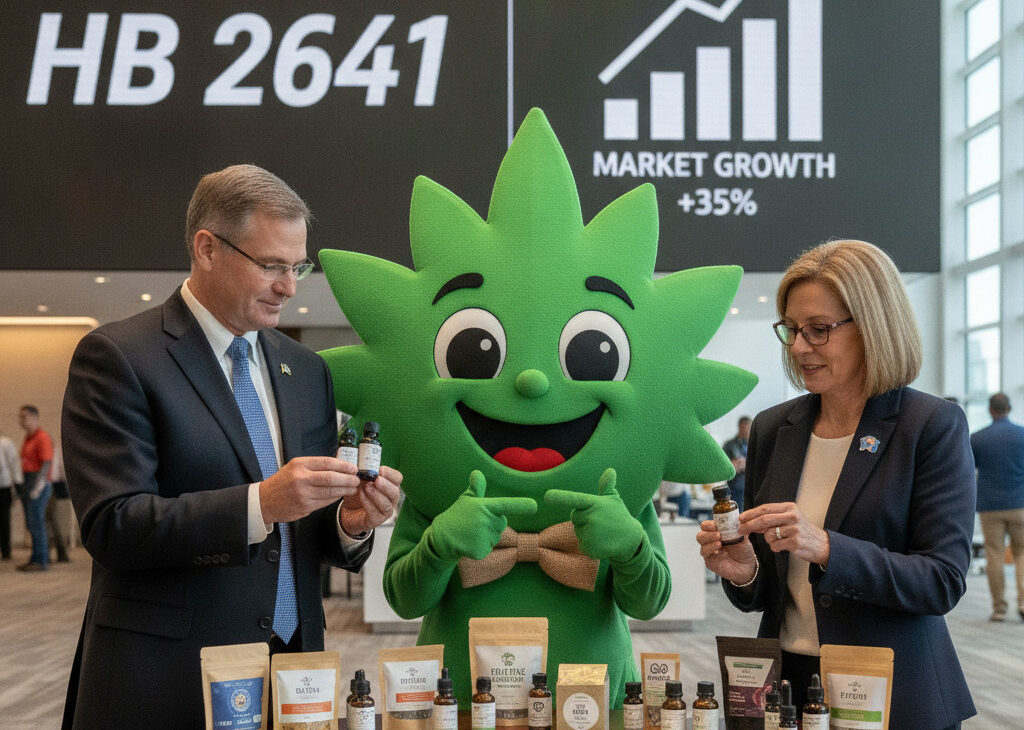
Cannabis policy and market updates in Missouri and Minnesota are reshaping the hemp and cannabis landscape this year. These shifts matter to farmers, retailers, regulators, and consumers. Because lawmakers passed major measures and new markets opened, businesses face urgent choices. This introduction highlights key legal and market changes to watch.
In Missouri, House Bill 2641 would ban intoxicating hemp products from retail sale starting November 12, 2026. The bill narrows the industrial hemp definition by excluding cannabinoids not naturally produced by cannabis and those made outside the plant. It also bars retailers from calling themselves dispensaries and allows only products with less than 0.4 milligrams of THC. As a result, Attorney General Catherine Hanaway issued cease and desist letters to dozens of sellers.
In Minnesota, the adult-use market has grown fast since last September. Adult-use retailers surpassed fifty million dollars in total sales, and January 2026 saw $10.3 million in adult-use sales and $8.8 million in medical sales. Overall, the state recorded roughly $210 million in adult-use THC sales in 2025. Additionally, about 180 businesses now hold adult-use licenses, most as microbusinesses that support a craft oriented market. Because testing capacity matters, Governor Tim Walz allowed hemp makers to keep using out-of-state labs until mid-2027.
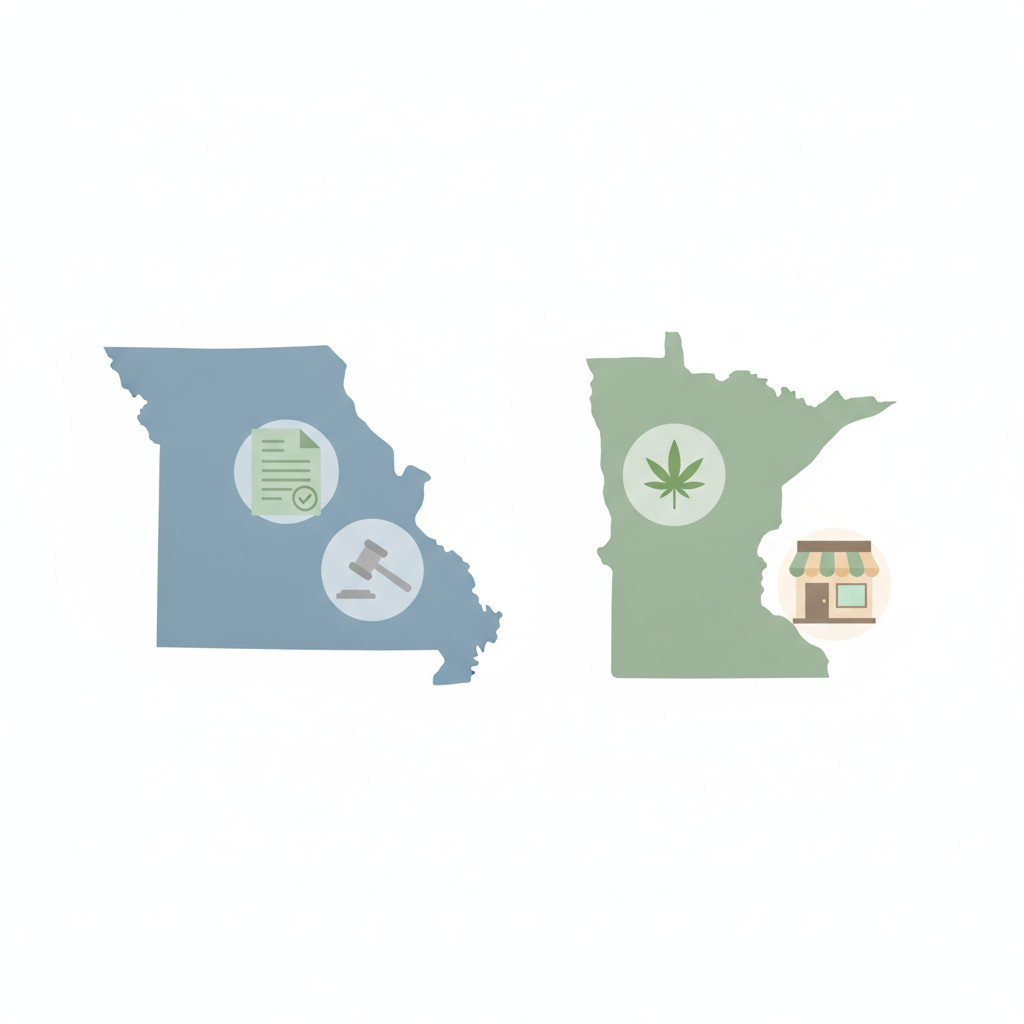
Cannabis policy and market updates in Missouri and Minnesota: Missouri policy changes
Missouri moved quickly this year to tighten rules on hemp-derived products. Because lawmakers aimed to protect public health, House Bill 2641 advanced through the legislature. The bill narrows the legal definition of industrial hemp and restricts intoxicating hemp products. As a result, sales of many THC-infused hemp items will shift toward licensed dispensaries.
Key elements of the Missouri changes
- House Bill 2641 would ban the retail sale of intoxicating hemp products starting November 12, 2026. For background, see Greenway Magazine.
- The law excludes cannabinoids not naturally produced by the cannabis plant, and excludes cannabinoids synthesized outside the plant.
- Retailers cannot call themselves dispensaries unless licensed under the state marijuana framework.
- Products may only contain less than 0.4 milligrams of total THC per container under the proposal.
- Attorney General Catherine Hanaway issued cease and desist letters to dozens of stores for alleged unlicensed sales. The AG release is at Attorney General’s Office.
Because these changes close regulatory gaps, businesses must reassess compliance. For example, hemp retailers may need to alter inventory and labeling. Additionally, testing and supply chains will face new scrutiny. Therefore, smaller hemp brands that cannot access licensed dispensaries may lose retail channels.
Cannabis policy and market updates in Missouri and Minnesota: Minnesota policy and market rules
Minnesota’s market is expanding after adult-use rollout last September. The state has focused on controlled market growth and testing capacity. Consequently, lawmakers extended permission for hemp manufacturers to use out-of-state testing labs until mid-2027. Read more at Fox 9.
Key elements of the Minnesota updates
- Adult-use retailers surpassed fifty million dollars in total sales since launch, signaling consumer demand. See the report at Ganjapreneur.
- January 2026 adult-use sales were $10.3 million, while medical sales hit $8.8 million.
- Roughly 180 businesses hold adult-use licenses, with many structured as microbusinesses.
- The state will phase in in-state lab testing, which aims to protect consumers and ensure product integrity.
How these rules affect actors on the ground
- Consumers will likely see clearer product channels and safer testing. However, availability may narrow for some hemp formats because of the new limits.
- Businesses must plan compliance, testing, and distribution shifts. Smaller hemp retailers face the biggest disruption, while licensed dispensaries may gain market share.
- Market landscape will favor regulated adult-use systems and craft-oriented microbusinesses. As a result, the market may mature with better quality control and clearer branding options.
Overall, these state changes show how policy shapes product availability, testing infrastructure, and competitive dynamics in the hemp and cannabis sectors.
Cannabis policy and market updates in Missouri and Minnesota: Comparison table
| Metric | Missouri | Minnesota |
|---|---|---|
| Latest major policy action | House Bill 2641 would ban intoxicating hemp products from retail sales starting November 12, 2026. | Adult use market launched in September 2025. Law allows out of state testing labs through mid 2027. |
| Adult use status | Not specified in recent updates | Legal and active since September 2025 |
| Patient numbers | Not specified in recent updates | Not specified in recent updates |
| Market size and notable sales | No state wide sales totals cited in recent updates | About $210 million in adult use THC sales in 2025. Retailers passed $50 million in total adult use sales since launch. |
| Recent monthly sales | Not available in recent updates | January 2026 adult use sales $10.3 million; medical sales $8.8 million |
| Number of licensed businesses | Not available in recent updates | Approximately 180 adult use license holders, many microbusinesses |
| Regulatory differences | Bill narrows industrial hemp definition. It excludes cannabinoids not naturally produced by the plant and synthesized cannabinoids. It limits THC to less than 0.4 milligrams per container. AG issued 33 cease and desist letters. | State phased approach. It emphasizes testing capacity and small business access. Out of state labs remain allowed until mid 2027 to ease capacity limits. |
| Enforcement and compliance notes | Bipartisan bill passage raises new compliance demands. Retailers must avoid unauthorized dispensary labeling. | Regulators focus on licensing, testing, and supporting craft oriented microbusinesses. |
Notes
Because data gaps remain, readers should treat Missouri entries as focused on the recent legislative proposals. For more details on enforcement actions in Missouri see Missouri Attorney General’s notice. For Minnesota market context see Minnesota Cannabis Sales report.
Market trends and consumer behavior: Cannabis policy and market updates in Missouri and Minnesota
Consumer demand and market structure diverge sharply across these states. In Minnesota, the newly launched adult-use system shows fast adoption. As a result, retailers already reported strong sales and steady growth. By contrast, Missouri faces regulatory tightening that may reshape consumer choices.
Key market trends
- Rapid adult-use growth in Minnesota. Retailers surpassed $50 million in total adult-use sales since launch. January 2026 saw $10.3 million in adult-use and $8.8 million in medical sales. For state sales context, see this article.
- Expansion of microbusinesses. Approximately 180 adult-use license holders operate in Minnesota, with many structured as microbusinesses. Therefore the market has a craft-oriented feel that favors small producers. See Minnesota Office of Cannabis Management for license details at this link.
- Testing capacity and supply chain pressure. Minnesota allowed out-of-state labs until mid-2027. Consequently, firms can meet demand while in-state labs scale up. Read the testing extension at here.
- Regulatory contraction in Missouri. House Bill 2641 narrows hemp definitions and limits intoxicating hemp sales. Therefore, many hemp formats could disappear from shelves in Missouri by November 12, 2026.
Consumer demographics and buying behavior
- Age and use patterns. Early data point to broad adult adoption in Minnesota. Younger adults drive novelty sales, while older adults favor medical forms and trusted brands. Consequently, product mixes skew toward both recreational flower and wellness products.
- Preference for craft and small brands. Because microbusinesses dominate licensing, consumers often choose local craft items. This pattern supports premium pricing and brand loyalty.
- Channel shifts and compliance sensitivity. In Missouri, customers may move from general retailers to licensed dispensaries. As a result, buying habits will shift toward regulated outlets with tested products.
Opportunities and growth areas
- Quality and testing services. Demand for accredited labs will grow as markets mature. Therefore, lab capacity represents a clear investment opportunity.
- Craft and microbusiness expansion. Small producers can capture market share in Minnesota through niche products and local branding.
- Ancillary services. Packaging, compliance software, and distribution logistics will expand as regulations tighten and markets scale.
- Product innovation. Edibles, concentrates, and wellness formulations remain high potential categories, but Missouri limits may constrain hemp-derived formats.
What businesses should do now
- Audit product lines for regulatory risk and compliance. This step helps firms avoid enforcement actions.
- Strengthen supply chains and testing partnerships. Reliable testing will build consumer trust.
- Focus on local branding and quality. Because consumers value craft in Minnesota, small brands can build lasting loyalty.
Overall, Minnesota’s market momentum shows clear consumer appetite. Meanwhile, Missouri’s policy shifts could narrow access to certain hemp products. Businesses should adapt quickly to remain competitive.
Missouri and Minnesota Cannabis Policy Changes
Missouri and Minnesota are moving in different directions on cannabis policy and markets. Missouri’s House Bill 2641 tightens the hemp definition and limits intoxicating hemp sales. As a result, many hemp formats face removal from retail shelves and enforcement actions increased. By contrast, Minnesota opened a regulated adult-use market last September. The state reported strong sales and is phasing in in-state testing while allowing out-of-state labs through mid-2027.
MyCBDAdvisor tracks these developments with full-spectrum, research driven coverage and practical guidance. We provide clear, trustworthy insights for brands, retailers, and consumers. Stay informed and plan ahead by visiting MyCBDAdvisor at MyCBDAdvisor for updates, analysis, and resources.
FAQ: Cannabis policy and market updates in Missouri and Minnesota
What is Missouri House Bill 2641 and when does it take effect?
HB 2641 would ban retail sales of intoxicating hemp products starting November 12, 2026. The bill narrows the industrial hemp definition by excluding cannabinoids not naturally produced by cannabis. Retailers cannot call themselves dispensaries unless licensed. Attorney General Catherine Hanaway sent cease and desist letters to 33 sellers. See the AG release at Attorney General’s Release.
Is adult-use cannabis legal in Minnesota now?
Yes. Minnesota launched adult-use in September 2025. Retailers surpassed $50 million in total adult-use sales since launch. The state counts roughly 180 adult-use license holders, many microbusinesses. Minnesota is phasing in in-state testing while permitting out-of-state labs until mid-2027. For official details see Minnesota OCM and market context at Ganjapreneur Article.
How will these changes affect consumers?
Consumers will see clearer product channels and stronger testing. However, Missouri limits could reduce availability for some hemp formats. Therefore shoppers may move to licensed dispensaries for tested products. Expect more emphasis on product labeling and safety.
What should businesses do to prepare?
Audit product lines for regulatory risk and adjust inventory. Strengthen lab partnerships and testing pipelines to ensure compliance. Consider microbusiness licensing in Minnesota because it favors craft producers. Also invest in compliance software and packaging that meets state rules.
Where can I find ongoing guidance and research?
MyCBDAdvisor offers research-driven coverage and practical resources. Visit MyCBDAdvisor for updates, analysis, and compliance guides. For state enforcement alerts consult the Missouri AG page at Attorney General’s Page.