
Introduction
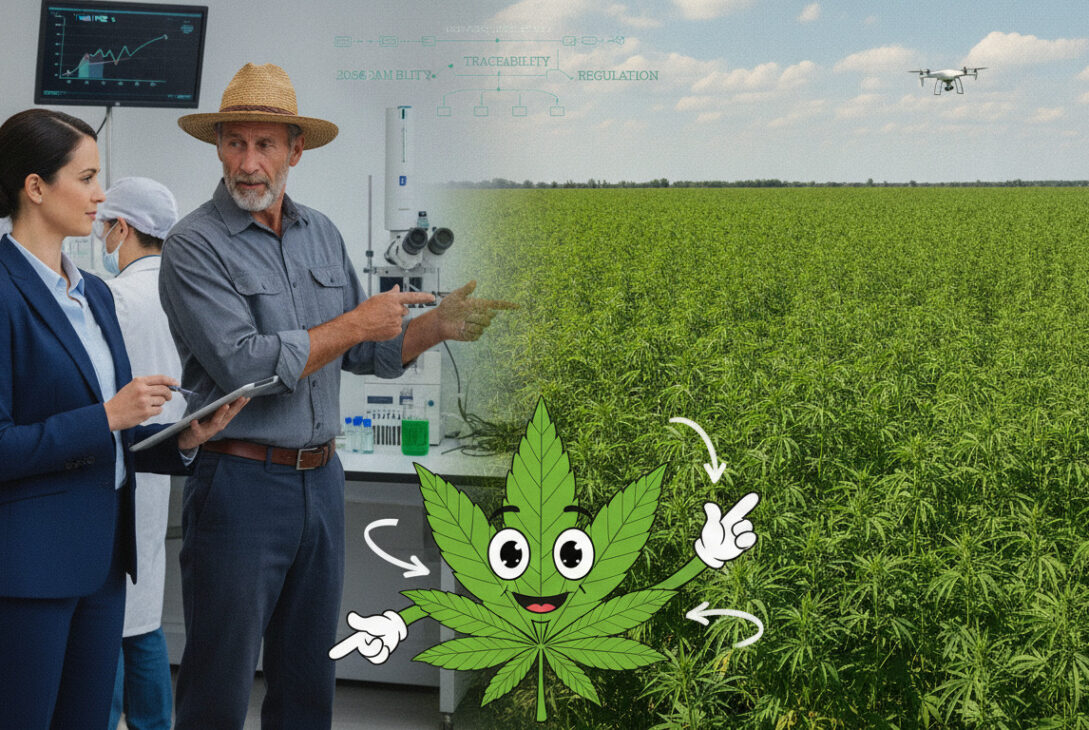
2026 Farm Bill hemp regulation tightens federal hemp standards by counting total THC, including THCA. Producers now face higher audit exposure through mandatory registration, reporting, and traceability.
- Verify seed sources and keep original seed tags
- Register farm locations and report production to USDA
- Implement seed to sale traceability and obtain accredited COA
You will learn practical steps to comply with testing, documentation, and traceability.
What is the Farm Bill hemp regulation (2026)?
The 2026 Farm Bill hemp regulation tightens federal hemp rules by defining total THC to include THCA, adding mandatory traceability and USDA reporting, and increasing enforcement risk (hemp compliance, total THC testing, traceability, COA). For growers the change raises the risk of harvest failures from THCA conversion; processors must adopt accredited lab COA verification and stronger quality control; consumers should prefer products with recent COAs and expect narrower availability and possible price increases.
Immediate next steps
- Growers: Schedule total THC testing and shift sampling closer to harvest
- Processors: Require ISO 17025 COA from suppliers and update QC records
- Consumers: Buy only products with visible, recent COAs and batch testing
Key Changes in Farm Bill Hemp Regulation (2026)
Total THC & THCA
Total THC now counts THCA and delta-9 THC which raises harvest failure risk as THCA converts during drying. This changes cannabinoid profiling and forces closer sampling windows to reflect final potency.
- Regulators measure delta-9 THC plus THCA and report total THC on the COA from accredited labs
- Early screens may understate final total THC because THCA conversion continues post sampling
- Genetics, harvest timing, and drying practices directly affect total THC outcomes
- Verify seed genetics and supplier traceability
- Monitor cannabinoid profiles weekly in flowering
- Sample close to harvest to match testing windows
Key takeaway: Treat THCA conversion as a moving variable and align sampling with final COA results.
Traceability & USDA Reporting
Mandatory traceability links producer IDs, locations, and output to USDA enforcement. Seed to sale records and chain of custody reduce audit risk and improve recall readiness.
- Register locations and retain timestamps for every transfer to support COA reconciliation
- Use platforms that export auditable logs and link samples to delta-9 THC results
- Keep digital records to speed USDA reporting and inspections
- Register with USDA immediately
- Adopt a seed to sale traceability platform
- Retain transfer and sale records for required retention periods
Key takeaway: Robust traceability turns regulatory data requests into routine record retrieval.
Documentation & Testing
Testing now requires ISO 17025 accredited labs and COA documentation that reports total THC. Maintain chain of custody, raw data, and sampling photos to withstand inspections.
- Confirm labs hold ISO 17025 accreditation and hemp testing scope before contracting
- Obtain a COA that includes delta-9 THC and lab raw data for each lot
- Archive sampling photos, chain of custody forms, and COA in an auditable system
- Verify lab accreditation and scope
- Define sampling windows near harvest
- Store COA and raw data securely
Key takeaway: Accreditation and clean COA chains are the primary defense in lab disputes.
FDA & Finished Products
FDA retains authority over finished goods, labeling, and claims which increases product liability risk. Manufacturers must control inputs and label copy to avoid misbranding.
- Require COA for incoming hemp inputs from ISO 17025 labs and confirm delta-9 THC compliance
- Remove unlawful health claims and maintain truthful ingredient lists
- Implement basic GMP controls and supplier qualification records
- Audit labels and remove unsupported claims
- Require COA for all hemp inputs
- Document GMP steps and supplier qualifications
Key takeaway: Upstream COA verification and basic GMP are essential to preserve market access.
Comparison: 2026 and Previous Bills
| Aspect | 2026 Farm Bill | 2018 Farm Bill | Pre-2018 Rules |
|---|---|---|---|
| THC limits | 0.3 percent total THC, counting THCA and delta-9, closing conversion loopholes | 0.3 percent delta-9 at testing time, did not always count THCA | Varied by state and federal guidance, often stricter or unclear |
| Definition of hemp | Separates industrial hemp for fiber and grain from other hemp production | Broad definition of hemp included flower-derived cannabinoids | Cannabis broadly regulated under CSA, little hemp clarity |
| Testing protocols | Requires total THC testing with COA from accredited hemp testing labs and tighter sampling window to prevent late THCA conversion and failures | Allowed testing that could miss later THCA conversion | Testing inconsistent and often state-driven |
| Traceability and data sharing | Mandatory producer ID, location, output, and USDA data sharing with enforcement | Limited federal traceability; states managed records | Minimal federal traceability; law enforcement not systematically linked |
| Licensing and documentation | Requires seed tags, sales contracts, FSA filings, harvest records, and registrations | State programs varied; documentation less uniform | Mostly state or local permits where allowed |
| FDA and product rules | FDA retains authority over finished products, safety, and labeling | FDA authority acknowledged, but market grew in gray area | FDA oversight limited and unevenly enforced |
| Market and compliance impact | Tighter hemp industry regulation; higher CBD compliance costs and narrower upstream supply | Rapid market expansion with regulatory uncertainty | Small, fragmented markets with higher legal risk |
Testing protocols require growers to use accredited hemp testing labs and obtain a Certificate of Analysis COA while adhering to a tightened sampling window to avoid late THCA conversion.
Traceability now mandates producer identification and seed-to-sale recordkeeping so farms must implement traceability systems and real-time reporting to USDA.
Documentation is essential; maintain seed tags, sales contracts, FSA filings, and harvest records as primary proof of industrial hemp status to reduce enforcement risk.
CONCLUSION
Producers must strengthen seed sourcing, recordkeeping, and testing to meet USDA reporting and avoid failures. Industry groups, labs, and insurers will shape compliance costs and market access. Because enforcement deadlines and FDA oversight remain firm, companies should prioritize audits and supply-chain resilience. Timely action reduces financial and legal exposure.
MyCBDAdvisor offers research-driven, full-spectrum CBD guidance to help navigate this changing landscape. We track policy shifts and enforcement timelines closely. Subscribe for updates and compliance resources. Learn more at MyCBDAdvisor.
Frequently Asked Questions (FAQs)
How do growers comply
Quick answer: Register with USDA, test for total THC, and use seed-to-sale traceability to document every step.
- Register and report locations in the USDA HeMP system and keep producer ID on file here.
- Preserve seed tags, FSA filings, and sales contracts as proof of industrial hemp status
- Implement seed-to-sale traceability and retain chain of custody records
How will the regulation affect CBD products
Quick answer: Manufacturers face higher input scrutiny and must adopt GMP and stricter supplier verification.
- Require COA for all inputs and verify supplier documentation and lab accreditation
- Adopt GMP quality controls and update labeling and safety procedures
- Review supply contracts to account for tighter upstream compliance here.
Do licensing and registration rules change
Quick answer: Yes, producers must register formally, report output, and maintain clearer records.
- File production type and output reports promptly with USDA and keep copies of registrations here.
- Update records after transfers or sales and retain harvest logs
What are the new testing standards
Quick answer: Testing measures total THC including THCA, using accredited labs and ISO 17025 protocols.
- Use ISO 17025 accredited labs and obtain a COA for each lot here.
- Follow approved sampling windows and retain raw data and chain of custody
Will consumer safety improve
Quick answer: Stronger FDA oversight plus third-party testing should reduce mislabeled and unsafe products.
- Buy products with visible COA and third-party test results
- Prefer brands that use GMP and documented quality systems for manufacturing here.
Related on CBD Advisor
- What Does the Lawful Hemp Protection Act (LHPA) Change
- Why Medicare coverage for hemp-derived CBD products matters now
- Why the Missouri ban on intoxicating hemp products matters