
Introduction
Cannabis terpenes shape scent driven mood and behavior, influencing user experience across formats and contexts. Recent inhalation studies found sex specific linalool and beta-myrcene effects that resemble real use today.
Preclinical vapor inhalation models recently showed measurable behavior changes and CBD interactions in mice (source). Effects depend on dose, delivery format, terpene blend, user biology, and biological sex differences across populations.
Brands and researchers can use this data to design predictable terpene CBD experiences and test safety. This article summarizes the white paper, highlights linalool plus CBD in females, compares beta-myrcene, and maps product implications.
FAQ Terpenes and behavioral effects
Effects
Terpenes alter mood, anxiety, alertness, and motor activity; examples include beta-myrcene and linalool, and some outcomes likely reflect an entourage effect.
Moderators
Effects vary with dose, delivery, CBD interactions, and biological sex differences, so results differ across studies and users.
Caveats
Findings are preclinical; human outcomes may differ—see the PMC white paper for details.
Dosing moderators
Delivery form and concentration change onset and intensity; inhalation typically acts within minutes, while oral formats take longer and depend on dose.
Keywords
entourage effect, biological sex differences, monoterpenes, terpene isolates, aroma compounds, terpene profiles.
How Cannabis Terpenes Affect Behavior
Understanding cannabis terpenes and behavioral responses helps predict effects and design better products. For consumers and researchers alike, this link explains why scent molecules can change mood, alertness, and anxiety.
- Myrcene and beta myrcene — Often described as calming. They can promote relaxation and influence motor activity. However, effects vary with dose and formulation.
- Linalool — Frequently linked to anti anxiety and sedative-like responses. In recent studies, linalool interacted with CBD to amplify effects in female mice, indicating sex-specific outcomes.
- Limonene — Tends to produce uplifting and mood-enhancing effects. Therefore it can increase alertness and reduce perceived stress for some users.
- Pinene — Usually associated with increased focus and alertness. As a result, it may counteract sedation and support cognitive clarity.
- Pinene and limonene blends — When combined, these terpenes can balance energy with calm. Thus, terpene blends may give nuanced outcomes beyond single isolates.
The preclinical work underpinning these observations is published and available for review at PubMed Central. Abstrax also summarizes the white paper and practical implications for formulation at Abstrax Tech. Together, these sources show that biological sex differences, terpene isolates, and terpene blends shape behavioral outcomes, so brands should test blends rather than rely on strain names.
Terpene Molecules Illustration
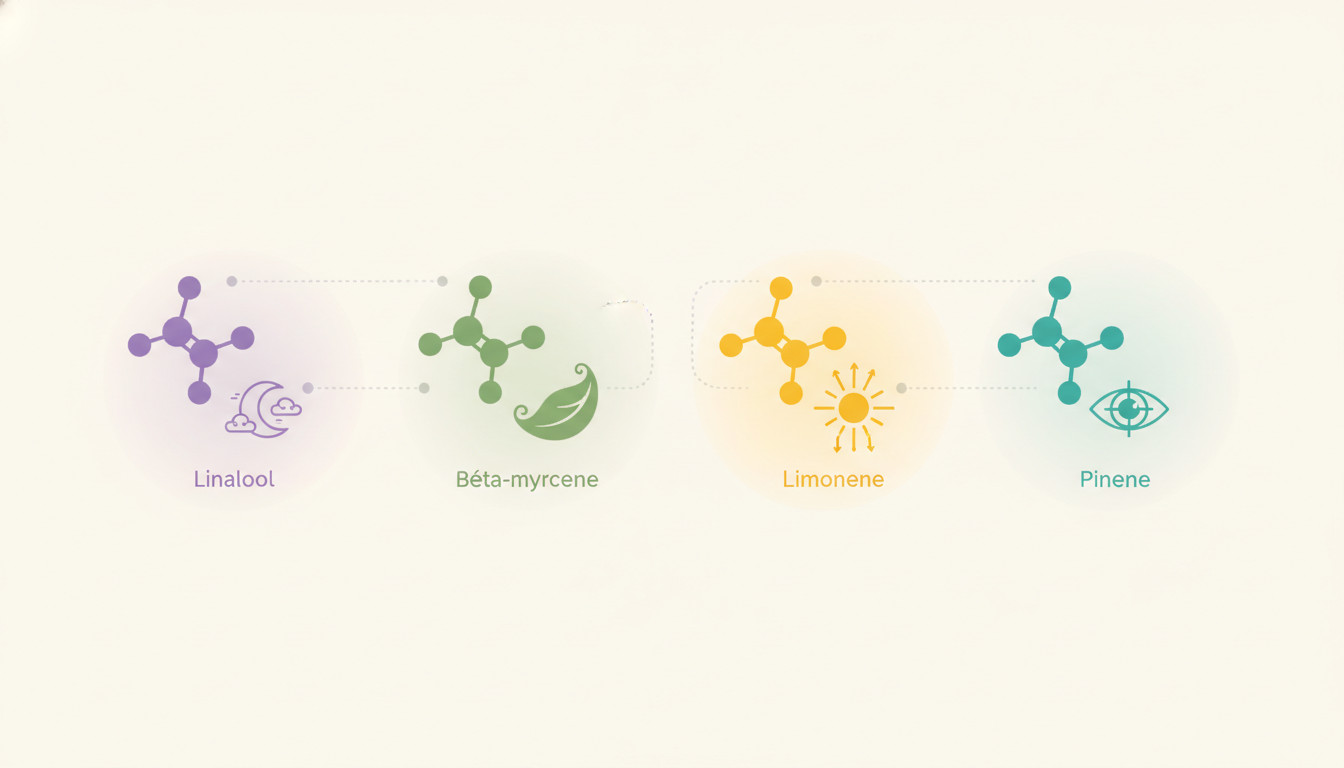
This illustration pairs simplified molecule diagrams with effect icons to link chemistry to behavior. It avoids labels to keep visual focus.
Terpene Comparison Table
This table summarizes cannabis terpenes and behavioral responses for quick comparison, showing typical effects, common sources, and suggested doses.
| Terpene | Behavioral Effects | Common Sources | Evidence Level | Suggested Starting Dose (Format-Specific) |
|---|---|---|---|---|
| Myrcene | Calming, muscle relaxation, may increase sedative feel; influences motor activity | Mango, hops, lemongrass, some cannabis strains | Preclinical (PMC) | Vape: 1–3 puffs; Edible: 0.5–2 mg; Sublingual: 0.25–1 mg |
| Linalool | Anti-anxiety, calming, sedative synergy with CBD observed in female mice | Lavender, coriander, some cannabis strains | Preclinical (PMC) | Vape: 1–3 puffs; Edible: 0.5–2 mg; Sublingual: 0.25–1 mg |
| Limonene | Uplifting, mood enhancing, may reduce perceived stress | Citrus peels, juniper, some cannabis strains | Limited clinical (Abstrax) | Vape: 1–3 puffs; Edible: 0.5–2 mg; Sublingual: 0.25–1 mg |
| Pinene | Increased alertness, improved focus, may counteract sedation | Pine needles, rosemary, basil, some cannabis strains | Limited clinical (Abstrax) | Vape: 1–3 puffs; Edible: 0.5–2 mg; Sublingual: 0.25–1 mg |
| Caryophyllene | Anti-inflammatory, interacts with CB2 receptors; may modulate pain and immune signaling | Black pepper, cloves, hops, some cannabis strains | Preclinical (PMC) | Vape: 1–3 puffs; Edible: 0.5–2 mg; Sublingual: 0.25–1 mg |
| Ocimene | Uplifting, fragrant, ambient scent benefits reported; botanical antifungal notes | Orchids, mint, kumquat, some cannabis strains | Anecdotal (PMC) | Vape: 1–3 puffs; Edible: 0.5–2 mg; Sublingual: 0.25–1 mg |
Evidence levels reflect published literature. See PMC white paper for details: PMC, Abstrax.
Understanding Cannabis Terpenes and Behavioral Responses
This five step guide gives practical testing and product selection advice while using related keywords such as monoterpenes, aroma compounds, scent molecules, terpene isolates, and terpene profiles. Follow short steps to match terpene science to goals and reduce variability.
Learn terpene effects
Terpenes modulate mood, alertness, anxiety, and motor activity through neural signaling. Effects depend on compound, dose, delivery, and biological sex, so expect variation across people and formats.
Read lab reports
Check certificates of analysis for myrcene, linalool, limonene, and pinene. High limonene predicts citrus aroma while linalool points to calming potential.
Match terpenes to goals
Choose calming profiles for relaxation and anti anxiety outcomes. For daytime focus prefer pinene or limonene and consider microdosing to reduce side effects.
Format specific dosing
- Vape: Starting dose 1 to 3 short puffs, Onset 5 to 20 minutes, Rationale fast onset for precise titration and brief sessions
- Edible terpenes: Starting dose 0.5 to 2 mg per serving, Onset 60 to 120 minutes, Rationale slower onset with longer lasting systemic effects
- Sublingual isolates: Starting dose 0.25 to 1 mg under the tongue, Onset 10 to 30 minutes, Rationale quicker than oral and easier to dose than inhalation
- Topical aroma only: Starting dose non systemic scent only, Onset immediate scent perception, Rationale mood effects via olfaction without systemic exposure
Test and track
Use simple trials and change one variable at a time. Keep a CSV log with the header below and wait 24 hours before major dose increases.
CSV header example single line:
Date,Time,Product,Format,Terpene dose,Mood before,Mood after,Motor changes,Intensity(1-10),Sleep quality,Biological sex
CSV example row single line:
2026-07-19,08:00,Product X,Vape,0.5 mg linalool,Mood before: anxious,Mood after: calm,Motor changes: reduced,Intensity:4,Sleep quality:7,Female
CONCLUSION
Understanding cannabis terpenes and behavioral responses matters for consumers seeking tailored effects. This research shows specific terpenes shape mood, alertness, anxiety, and relaxation. Therefore, buyers can make smarter choices when they know a product’s terpene profile.
Hemp carries many of the same terpenes as cannabis, so it influences effects too. Because hemp is legally accessible, it offers a testbed for scent driven formulations. As a result, hemp products can deliver calming or uplifting outcomes depending on extraction and blend.
MyCBDAdvisor commits to clear, research based information about cannabinoids, CBD, hemp, and terpenes. We translate peer reviewed data into practical guidance for consumers and clinicians. Visit our site for evidence based resources and product education: MyCBDAdvisor.
Brands and consumers should test blends and account for biological sex differences. However, real world outcomes depend on dose, delivery, and individual biology. So start small, track effects, and choose products guided by data rather than labels.